Skip to content
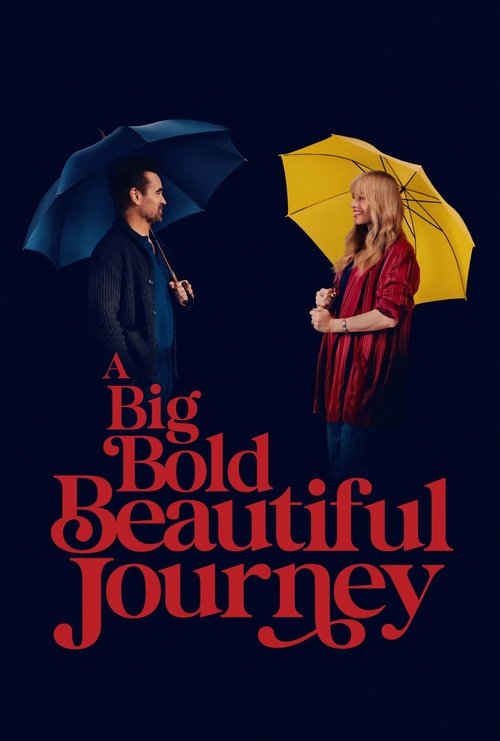
A Big Bold Beautiful Journey
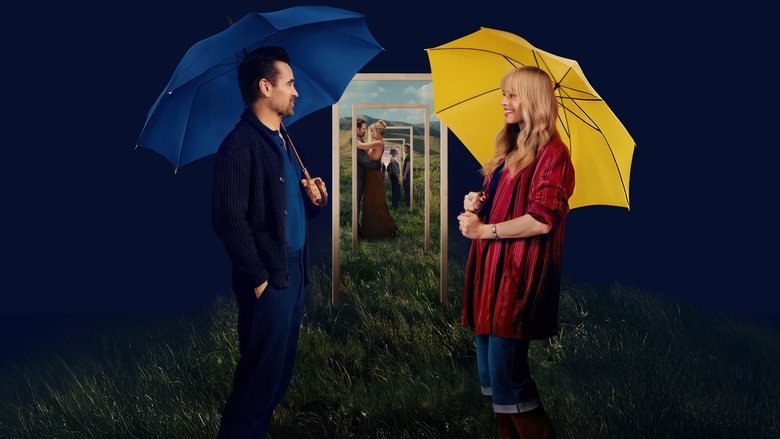
A dreamlike romantic fantasy in which two guarded strangers drive through magic doorways into their own wounded pasts — a road movie where every mile travelled is a memory reopened.
A Big Bold Beautiful Journey

"Relive your past. Change your future."

17 September 2025 United States of America 109 min 6.2 (438)

Director: Kogonada

Cast: Colin Farrell, Margot Robbie, Kevin Kline, Phoebe Waller-Bridge, Lily Rabe

Drama Fantasy Romance The past as a place you can visit but not repair Fear of intimacy in adulthood Surrender versus control The ordinary made magical Strangers as the only possible witnesses
Budget: $45,000,000
Box Office: $22,393,413

A Big Bold Beautiful Journey — Ending Explained

⚠️ Spoiler Analysis

Full spoilers follow.

The setup. David collects a 1994 Saturn SL from an odd car rental company staffed by two disconcertingly agreeable employees (Kevin Kline and Phoebe Waller-Bridge) and drives to a friend's wedding. There he meets Sarah, who states plainly that she has no interest in marriage or relationships; David counters that his childhood dream was to be a husband and father. They part. The GPS then routes him to a Burger King rest stop where Sarah's car will not start, and instructs him to pick her up.

The mechanism. The device does not ask. It keeps delivering the two of them to the same places until they stop fighting it and agree to take the journey together, driving hundreds of miles to a sequence of doors that open onto traumatic moments from each of their pasts. Crucially — and this is the film's key reversal of audience expectation — the doors are not a time machine. The trip is not about changing history but about reviving it for the sake of therapy. They enter, they witness, they emerge; the past stands exactly as it was.

What this reframes. Once you understand that nothing can be altered, the film's earlier scenes read differently. Sarah's declared indifference to relationships and David's lifelong yearning are revealed as the same defence wearing opposite clothes — both are ways of not being present. The GPS's refusal to take instruction is not a gimmick but the point: neither of them would ever have driven this route voluntarily, and the film's magic exists solely to remove the option of avoidance.

The ending. Their final destination is love — the two of them, having stood inside each other's worst moments as adults, able at last to be with someone. The romantic resolution is presented as a consequence rather than a reward: the journey did not find them a partner, it made them into people who could have one. This is also precisely where the film divides its audience. Read generously, it is an earned emotional payoff after genuine excavation. Read skeptically, it is a conclusion the premise handed the characters for free, since a magic door did the work that a life normally demands years for. Both readings account for every frame; the film does not adjudicate between them.

The hidden meaning. The title is the trap. Everything in the marketing and the concept promises adventure — big, bold, beautiful. What the film actually delivers is two people in a dying economy car, going back to look at things they spent their adult lives arranging not to look at. That, Kogonada argues, is the big bold beautiful journey. There isn't another one.

Alternative Interpretations

The therapy reading. The most widely held view, and the one supported by how the film behaves: the doors are not time travel at all but a dramatised model of therapeutic work. Nothing in the past is altered; the pair simply go back, look, and return changed. On this reading the GPS is a therapist, the road is a course of treatment, and love is what becomes possible afterwards rather than the goal itself.

The literal-fantasy reading. Taken at face value, the film is a supernatural romance in which a genuinely magical agency dispatches two people fate has selected for each other. Viewers who accept this reading tend to find the film charming; those who resist it object that the mechanism is never explained or costed — the magic asks nothing of the characters except that they agree to it.

The purgatory or dream reading. The blank, obliging surrealism of the rental agency, the impossible GPS and the endlessly accommodating road invite a reading in which none of the journey is literally occurring — a fugue, a dream, or a suspended state, with the ordinary world of the wedding as the only reality. The film does not confirm this, but it also never firmly closes the door.

The skeptical reading. A significant minority of critics argued the fantasy is a device for extracting emotional payoff without earning it — that a story which grants its characters direct access to their formative traumas has bypassed the difficult middle of any real reckoning. On this view the ending's arrival at love is not resolution but wish-fulfilment, and the disagreement over whether the film is sincere or merely sentimental is essentially unresolvable, since both camps are describing the same scenes.

Explore More About This Movie

Dive deeper into specific aspects of the movie with our detailed analysis pages

Similar Movies