Full spoilers follow.
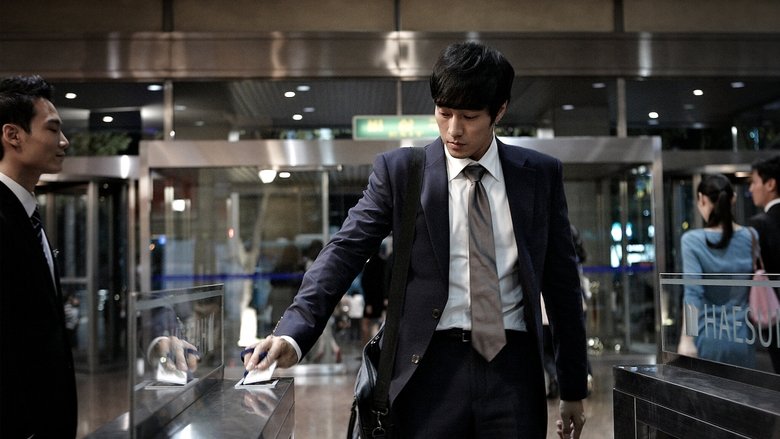
Ji Hyeong-do is the top performer at New Continent Metals, a metals trading company whose genuine business is contract killing, structured exactly like an ordinary corporation. For one assignment he proposes that a temporary employee carry out the job — which, under the firm's logic, obliges him to eliminate the temp afterward, since non-regular hires are consumable by design. This is the film's cruellest piece of satire made literal: the disposable worker is disposed of.
Hyeong-do then makes what the film calls his first mistake in a flawless career: he agrees to fulfil the dying young man's final wish and deliver his savings to his mother. The mother is Yuk Mi-yeon, a former teen idol singer whose records Hyeong-do adored as a boy — a connection the film visualizes in a flashback of the young Hyeong-do cycling with headphones on, listening to her songs. The retrospective irony is total: the envelope he carries out of guilt leads him to the one person capable of reminding him he was ever a child, and he never tells her that he is the reason her son is dead. Every subsequent act of kindness toward her and her household is disguised restitution.
Drawn into their domestic life, Hyeong-do does the unthinkable and tries to resign. Inside the firm this is read not as a career decision but as the ultimate betrayal, and the organization immediately turns its machinery on him — colleagues become hunters, the workplace becomes a kill order. The logic is corporate before it is criminal: a man who can leave proves the system isn't total, and the system cannot permit that proof. His superior and rival (Kwak Do-won) leads the pursuit, office politics transposed into open warfare.
Cornered and with nothing left to protect but Mi-yeon and her surviving household, Hyeong-do goes berserk and takes the fight to his employer, working his way up the hierarchy toward the executives who ordered his death. The climax closes the film's central metaphor: the arena of the final reckoning is the office itself, the desks and corridors of ordinary employment reframed as a killing floor, and the firm's most valuable asset becomes the weapon that destroys it. The victory, such as it is, is purchased at catastrophic personal cost — Hyeong-do's revenge and his self-annihilation are the same movement, and the peaceful, ordinary life that motivated everything is precisely what the fight makes impossible to enjoy.
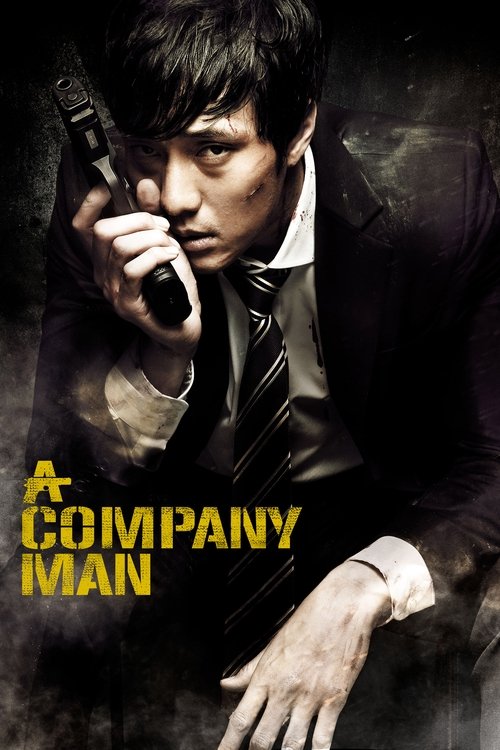
What becomes clear only in retrospect: the title is not ironic but diagnostic. Hyeong-do was never a gangster or a lone wolf; he was a company man, and the film's whole tragedy is that he had no self outside his job description. His attempted resignation, not any of his killings, is the film's decisive moral act — and the organization's response proves its thesis, that in such a system the only available form of freedom is destruction.