
Skip to content
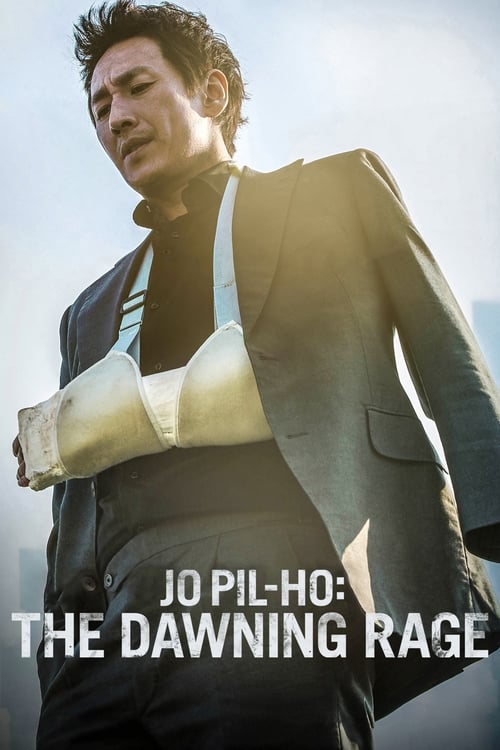
Jo Pil-ho: The Dawning Rage
A rain-slicked Korean noir where a rotten cop and a hardened schoolgirl drag each other through the wreckage of a city that never stopped grieving — rage burning where mourning should be.
Jo Pil-ho: The Dawning Rage

악질경찰

"The bad meets the worst."

20 March 2019 South Korea 127 min 6.1 (129)

Director: Lee Jeong-beom

Cast: Lee Sun-kyun, Jeon So-nee, Park Hae-joon, Lee You-young, Park Byung-eun

Drama Crime Action Thriller Institutional corruption and the conglomerate state Unresolved national grief (the Sewol legacy) The antihero without redemption Adults failing children Truth, evidence and erasure

Jo Pil-ho: The Dawning Rage — Ending Explained

⚠️ Spoiler Analysis

Full spoilers follow.

The set-up. Jo Pil-ho, a corrupt Ansan homicide detective, recruits Han Ki-chul as an accomplice for a scheme involving the police storehouse. When Ki-chul enters, a massive explosion kills him and incinerates a cache of highly classified evidence. Pil-ho survives, and the prosecution immediately treats him as the man behind it. The crucial reframing is that Pil-ho was never the author of the plan he thought he was running — his petty criminality made him the perfect patsy for people who needed that evidence destroyed and needed someone credible to blame.

The conspiracy. Pulling the thread leads to the Taesung Group and the officials protecting it. Pil-ho's only route to proof runs through Mina, a teenage girl connected to the affair, and their partnership — initially exploitative on his side and mistrustful on hers — becomes the spine of the film. The Sewol ferry thread runs beneath all of it: the characters are mourning one of their own, and the conspiracy is presented as the same species of institutional lying that the city has already survived once.

Mina's death. Having lost her will to live under the accumulated weight of what has been done to her and what she knows, Mina jumps from a building. This is the film's hinge. It removes any possibility that the story is a rescue narrative and converts Pil-ho's investigation — which was, until then, still partly about saving his own skin — into pure vengeance. Every earlier moment of him using her is retroactively poisoned.

The climax. Pil-ho fatally shoots Kwon, then shoots Jung in the head, before being shot himself by Kim. He survives; his actions expose Taesung Group's corruption. But he is arrested for murder, and the film's final image is of a man broken and driven out of his mind by the whole ordeal.

What becomes clear afterwards. The title's "dawning rage" is not an awakening of conscience but the moment grief stops being survivable and becomes action. The film systematically withholds every satisfaction its genre promises: the corrupt are exposed but the exposure changes nothing that matters, the girl is not saved, and the antihero is not redeemed — he is simply used up. Read against the Sewol context the director explicitly built in, the ending argues that the truth coming out years later, to a public already exhausted, is not justice. It is just the record being corrected over a grave.

Alternative Interpretations

The ending as tragedy versus the ending as indictment. One reading takes Pil-ho's final rampage as a classic noir self-immolation: he gets his revenge, exposes Taesung, and is destroyed by it — a man who was never good enough to survive doing one good thing. Another reading treats the finale as deliberately unsatisfying by design: the conspiracy is exposed but Mina is still dead and Pil-ho is arrested and broken, which argues that vigilante catharsis is a lie the genre tells and the film is refusing to tell it.

Is Pil-ho redeemed? Sympathetic viewers see a man who finally chooses something other than himself. Sceptics point out that nothing in his conduct fundamentally changes — he remains violent, self-serving and reckless with other people — and that the film may be showing rage merely finding a more flattering object, not a conscience being born.

The Sewol element — exploitation or elegy? The dominant domestic critique was that the tragedy functions as borrowed gravity for a genre plot. The counter-reading, supported by the director's own account of visiting Danwon High School, is that the film's crime story is the vehicle rather than the point: an argument that the same machinery of institutional lying that produced the disaster keeps operating afterwards, and that a thriller about a cover-up is a legitimate, if blunt, way to say so.

Mina's fate. Some read it as the film's honest refusal of rescue-fantasy — a girl whom no adult and no institution arrived in time for. Others read it as the narrative sacrificing its most alive character to motivate a man's third act, one of the most frequently voiced objections to the script.

Explore More About This Movie

Dive deeper into specific aspects of the movie with our detailed analysis pages

Similar Movies