Skip to content
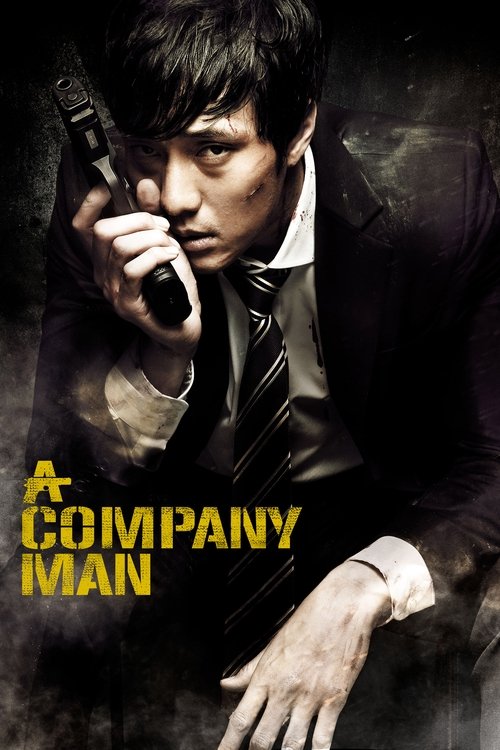
A Company Man
A sleek Korean noir where a hitman in a pressed suit discovers his own heartbeat — corporate fluorescence and arterial red bleeding together into the loneliest office in the world.
A Company Man

A Company Man

회사원

"Fight before being fired."

11 October 2012 South Korea 96 min 7.0 (221)

Director: Lim Sang-yoon

Cast: So Ji-sub, Lee Mi-yeon, Kwak Do-won, Kim Dong-jun, Jeon Kuk-hwan

Drama Crime Action Thriller The Corporation as Organized Crime Loyalty, Obedience and Betrayal Redemption Through an Ordinary Life Disposability of the Worker Masculinity as Mute Performance
Budget: $3,500,000
Box Office: $7,339,398

Overview

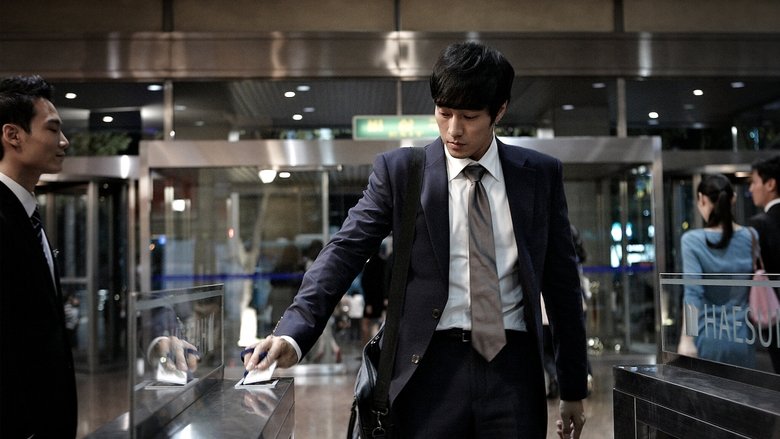
Ji Hyeong-do (So Ji-sub) leaves home each morning in a dark suit and tie, briefcase in hand, and clocks in at New Continent Metals — a firm that, behind its trading-company facade, runs a contract-killing operation with the bureaucratic discipline of any chaebol subsidiary. There are performance reviews, seniority politics, office gossip, and a strict chain of command. Hyeong-do is the company's best employee: silent, punctual, unflinchingly loyal.

A routine assignment involves a temporary worker brought in for a single job — a hire who, by company policy, must be erased once the work is done. For the first time in his career, Hyeong-do makes a mistake: he agrees to honor the young man's last wish and deliver his savings to his mother. That mother, Yuk Mi-yeon (Lee Mi-yeon), turns out to be a faded teen-idol singer whose songs Hyeong-do listened to as a boy, and the encounter cracks open something he has kept sealed for decades.

Pulled toward the possibility of an ordinary life — a woman, a household, a future — Hyeong-do does the one thing his employer cannot forgive: he tries to resign. Lim Sang-yoon's directorial debut turns that resignation into a manhunt, letting a cold, stylish action thriller double as a deadpan satire of salaryman life, where quitting your job is indistinguishable from betraying the family business.


Core Meaning

Lim Sang-yoon's central conceit is a single sustained metaphor: the corporation as a murder machine, and the loyal employee as its instrument. By rendering assassination as ordinary white-collar labor — complete with org charts, temp contracts, disposable juniors and superiors who take credit for your kills — the film argues that what a man does for a living eventually becomes what he is, and that the company's highest value is not profit but obedience.

Critics reading the film have emphasized its social commentary: a protagonist trapped in corporate life, unable to leave work he has grown sick of, serving superiors he despises. The dream of freedom and the impossibility of an independent, ordinary existence outside the firm drive the drama; the injustice of that bind is what lets us understand the interior life of a cold-blooded killer who finally attempts to redeem himself.

The message is bleak and pointed: in a system that equates resignation with treason, the only exit is violence, and the only thing the company truly cannot tolerate is an employee who remembers he has a soul.

Thematic DNA

The Corporation as Organized Crime 30%
Loyalty, Obedience and Betrayal 22%
Redemption Through an Ordinary Life 20%
Disposability of the Worker 16%
Masculinity as Mute Performance 12%

The Corporation as Organized Crime

The film's structural joke is also its thesis: New Continent Metals launders killing through the grammar of business — departments, promotions, quarterly pressure, performance metrics. Hyeong-do's job is murder, but his real oppression is managerial. Reviewers singled out this framing as the film's social commentary, a portrait of a man who cannot quit work he is tired of and must answer to despicable superiors.

Loyalty, Obedience and Betrayal

Within the firm, loyalty is the only currency, and resignation is read as the ultimate betrayal — which is precisely why Hyeong-do is hunted the instant he tries to leave. The film inverts the moral vocabulary of the workplace: the decent act (honoring a dead man's wish, protecting a woman) registers inside the system as treachery, while mass murder is simply compliance.

Redemption Through an Ordinary Life

Hyeong-do's awakening is modest rather than heroic: a warm meal, a domestic kitchen, a pop song from his adolescence, a boy who needs a father figure. His longing is not for escape into adventure but for banality — the very thing his profession has made unreachable. His attempt to redeem himself is framed as a reach toward normality, which the film treats as the most unattainable luxury of all.

Disposability of the Worker

The temp worker who must be eliminated once his assignment is complete is the film's cruellest piece of satire and its inciting wound: the non-regular employee is literally expendable, a pointed barb aimed at South Korea's irregular-labor economy. Every character is ultimately a line item, and the film's body count is also a layoff ledger.

Masculinity as Mute Performance

So Ji-sub plays Hyeong-do almost wordlessly, conveying, as reviewers noted, gravitas and subtle awkwardness through his eyes and body rather than dialogue. The suit is armor and uniform at once; emotional literacy is the one skill the company never trained into him, and his fumbling attempts at tenderness are as awkward as his killings are fluent.

Character Analysis

Ji Hyeong-do

So Ji-sub

Archetype: Antihero / reluctant killer seeking redemption Key Trait: Silent, near-expressionless discipline masking a starved capacity for tenderness

Motivation

Initially, flawless professional performance; later, the impossible wish for a normal existence — a woman, a household, a name that isn't an employee number — and finally retribution against the system that denies him all three.

Character Arc

Introduced as the syndicate's most skillful and most obedient contract killer, he commits his first mistake by honoring a dying temp worker's last wish. Meeting the man's mother reawakens the boy he once was, and he attempts to resign for the sake of an ordinary life — an act the firm reads as unforgivable betrayal. Hunted by his own employer, he turns the instrument of the company against itself, going berserk and seeking revenge on the organization he devoted his life to serving.

Yuk Mi-yeon

Lee Mi-yeon

Archetype: Catalyst / the ordinary world personified Key Trait: Weathered warmth — a woman whose fame is gone but whose decency isn't

Motivation

Protecting her son and salvaging dignity from a life that peaked early; and, tentatively, accepting companionship from a man who offers her unexplained kindness.

Character Arc

A faded former teen-idol singer now raising a son alone, she receives the stranger who brings her dead child's savings and slowly lets him into her household. Unaware of what he does for a living, she becomes the measure of everything Hyeong-do could have been, and her presence transforms him from asset into liability in the company's ledger.

All 4 characters and cast

Symbols & Motifs

The Suit and Tie

Meaning:

The fusion of salaryman and assassin: a uniform that makes killing look like commuting, and conformity indistinguishable from lethality. It is simultaneously armor, shroud and corporate branding.

Context:

Hyeong-do wears a dark suit and tie like any other white-collar worker while his actual profession is murder; the film keeps him impeccably dressed through carnage, so that blood on the shirt reads as an occupational stain.

New Continent Metals

Meaning:

The front company embodies the idea that respectable capitalism and organized killing share the same architecture — a metals trading firm whose real product is death, processed and invoiced.

Context:

Presented on the surface as a legitimate metal trading business, the firm operates internally as a contract-killing syndicate, complete with hierarchy, office floors and personnel policy.

The Temp Worker's Savings Envelope

Meaning:

A dead man's money becomes the seed of conscience: the first promise Hyeong-do keeps that serves no one's interest but a stranger's. It is the film's small, concrete emblem of moral debt.

Context:

Hyeong-do's first-ever professional mistake is agreeing to fulfill the temporary employee's final wish and deliver his savings to his mother — the errand that leads him to Yuk Mi-yeon and detonates his life.

Yuk Mi-yeon's Pop Songs

Meaning:

Music as preserved innocence — the sound of the boy Hyeong-do was before the company made him an instrument. It stands for a self he thought was gone.

Context:

Mi-yeon is a former teen idol singer whose records Hyeong-do loved as a youth; a flashback shows him as a boy riding his bicycle with headphones on, listening to her, cross-cutting his lost childhood against his present.

The Office Building

Meaning:

The corporate tower as labyrinth and battlefield: the place that formed him is also the place that must be destroyed, so the workplace becomes the arena of the final reckoning.

Context:

The film's escalating action moves inward toward the firm itself, turning desks, corridors and stairwells — the scenery of routine employment — into the stage for Hyeong-do's revenge.

The Family Dinner Table

Meaning:

A shorthand for the ordinary life Hyeong-do has never had: shared food as the most radical thing a hired killer can aspire to.

Context:

The domestic scenes with Mi-yeon and her son supply the film's only warmth, and their soft, lived-in texture makes the return to the office feel like re-entering a freezer.

Philosophical Questions

Can a person be held morally responsible for work the system has made them?

Hyeong-do is not a sadist; he is competent and compliant, shaped by an institution that trained him into violence and rewarded it. The film withholds easy condemnation — reviewers noted how much compassion So Ji-sub draws for a cold-blooded killer — forcing the question of where the employee ends and the employer begins.

Is the right to quit the most fundamental freedom?

By making resignation the unforgivable sin, the film treats exit as the real test of liberty. Hyeong-do has money, skill and status but no ability to leave, which renders all the rest worthless; his story proposes that freedom is measured not by what you can do inside a system but by whether you can step outside it.

Can violence ever purchase redemption?

Hyeong-do's moral awakening expresses itself through the only competence he owns — killing. The film asks whether an act of love carried out in the grammar of murder can redeem anything, and leaves the answer deliberately unsettled, letting grace and carnage occupy the same frame.

What makes a life ordinary, and why is it so hard to reach?

The film's emotional stakes are strikingly modest: a meal, a household, a pop song, a boy to look after. Against the spectacle of professional murder, these small things are presented as the unattainable luxury, suggesting that modern labour's real cost is not danger but the quiet forfeiture of an ordinary existence.

Is the person we are at work the person we actually are?

Hyeong-do's suit never changes, but the man inside it does, and the film stages the gap between function and self as almost unbridgeable — his killing is fluent, his tenderness is clumsy. The suggestion is that identity follows practice: do something long enough and it stops being a role.

Alternative Interpretations

As labour satire. The most widely shared reading treats the killing as nearly incidental: the film is about a man who cannot quit. Hyeong-do's tragedy is bureaucratic, not criminal — he is exhausted by his job, answerable to contemptible superiors, and denied the most basic worker's right, the right to resign. On this reading the violence is simply what happens when an employee tries to leave a company that does not permit exits.

Full ending explanation

Cultural Impact

A Company Man arrived in October 2012, in the middle of a decade-long boom in Korean crime cinema and at the height of national anxiety about corporate power, seniority culture and irregular employment. Its conceit — that a murder-for-hire syndicate would be indistinguishable from a mid-sized trading company, complete with disposable temp workers — landed as satire precisely because Korean audiences recognized the org chart. The film sits on the commercial end of that conversation: a star vehicle that smuggles labour critique inside a slick action thriller.

Commercially it worked. Carried by So Ji-sub, it crossed a million admissions domestically within two weeks and took roughly US$7.3 million, a solid return on a ₩4 billion budget, and it travelled widely on the festival and Asian-cinema circuit, where it has been regularly revisited — screened at events such as the Korean Film Festival in Australia and reviewed by outlets including Asian Movie Pulse, AsianMovieWeb, easternkicks and Modern Korean Cinema.

Critically the reception was warm rather than reverent. Reviewers praised Lim Sang-yoon's technical assurance for a debut — the camerawork, the transitions, the modern action choreography — and So Ji-sub's restrained, physically expressive lead performance, which grants a contract killer genuine pathos. The most common reservation was familiarity: the loyal-hitman-hunted-by-his-employers story had been told before, most notably in A Bittersweet Life, and several critics felt the corporate twist alone wasn't enough to make the film stand apart. Its lasting contribution is the metaphor itself — the hitman as salaryman — which has become one of the most legible shorthand images in Korean genre cinema for what work does to a person.

Audience Reception

Praised. Audiences and reviewers converged on two strengths. The first is So Ji-sub, described as outstanding in conveying the gravitas of a contract killer and especially effective in subtle, awkward moments communicated through his eyes and body rather than dialogue, which lends the character a humane side and draws real compassion. The second is craft: the action is choreographed with a modern sensibility and inventive camera angles, and the film's fade-ins, fade-outs and photography were repeatedly cited as evidence of unexpected technical finesse from a first-time director. The central premise — assassination reorganized as white-collar employment — was widely enjoyed for its deadpan wit and its sting of social commentary about bad bosses and jobs you can't escape.

Criticized. The dominant complaint is derivativeness: despite the corporate framing, the story of a loyal hitman hunted by his own organization had been done many times, notably in A Bittersweet Life, and critics felt the film needed something more to truly stand out. The romance with Mi-yeon struck some viewers as underdeveloped and convenient — a motivation asserted more than dramatized — and the tonal shifts between office satire, melodrama and full-scale gunplay didn't land for everyone. A few found the final act's escalation into large-scale action at odds with the restrained character study that preceded it.

Verdict. A well-made, handsomely shot, emotionally sincere genre film anchored by a quietly excellent lead performance, slightly short of distinctive — reflected in its middling-to-good 6.6 IMDb average and its strong domestic performance of over a million admissions in two weeks and roughly US$7.3 million worldwide. Recommended for Korean-noir enthusiasts; judged familiar by those who've seen the template before.

Interesting Facts

  • A Company Man is the feature directorial debut of Lim Sang-yoon, who also wrote the film.
  • Principal photography ran roughly four months and wrapped on 4 December 2011; the film was released in South Korea on 11 October 2012.
  • The production budget was approximately ₩4 billion (about US$3.5 million at the time).
  • Boosted by So Ji-sub's star power, the film passed one million admissions at the Korean box office within two weeks of release and grossed around US$7.3 million worldwide.
  • Kim Dong-jun, a member of the K-pop group ZE:A, made his film debut in a supporting role — a neat fit for a story in which Lee Mi-yeon plays a former teen idol singer.
  • Lee Mi-yeon, a major star of 1990s Korean cinema, plays the faded ex-idol whose songs the hitman loved as a boy, lending the casting an extra layer of real-world nostalgia.
  • So Ji-sub performs Hyeong-do with minimal dialogue; reviewers repeatedly praised how much he conveys through his eyes and body language rather than speech.
  • Critics frequently compared the film to Kim Jee-woon's A Bittersweet Life (2005), noting that the loyal-hitman-turned-target premise was familiar terrain for Korean noir.
  • Reviewers singled out the film's technical polish for a first-time director, citing inventive fade-ins and fade-outs, unusual camera angles and modern action choreography.
  • The film carries a solid but not spectacular 6.6 average user rating on IMDb, reflecting a broadly positive but not rapturous critical consensus.

Easter Eggs

Lee Mi-yeon cast as a former teen idol singer

Lee Mi-yeon was one of the defining Korean film stars of the 1990s, so casting her as a faded pop idol whose records a boy once adored folds the audience's own nostalgia into Hyeong-do's. The flashback of the young protagonist cycling with headphones, listening to her music, works as a wink at viewers who grew up with her.

Kim Dong-jun's film debut as an idol playing the idol's son

An active K-pop idol from ZE:A making his screen debut opposite a character who is a retired idol quietly mirrors the industry's generational churn — yesterday's manufactured star raising tomorrow's, both of them processed by systems that discard people on schedule, exactly like the firm in the film.

The A Bittersweet Life lineage

The loyal-enforcer-turned-target structure, the immaculate suit, the corporate-criminal hierarchy and the office-tower showdown place the film in open dialogue with Kim Jee-woon's A Bittersweet Life (2005), a comparison critics made repeatedly — less a hidden reference than a genre inheritance the film wears deliberately.

Frequently Asked Questions

Explore More About This Movie

Dive deeper into specific aspects of the movie with our detailed analysis pages

Comments (0)

Leave a comment

No comments yet. Be the first to share your thoughts!

Similar Movies