
Skip to content
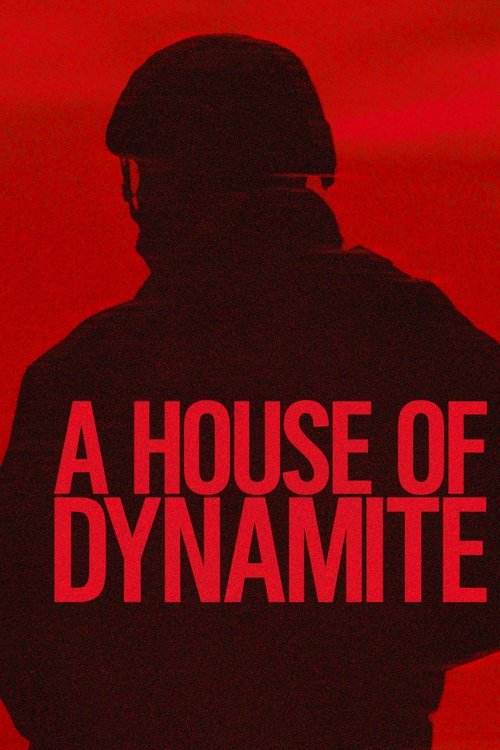
A House of Dynamite
A suffocating, real-time geopolitical procedural of mounting dread, where the frantic machinery of statecraft fractures under cold fluorescent lights like a precision watch ticking down toward an inevitable abyss.
A House of Dynamite

A House of Dynamite

"Not if. When."

02 October 2025 United States of America 112 min 6.4 (1,360)

Director: Kathryn Bigelow

Cast: Idris Elba, Rebecca Ferguson, Gabriel Basso, Jared Harris, Tracy Letts

Drama Thriller The Fragility of Deterrence and Attribution Fog Systemic Failure and the Illusion of Control Temporal Compression in High-Stakes Decision-Making The Rashomon Effect in Institutional Bureaucracy
Box Office: $181,125

Overview

Directed by Academy Award winner Kathryn Bigelow from a screenplay by Noah Oppenheim, A House of Dynamite (2025) plunges viewers into a hyper-realistic, procedural nightmare of modern warfare and geopolitical fragility. When early-warning systems detect a single, unattributed intercontinental ballistic missile (ICBM) launched from the Pacific and hurtling toward Chicago, the United States defense apparatus has an estimated 18 minutes to confirm the threat, attempt an interception, determine the origin, and choose a course of retaliation.

Rather than following a traditional linear chronology, the narrative unfolds across three distinct chronological chapters that replay the identical 18-minute countdown from varying rungs of the chain of command. The film moves from the tactical ground floor—including the White House Situation Room watch floor and the ground-based interceptor missile base at Fort Greely, Alaska—through the corridors of intelligence agencies and military commands, ultimately culminating with the President of the United States.

As communications break down, protocols clash with human panic, and missile defense systems are pushed to their theoretical limits, the film strips away Hollywood heroics. Instead, it presents an unvarnished examination of institutional friction, information fog, and the existential terror of decisions made under severe temporal constraints.

Core Meaning

Bigelow and Oppenheim use the 18-minute countdown to demystify the illusion of modern security and deterrence. The core message is that the elaborate architecture of 21st-century nuclear defense and command-and-control is a fragile house of cards: when forced into extreme real-time execution with ambiguous intelligence, highly trained human beings and complex automated protocols do not guarantee salvation—they reveal systemic vulnerability, cognitive paralysis, and the terrifying speed with which civilization can unravel.

Thematic DNA

The Fragility of Deterrence and Attribution Fog 30%
Systemic Failure and the Illusion of Control 25%
Temporal Compression in High-Stakes Decision-Making 25%
The Rashomon Effect in Institutional Bureaucracy 20%

The Fragility of Deterrence and Attribution Fog

Cold War deterrence doctrine relied on knowing who fired a weapon to guarantee Mutually Assured Destruction (MAD). The film demonstrates how modern non-state actors, ghost launches, or cyber disruptions render traditional retaliation doctrines catastrophically obsolete.

Systemic Failure and the Illusion of Control

Highly drilled military personnel and multi-billion-dollar missile defense arrays (such as the Ground-Based Midcourse Defense) are shown to be fallible mechanisms vulnerable to minor sensor mismatches, timing delays, and operational friction.

Temporal Compression in High-Stakes Decision-Making

Explores how human judgment collapses when forced to make irrevocable existential choices involving millions of human lives within a compressed eighteen-minute window.

The Rashomon Effect in Institutional Bureaucracy

By replaying the same 18 minutes across tactical operators, intelligence analysts, and the Commander-in-Chief, the film illustrates how fragmented information creates competing realities at every level of government.

Character Analysis

POTUS (The President of the United States)

Idris Elba

Archetype: The Burdened Sovereign / Reluctant Decider Key Trait: Measured, stoic under pressure, yet haunted by moral paralysis

Motivation

To protect the American populace while avoiding triggering an unprovoked global nuclear exchange based on incomplete attribution data.

Character Arc

Begins his morning in the mundane civilian world at a community event, is abruptly evacuated, and is pushed into absolute isolation where his training and conscience collide over retaliatory strike codes.

Captain Olivia Walker

Rebecca Ferguson

Archetype: The Dutiful Gatekeeper / Frontline Professional Key Trait: Hyper-focused, unflinching discipline beneath mounting dread

Motivation

To maintain operational order on the White House Situation Room watch floor and ensure critical telemetry reaches senior leadership without distortion.

Character Arc

Moves from disciplined administrative command to suppressing sheer personal terror as communication protocols begin to glitch.

All 5 characters and cast

Symbols & Motifs

The Countdown Clock / Time Stamps

Meaning:

Serves as a relentless metronome that erodes institutional composure, measuring the rapid decay of rational control.

Context:

Displayed flashing across monitors, digital clocks, and screen title cards throughout all three acts.

The Unidentified Trajectory Line on Radars

Meaning:

Symbolizes humanity's impending annihilation reduced to an abstract, emotionless piece of digital telemetry.

Context:

Visible as a blinking digital arc rising from the Pacific toward the American heartland across operations displays.

The White House Situation Room Monolith

Meaning:

Represents the modern panopticon—ironically blinded by data overload yet starved of definitive truth.

Context:

Framed as a sunken, windowless bunker filled with horseshoe desks and glowing monitoring panels.

The "Nuclear Football" (Presidential Emergency Satchel)

Meaning:

Highlights the disproportionate physical simplicity of total destruction compared to its catastrophic consequences.

Context:

Presented as a mundane leather briefcase holding the capability to end human civilization.

Fluorescent Lighting and Sterile Office Architecture

Meaning:

Contrasts the sanitized, bureaucratic aesthetic of civil service with the visceral apocalypse occurring outside.

Context:

Permeates the clinical command rooms, underground bunkers, and intelligence workspaces.

Memorable Quotes

Protocol was written for a world where we knew who was holding the match.
— POTUS (Idris Elba)

Context

Spoken inside the Presidential Emergency Operations Center as military brass demand immediate retaliatory counterstrikes despite having no verified launch origin.

Meaning

Encapsulates the film's primary critique of obsolete Cold War nuclear doctrines in an era of asymmetric warfare.

Inclination is flattening. We have lost midcourse intercept.
— Captain Olivia Walker (Rebecca Ferguson)

Context

Relayed across the Situation Room floor when the Alaska interceptor missile fails to neutralize the inbound warhead.

Meaning

Marks the devastating pivot from tactical defense to unavoidable civilian annihilation.

All 3 quotes

Philosophical Questions

Is deterrence fundamentally obsolete when warheads cannot be definitively attributed in real time?

The narrative interrogates whether traditional Mutually Assured Destruction doctrines collapse entirely when modern warfare introduces unattributed launches, ghost signatures, or asymmetric cyber warfare.

Can morality exist within automated, game-theoretic nuclear protocols designed to guarantee mutual destruction?

Explores the tension between mathematical military game theory—which demands immediate counterstrike—and the human conscience refusing to kill millions of potential innocents.

When systems become too complex for human cognition during a crisis, is humanity genuinely in control of its survival?

Examined through the breakdown of communication and sensor fallibility, showing how human agency is overwhelmed by rapid temporal constraints and automated defense networks.

Alternative Interpretations

The film opens itself to several analytical interpretations:

Full ending explanation

Cultural Impact

Released amid growing 21st-century concerns over hypersonic weaponry, automated missile defense limitations, and the breakdown of international arms control treaties, the film resonated with contemporary geopolitical anxieties.

Premiering to strong critical buzz at Venice, critics lauded Bigelow's technical prowess, Kirk Baxter's razor-sharp editing, and the powerhouse performances of Idris Elba and Rebecca Ferguson, with many labeling it a "nerve-shredding procedural comeback" for Bigelow. However, some reviewers noted that repeating the same 18-minute timeframe three times resulted in structural repetition where the central plot did not advance beyond the initial setup.

Audience Reception

Audiences and critics widely praised the film's relentless pacing, palpable documentary-like tension, restrained and grounded performances (especially from Idris Elba, Rebecca Ferguson, and Tracy Letts), as well as its technical authenticity and sound design.

Points of criticism focused on the looping tripartite structure, which felt repetitive to some viewers seeking narrative progression, and the lack of a conventional Hollywood climax. Overall, it is regarded as an uncompromising, chilling modern political thriller that favors procedural authenticity over escapist spectacle.

Interesting Facts

  • The film had its high-profile world premiere at the 82nd Venice International Film Festival on September 2, 2025, competing in the official selection for the Golden Lion.
  • Director Kathryn Bigelow and cinematographer Barry Ackroyd utilized multi-camera setups running continuous, lengthy takes to simulate the real-time claustrophobia of live control rooms.
  • Screenwriter Noah Oppenheim and Bigelow consulted former White House Situation Room duty officers, STRATCOM advisors, and nuclear security analysts to replicate military jargon and exact command sequences.
  • Casting director Susanne Scheel deliberately cast background personnel and supporting officers with genuine military and emergency-operations backgrounds to maintain procedural realism.
  • Editor Kirk Baxter had to assemble three interlocking 18-minute perspectives where background audio, off-screen telephone cues, and monitor telemetry matched across all three acts.
  • Oscar-winning composer Volker Bertelmann crafted a sparse, ticking percussive score designed to subtly integrate with the electronic beeps and hums of government server hardware.

Easter Eggs

Homage to Sidney Lumet's Fail Safe (1964)

The stark, clinical depiction of command centers and the President's moral dilemma directly pays homage to Lumet's Cold War classic rather than the satirical tone of Dr. Strangelove.

Reunion with Jason Clarke

Jason Clarke's appearance as a senior Situation Room officer marks a reunion with Kathryn Bigelow following his leading role as Dan in Zero Dark Thirty (2012).

Synchronized Background Audio Cues

In Chapter 1 (Situation Room), background telephone conversations capture fragmented lines from characters who only become the focal point in Chapters 2 and 3.

Authentic Defcon Transition Visuals

The subtle transitions between Defcon threat levels on monitors follow real-world NORAD graphics rather than stylized cinematic depictions.

Frequently Asked Questions

Explore More About This Movie

Dive deeper into specific aspects of the movie with our detailed analysis pages

Comments (0)

Leave a comment

No comments yet. Be the first to share your thoughts!

Similar Movies