Skip to content
The Lost Bus
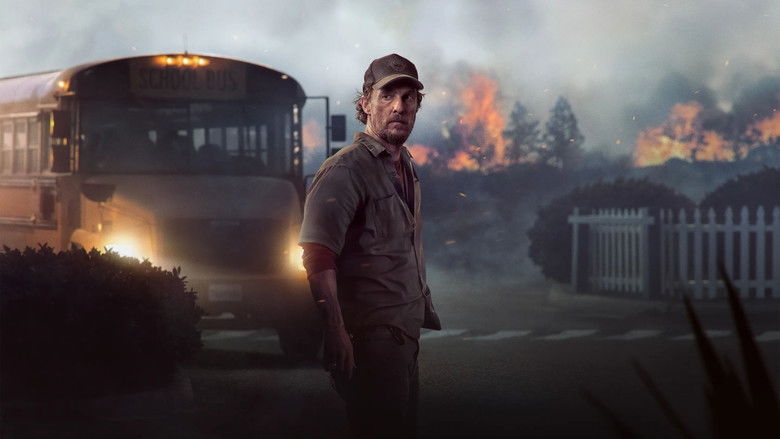
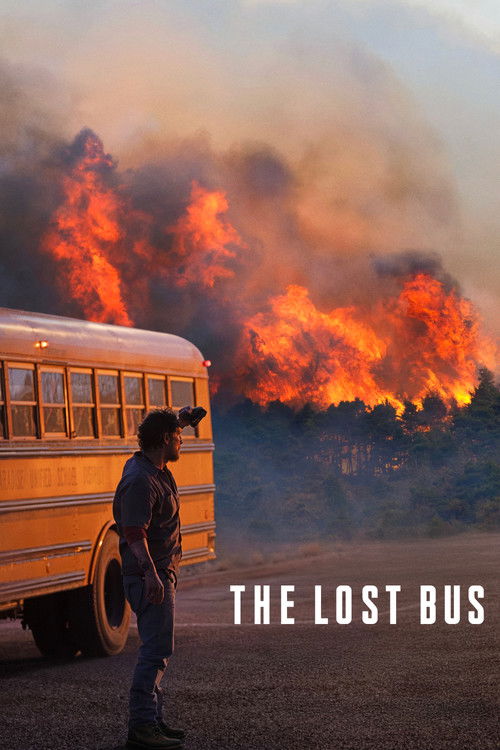
A relentless survival thriller steeped in suffocating dread, where an ordinary yellow school bus becomes a fragile sanctuary piercing a pitch-black crucible of fire and ash.
The Lost Bus

The Lost Bus

"Inspired by a true story of survival."

19 September 2025 United States of America 130 min 7.0 (812)

Director: Paul Greengrass

Cast: Matthew McConaughey, America Ferrera, Yul Vazquez, Ashlie Atkinson, Kimberli Flores

Drama Thriller Ordinary Heroism and Civic Responsibility Parental Duty, Guilt, and Familial Redemption Systemic Failure and Corporate Neglect The Brutality of Ecological Crisis
Budget: $90,000,000

Overview

Set against the morning of November 8, 2018, The Lost Bus chronicles the sudden devastation of Paradise, California, during the deadly Camp Fire. The narrative centers on Kevin McKay, a down-on-his-luck local school bus driver struggling under personal grief, mounting family tensions, and economic strain. When an errant power line failure rapidly mushrooms into an unprecedented firestorm, the town's infrastructure disintegrates, stranding elementary students whose parents are cut off by advancing walls of flame.

Stepping up when no other transportation is available, Kevin teams with Mary Ludwig, an intensely compassionate schoolteacher. Together, they take charge of Bus No. 7, loading 22 trapped schoolchildren with the goal of navigating a brief evacuation route. However, the routine pickup deteriorates into an escalating nightmare as fallen power lines, explosive fireballs, and panicked traffic bottlenecks repeatedly close off every known escape path.

Directed by Paul Greengrass, the film deploys a raw, docudrama aesthetic that thrusts the audience directly inside the smoke-choked cabin. While McKay relies on instincts and mechanical endurance behind the wheel, Ludwig fights to shield the children from toxic fumes and sheer terror, resulting in a visceral study of civic responsibility under catastrophic pressure.
Core Meaning

Director Paul Greengrass uses the Camp Fire disaster to examine everyday heroism rooted in communal duty rather than mere disaster spectacle. The core message asserts that during catastrophic societal and infrastructural collapses, salvation relies not on institutional saviors, but on ordinary, flawed citizens who step across the threshold of apathy to protect one another. By juxtaposing corporate neglect against the moral courage of working-class citizens, the film demonstrates that community solidarity is humanity's final firewall.

Thematic DNA

Ordinary Heroism and Civic Responsibility 35%
Parental Duty, Guilt, and Familial Redemption 25%
Systemic Failure and Corporate Neglect 20%
The Brutality of Ecological Crisis 20%

Ordinary Heroism and Civic Responsibility

Kevin McKay is depicted not as an action hero, but as an exhausted, flawed working-class man facing personal crises. When systemic emergency responses fail, Kevin and Mary Ludwig must improvise life-saving choices under duress, underscoring that heroism is an active moral decision rather than an absence of fear.

Parental Duty, Guilt, and Familial Redemption

Kevin's journey is shaped by guilt surrounding his fractured relationship with his sick son Shaun and his late father. Guiding 22 surrogate children through mortal peril serves as an act of personal expiation and reconciliation where paternal and protective instincts converge.

Systemic Failure and Corporate Neglect

The narrative frames the fire not merely as an inevitable natural disaster, but as an avoidable catastrophe resulting from ignored warnings, deteriorating infrastructure, and the malfeasance of private utility monopolies.

The Brutality of Ecological Crisis

The wildfire is portrayed as a kinetic monster, confronting the audience with the extreme speed, claustrophobia, and vulnerability of human life during modern megafires in an era of destabilized climate conditions.

Character Analysis

Kevin McKay

Matthew McConaughey

Archetype: Reluctant / Everyman Hero Key Trait: Unflinching calm and resourcefulness under extreme mechanical panic.

Motivation

Protecting the 22 children placed in his care and returning home to his estranged son.

Character Arc

Begins as a demoralized, alienated driver weighed down by familial guilt and economic grief, but finds emotional resilience and confronts his self-doubt by navigating the bus through mortal peril.

Mary Ludwig

America Ferrera

Archetype: Guardian / Protector Key Trait: Fierce empathy and mental resilience.

Motivation

Ensuring that none of the terrified children succumb to terror or asphyxiation.

Character Arc

Transitions from a conventional elementary schoolteacher to an emotional anchor in the face of death, fighting despair to keep the children calm and breathing.

All 5 characters and cast

Symbols & Motifs

The School Bus (Bus No. 7)

Meaning:

Represents innocence and communal preservation, acting as a fragile modern ark caught between survival and complete destruction.

Context:

Serves as the primary sanctuary for Kevin, Mary, and the 22 schoolchildren as the surrounding landscape dissolves into an apocalyptic inferno.

The Smoke and Embers

Meaning:

Visual motifs signifying creeping disorientation, asphyxiation, systemic blind spots, and moral obscurity.

Context:

Pervades the atmosphere with a red-orange glow cutting through pitch-black daytime darkness, blinding characters and cutting off visibility.

Wet Cloths and T-shirts

Meaning:

Symbolizes tactile maternal protection and human ingenuity turning ordinary fabric into a vital life-preserving barrier.

Context:

Used by Mary Ludwig, who soaks clothing and paper towels in water to cover the children's faces against lethal toxic gases inside the cabin.

The Roadblocks and Gridlock

Meaning:

Physical manifestations of modern civilization's bottlenecked breakdown and the failure of organized evacuation.

Context:

Encountered along Route 191 and the Skyway, where lines of abandoned, melting vehicles force Kevin to seek hazardous alternative routes.

Memorable Quotes

Don't talk like that.
— Kevin McKay

Context

Spoken to Mary inside the smoke-filled bus after she watches children lose consciousness and questions if slipping away is better than burning alive.

Meaning

Arrests the cabin's descent into hopelessness and reaffirms their moral commitment to endure and survive.

Listen up people...
— Fire Official / Chief

Context

Delivered during increasingly frantic command center updates as dispatchers discover primary evacuation corridors have been swallowed by fire.

Meaning

Epitomizes institutional dread and the growing panic within command structures as emergency protocols fail.

Philosophical Questions

When systemic authority fails, where does moral obligation begin and end?

Investigated through Kevin's choice to risk his life for other people's children while his own home life and family are in acute distress.

Can individual heroism compensate for corporate and institutional negligence?

Reflected in the survival of the 22 students, which provides individual redemption but leaves the negligent corporate structures that caused the catastrophe largely untouched.

How do human beings maintain dignity and sanity when confronted by existential terror?

Demonstrated through Mary Ludwig's persistent efforts to comfort, ground, and distract the children while trapped inside a suffocating, smoke-filled cabin.

Alternative Interpretations

The narrative is frequently interpreted as an allegory for modern society, with passengers isolated in a fragile vessel navigating corporate-induced environmental degradation through mutual aid. Additionally, discussions arose regarding cinematic dramatization versus historical reporting; while Lizzie Johnson's reporting confirmed McKay's real family was already safe, the film introduces a sick, stranded son to amplify dramatic stakes, which commentators viewed either as vital dramatic distillation or conventional Hollywood melodrama.

Full ending explanation

Cultural Impact

Focusing on the 2018 Camp Fire—California's deadliest wildfire, which destroyed approximately 19,000 structures and killed 85 people—the film debuted at the 2025 Toronto International Film Festival before releasing theatrically and on Apple TV+. Critics highlighted the project as a prime example of modern 'lived catastrophe cinema,' shifting away from escapist disaster tropes toward ground-level human endurance and infrastructural fragility amid worsening climate catastrophes.

Audience Reception

Critical reception praised Paul Greengrass's kinetic staging, the claustrophobic atmosphere, and the grounded acting of Matthew McConaughey and America Ferrera, alongside its seamless practical and digital effects. Conversely, outlets like RogerEbert.com and Mashable critiqued the early acts for overburdening McKay with standard melodrama tropes such as debt, divorce, and a dying dog. Despite these criticisms, audiences responded enthusiastically, resulting in an 86% critics score and a 92% audience score on Rotten Tomatoes as a gripping tribute to real-life endurance.

Interesting Facts

  • The screenplay, co-written by Paul Greengrass and Brad Ingelsby, is based on Lizzie Johnson's 2021 investigative book Paradise: One Town's Struggle to Survive an American Wildfire.
  • Jamie Lee Curtis initiated the production after hearing author Lizzie Johnson interviewed on NPR, securing rights via Comet Pictures and partnering with Blumhouse.
  • Principal photography occurred in New Mexico (Santa Fe, Garson Studios, Española, Glorieta, and Ruidoso) rather than California to avoid re-traumatizing Paradise residents and leverage local incentives.
  • The production employed more than 2,500 New Mexico locals, comprising 480 crew members and 2,100 background actors.
  • Matthew McConaughey's real son Levi portrays Kevin's son Shaun, while Matthew's mother Kay McCabe McConaughey plays Kevin's mother Sherry.
  • The film earned an Academy Award nomination for Best Visual Effects at the 98th Academy Awards for its blend of practical fire and digital blazes.
  • Director Paul Greengrass approached the film in the mold of Captain Phillips, blending factual realism with high-tension cinematic survival pacing.

Easter Eggs

A Real McConaughey Family Trio

Marks the first time three generations of the McConaughey family appear together in the same film: Matthew McConaughey as Kevin, his real mother Kay as Sherry, and his son Levi as Shaun.

Greengrass Docudrama Signatures

The claustrophobic handheld camerawork within the bus cabin mirrors Greengrass's directing techniques from United 93 and Captain Phillips, contrasting tight domestic quarters with world-ending external hazards.

Frequently Asked Questions

Explore More About This Movie

Dive deeper into specific aspects of the movie with our detailed analysis pages

Comments (0)

Leave a comment

No comments yet. Be the first to share your thoughts!

Similar Movies