Skip to content
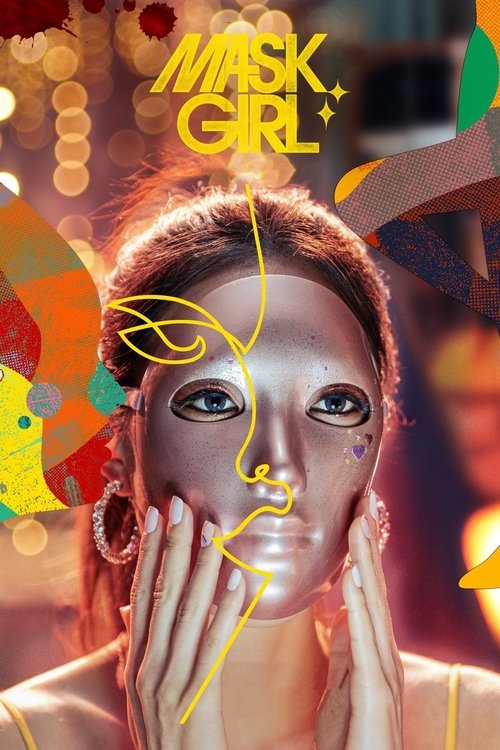
Mask Girl
Drenched in neon-lit noir and suffocating social alienation, Mask Girl is a harrowing descent into identity obsession, where vanity and vengeance collide like shattered mirror shards beneath the harsh glare of a merciless digital spotlight.
Mask Girl

Mask Girl

마스크걸

"3 names, 3 lives, 3 murders."

18 August 2023 — 18 August 2023 South Korea 1 season 7 episode Ended 7.4 (192)

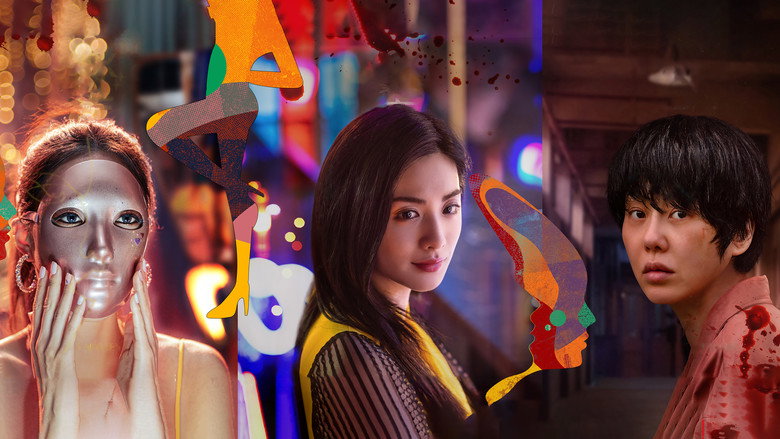
Cast: Go Hyun-jung, Nana, Lee Han-byeol, Ahn Jae-hong, Yeom Hye-ran

Drama Crime Comedy Mystery Lookism and the Tyranny of the Male Gaze Dual Identity and Digital Alienation Distorted Motherhood and Generational Trauma Obsessive Revenge and Moral Degradation

Overview

Mask Girl is a South Korean black comedy crime-thriller miniseries written and directed by Kim Yong-hoon, adapted from the popular Naver webtoon by Mae-mi and Hee-se. The narrative centers on Kim Mo-mi, an ordinary office clerk burdened by a lifelong inferiority complex regarding her facial appearance. Yearning for the stage and the adoration denied to her in daily life, she adopts an alter ego by night: a cam-girl known as Mask Girl, wearing a stylized mask and wig to stream seductive dance routines to thousands of eager online fans.

As Mo-mi's dual life becomes tangled with the obsessions of voyeuristic coworkers and toxic online spectators, a catastrophic real-world confrontation turns lethal. The story rapidly spirals out of the domestic cyberspace into an expansive, decade-spanning odyssey of plastic surgery, hidden identities, gruesome violence, and maternal vengeance. The narrative unfolds nonlinearly, shifting perspectives across multiple interconnected characters whose lives are irrevocably destroyed by secrets and societal neglect.

Over the course of its seven tightly structured chapters, Mask Girl transforms from a razor-sharp satire of modern internet culture and corporate misogyny into a bleak multi-generational crime saga. It explores how the pursuit of external validation warps into a cycle of destruction that haunts not only Mo-mi herself, but everyone orbiting her tragic world.

Core Meaning

The central message of Mask Girl is a scathing condemnation of "lookism" (외모지상주의) and the predatory nature of modern gaze culture, showing how society's reduction of human worth to cosmetic perfection produces grotesque systemic monsters. The creators argue that when individuals are denied basic dignity, empathy, and love due to superficial beauty standards, their suppressed desires will metastasize into violence, delusion, and self-annihilation. Furthermore, the show demonstrates that changing one's external face or donning a disguise does not erase the trauma inflicted by a cruel world; authentic redemption requires confronting truth and breaking the generational cycle of shame passed from mother to daughter.

Thematic DNA

Lookism and the Tyranny of the Male Gaze 30%
Dual Identity and Digital Alienation 25%
Distorted Motherhood and Generational Trauma 25%
Obsessive Revenge and Moral Degradation 20%

Lookism and the Tyranny of the Male Gaze

The driving engine of the series. Mo-mi is ostracized from childhood for failing standard beauty aesthetics despite her musical talent. The male characters—from creepy cam fans like "Handsome Monk" to colleagues like Ju Oh-nam—either exploit, judge, or objectify women based entirely on their physical exterior.

Dual Identity and Digital Alienation

Explores how anonymity and digital personas become refuge and prison. In the cyber landscape, Mo-mi receives adoration as Mask Girl, while Ju Oh-nam retreats into otaku culture to cope with social rejection. In the physical world, surgical alteration replaces the rubber mask with a reconstructed face, proving that identity cannot easily be escaped.

Distorted Motherhood and Generational Trauma

Three maternal relationships anchor the emotional tragedy: Mo-mi’s emotionally cold mother Sim Young-hee, Kim Kyung-ja’s suffocating and delusional maternal devotion to Ju Oh-nam, and Mo-mi’s desperate, sacrificial love for her daughter Mi-mo.

Obsessive Revenge and Moral Degradation

Kim Kyung-ja's transformation into a bloodthirsty vigilante shows how unchecked grief and righteous fury dehumanize the avenger, blinding her to the truth about her son and leading to self-destruction.

Character Analysis

Kim Mo-mi

Lee Han-byeol (Phase 1), Nana (Phase 2), Go Hyun-jung (Phase 3)

Archetype: Tragic Antihero / Scapegoat Key Trait: Creative resilience, suppressed rage

Motivation

Craves adoration/love; evolves into survival and maternal sacrifice.

Character Arc

Evolves from an insecure office cam-girl into a glamorous nightclub dancer on the run, and ultimately into an austere, stoic prisoner fighting to protect her daughter.

Ju Oh-nam

Ahn Jae-hong

Archetype: Creep / Tragic Antagonist / Parasite Key Trait: Delusional entitlement, voyeurism

Motivation

Desires companionship and possession of Mask Girl.

Character Arc

Trapped in profound social isolation and pornography addiction; deduces Mask Girl's identity and crosses moral boundaries into stalking, assault, and complicity.

All 5 characters and cast

Symbols & Motifs

The Mask

Meaning:

Symbolizes both liberation and concealment. It allows Mo-mi to express her artistic passion free from prejudice, but simultaneously turns her into an anonymous object of fetishization.

Context:

Worn by Mo-mi during her nightly online cam-girl dance broadcasts to conceal her natural face while soaking in adoration.

Mirrors and Reflections

Meaning:

Represent fractured self-perception, dysphoria, and the constant agony of being judged by one's own reflection.

Context:

Ubiquitous throughout all episodes—appearing in dressing rooms, office bathrooms, vanity mirrors, and prison windows.

The Scalpel / Plastic Surgery

Meaning:

Represents South Korea's societal obsession with cosmetic alteration. It functions not as a path to authentic happiness, but as a Faustian bargain where physical transformation merely alters the flavor of one's suffering.

Context:

Used by Mo-mi to completely transform her face after the murder of Ju Oh-nam, and later undergone by Kim Kyung-ja to disguise her identity.

The Dance / Stage Light

Meaning:

The ultimate motif of Mo-mi's pure childhood dream. Dance begins as innocent joy, is corrupted into sexualized live streams, evolves into seedy cabaret performances, and returns at the end as a poignant reminder of stolen innocence.

Context:

Spans Mo-mi's entire life from childhood talent shows, internet live streams, nightclub stages, to the final archival videotape watched by Mi-mo.

The Bible and Cross

Meaning:

Illustrates the perversion of religious faith into self-righteous vengeance, masking murderous fanaticism as divine retribution.

Context:

Carried and wielded by Kim Kyung-ja throughout her relentless, decades-long hunt for Kim Mo-mi.

Memorable Quotes

저는 사람들에게 사랑받는 사람이 되고 싶었어요.
— Kim Mo-mi (Lee Han-byeol)

Context

Spoken in Episode 1 during the setup of Mo-mi's life and her yearning for affection.

Meaning

The opening thesis of the entire series, expressing the root tragedy that drove an innocent girl into the masked digital underbelly.

아이시떼루!
— Ju Oh-nam (Ahn Jae-hong)

Context

Spoken in Episode 2 during Oh-nam’s intense, parasocial, delusional confession to Mo-mi.

Meaning

Encapsulates his distorted understanding of intimacy, parasocial obsession, and pop-culture escapism.

All 4 quotes

Episode Highlights

Kim Mo-mi

S1E1

Establishes Mo-mi’s dual life, the harsh reality of lookism in South Korean corporate offices, and her encounter with internet troll "Handsome Monk," which ends in accidental manslaughter.

Significance:

Sets the irreversible crime narrative in motion.

Ju Oh-nam

S1E2

Reframes the initial events through the disturbing perspective of Ju Oh-nam, dissecting male entitlement, otaku isolation, and parasocial obsession. Culminates in Oh-nam helping Mo-mi dispose of the body, then attempting to assault her, leading to his demise.

Significance:

Deepens the psychological complexity of the inciting incident and eliminates Oh-nam, setting up the revenge narrative.

Kim Kyung-ja

S1E3

Introduces Kim Kyung-ja’s perspective. Depicts her maternal grief turning into weaponized rage as she masters modern digital technology and tracks down clues regarding her son's disappearance.

Significance:

Establishes the primary antagonistic force and thematic counterpart to Mo-mi.

Kim Choon-ae

S1E4

Introduces Choon-ae, exploring toxic romance, male idol exploitation (Choi Bu-yong), and female solidarity. Mo-mi and Choon-ae unite against their abusers and Kyung-ja, leading to a bloodbath where Choon-ae sacrifices herself.

Significance:

Transforms Mo-mi's arc from isolated survival to shared sisterhood, ending Phase 2 of her life.

Kim Mo-mi

S1E6

Re-introduces Kim Mo-mi in middle age as Inmate 1047 in a brutal women's prison. When she receives an anonymous letter threatening her estranged daughter Mi-mo, Mo-mi executes a perilous prison breakout.

Significance:

Shifts Mo-mi's motivation entirely toward maternal preservation and sets up the final conflict.

Mo-mi and Mi-mo

S1E7

The climax and finale. Mo-mi faces off against Kim Kyung-ja in a house of horrors to save her daughter Mi-mo, concluding the decades-long generational blood feud.

Significance:

Brings closure to the multi-generational trauma and restores Mo-mi's lost innocence in the eyes of her daughter.

Philosophical Questions

Is identity determined by external form or internal consciousness?

The series asks whether plastic surgery can truly offer a "new life" or if identity is inescapably bound to social perception and memory.

How does voyeurism erode basic human consent?

Through cam-girl culture and internet vigilantism, the show investigates whether digital consumerism inevitably dehumanizes its subjects into consumable commodities.

Can moral monstrosity be born purely out of self-defense?

The series explores whether Mo-mi’s descent into violence was a series of willful crimes or the inevitable byproduct of an aggressive, predatory environment.

Alternative Interpretations

The Paternal Ambiguity: Viewers and critics debate whether Ju Oh-nam is truly Mi-mo’s biological father. While the timeline and Oh-nam’s sexual assault heavily imply his paternity, Mo-mi never confirms it, ensuring that Mi-mo remains conceptually untainted by Oh-nam's legacy in her mother's eyes.

Full ending explanation

Cultural Impact

Mask Girl debuted during heightened global discussions surrounding South Korea’s intense cosmetic surgery industry, toxic internet culture (such as BJ/livestream tipping culture on platforms like AfreecaTV), and gender-based violence.

The show was critically acclaimed for its sharp social commentary and swept major Korean honors at the 60th Baeksang Arts Awards and 3rd Blue Dragon Series Awards, where Ahn Jae-hong and Yeom Hye-ran won Best Supporting Actor and Best Supporting Actress respectively. Its release reinforced Netflix Korea’s shift toward hard-edged, auteur-driven dark thrillers, leaving a lasting benchmark for multi-actor character adaptations in modern streaming television.

Audience Reception

Mask Girl was praised internationally and domestically for its brisk pacing, stylistic transitions, anthology-like episodic structure, and tour-de-force acting—specifically highlighting Ahn Jae-hong's unsettling immersion and Yeom Hye-ran’s emotional ferocity. The three-act casting choice for Kim Mo-mi was widely celebrated as an inventive, triumphant storytelling vehicle.

However, some viewers and critics found the show's sudden genre pivot in the second half—shifting from internet satire into a grim, blood-soaked prison revenge thriller—jarring, noting that it discarded some of the nuanced workplace satire established in early episodes.

Interesting Facts

  • Director Kim Yong-hoon made the daring creative choice to cast three different actors (Lee Han-byeol, Nana, and Go Hyun-jung) for Kim Mo-mi across her life stages (referred to on set as Mo-mi A, B, and C) rather than using heavy prosthetic makeup.
  • Rookie actress Lee Han-byeol landed the role of the original Kim Mo-mi after beating out roughly 1,000 applicants in an open audition, making Mask Girl her professional acting debut.
  • Ahn Jae-hong underwent extensive daily special-effects makeup, wearing a thinning-hair bald wig and skin appliances to realistically embody the webtoon likeness of Ju Oh-nam.
  • While the lead actresses performed dance scenes, professional Korean model and dancer ZiZian also served as a body double for complex dance choreography sequences.
  • The dance choreography performed by Mask Girl was directed by a resident choreographer from YG Entertainment.
  • In the original webtoon, Kim Choon-ae and Mo-mi harbor mutual distrust and animosity; director Kim Yong-hoon deliberately rewrote them to share a deep, empathetic sisterhood.

Easter Eggs

Cameo by Lee Jun-young

K-pop idol and actor Lee Jun-young makes a cameo appearance as the parasitic ex-idol Choi Bu-yong, satirizing the dark underbelly of Korean idol trainee systems.

Veteran Moon Sook as the Matriarch

Veteran actress Moon Sook—frequently dubbed the "Audrey Hepburn of South Korea"—plays Mo-mi’s hardened mother, Sim Young-hee, deliberately playing against her traditional glamorous image.

Nod to 2000s K-Pop ("Rhythm in the Dance")

Mask Girl's signature streaming dance routine uses Kim Wan-sun’s 1987 hit "Rhythm in the Dance" (리듬 속의 그 춤을), anchoring Mo-mi’s performance in retro Korean pop nostalgia.

The Custom-Sculpted Mask

The prop mask was molded to match the facial structure of Lee Han-byeol, but deliberately sculpted with idealized cosmetic features resembling Nana's visage, hinting at her eventual surgical transformation.

Frequently Asked Questions

Explore More About This Movie

Dive deeper into specific aspects of the movie with our detailed analysis pages

Comments (0)

Leave a comment

No comments yet. Be the first to share your thoughts!

Similar Movies