Skip to content
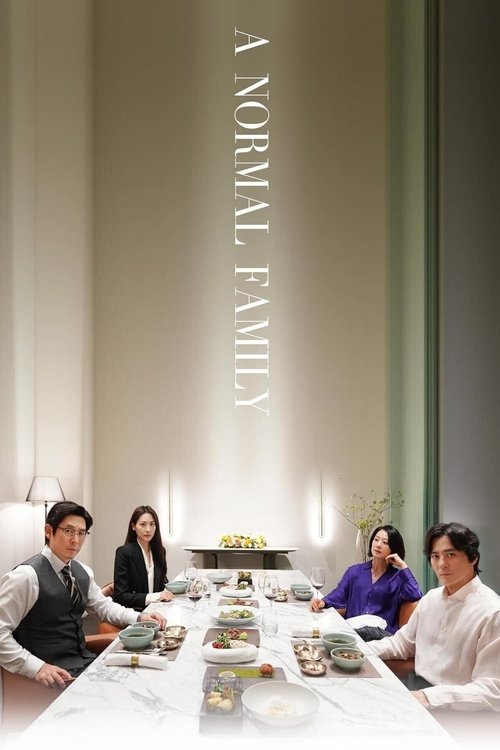
A Normal Family
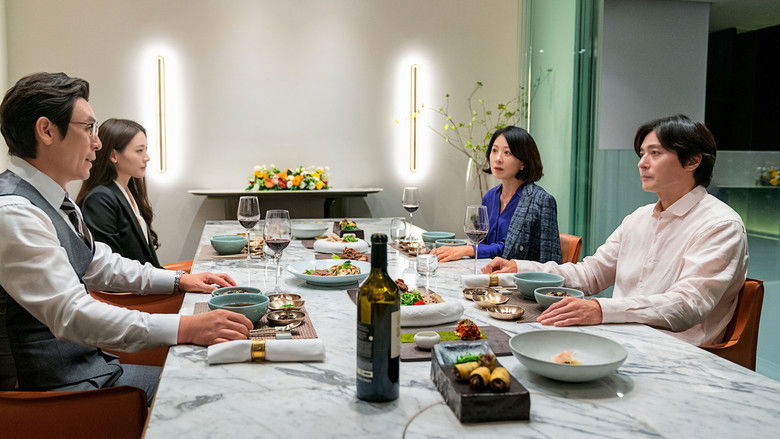
A cold, glass-walled moral thriller where polished dinner plates reflect rotting consciences, and a family's veneer of civility cracks one course at a time until only instinct remains.
A Normal Family
A Normal Family

보통의 가족

"My child has committed a murder. What choice do I have?"

16 October 2024 South Korea 116 min 6.9 (153)

Director: Hur Jin-ho

Cast: Sul Kyung-gu, Jang Dong-gun, Kim Hee-ae, Claudia Kim, Hong Ye-ji

Drama Thriller Parental love versus moral duty Hypocrisy and the fragility of principles Class, wealth and privilege Appearances and the unknowability of one's children Family hierarchy and patriarchy in Korean society
Box Office: $4,399,821

A Normal Family — Ending Explained

⚠️ Spoiler Analysis

The crime and the positions: CCTV footage shows that Hye-yoon and Si-ho beat a homeless man, leaving him critically injured. He later dies. At first the expected sides form. Jae-gyu, the ethical doctor, leans toward turning the children in, while Jae-wan, the lawyer, looks at it as a legal problem to manage.

The reversal: As the dinners continue, the positions flip. Jae-gyu sees his son's future collapsing and becomes desperate to protect him, and Yeon-kyung is just as determined. Jae-wan grows disgusted by his daughter's lack of remorse and decides the children must face justice. The cynic becomes the conscience, and the idealist gives up his principles.

The climax: In the last minutes, which NME called the film's most violent and terrifying moments, Jae-gyu runs his brother down with a car to stop him from reporting the crime. It deliberately echoes the road-rage case from the opening, which the "good" brother had once condemned. The ending is abrupt and, in IndieWire's words, "darkly poetic and anything but normal."

Hidden meanings in hindsight: Several early details turn out to be warnings: the grandmother's comment about her son's violent streak, Jae-gyu's self-righteous lectures, and Yeon-kyung's open contempt for those below her in the family. The respectable family was never normal. Its wealth and manners were hiding violence the whole time.

Alternative Interpretations

Reading 1: a bleak view of human nature. NME read the ending as fulfilling Hur's and Koch's pessimism about humanity. In this view, everyone's civility is thin, and violence is always waiting underneath.

Reading 2: nature versus nurture. Asian Movie Pulse noted that the film raises the nature-versus-nurture question. The grandmother's warning about her son's violent streak suggests the children's cruelty may be inherited rather than learned, which would make the "good" brother's line just as tainted as the bad one.

Reading 3: social critique, not a family tragedy. In this reading, the children are, as one critic put it, more or less vessels for the parents' psychology. The real subject is a class that has lost touch with the poor. The children's contempt for a homeless man reflects values the adults themselves hold.

Reading 4: the moral swap. Some viewers read the brothers' reversal as the film's thesis: cynics who know the law may be more honest about guilt than idealists whose virtue is mostly self-image.

Explore More About This Movie

Dive deeper into specific aspects of the movie with our detailed analysis pages

Similar Movies