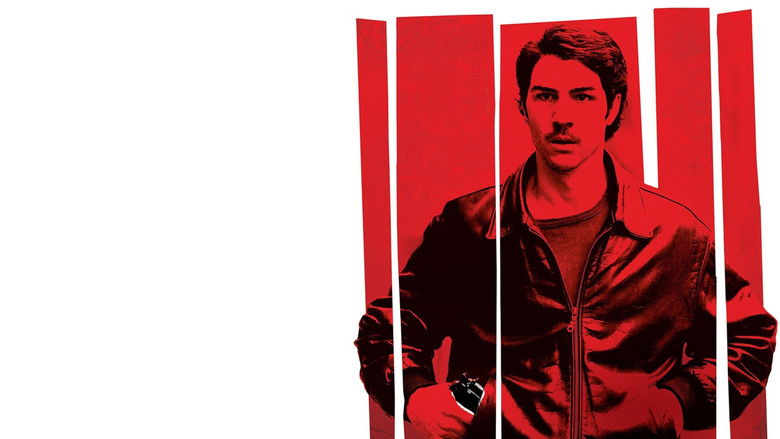
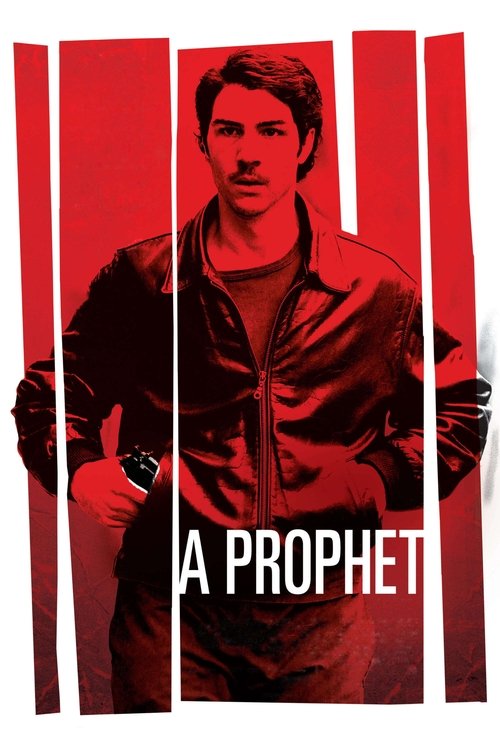
Full spoilers. Malik El Djebena, nineteen and illiterate, enters prison for six years after attacking police officers. The Corsican bloc that effectively runs the facility, led by César Luciani, gives him an ultimatum: murder Reyeb, a Muslim inmate who has informed, or be killed himself. Malik is taught to conceal a razor blade in his mouth, and the killing — clumsy, prolonged, appalling — is the act that buys him his life and forecloses it at the same time.
The ghost. Reyeb returns to Malik's cell, throat marked with razor cuts, clothes smouldering with blue flame. Crucially he is not a vengeful spirit: he keeps Malik company, and he supplies uncanny awareness of the routines of fellow inmates and foresight into coming events. The film never resolves whether this is a psyche buckling or an actual gift, and the title depends on that refusal.
The long education. Protected by the Corsicans and despised by them — an Arab kept as a dog, a coffee-maker, an errand boy — Malik uses the position exactly as a student would. He learns to read in prison classes. He teaches himself Corsican in secret, so that the conversations conducted freely in front of him become his private intelligence archive. He befriends Ryad, who is released and becomes his partner outside, and he begins converting authorised prison leave into the infrastructure of an independent operation, dealing with figures including Jordi the Gypsy while still nominally running César's errands.
The reversal. As the Corsican bloc empties out through releases and transfers, César becomes isolated and increasingly dependent on the one man he never considered a person. Malik's revelation that he has understood Corsican all along is the hinge of the film: the servant has been the best-informed man in the building for years. From there the power transfer is less a coup than a settling of accounts, with César reduced to a figure clinging to a kingdom that has already changed hands.
The deer and the prophecy. On the outside, Malik's premonition of a deer on the road — the animal flying through the air on impact — is the moment the supernatural becomes political currency. Lattrache, who is bitter toward the Corsicans over Reyeb's murder and at one point holds Malik at gunpoint, is impressed enough to call him a prophet and to agree to do business with him rather than with Luciani — even after Malik admits that he was the one who killed Reyeb. The confession costs him nothing; that is the darkest beat in the film. Reyeb's death, the original sin, has become an asset.
The ending. Malik completes his sentence and walks out. Ryad's family walks with him, and the final shot pulls back to reveal a convoy of black cars falling in behind. The meaning that only lands in retrospect: everything the film presented as growth — literacy, languages, faith, discipline, foresight — was an apprenticeship. Malik leaves better educated, spiritually awakened and full of opportunity, and the institution's achievement was to turn a petty criminal into a drug kingpin. The film's closing position is not moral judgement of Malik but an acknowledgement of a system that manufactures smarter, better criminals instead of rehabilitated citizens.