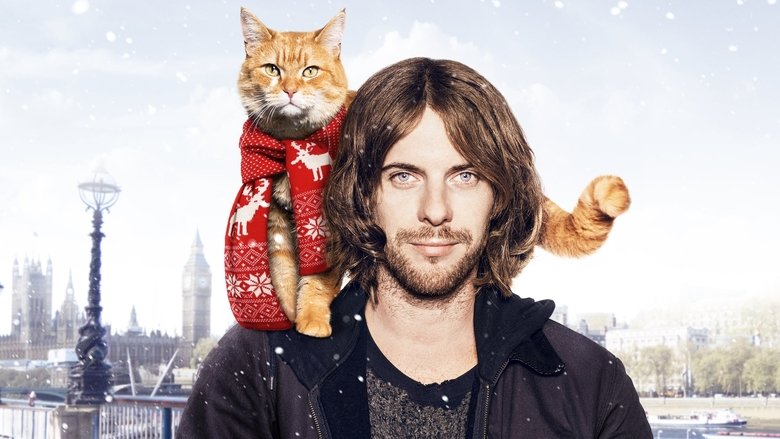
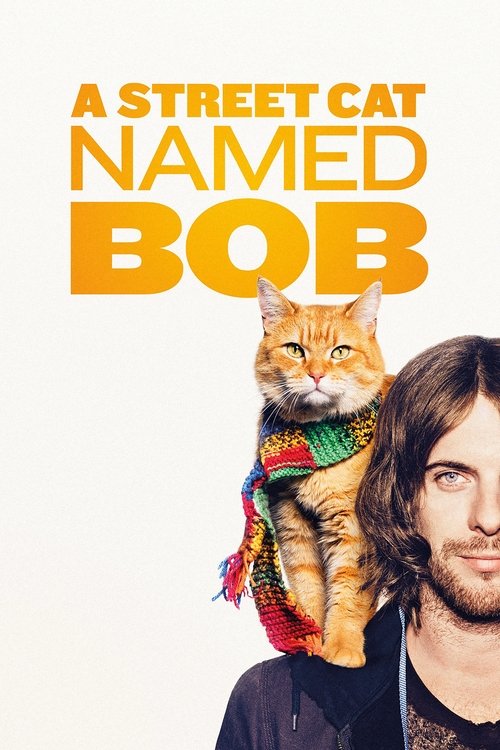
A Street Cat Named Bob
A gritty, heartwarming drama where a stray ginger cat becomes a vibrant red scarf of hope, guiding a lost soul through the grey streets of London toward redemption.
A Street Cat Named Bob

A Street Cat Named Bob

"Sometimes it takes nine lives to save one"

04 November 2016 United Kingdom 103 min ⭐ 7.9 (1,500)
Director: Roger Spottiswoode
Cast: Luke Treadaway, Ruta Gedmintas, Joanne Froggatt, Anthony Stewart Head, Caroline Goodall
Drama Family
Redemption and Second Chances The Healing Power of Companionship Addiction and Recovery Social Invisibility and Homelessness
Budget: $8,000,000
Box Office: $17,900,000

Overview

"A Street Cat Named Bob" is the true story of James Bowen, a homeless man and recovering heroin addict trying to get by on the streets of London. His life is a monotonous cycle of busking for spare change and attending methadone appointments with his supportive but weary counselor, Val. His existence is one of invisibility and despair, alienated from his family and haunted by his past.

This bleak routine is irrevocably changed when he discovers a stray ginger cat in the kitchen of his sheltered accommodation. After nursing the injured cat back to health, whom he names Bob, James tries to set him free, but the fiercely loyal feline has other plans. Bob begins following James everywhere, perching on his shoulder as he busks in Covent Garden. This unlikely pairing quickly draws the attention of the public, transforming James from an unseen outcast into a local curiosity and giving him a newfound purpose and a reason to fight for a better life.

Core Meaning

The core meaning of "A Street Cat Named Bob" is a powerful testament to the transformative power of companionship and second chances. The director, Roger Spottiswoode, conveys the message that redemption can come from the most unexpected places. Bob the cat is not just a pet; he is a catalyst for change, providing James with a sense of responsibility and unconditional love that he had been missing. The film suggests that having something to care for outside of oneself is a crucial step in overcoming personal demons, be it addiction, homelessness, or profound loneliness. It highlights how a simple, profound bond between a human and an animal can restore a person's dignity, reconnect them to society, and provide the motivation needed to heal past traumas and build a future.

Thematic DNA

Redemption and Second Chances 35%
The Healing Power of Companionship 30%
Addiction and Recovery 20%
Social Invisibility and Homelessness 15%

Redemption and Second Chances

The film's central theme is the possibility of redemption. James is at rock bottom, a homeless addict ostracized by society and his family. His support worker, Val, secures him a 'last chance' council flat. However, it's the arrival of Bob that truly provides the opportunity for a new beginning. Caring for Bob gives James a reason to stay clean, work consistently, and ultimately, to choose life over addiction. The narrative reinforces the idea that everyone deserves a second chance, and that these chances are there for the taking, even if they appear in the form of a stray cat.

The Healing Power of Companionship

Loneliness and isolation are depicted as key aspects of James's life on the streets. People ignore him, treating him as a 'non-person'. Bob's companionship breaks through this isolation. The cat's constant, non-judgmental presence offers James unconditional love and loyalty. This human-animal bond is shown to be profoundly healing, giving James a sense of purpose and slowly restoring his ability to connect with others, including his neighbor Betty and eventually, his estranged father. Bob literally and figuratively saves him.

Addiction and Recovery

The film offers a raw and honest, yet not overly graphic, portrayal of drug addiction and the arduous process of recovery. It shows the daily grind of the methadone program, the constant temptation of relapse, and the physical and emotional agony of withdrawal. The death of James's friend Baz from an overdose underscores the life-and-death stakes of his struggle. James's decision to go 'cold turkey' to provide a stable life for Bob is the climax of this struggle, showing that recovery is not just a personal battle but one that is often won for the sake of another.

Social Invisibility and Homelessness

The film shines a light on the issue of homelessness and the way society often ignores its most vulnerable members. Before Bob, James is invisible; people walk past him without a glance. With Bob on his shoulder, he becomes a spectacle, someone people want to engage with. This contrast highlights a cynical truth: society is often more responsive to the novelty of an animal than the humanity of a person in need. The film critiques this social indifference while also showing the positive impact of communities like The Big Issue, which provides opportunities for the homeless to earn a living with dignity.

Character Analysis

James Bowen

Luke Treadaway

Archetype: The Outcast Hero
Key Trait: Resilient

Motivation

Initially, his motivation is survival and feeding his addiction. After meeting Bob, his primary motivation shifts to providing for and protecting his new companion. Bob's well-being becomes the driving force behind his decision to get clean and build a stable life, as he realizes he cannot be a proper carer while still being an addict.

Character Arc

James begins as a broken, homeless heroin addict, invisible to the world and estranged from his family. His life is defined by a desperate, selfish struggle for survival. The arrival of Bob forces him to take on responsibility for another being, which sparks a profound transformation. He learns to care, to connect, and to fight for a better future. By the end of the film, he has successfully overcome his addiction, reconciled with his father, and found success and purpose as an author, all thanks to the companionship of his cat.

Bob

Bob the Cat

Archetype: The Mentor / The Catalyst
Key Trait: Loyal

Motivation

Bob's motivation is simple and pure: companionship. Having found a kind and caring human in James, his motivation is to stay by his side. His actions—following James onto the bus, sitting patiently while he busks, and comforting him during withdrawal—all stem from a deep, instinctual bond.

Character Arc

Bob enters the story as an injured stray, seemingly in need of rescue. However, he quickly reveals his extraordinary intelligence, loyalty, and calming nature. He doesn't change in personality but his role evolves from a dependent pet to James's steadfast partner and guardian angel. He provides the emotional support and purpose James needs to heal. He stars as himself in the majority of the film's scenes.

Betty

Ruta Gedmintas

Archetype: The Ally / Love Interest
Key Trait: Compassionate but Guarded

Motivation

Betty is motivated by her love for animals and a compassionate nature, though it is guarded by past trauma. She wants to help Bob and is drawn to James's kindness towards the cat, but is also motivated by a need for self-preservation, which causes her to pull away when his addiction becomes apparent.

Character Arc

Betty is James's quirky, animal-loving neighbor. Initially, she is a friendly face who helps James with Bob, naming him and directing James to a charity vet. A romance blossoms between them, but it is challenged by her deep-seated aversion to drug addicts, stemming from the trauma of her brother's death. Her arc involves learning to see past James's addiction to the person he is. Though their romance doesn't last, they part as friends, and she is seen proudly attending his book launch, showing her support for his transformation.

Val

Joanne Froggatt

Archetype: The Mentor
Key Trait: Supportive

Motivation

Val is motivated by a professional and personal desire to help people overcome addiction. She believes James has the capacity to change and is driven to provide him with the opportunities and support he needs to succeed, acting as his official link to a life of recovery.

Character Arc

Val is James's drug rehabilitation counselor and a key figure in his recovery. She is tough and has heard every excuse, but she sees a spark of potential in James and fights to get him a flat, giving him a crucial first step off the streets. She remains a consistent, grounding presence, guiding him through the methadone program. Her faith in him is ultimately rewarded as she witnesses his complete turnaround.

Symbols & Motifs

Bob the Cat

Meaning:

Bob is the central symbol of the film, representing hope, unconditional love, and the possibility of a second chance. He is a mirror to James; both are strays, wounded and alone. By saving Bob, James begins to save himself. Bob's steadfast loyalty and calming presence symbolize the stability and purpose that James has been desperately seeking.

Context:

Bob is a constant presence throughout the film, from their first meeting in James's flat to riding on his shoulder while busking and staying by his side during his painful methadone withdrawal. His refusal to leave James signifies a profound, life-altering connection.

The Guitar

Meaning:

James's guitar symbolizes his voice and his struggle for survival. It is his primary means of earning a living, but his music is initially mediocre and ignored, mirroring his own feelings of worthlessness. As his life improves with Bob, his music and performance become a source of connection and joy, drawing crowds and ultimately leading to his discovery.

Context:

The guitar is present in all of James's busking scenes. Initially, it's just a tool for begging. Later, when Bob sits in the open guitar case, it becomes a stage for their unique partnership, turning his once-ignored performances into a celebrated attraction.

Bob's Scarves

Meaning:

The colorful scarves that Bob wears symbolize the newfound color and vibrancy he brings into James's grey, monotonous life. They make Bob—and by extension, James—more visible and approachable. The scarves represent care, identity, and the special status Bob holds, transforming him from a simple stray into a beloved personality.

Context:

Betty gifts Bob his first knitted scarf. He is seen wearing various colorful scarves throughout his public appearances with James, making him instantly recognizable and a focal point of public affection. This simple accessory helps to brand their unique partnership.

Memorable Quotes

Everyone gets a second chance, but not everyone manages to take them.

— James Bowen

Context:

This is the opening line of James's speech at the launch event for his book, "A Street Cat Named Bob". He is addressing the crowd, including his father and Betty, reflecting on his incredible journey from the streets to becoming a published author.

Meaning:

This quote, which opens James's speech at his book launch, encapsulates the film's central theme. It acknowledges that opportunities for change are available, but seizing them requires courage, support, and a reason to fight—which for James, was Bob.

I don't see an animal, this is my co-pilot.

— James Bowen

Context:

James says this to a DMV worker who tells him he cannot have an animal in his photo for an official ID card. It's a lighthearted moment that perfectly illustrates their inseparable partnership.

Meaning:

This witty line demonstrates the depth of James's bond with Bob. He doesn't see Bob as just a pet, but as an equal partner in his life and journey. It highlights the shift in his perspective and the profound respect he has for the cat who saved him.

Living on the streets of London strips away your dignity, your identity − your everything, really. Worst of all, it strips away people's opinion of you.

— James Bowen

Context:

This is part of James's narration, reflecting on his life before Bob. It sets the stage for understanding just how profound Bob's impact was in helping him feel human again.

Meaning:

This quote poignantly describes the dehumanizing experience of homelessness. It speaks to the theme of social invisibility and the psychological toll of being ignored and judged by society. Bob's presence helps James reclaim his identity and be seen as a person again.

I'm ready. I've got Bob. He'll look after me.

— James Bowen

Context:

James says this to Val, his support worker, as he commits to getting completely clean. It's a declaration of his determination and his faith in the healing power of his friendship with Bob.

Meaning:

This line marks a turning point for James. He says it as he's about to begin the grueling process of methadone withdrawal. It shows that his motivation is no longer just for himself, but rooted in his responsibility and connection to Bob. He draws strength from their bond, believing the cat will give him the support he needs to succeed.

Philosophical Questions

What is the nature of purpose and can it be found in responsibility for another being?

The film explores this question through James's transformation. Before Bob, his life is purposeless, driven only by the next fix or the next meal. The responsibility of caring for Bob—feeding him, taking him to the vet, ensuring his safety—gives James a reason to get up in the morning. It suggests that purpose is not always a grand, internal revelation but can be a simple, external commitment. By being accountable to another life, James finds accountability for his own.

Does society value animal life over human life in certain contexts?

The film implicitly raises this question by contrasting the public's reaction to James before and after Bob. As a lone homeless man, he is invisible and ignored. With Bob, he becomes an attraction, showered with attention and money. This suggests a societal bias where the charm of an animal can overshadow the plight of a human being. The film forces the audience to consider why we are often more moved to compassion by a cute animal than by a fellow human in distress.

What constitutes a 'family'?

James is estranged from his biological family, who see him as a lost cause. The film redefines the concept of family through the bond between James and Bob. Their relationship is one of mutual support, unconditional love, and shared destiny. Bob becomes James's 'co-pilot' and son-like figure. This challenges the traditional notion of family, suggesting that the deepest and most meaningful connections can be formed in the most unconventional of circumstances, even between different species.

Alternative Interpretations

While the film is presented as a straightforward, true-life story, it can be interpreted through a more psychological lens. One could view Bob not just as a cat, but as an external manifestation of James's own will to live. Bob's arrival coincides with James reaching his absolute lowest point; the cat's needs force James to develop the discipline, responsibility, and self-worth he couldn't find on his own. In this reading, caring for Bob is a form of self-care, a way for James to project his own need for nurturing onto another creature, thereby allowing him to heal himself indirectly.

Another interpretation could focus on the story as a modern fable about the transactional nature of compassion in contemporary society. James, the human in distress, is largely ignored. It is only when he is paired with a charismatic animal that he becomes 'worthy' of public attention and kindness. This reading suggests a more cynical view of the story, framing it as a commentary on how society often requires a sentimental or novel 'hook'—like a cute cat—to engage with difficult social issues like homelessness and addiction. Bob becomes the currency through which James can buy back his place in society.

Cultural Impact

"A Street Cat Named Bob" had a significant cultural impact, primarily by bringing mainstream attention to the interconnected issues of homelessness, addiction, and mental health through an accessible, heartwarming lens. Based on the international bestselling book, the film amplified a true story that had already touched millions, further cementing James and Bob as beloved figures. The story's success helped to humanize the homeless, challenging the stigma and anonymity often faced by those living on the streets. By showing that audiences responded more to a man with a cat, the film subtly critiqued social apathy.

The film was well-received by critics and audiences for its sincerity and uplifting message, winning Best British Film at the UK National Film Awards in 2017. It became a 'feel-good' movie with surprising depth, balancing its charm with a gritty, realistic depiction of the hardships of recovery. The story of James and Bob became a global phenomenon, leading to several follow-up books and a sequel film, "A Gift from Bob". Most importantly, James Bowen has used his platform to support charities for homelessness and animal welfare, turning his personal story of redemption into a vehicle for real-world advocacy.

Audience Reception

Audience reception for "A Street Cat Named Bob" was overwhelmingly positive. Viewers praised it as a heartwarming, uplifting, and inspirational film that faithfully adapted the beloved book. Many were deeply moved by the true story of redemption and the powerful bond between James and Bob. Luke Treadaway's performance as James was frequently highlighted for its authenticity and emotional depth, convincingly portraying the struggles of addiction without being overly sentimental. The fact that the real Bob the cat starred as himself was a huge point of praise, adding a layer of charm and realism that audiences adored. The main points of criticism, though minor, were directed at a perceived formulaic narrative structure and a somewhat underdeveloped romantic subplot between James and Betty, which some felt was unnecessary and distracted from the core relationship between man and cat. Overall, audiences embraced the film as a feel-good story with a powerful message of hope, kindness, and second chances.

Interesting Facts

  • The real Bob the cat played himself for most of his scenes in the film. While other trained cats were on standby for more complex actions like jumping on buses, the director found the real Bob was so calm and 'zen' around crowds that he was used extensively.
  • The real James Bowen makes a cameo appearance towards the end of the film. He is in the queue at the book signing, where he asks the fictional James (Luke Treadaway) to sign his copy and remarks, 'Felt like I lived every moment.'
  • The title of the book and film, "A Street Cat Named Bob", is a playful homage to the famous play and film "A Streetcar Named Desire".
  • Actor Luke Treadaway spent time with the real James Bowen to prepare for the role, playing guitar and talking for hours to understand his experiences with addiction and homelessness.
  • A Christmas-themed sequel, "A Gift from Bob", was released in 2020. Sadly, it was released posthumously, as the real Bob the cat passed away in June 2020 at the age of 14.
  • To create Bob's point-of-view, filmmakers used 'cat-cam' shots, which some critics found charmingly intimate, while others found it slightly disorienting.

Easter Eggs

The real James Bowen appears in the final act of the movie during the book signing scene.

He is one of the last people in line to get his book signed. The main character, played by Luke Treadaway, asks him what he thought of the book. The real James Bowen replies, 'Felt like I lived every moment'. It's a touching, meta-moment that bridges the gap between the true story and its cinematic adaptation.

⚠️ Spoiler Analysis

Click to reveal detailed analysis with spoilers

Frequently Asked Questions

Explore More About This Movie

Dive deeper into specific aspects of the movie with our detailed analysis pages

Comments (0)

Leave a comment

No comments yet. Be the first to share your thoughts!