Suzume
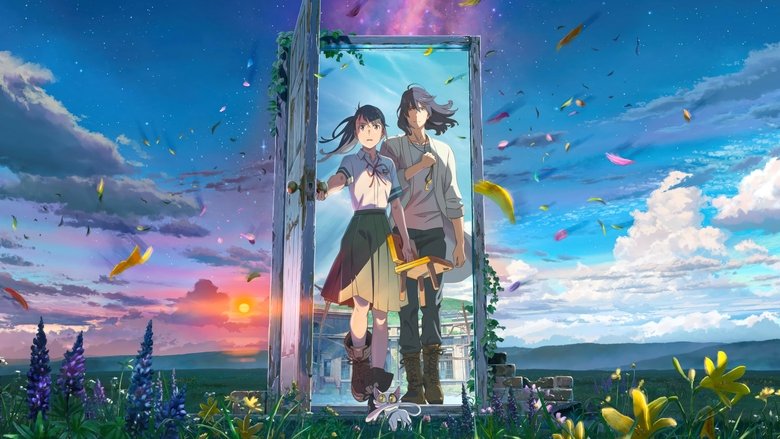
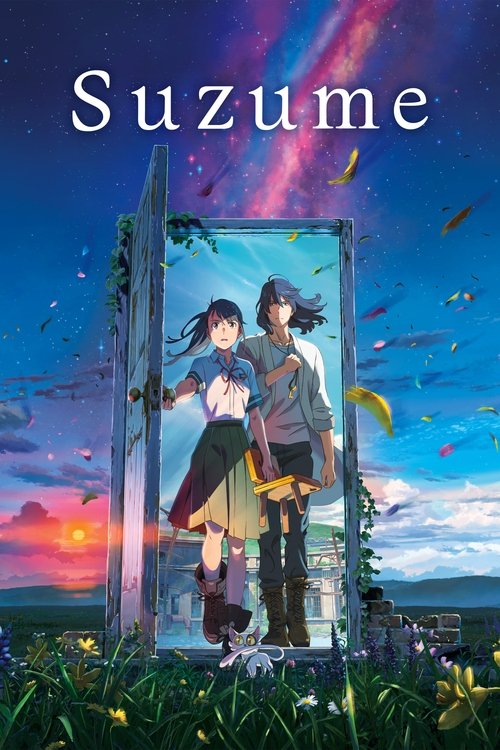
A coming-of-age fantasy adventure where a young woman confronts Japan's collective trauma, closing mystical doors to prevent disasters in a visually stunning and emotionally resonant journey.
Suzume

Suzume

すずめの戸締まり

"On the other side of the door, was time in its entirety."

11 November 2022 Japan 122 min ⭐ 7.9 (1,567)
Director: Makoto Shinkai
Cast: Nanoka Hara, Hokuto Matsumura, Eri Fukatsu, Shota Sometani, Sairi Ito
Drama Animation Fantasy Adventure
Grief and Trauma Memory and Remembrance Responsibility and Coming of Age Humanity's Relationship with Nature
Box Office: $323,638,107

Overview

"Suzume" follows the story of Suzume Iwato, a 17-year-old high school student living with her aunt in a quiet town in Kyushu, Japan. Her life takes a dramatic turn when she encounters Souta Munakata, a mysterious young man searching for enigmatic doors in abandoned places. Drawn to him, Suzume finds a lone door standing in a ruin and, out of curiosity, opens it. In doing so, she accidentally unleashes a powerful, cat-like keystone named Daijin, which frees a colossal, supernatural entity known as the "Worm." This entity has the power to cause devastating earthquakes across Japan.

To make matters worse, the mischievous Daijin curses Souta, transforming him into a small, three-legged wooden chair—a cherished memento from Suzume's late mother. Now, Suzume and the animated chair-Souta must embark on a road trip across Japan, chasing Daijin and closing other doors that have begun to open in desolate locations, from abandoned schools to forgotten amusement parks. Along the way, Suzume meets various people who offer her kindness and support, forcing her to confront not only the impending disasters but also her own deeply buried trauma from losing her mother in the 2011 Tōhoku earthquake and tsunami.
Core Meaning

The core meaning of "Suzume" revolves around the process of confronting and healing from collective and personal trauma, particularly in the context of the 2011 Tōhoku earthquake and tsunami that deeply impacted Japan. Director Makoto Shinkai has stated that the disaster changed his worldview, compelling him to address it directly in his work rather than through metaphor. The film explores how a nation and an individual can process grief and loss. The act of "closing doors" is a powerful metaphor for acknowledging the memories of those who lived in now-abandoned places, paying respects to the past, and finding the strength to move forward.

It emphasizes the importance of human connection, memory, and responsibility. By traveling across Japan and meeting people from different walks of life, Suzume learns that she is not alone in her grief and that kindness can be found even in the face of immense tragedy. The film ultimately carries a message of hope, resilience, and the idea that while disasters are an inevitable part of life, it is the act of remembering, honoring the past, and embracing the future that allows individuals and society to heal and grow.

Thematic DNA

Grief and Trauma 35%
Memory and Remembrance 25%
Responsibility and Coming of Age 20%
Humanity's Relationship with Nature 20%

Grief and Trauma

This is the central theme, directly linked to the 2011 Tōhoku earthquake and tsunami. Suzume's personal journey is a poignant exploration of unresolved childhood trauma from losing her mother in the disaster. The film depicts how this event shaped her life and her aunt Tamaki's. The journey to close doors becomes a journey into her own past, forcing her to confront repressed memories and the immense grief she has carried. The film's climax, where she meets her younger self in the "Ever-After," symbolizes the act of comforting one's own past self to finally begin healing.
Memory and Remembrance

The film posits that abandoned places are not empty, but are filled with the lingering memories and feelings of the people who once lived there. Souta explains that the "weight of people's feelings quells the land" and prevents disasters. To close each door, Suzume and Souta must listen to the voices of the past, acknowledge their lives, and honor their memories. This theme suggests that remembrance is a sacred act, essential for preventing the past's tragedies from being forgotten and for maintaining a balance between the world of the living and the spiritual realm.

Responsibility and Coming of Age

After accidentally unleashing the keystone, Suzume feels a profound sense of guilt and responsibility to correct her mistake. This propels her from a regular high school girl into a determined young woman on a critical mission. Her journey across Japan is a classic coming-of-age story where she learns about sacrifice, courage, and the weight of her actions. The transformation of Souta into a chair, an inanimate object, forces Suzume to take the lead, demonstrating her growth and resilience. The film explores both the burden and the nobility of taking responsibility for the well-being of others and the world.

Humanity's Relationship with Nature

The "Worm" is a powerful metaphor for the destructive forces of nature, specifically earthquakes. It is not portrayed as an evil entity, but as a natural, albeit terrifying, power that must be kept in balance. The film explores the idea that human presence and memory have a tangible effect on the land. Shinkai himself stated that the cats, Daijin and Sadaijin, represent the unpredictable and amoral character of nature itself—beautiful and captivating one moment, destructive the next. This theme delves into the fragility of human life in the face of nature's might and the respect required to coexist with it.

Character Analysis

Suzume Iwato

Nanoka Hara

Archetype: The Heroine / Everywoman
Key Trait: Resilient

Motivation

Initially driven by guilt for releasing the keystone, her motivation quickly shifts to a deep desire to protect others from suffering the same loss she experienced. This is amplified by her growing feelings for Souta and her determination to save him from being permanently turned into a keystone. Her journey is ultimately motivated by a need for personal healing and closure.

Character Arc

Suzume begins as a normal high school student haunted by a past she has repressed. Her journey is a classic coming-of-age arc, triggered by her encounter with Souta and her accidental release of Daijin. She evolves from a guilt-ridden girl into a determined and courageous young woman who takes responsibility for saving Japan. Her emotional arc culminates in her confronting the trauma of her mother's death, allowing her to comfort her younger self and finally embrace her future with hope.

Souta Munakata

Hokuto Matsumura

Archetype: The Mentor / The Cursed Hero
Key Trait: Dedicated

Motivation

Souta is motivated by a profound sense of duty passed down through generations of his family. His primary goal is to close the doors and prevent the Worm from causing earthquakes, a responsibility he takes very seriously. His motivations become intertwined with protecting Suzume as their journey progresses.

Character Arc

Souta is a dedicated "Closer," a young man who has inherited the solemn duty of preventing disasters. He acts as a mentor to Suzume, explaining the supernatural world she has entered. His arc is dramatically altered when he is turned into a three-legged chair, forcing him into a passive, observer role. This transformation, however, deepens his bond with Suzume. He accepts his potential fate as a keystone with solemn dignity but is ultimately saved by Suzume's determination, reinforcing the theme of shared burdens.

Daijin

Ann Yamane

Archetype: The Trickster / The Wild Card
Key Trait: Capricious

Motivation

Daijin's primary motivation is to be loved and cared for by Suzume, whom it believes set it free. It is not evil but operates on a divine, childlike logic, wanting to play and be with Suzume, even if it means Souta must take its place as the keystone. Ultimately, its love for Suzume drives its final, heroic decision.

Character Arc

Daijin begins as a mysterious, mischievous, and seemingly antagonistic force. As a keystone freed from its duty, it acts like a liberated child, seeking love and attention from Suzume while being indifferent to the consequences of its actions. Its arc is one of tragic realization. Despite its desire to be Suzume's cat, it eventually understands its true purpose and that Suzume's love is for Souta. In a moment of selfless sacrifice, Daijin chooses to become a keystone again to help save the world, showing a surprising depth and tragic maturity.

Tamaki Iwato

Eri Fukatsu

Archetype: The Guardian / The Overprotective Parent
Key Trait: Protective

Motivation

Tamaki's core motivation is to protect Suzume, a duty she took on out of love for both her niece and her late sister. This protective instinct is born from her own fear of loss and the immense sacrifice she made in raising Suzume, which has caused underlying tension in their relationship.

Character Arc

Tamaki is Suzume's aunt who took her in after her sister's death. She is caring but also overprotective, their relationship strained by unspoken grief and resentment. Her arc involves confronting her own sacrifices and the complex, sometimes burdensome, love she feels for Suzume. During their climactic argument, possessed by Sadaijin, her repressed feelings pour out. This painful honesty ultimately allows for reconciliation and a deeper, more mature understanding between her and Suzume.

Symbols & Motifs

Doors

Meaning:

The doors symbolize mystical gateways between the world of the living and the "Ever-After," a realm of spirits and memories where time exists simultaneously. They also represent portals to past tragedies and collective trauma. The act of closing them is a metaphor for confronting and processing grief, acknowledging the past to prevent future disasters, and restoring balance.

Context:

These doors are found in abandoned, forgotten places across Japan—ruins of schools, amusement parks, and homes—locations filled with the memories of people who are no longer there. Suzume and Souta must find these doors before the destructive "Worm" can escape from the Ever-After and cause earthquakes.

The Three-Legged Chair

Meaning:

The chair, a memento from Suzume's late mother, symbolizes her unresolved grief and the missing piece in her life. Its three legs represent her brokenness and imperfection, yet also her resilience and ability to stand despite her loss. When Souta is transformed into the chair, it becomes a vessel for her past trauma and her present mission, physically linking her journey of healing to her most cherished memory of her mother.

Context:

Daijin turns Souta into the chair early in the film. This forces Suzume to literally carry the weight of her past with her on her journey. In the film's emotional climax, Suzume gives the three-legged chair to her younger, grieving self in the Ever-After, symbolizing self-comfort and acceptance.

The Worm

Meaning:

The Worm is a physical manifestation of the immense, destructive energy of nature, specifically representing the power of earthquakes. It is based on the Japanese mythological creature, the Namazu, a giant catfish held down by a god to prevent it from causing earthquakes. It is not inherently evil, but a chaotic natural force that becomes devastating when its connection to the human world is opened through the doors.

Context:

The Worm emerges from the doors in abandoned locations and threatens to fall upon Japan, causing massive earthquakes. Suzume and Souta's primary mission is to seal the doors to prevent the Worm from fully emerging and wreaking havoc, as it did during historical events like the 1923 Great Kantō earthquake.

Daijin and Sadaijin (The Cats)

Meaning:

The two cats, Daijin (the small white cat) and Sadaijin (the large black cat), are the keystones—divine beings meant to seal the Worm. According to director Makoto Shinkai, they symbolize nature itself: amoral, unpredictable, and operating outside human concepts of good and evil. Daijin's behavior is childlike and chaotic; it seeks love and affection from Suzume but is indifferent to the destruction it causes. They represent the balance of nature's creative and destructive forces, akin to yin and yang.

Context:

Suzume frees Daijin from his role as the western keystone at the beginning of the film. Daijin then follows Suzume across Japan, inadvertently leading her to open doors while also passing his keystone responsibility onto Souta. Sadaijin, the eastern keystone, appears later to help restore balance. In the end, both cats willingly return to their dormant keystone forms to seal the Worm once more.

Butterflies

Meaning:

Butterflies appear frequently throughout the film, often associated with Suzume's dreams and the Ever-After. In Japanese culture, butterflies can symbolize souls, metamorphosis, love, joy, and resilience. In the context of the film, they represent Suzume's connection to the spiritual world and her own personal transformation (metamorphosis) as she confronts her past and grows into a courageous young woman. They are also linked to the spirit of her late mother.

Context:

The film opens with a dream sequence of young Suzume in the Ever-After, surrounded by butterflies as a mysterious figure approaches. They reappear at key moments, such as hovering over Suzume's bed, indicating her deep connection to the other realm and the lingering presence of her mother's memory.

Philosophical Questions

What is our responsibility to the memories of abandoned places and forgotten people?

The film explores this question through the ritual of closing doors. Before a door can be locked, Suzume must listen to and acknowledge the everyday lives, joys, and sorrows of the people who once inhabited that space. It suggests a philosophical duty to remember, arguing that the collective memory of humanity is a force that brings peace and stability to the land itself. The film posits that forgetting is not a neutral act, but one that can lead to decay and disaster, making remembrance an active, ongoing responsibility for the living.

How can one find hope and a future after experiencing catastrophic loss?

"Suzume" tackles this question through its protagonist's journey. Having lost her mother in a tsunami, Suzume is trapped in a state of arrested grief. The film proposes that healing is not a passive process, but an active journey—a literal and metaphorical road trip. Hope is found not in erasing the past, but in confronting it. The climax, where adult Suzume comforts her child self with the words, "You will grow up. The light will come, and you will meet wonderful people," serves as the film's core thesis: the future is not a betrayal of the past, but a promise that one can carry loss and still find love and light.

Can humanity truly control or coexist with the overwhelming and amoral forces of nature?

The Worm is depicted not as an evil monster to be vanquished, but as a raw, natural force that is simply part of the world. The "Closers" do not seek to destroy it, but to seal it away, acknowledging that it cannot be eliminated. This reflects a Shinto-influenced worldview where nature is divine, powerful, and operates beyond human morality. The film suggests that humanity's role is not one of dominance over nature, but of respectful stewardship and the performance of rituals (closing the doors) to maintain a fragile balance. It asks us to accept that disasters will happen and that our response should be one of resilience and remembrance rather than a futile quest for total control.

Alternative Interpretations

One of the most discussed alternative interpretations revolves around the character of Daijin. While on the surface, Daijin appears as a chaotic trickster, some viewers interpret its actions as a misunderstood form of guidance. According to this reading, Daijin isn't malevolently cursing Souta but is strategically pushing Suzume on her necessary journey. It leads her to each open door not to cause chaos, but because it knows she is the only one who can close them and that this path is essential for her to confront her past. Daijin's desire to be "Suzume's cat" is seen as a yearning to be part of the human world it protects, and its ultimate sacrifice is not just a change of heart, but the fulfillment of its complex duty.

Another interpretation focuses on the relationship between Suzume and her aunt, Tamaki. The explosive argument they have, influenced by Sadaijin, can be read not as a moment of supernatural possession, but as the raw, unfiltered release of years of repressed grief and sacrifice. Sadaijin doesn't create these feelings but merely unlocks the door to them. This perspective views their conflict as a necessary, albeit painful, step in their healing process, allowing them to finally be honest with each other about the burden they both carry. It reframes their relationship as a central pillar of the film's message about how families navigate shared trauma.

Cultural Impact

"Suzume" had a significant cultural impact both in Japan and internationally, primarily for its direct and sensitive handling of the 2011 Tōhoku earthquake and tsunami. While Shinkai's previous films used disaster as a metaphor, "Suzume" confronted the real-world tragedy, resonating deeply with a Japanese audience still processing the collective trauma. The film sparked national conversations about grief, memory, and how to preserve the stories of depopulated and disaster-stricken areas. For many younger viewers who were children in 2011, the film served as an accessible way to understand the emotional weight of the event.
Critically, the film was lauded for its stunning animation, emotional depth, and mature storytelling, earning a 96% score on Rotten Tomatoes. Its selection for the main competition at the Berlin International Film Festival highlighted its status as a major work of art, drawing comparisons to Studio Ghibli's legacy. Commercially, its immense success across Asia, particularly in China and South Korea where it broke records, demonstrated the universal appeal of its themes of loss and resilience. The film solidified Makoto Shinkai's reputation as one of the most important voices in modern animation, capable of blending spectacular fantasy with profound human emotion.

Audience Reception

Audience reception for "Suzume" was overwhelmingly positive. On Rotten Tomatoes, it holds a 96% critic score and a 98% audience score, indicating widespread acclaim. Viewers frequently praised the film's breathtaking animation and visual style, a signature of Makoto Shinkai's work, calling it a visual spectacle worthy of the biggest screen. The emotional weight of the story was another major point of praise, with many viewers finding the exploration of grief, trauma, and healing to be deeply moving and resonant. The characters, particularly the resilient Suzume and the surprisingly complex cat Daijin, were also highlighted as strengths.

Points of criticism, though less common, tended to focus on the pacing and the romantic subplot. Some viewers felt the relationship between Suzume and Souta developed too quickly and lacked the emotional depth of Shinkai's previous films like "Your Name." A few critics also found the narrative to be somewhat formulaic or rudderless at times, with unclear magical logistics. However, the overall verdict from audiences was that "Suzume" is a powerful, beautiful, and emotionally satisfying film that successfully balances its fantastical elements with a very real and poignant human story.

Interesting Facts

  • The film is directly inspired by the 2011 Tōhoku earthquake and tsunami. Director Makoto Shinkai felt a need to address the disaster head-on, fearing that people's memories of the event were beginning to fade.
  • "Suzume" is the final installment of Makoto Shinkai's "disaster trilogy," following "Your Name" (2016) and "Weathering with You" (2019), which also feature themes related to natural disasters.
  • To ensure the authenticity of the cross-country journey, Makoto Shinkai and his team actually traveled the route depicted in the film, visiting the various regions and abandoned locations.
  • The idea to turn the male lead, Souta, into a chair was partly a narrative device by Shinkai to de-emphasize the romance plot and focus more on Suzume's personal growth and coming-of-age story.
  • Initially, Shinkai considered a story centered on a same-sex romance between two girls, but the idea was changed during production. He has joked that turning the male lead into an inanimate object was his form of "revenge."
  • The film was a massive box office success, becoming the fourth highest-grossing Japanese film of all time and the highest-grossing Japanese film in both China and South Korea.
  • "Suzume" was the first Japanese animated film to compete at the Berlin International Film Festival in 21 years, since Hayao Miyazaki's "Spirited Away" won the Golden Bear in 2002.
  • The character Tomoya Serizawa is named in reference to Dr. Daisuke Serizawa from the original 1954 "Godzilla" film, another movie that deals with the aftermath of national tragedy.
  • The film's score was created by the popular Japanese rock band Radwimps in collaboration with composer Kazuma Jinnouchi, marking the third time Radwimps has worked with Shinkai.

Easter Eggs

During a car ride scene with Serizawa, the song playing on the stereo is "Rūju no Dengon" ("Message in Rouge") by Yumi Arai.

This song is famously known as the opening theme for Studio Ghibli's 1989 film "Kiki's Delivery Service." Shinkai included this as a deliberate homage to Hayao Miyazaki and to ground Suzume's world in a reality shared by the audience, as most Japanese people would have seen and recognized the music from the classic film.

In the same scene where the "Kiki's Delivery Service" theme plays, a truck passes by with a logo of a black cat.

This is a multi-layered reference. The black cat is an obvious nod to Jiji, Kiki's feline companion in the Ghibli film. Furthermore, the logo belongs to the real-life Japanese shipping company Yamato Transport, whose logo is a black cat and who was a sponsor of "Kiki's Delivery Service."

Some viewers have noted that a woman seen traveling on a train in "Suzume" bears a resemblance to a character who also appeared in a train scene in "Your Name."

While not a major plot point, this could be a subtle visual cameo linking the worlds of Shinkai's films, suggesting a shared universe or simply a recurring character design that the director is fond of using.

The red ribbon that Suzume uses to tie her hair is visually similar to the red braided cord (kumihimo) that was a central motif in "Your Name."

This could be another subtle visual nod to Shinkai's previous work, linking the films thematically through a shared visual language of connection and fate.

⚠️ Spoiler Analysis

Click to reveal detailed analysis with spoilers

Frequently Asked Questions

Explore More About This Movie

Dive deeper into specific aspects of the movie with our detailed analysis pages

Comments (0)

Leave a comment

No comments yet. Be the first to share your thoughts!