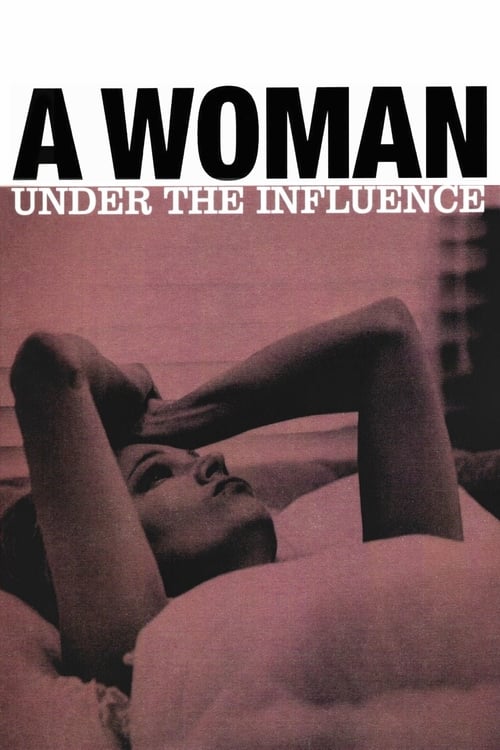
A Woman Under the Influence
A raw, claustrophobic drama of domestic disintegration where love becomes a fractured mirror, reflecting the agonizing struggle between a woman's vibrant spirit and the suffocating boundaries of mid-century normalcy.
A Woman Under the Influence

A Woman Under the Influence

"A woman of today, her world, her passions."

18 November 1974 United States of America 155 min ⭐ 7.8 (540)
Director: John Cassavetes
Cast: Gena Rowlands, Peter Falk, Fred Draper, Lady Rowlands, Katherine Cassavetes
Drama Romance
The Performance of Normalcy Gender Roles and Patriarchal Control Communication Breakdown The Cycle of Family Dysfunction
Budget: $1,000,000
Box Office: $12,200,000

Overview

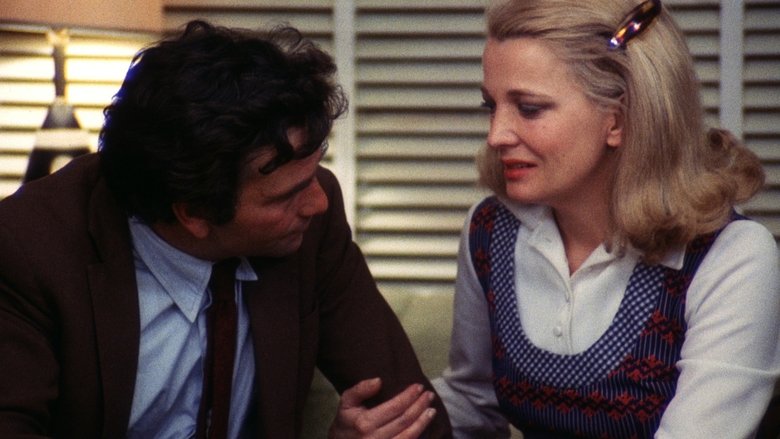
A Woman Under the Influence centers on Mabel Longhetti (Gena Rowlands), a housewife and mother in Los Angeles who is deeply loved by her construction-foreman husband, Nick (Peter Falk), but whose behavior grows increasingly eccentric and socially erratic. Mabel’s exuberant, often childlike expressions of emotion clash with the rigid expectations of her blue-collar environment, leading to a series of high-tension social disasters that strain the family's sanity.

The narrative follows the couple's volatile relationship as Nick struggles between his fierce devotion to Mabel and his mounting embarrassment and inability to manage her mental state. When a disastrous dinner party for Nick's work crew ends in a public breakdown, Nick is pressured by his mother and the community to commit Mabel to a psychiatric institution. The second half of the film explores Mabel's return six months later and the family’s desperate, clumsy attempt to reconstruct a version of 'normalcy' that might be fundamentally impossible.

Core Meaning

The film serves as a visceral exploration of the thin line between mental illness and social non-conformity. Director John Cassavetes suggests that Mabel’s 'madness' may not be an inherent pathology, but rather a reasonable reaction to the crushing weight of patriarchal expectations and the lack of a genuine emotional outlet in a domestic setting.

Ultimately, the film posits that the people around Mabel—particularly Nick—are as 'under the influence' of societal norms as Mabel is of her own internal impulses. It carries a message about the terrifying vulnerability of love: that even the most genuine affection can become a tool of control and destruction when it is filtered through a desire for conformity.

Thematic DNA

The Performance of Normalcy 30%
Gender Roles and Patriarchal Control 25%
Communication Breakdown 25%
The Cycle of Family Dysfunction 20%

The Performance of Normalcy

The film highlights how social life is a series of 'performances.' Mabel is constantly asking 'How did I do?' or 'Tell me what you want me to be,' revealing her awareness that she is failing to play the role of the ideal housewife. Her failure to perform 'normalcy' is what leads to her institutionalization.

Gender Roles and Patriarchal Control

Mabel’s identity is entirely defined by her relationship to men—her husband and her father. The film reveals how male-dominated social structures define 'sanity' based on a woman's obedience and domestic efficiency. Nick often reacts with physical or verbal violence to 'force' her back into a socially acceptable state.

Communication Breakdown

Despite their intense love, Mabel and Nick lack the vocabulary to discuss their emotions. Their interactions are marked by shouting, physical gestures, and a reliance on social rituals (like the spaghetti dinner) to replace genuine dialogue, leading to a perpetual state of misunderstanding.

The Cycle of Family Dysfunction

The involvement of the children and the in-laws suggests that the tension is not just between two people, but is an inherited cultural trauma. The children are seen mimicking the volatile behaviors of their parents, indicating that the 'influence' of the environment is passed down through generations.

Character Analysis

Mabel Longhetti

Gena Rowlands

Archetype: The Tragic Muse
Key Trait: Hyper-expressiveness

Motivation

To be loved and to fulfill the roles of wife and mother, while struggling to contain a personality that is too large for those roles.

Character Arc

Starts as a woman desperately trying to please everyone; goes through a total psychological collapse; returns from the institution physically subdued but emotionally unchanged, eventually finding a fragile, defiant moment of self-acceptance.

Nick Longhetti

Peter Falk

Archetype: The Volatile Guardian
Key Trait: Explosive temperament

Motivation

To maintain the image of a strong, normal family and to protect Mabel, even if that protection requires hurting her.

Character Arc

Moves from a state of denial regarding his wife's health to an authoritative 'fixer' role; he experiences his own 'madness' while she is gone, only to realize he is just as incapable of being 'normal' as she is.

Margaret Longhetti

Katherine Cassavetes

Archetype: The Antagonist / Matriarch
Key Trait: Cold pragmatism

Motivation

To preserve the social standing and sanity of her son, Nick, at any cost.

Character Arc

Remains a consistent force of traditional judgment; she is the one who ultimately triggers Mabel's institutionalization by refusing to tolerate her behavior.

Symbols & Motifs

The Spaghetti Dinner

Meaning:

Symbolizes the performative nature of domesticity and the 'social test' Mabel is constantly subjected to.

Context:

Nick brings his entire construction crew home for an unannounced meal, forcing Mabel to play the role of the gracious hostess in a high-pressure environment.

The Telephone

Meaning:

Represents the broken connection between the couple and the intrusion of the judgmental outside world.

Context:

The film begins with a failed phone call between Nick and Mabel, and ends with Nick refusing to answer a ringing phone, symbolizing a temporary closing off of their private world from external interference.

Swan Lake / Tchaikovsky

Meaning:

Symbolizes Mabel's inner world of beauty and grace, which is at odds with her gritty reality.

Context:

Mabel plays the music and encourages the children to dance with her, using it as an escapist fantasy that others view as evidence of her madness.

The Bed

Meaning:

Represents the site of both intimacy and confinement; it is where the couple tries to reconcile but also where they are most vulnerable to each other's attacks.

Context:

Many of the film's most intense arguments and moments of reconciliation take place in or around the oversized bed, which dominates their small living space.

Memorable Quotes

Tell me what you want me to be! I can be anything! I can be anything you want me to be!

— Mabel Longhetti

Context:

Mabel screams this during a desperate confrontation with Nick as she tries to avoid being sent away.

Meaning:

Highlights the total loss of self-identity that Mabel feels in her marriage, viewing her personality as something that should be molded by her husband's desires.

Mabel's not crazy, she's unusual. She's not crazy, so don't say she's crazy.

— Nick Longhetti

Context:

Nick tells this to his construction crew friends early in the film to set the tone for their interaction with her.

Meaning:

Demonstrates Nick's fierce loyalty and his defensive denial of the reality of Mabel's mental state.

Die! Die for me! Die for your father!

— Mabel Longhetti

Context:

Mabel encourages her children to play-act death to the music of Swan Lake during a frantic afternoon.

Meaning:

A disturbing moment where Mabel uses the metaphor of the dying swan to express her own emotional exhaustion to her children.

Philosophical Questions

What defines 'Sanity' in a domestic setting?

The film explores whether sanity is an internal state or merely a measure of how well one conforms to the expectations of others.

Is love enough to bridge a breakdown in communication?

Despite their undeniable love, the characters' inability to communicate leads to tragedy, suggesting that love without understanding can be a prison.

Alternative Interpretations

The Feminist Critique: Many critics interpret Mabel not as mentally ill, but as a victim of a 'gaslighting' society. In this view, her behavior is a form of resistance against a role that provides no intellectual or creative stimulation.

The Mutual Madness Theory: Some readings argue that Nick is the truly unstable character, as he exhibits violent outbursts and is unable to handle reality without a script, whereas Mabel is simply 'unusually' honest about her feelings.

The Existentialist Reading: The film can be seen as a study of the 'Absurd,' where characters are trapped in a meaningless cycle of social rituals and their only 'escape' is through the performative madness that labels them outcasts.

Cultural Impact

A Woman Under the Influence is widely considered the masterpiece of American Independent Cinema. It revolutionized film acting by prioritizing 'emotional truth' and raw, improvised-feeling moments over traditional narrative structure. Gena Rowlands' performance is frequently cited as one of the greatest in the history of cinema, influencing generations of actresses.

Philosophically, the film anticipated 1970s feminist discourse regarding the 'problem that has no name'—the psychological malaise of the suburban housewife. It remains a key text in the study of mental health on screen, challenging audiences to question who is truly 'crazy' in a crazy society.

Audience Reception

The film received near-universal acclaim for its acting, with Gena Rowlands winning a Golden Globe and an Oscar nomination. However, it was also noted for being 'uniquely exhausting' and 'painfully realistic.' Some audiences found the long, unedited scenes of domestic conflict difficult to watch, while others praised the film for its uncompromising refusal to provide a happy or easy resolution.

Interesting Facts

  • The film was entirely self-financed by John Cassavetes and Peter Falk; Falk contributed $500,000 of his own money from his 'Columbo' salary.
  • Cassavetes mortgaged his own home to complete the production after being rejected by every major Hollywood studio.
  • The film's release was saved by Martin Scorsese, who threatened to withdraw his own film from the New York Film Festival unless they screened Cassavetes' movie.
  • Gena Rowlands did her own hair and makeup throughout the shoot to maintain a raw, unpolished look.
  • The role of Nick's mother was played by Cassavetes' actual mother, Katherine, and Mabel's mother was played by Gena Rowlands' actual mother, Lady Rowlands.
  • The movie was shot chronologically over 65 days to help the actors develop the emotional arc of the characters naturally.
  • Richard Dreyfuss famously stated that the film made him so physically ill and emotionally distraught that he went home and vomited after seeing it.

Easter Eggs

Casting the Mothers

The decision to cast the real-life mothers of the director and lead actress adds a layer of metatextual 'truth' to the family dynamics, blurring the line between fiction and documentary.

The 'Columbo' Influence

Peter Falk's character wears clothes and displays mannerisms that subtly subvert his famous 'Columbo' persona, using his star power to bring a working-class grit to a character who is far more dangerous and less 'cuddly' than the detective.

⚠️ Spoiler Analysis

Click to reveal detailed analysis with spoilers

Frequently Asked Questions

Explore More About This Movie

Dive deeper into specific aspects of the movie with our detailed analysis pages

Comments (0)

Leave a comment

No comments yet. Be the first to share your thoughts!