The Whale
A claustrophobic chamber drama where suffocating shadows meet the blinding light of redemption. A reclusive, 600-pound man attempts to bridge the emotional abyss with his estranged daughter through the language of honest literature.
The Whale

The Whale

"People are amazing"

09 December 2022 United States of America 117 min ⭐ 7.8 (4,390)
Director: Darren Aronofsky
Cast: Brendan Fraser, Sadie Sink, Ty Simpkins, Hong Chau, Samantha Morton
Drama
Redemption and Self-Forgiveness The Weight of Grief and Trauma Honesty vs. Performance Religious Guilt and Salvation Isolation and Connection
Budget: $3,000,000
Box Office: $55,101,305

Overview

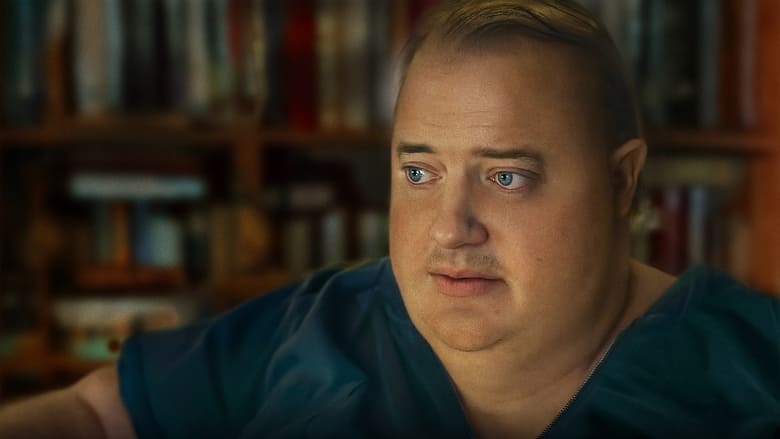
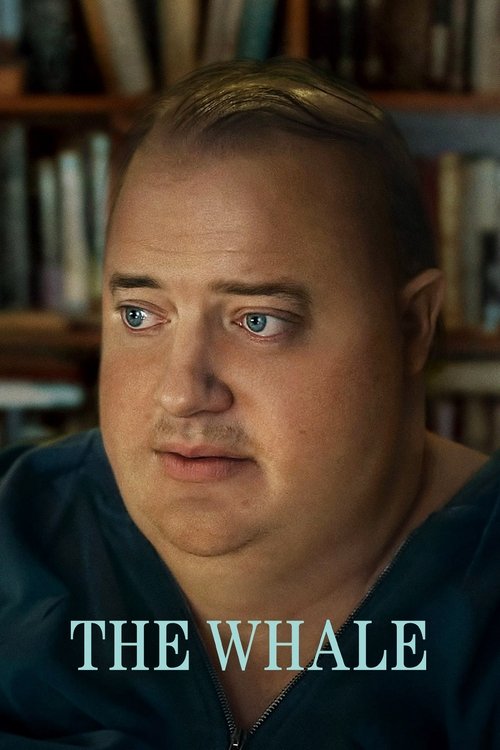
The Whale is a 2022 psychological drama directed by Darren Aronofsky, adapted from Samuel D. Hunter's acclaimed stage play. The story centers on Charlie, a reclusive English instructor living with severe obesity, who spends his days teaching online courses with his camera permanently disabled. Confined to his small Idaho apartment and aware that his health is rapidly failing due to congestive heart failure, Charlie decides to spend his final days attempting to repair a fractured relationship with his cynical teenage daughter, Ellie.

As the film unfolds within the four walls of Charlie's dimly lit home, a small circle of visitors enters his orbit: Liz, his nurse and only friend who provides both care and enabling behavior; Thomas, a young missionary determined to save Charlie's soul; and Mary, his ex-wife who remains haunted by their past. Through these interactions, the film explores the heavy burdens of grief and the desperate, late-stage quest for a legacy defined by one good deed.

Core Meaning

The core meaning of The Whale lies in the transformative power of radical honesty and the possibility of redemption even at the brink of death. Aronofsky uses Charlie’s physical condition as a metaphor for the profound weight of guilt and unexpressed grief. The film posits that people are "incapable of not caring," suggesting that beneath layers of trauma, bitterness, and self-destruction, there is an innate human goodness that can only be accessed through the painful process of being truly seen by others.

Thematic DNA

Redemption and Self-Forgiveness 30%
The Weight of Grief and Trauma 25%
Honesty vs. Performance 20%
Religious Guilt and Salvation 15%
Isolation and Connection 10%

Redemption and Self-Forgiveness

Charlie views his life as a failure, particularly his abandonment of his family. His refusal to seek medical help while saving his money for Ellie's future is a form of penance. The film explores whether one can find salvation through a single selfless act after a lifetime of perceived mistakes.

The Weight of Grief and Trauma

Charlie’s compulsive eating began as a coping mechanism following the suicide of his partner, Alan. The film visualizes how grief can become a physical burden that literally and figuratively traps a person in their past.

Honesty vs. Performance

Charlie constantly challenges his students and his daughter to write something honest. This theme is mirrored in his own journey to finally turn on his camera and reveal his true self, moving past the "polite" lies that define most human interactions.

Religious Guilt and Salvation

The backstory of Alan’s death, driven by the rejection of his religious community, casts a shadow over the film. The character of Thomas represents the institutional attempt at salvation, which Charlie ultimately rejects in favor of a personal, humanistic redemption.

Isolation and Connection

Set almost entirely in one apartment, the film highlights the paradox of digital connection in an age of physical isolation. Charlie’s struggle to touch his daughter’s hand or stand up represents the difficulty of bridging emotional distances.

Character Analysis

Charlie

Brendan Fraser

Archetype: The Tragic Hero
Key Trait: Eternal optimism despite physical and emotional suffering.

Motivation

To ensure his daughter Ellie knows she is a "good person" and to leave her with a financial and emotional foundation before he dies.

Character Arc

Begins as a man who has surrendered to his own slow suicide, hiding from the world. His arc culminates in a final, agonizing stand—both physical and moral—where he finally faces his daughter with total honesty and achieves a state of grace.

Ellie

Sadie Sink

Archetype: The Rebel / The Cynic
Key Trait: Caustic honesty and defensive hostility.

Motivation

To punish her father for abandoning her and to navigate the intense anger she feels toward a world that has failed her.

Character Arc

Ellie shifts from a place of unmitigated cruelty and lashing out toward a moment of raw connection. By reading her essay at the end, she acknowledges her father's love and her own buried capacity for empathy.

Liz

Hong Chau

Archetype: The Caregiver / The Enabler
Key Trait: Fierce loyalty and suppressed grief.

Motivation

To protect Charlie as the last link to her deceased brother, Alan, even if it means helping him eat himself to death.

Character Arc

Liz struggles between her professional duty as a nurse and her personal loyalty to Charlie. Her arc reveals the complexity of love that is both supportive and destructive.

Symbols & Motifs

Moby-Dick (The Essay)

Meaning:

Represents the anchor for Charlie’s soul. The essay, written by a young Ellie, focuses on the whale's lack of malevolence and Ahab's tragic obsession, mirroring Charlie's own view of himself as a misunderstood creature and his hope for Ellie's inherent goodness.

Context:

Charlie asks Liz, Thomas, and eventually Ellie to read the essay aloud when he is experiencing a medical crisis; it is the only thing that can calm his racing heart.

The Facecam

Meaning:

A symbol of shame and the curated identities we present to the world. Keeping it off allows Charlie to exist only as a voice, protecting him from judgment while simultaneously preventing him from being fully known.

Context:

The climax of the film involves Charlie finally turning the camera on for his students, an act of vulnerability that costs him his job but grants him his dignity.

The Bird and the Window

Meaning:

Symbolizes the world outside that Charlie has abandoned and the fragile, persistent nature of life. It serves as a reminder of his partner Alan, who also sought to nurture life before being consumed by despair.

Context:

Charlie keeps a bird feeder outside his window, and his interaction with the bird is one of his few connections to the natural world beyond his apartment.

The 1.33:1 Aspect Ratio

Meaning:

The nearly square frame creates a sense of claustrophobia, symbolizing Charlie’s confinement within his own body and his small apartment.

Context:

This visual decision forces the viewer to confront Charlie’s size as he fills the frame, leaving little room for anything else until the very final, transcendent shot.

Memorable Quotes

I need to know that I have done one thing right with my life!

— Charlie

Context:

Charlie shouts this during a heated exchange with his ex-wife Mary, explaining why he is refusing medical help and saving money for Ellie.

Meaning:

This is the emotional thesis of the film. It expresses the universal human fear of a wasted life and the desperate hope for a singular act of redemption.

People are amazing.

— Charlie

Context:

Repeated several times, most notably when discussing his students' writing or Ellie's potential.

Meaning:

A radical affirmation of human worth. It highlights Charlie's refusal to become cynical, despite how the world sees him and how he has been treated.

Do you ever get the feeling that people are incapable of not caring?

— Charlie

Context:

Charlie asks this of Thomas, the missionary, challenging his rigid religious views with a broader humanistic faith.

Meaning:

Explores the idea that empathy is an innate, unavoidable human trait, even when people try to hide it behind anger or indifference.

Philosophical Questions

Can honesty be a form of salvation?

The film suggests that truth-telling is the only way to shed the 'weight' of the past. Charlie’s insistence on honesty in writing and life serves as his primary spiritual practice.

Is empathy a choice or an instinct?

Through the character of Ellie, the film asks if humans can truly be 'bad' or if their cruelty is merely a defense mechanism for a capacity to care that has been wounded.

What constitutes a 'good life' at its end?

Charlie rejects medical survival in favor of ensuring his legacy through his daughter, posing a question about the value of physical longevity versus emotional closure.

Alternative Interpretations

The ending of the film is a major point of interpretative debate. Some viewers see the final shot—Charlie floating upward as a blinding white light fills the screen—as a literal depiction of death and an entry into the afterlife. Others interpret it as a psychological or spiritual ascension; the 'weight' he feels is finally lifted because he has achieved the honesty he craved, regardless of whether he physically dies in that moment. A darker interpretation suggests that Charlie’s 'redemption' is actually a final act of self-delusion, where he ignores the real-world consequences of his death on Ellie to satisfy his own need for a peaceful exit.

Cultural Impact

The Whale catalyzed a massive cultural moment known as the 'Brenaissance', marking the triumphant return of Brendan Fraser to leading roles. The film was highly divisive; while it received standing ovations at festivals and won Fraser the Academy Award for Best Actor, it also sparked intense debate regarding 'fat-suits' and the ethics of portraying obesity as a tragic spectacle. Critics were split between those who saw it as a deeply moving humanistic portrait and those who found it manipulative and 'miserabilist.' It has since become a landmark in discussions about empathy in cinema and the representation of marginalized bodies.

Audience Reception

Audience reception was deeply polarized but generally favored Fraser's performance. On platforms like Rotten Tomatoes and IMDb, viewers praised the emotional intensity and the acting, particularly Hong Chau and Sadie Sink. However, some segments of the audience found the film's relentless focus on Charlie's physical distress to be voyeuristic or depressing. Despite the controversy, the film was a significant box office success for an indie drama, grossing over $57 million against a $3 million budget, proving that its themes of redemption resonated deeply with the general public.

Interesting Facts

  • Brendan Fraser wore a prosthetic suit that weighed up to 300 pounds, requiring a team of five people and several hours to put on.
  • The film was shot entirely in a single studio set in Newburgh, New York, which was designed to look like a lived-in Idaho apartment.
  • Aronofsky spent ten years trying to cast the lead role before seeing Brendan Fraser in a trailer for a low-budget Brazilian film and realizing he was perfect for the part.
  • The 1.33:1 aspect ratio was chosen to emphasize the 'verticality' of Charlie's character and to make the apartment feel more like a cage.
  • Brendan Fraser worked with the Obesity Action Coalition to ensure his performance was empathetic and grounded in real experiences.

Easter Eggs

The 'Encino Man' Connection

During the 2022-2023 awards season, Brendan Fraser reunited with his Encino Man (1992) co-star Ke Huy Quan. This 'Brenaissance' and 'Quanaissance' became a significant meta-narrative for the film's reception.

Authentic Student Writing

The line from a student's essay, "I think I need to accept that my life isn't going to be very exciting," was a real sentence written by one of Samuel D. Hunter's students when he taught expository writing.

⚠️ Spoiler Analysis

Click to reveal detailed analysis with spoilers

Frequently Asked Questions

Explore More About This Movie

Dive deeper into specific aspects of the movie with our detailed analysis pages

Comments (0)

Leave a comment

No comments yet. Be the first to share your thoughts!