Adventure Time
A whimsical, post-apocalyptic odyssey that blossoms from silly adventures into a poignant, existential tapestry of growth, loss, and the enduring warmth of found family.
Adventure Time

Adventure Time

"They’re not righteous, they’re wrongteous!"

05 April 2010 — 03 September 2018 United States of America 10 season 279 episode Ended ⭐ 8.5 (2,942)
Cast: Jeremy Shada, John DiMaggio, Tom Kenny, Hynden Walch, Olivia Olson
Animation Sci-Fi & Fantasy Comedy
Coming of Age and Maturation Friendship and Found Family Post-Apocalyptic Existentialism and Memory Moral Ambiguity

Overview

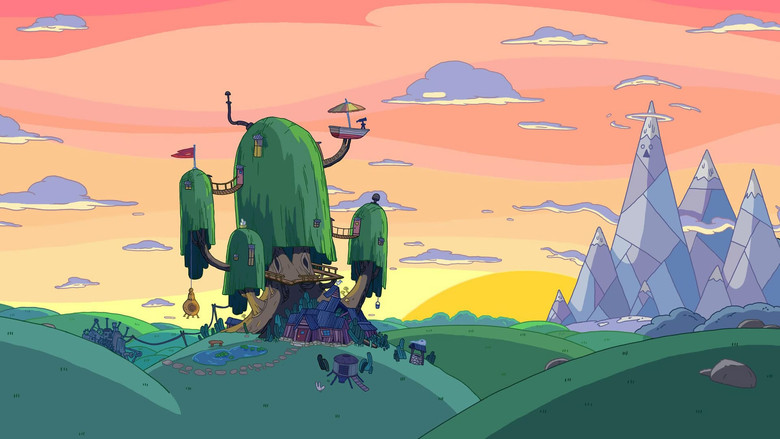
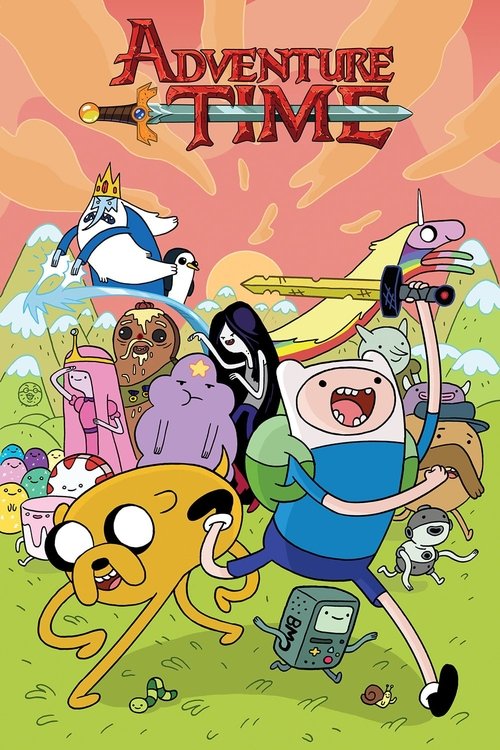
"Adventure Time" begins as a seemingly simple animated series about the escapades of Finn, a spirited human boy, and his best friend Jake, a magical dog with shape-shifting abilities. Set in the vibrant, surreal, and post-apocalyptic Land of Ooo, their initial adventures involve rescuing princesses, battling quirky monsters, and exploring dungeons. The duo interacts with a host of eccentric characters including the scientifically brilliant Princess Bubblegum, the tragic and misunderstood Ice King, and the thousand-year-old rocker, Marceline the Vampire Queen.

As the series progresses across its ten seasons, the lighthearted monster-of-the-week format gradually gives way to a deeper, overarching narrative. It delves into the complex backstories of its characters, revealing the world's history as a land recovering from a cataclysmic "Mushroom War" a millennium ago. The show matures alongside its protagonist, Finn, shifting its focus from straightforward heroism to exploring complex themes of morality, identity, love, loss, and the bittersweet nature of growing up, all while maintaining its unique blend of surreal humor and heartfelt emotion.
Core Meaning

At its core, "Adventure Time" is a profound exploration of maturation and the cyclical nature of life, death, and rebirth. Created by Pendleton Ward, the series uses its fantastical post-apocalyptic setting to convey the message that meaning is not found, but created through relationships, experiences, and the choices one makes in an often absurd and indifferent universe. It champions the idea that even in a world scarred by immense loss (the "Mushroom War"), life finds a way to be beautiful, joyful, and worth fighting for. The ultimate message is one of optimistic nihilism: while there may be no single, grand purpose, the bonds of friendship and the journey of self-discovery provide a powerful and valid meaning for existence. The series suggests that change is the only constant, and embracing this constant flux is the key to growth and finding peace.

Thematic DNA

Coming of Age and Maturation 35%
Friendship and Found Family 30%
Post-Apocalyptic Existentialism and Memory 25%
Moral Ambiguity 10%

Coming of Age and Maturation

The series is fundamentally Finn's bildungsroman. He begins as a twelve-year-old boy with a black-and-white view of heroism and morality. Throughout the seasons, he experiences his first love, heartbreak, disillusionment with his heroes, and confronts the complexities of good and evil. His physical and emotional growth is a central thread, as he grapples with his identity, the loss of his innocence, and the responsibilities that come with growing older. This theme is mirrored in other characters, like Princess Bubblegum, who evolves from a damsel-in-distress to a complex and sometimes morally ambiguous leader.

Friendship and Found Family

The relationship between Finn and his adoptive brother Jake is the heart of the series. Their unwavering loyalty provides a stable emotional core amidst the chaos of Ooo. The concept of family is expanded beyond blood ties, encompassing the deep, evolving relationships between Finn, Jake, Princess Bubblegum, Marceline, and even the Ice King. These characters form a supportive, if unconventional, family unit, demonstrating that connection and love can be found and built in the most unexpected places, serving as an anchor in a chaotic world.

Post-Apocalyptic Existentialism and Memory

Beneath its candy-colored surface, the Land of Ooo is a world built on the ruins of human civilization after the "Mushroom War." This setting provides a backdrop for exploring existential themes: the search for meaning in a seemingly meaningless world, the nature of existence, and the weight of history. Characters like the Ice King, whose memory and identity have been erased by his magical crown, and Marceline, an immortal survivor of the war, embody the theme of memory and loss. The show posits that while the past shapes the present, one can still forge a future filled with purpose.

Moral Ambiguity

"Adventure Time" consistently challenges simplistic notions of good and evil. The Ice King, initially presented as the main antagonist, is revealed to be a tragic figure, Simon Petrikov, driven mad by a cursed crown. Princess Bubblegum, the benevolent ruler, is shown to have authoritarian tendencies and a history of morally questionable decisions for the sake of her kingdom. The series suggests that morality is complex and situational, and that even heroes have flaws while villains have sympathetic motivations.

Character Analysis

Finn the Human

Jeremy Shada

Archetype: The Hero
Key Trait: Righteous

Motivation

Initially, Finn is driven by a simple, almost dogmatic code of heroism: help anyone in need and vanquish evil. This is his core identity. As he matures, his motivation becomes more nuanced. It shifts from a desire for adventure and glory to a deeper, more personal need to protect his friends and family and to simply do the right thing, even when it's difficult or unclear what the "right thing" is. Ultimately, he is motivated by love for his found family and a genuine desire to leave the world a better place.

Character Arc

Finn begins the series as a young, impulsive boy with a simplistic, zealous desire to be a hero. His worldview is black and white. As the series progresses, his arc is one of classic maturation. He experiences love and crushing heartbreak with Princess Bubblegum and Flame Princess, forcing him to confront complex emotions. He meets his biological father, only to be abandoned again, a trauma that leads to him losing his arm and a piece of his youthful idealism. Over ten seasons, Finn evolves from a hyperactive child into a thoughtful, more world-weary young man who understands that heroism isn't about slaying monsters but about empathy, perseverance, and helping people through their struggles. His journey is about accepting the imperfections of the world and himself.

Jake the Dog

John DiMaggio

Archetype: The Mentor/Sidekick
Key Trait: Laid-back

Motivation

Jake's primary motivation is to support and protect his younger brother, Finn. He is driven by a love of adventure, food (especially sandwiches), and having a good time. As the series progresses, a deeper motivation emerges: ensuring the happiness and safety of his family, including Finn, Lady Rainicorn, and their children. He seeks a life of minimal stress and maximum enjoyment, but will always step up when his loved ones are in peril.

Character Arc

Jake starts as Finn's laid-back, fun-loving, and occasionally lazy older brother and partner in adventure. His primary role is to support Finn, often acting as a multi-tool with his stretching powers. Jake's arc is more subtle than Finn's. While he remains the comic relief, he matures into a responsible adult and father after having children with Lady Rainicorn. This new role forces him to balance his carefree nature with paternal duties. He often provides surprisingly profound, zen-like advice, acting as Finn's moral compass and emotional anchor. His journey is about finding contentment and wisdom not in grand adventures, but in the simple joys of life and family.

Ice King / Simon Petrikov

Tom Kenny

Archetype: The Tragic Villain/The Sage
Key Trait: Tragic

Motivation

As the Ice King, his motivation is a twisted, surface-level desire for companionship, manifesting as a compulsion to kidnap princesses to force one to marry him and cure his profound loneliness. This is a corrupted echo of how he used to call his fiancée Betty his "princess." As Simon, his original motivation was to study ancient artifacts, and later, to protect young Marceline in the post-apocalyptic wasteland. The remnants of this protective instinct occasionally surface through the Ice King's madness.

Character Arc

The Ice King is introduced as the show's primary, yet comically inept, antagonist, obsessed with kidnapping princesses. His character arc is one of the most dramatic and tragic in the series. Through flashbacks and revelations, it's shown he was once a kind, human antiquarian named Simon Petrikov who was driven to madness and lost all his memories after finding a magical crown. The crown, which protected him during the Mushroom War, also took his sanity and his fiancée, Betty. He became a father figure to a young Marceline before forgetting her too. His arc is about the gradual unearthing of this tragedy, transforming him in the eyes of the audience and other characters from a villain to a deeply sympathetic figure trapped by his curse. In the finale, he is finally restored to Simon, completing his journey from madness back to himself.

Princess Bubblegum

Hynden Walch

Archetype: The Ruler/The Scientist
Key Trait: Pragmatic

Motivation

Her unwavering motivation is the protection and prosperity of the Candy Kingdom and its citizens. As an immortal being with a genius intellect, she feels an immense burden of responsibility to safeguard her creation. This often leads her to prioritize the greater good over individual freedoms or her own happiness. Her actions are driven by a deep-seated fear of chaos and destruction, stemming from her long life in a dangerous world.

Character Arc

Princess Bubblegum (Bonnibel) begins as a classic princess archetype: the kind, intelligent ruler of the Candy Kingdom and a frequent object of Finn's affections. Her arc reveals immense complexity and moral ambiguity. As the series progresses, her dedication to science and protecting her citizens leads her down a darker path. She exhibits authoritarian tendencies, creating a surveillance state and weapons of mass destruction, believing the ends justify the means. A near-death experience and being temporarily deposed from her throne force her to confront the consequences of her actions and her controlling nature. Her journey is about learning to trust others, accepting imperfection, and balancing the immense responsibility of leadership with personal relationships, culminating in her romantic relationship with Marceline.

Marceline the Vampire Queen

Olivia Olson

Archetype: The Outcast/Anti-Hero
Key Trait: Independent

Motivation

Marceline's initial motivation is self-preservation, both physically and emotionally. She keeps others at a distance to avoid the pain of loss she has experienced so many times. She is also driven by a need for freedom and a love of music, which serves as her primary outlet for her complex emotions. Over time, her motivation shifts to protecting her newfound friends and reconciling with the important figures from her past, seeking connection over isolation.

Character Arc

Marceline is introduced as a mischievous, punk-rock vampire queen who appears antagonistic. Her arc is a journey of confronting and healing from a millennium of trauma and loneliness. As a half-demon, half-human survivor of the Mushroom War, she carries deep emotional scars from her abandonment by her father, Hunson Abadeer, and the loss of her surrogate father, Simon Petrikov, to the Ice Crown's madness. Initially guarded and emotionally distant, she slowly opens up to Finn and Jake, finding in them a stable friendship. Her journey is about letting go of her detached persona, reconnecting with her past (with both Simon and her estranged father), and allowing herself to form lasting, meaningful bonds, most significantly rekindling her romantic relationship with Princess Bubblegum.

Symbols & Motifs

The Great Mushroom War

Meaning:

Symbolizes the forgotten past and the cyclical nature of destruction and creation. It represents the cataclysm that wiped out the old world (our own) and allowed the magical, strange world of Ooo to grow from its ashes. It's a constant, often unspoken, reminder of the world's fragility and the deep history underlying the characters' present-day adventures.

Context:

Evidence of the war is scattered throughout the series in the form of ruins, skeletons in business suits, and unexploded bombs. Characters like Marceline and the Ice King are direct survivors, and their backstories, particularly in episodes like "I Remember You" and "Simon & Marcy," explicitly explore the war's devastating aftermath.

The Ice King's Crown

Meaning:

The crown symbolizes madness, memory loss, and the tragic loss of self. It is a powerful metaphor for mental illness, particularly dementia or Alzheimer's disease, as it slowly stripped Simon Petrikov of his identity, memories, and sanity, leaving the lonely, erratic Ice King in his place. It represents the terrible cost of survival, as the crown's magic is what allowed Simon to live through the Mushroom War.

Context:

The crown is the source of the Ice King's power and his defining object. Its origin and influence are explored in depth in episodes like "Holly Jolly Secrets," "I Remember You," and "Betty." The series finale sees the crown's magic and curse finally resolved when it is consumed by GOLB, restoring Simon.

Finn's Arm

Meaning:

Finn's recurring loss of his right arm symbolizes destiny, sacrifice, and the painful, inevitable losses that are part of growing up. Across multiple realities and past lives, Finn is destined to lose his arm, signifying that some aspects of life are beyond one's control. Its loss is directly tied to his relationship with his estranged, deadbeat father, Martin, linking the physical wound to a deep emotional one. The various prosthetic arms he receives represent different stages of coping with trauma and loss.

Context:

The loss of Finn's arm is foreshadowed in alternate timelines ("Finn the Human") and past lives ("The Vault"). He physically loses it in the Season 6 episode "Escape from the Citadel" when trying to stop his father from abandoning him again. He later gains a flower arm, a telekinetic arm, and finally a bionic one, each reflecting his psychological state, before being restored to his primal, one-armed form in the finale.

The Waving Snail

Meaning:

The snail is a recurring Easter egg that symbolizes the constant observer and the hidden continuity of the series. Its brief, often unnoticed presence in every episode reminds viewers that there's always more happening than meets the eye and serves as a fun, unifying thread throughout the show's long run.

Context:

The snail appears, waving at the screen, for a few frames in every single episode of the original series. Initially just a gag, it becomes a significant plot point when it is possessed by The Lich, the series' main antagonist, turning the harmless Easter egg into a vessel for pure evil for a period.

Memorable Quotes

Sucking at something is the first step to being sorta good at something.

— Jake the Dog

Context:

Jake says this to Finn in the Season 1 episode "City of Thieves." Finn is trying to learn how to play the lute but is frustrated by his lack of skill. Jake's advice encourages him to keep trying without shame.

Meaning:

This quote encapsulates the show's philosophy on growth and learning. It's a humorous yet profound reminder that failure is a natural and necessary part of mastering any skill or navigating life. It champions perseverance and dismisses the fear of not being immediately perfect.

Please forgive me for whatever I do, when I don't remember you.

— Simon Petrikov (The Ice King)

Context:

This quote is revealed in the Season 4 episode "I Remember You." Marceline finds Simon's old notes, and they turn them into a heart-wrenching song. The lyrics are Simon's apology from a thousand years ago for the person he is becoming.

Meaning:

This line, from a note Simon wrote to Marceline, is the devastating core of their shared tragedy. It's a plea for forgiveness from a man aware that he is losing his mind and identity. It reframes the Ice King's villainy as a symptom of his condition, highlighting the show's deep empathy for those suffering from memory loss and mental illness.

People get built different. We don’t need to figure it out, we just need to respect it.

— Princess Bubblegum

Context:

Princess Bubblegum says this in the Season 5 episode "The Tower," advising Finn on how to deal with his feelings about his absent and disappointing father. It encourages acceptance over the futile struggle to understand or change people.

Meaning:

This quote is a powerful statement on acceptance, tolerance, and diversity. It speaks to the show's underlying message of embracing differences rather than trying to force everyone into the same mold. It's a moment of maturity and wisdom from a character who often struggles with control.

You're getting hung up on my lumps. You've gotta accept them. ALL of my lumps.

— Lumpy Space Princess

Context:

Lumpy Space Princess says this in the Season 1 episode "Trouble in Lumpy Space." After Finn is accidentally bitten and begins turning lumpy, she tries to teach him about the lumpy way of life, which involves radical self-acceptance.

Meaning:

Delivered with Lumpy Space Princess's signature valley-girl accent, this line is a comedic yet poignant metaphor for self-acceptance. It's about embracing one's flaws and imperfections ("lumps") and demanding that others do the same. It's a declaration of self-worth in its rawest form.

Episode Highlights

Mortal Folly / Mortal Recoil

S2E24

This two-part season finale introduces the series' ultimate antagonist, The Lich, a powerful undead being of pure evil. The episodes mark a significant tonal shift for the series, introducing a much darker and more serious threat than anything seen before. Princess Bubblegum is shattered and de-aged to 13, a major event that impacts her character development for several seasons.

Significance:

This is the turning point where "Adventure Time" firmly established its underlying lore and proved it was more than just a silly kids' show. The introduction of The Lich raised the stakes for the entire series and began the exploration of its deeper, post-apocalyptic mythology.

Holly Jolly Secrets

S3E19

In this two-part Christmas special, Finn and Jake find the Ice King's secret video diaries. While initially hoping to find evil secrets, they instead uncover the tragic backstory of Simon Petrikov, an antiquarian who was driven mad by the magic crown, losing his fiancée Betty and his identity in the process.

Significance:

This episode was a game-changer for the Ice King's character, transforming him from a one-dimensional villain into a complex, tragic figure. It was the first major reveal of the pre-apocalypse world and established the deep, sorrowful lore that would become a hallmark of the series.

I Remember You

S4E25

Marceline and the Ice King try to write a song together. The episode culminates in Marceline uncovering notes written by Simon Petrikov from 1,000 years ago, documenting his descent into madness and his desperate need to protect her. They turn his words into a powerful, heart-wrenching song.

Significance:

Widely regarded as one of the series' best episodes, "I Remember You" provides a profoundly emotional look at memory, loss, and mental illness. It cemented the tragic father-daughter relationship between Simon and Marceline and showcased the show's ability to tell deeply moving stories with incredible nuance and emotional weight.

The Lich / Finn the Human / Jake the Dog

S5E1

The Season 4 finale and Season 5 premiere form a trilogy where The Lich kills the hero Billy and tricks Finn and Jake into opening a portal to the Time Room to wish for the extinction of all life. To stop him, Finn wishes The Lich had never existed, creating an alternate "Farmworld" timeline where the Mushroom War was prevented but other dark consequences arose.

Significance:

This arc fully delves into the show's multiverse and "what if" scenarios. It explores the idea of destiny versus choice and solidifies The Lich as an inescapable, primordial force of evil. It also introduces Finn's alternate-reality family and deepens the lore of Ooo's creation.

Escape from the Citadel

S6E2

Finn finally meets his biological father, Martin Mertens, who turns out to be a selfish con man. While trying to escape the Citadel, a cosmic prison, Martin abandons Finn, and in the process, Finn's arm is ripped off as he desperately tries to hold on.

Significance:

A pivotal and traumatic moment in Finn's maturation. This episode shatters Finn's idealized image of his father and inflicts a permanent physical and emotional wound. The loss of his arm, long foreshadowed, becomes a major catalyst for his character development in subsequent seasons, forcing him to confront loss and disillusionment.

Come Along With Me

S10E13

The four-part series finale sees the culmination of the Gum War between Princess Bubblegum and her Uncle Gumbald, which is interrupted by the arrival of the chaotic deity GOLB. The heroes of Ooo must unite to save their world from being erased. The episode is framed by the story being told in the distant future by BMO to two new adventurers.

Significance:

The finale provides a deeply satisfying and emotional conclusion to the series. It resolves major character arcs (Simon's restoration, Marceline and Bubblegum's kiss) and reinforces the central theme that life and adventure continue, even after the story ends. The final song, "Time Adventure," beautifully encapsulates the series' message about the enduring nature of friendship and memory.

Philosophical Questions

What does it mean to be a hero in a morally ambiguous world?

The series constantly challenges Finn's initial black-and-white view of heroism. He learns that villains like the Ice King have tragic pasts and that allies like Princess Bubblegum can make ruthless decisions. The show explores whether being a hero is about following a strict code or about showing empathy and doing one's best in complex situations. It suggests that true heroism lies not in being perfect, but in the persistent struggle to do good despite personal flaws and the world's imperfections.

How do we find meaning in an absurd universe?

Drawing on themes of existentialism and absurdism, particularly reminiscent of Albert Camus, "Adventure Time" presents a world that is chaotic, strange, and often nonsensical. The series rejects the idea of a single, inherent meaning to life. Instead, it suggests that characters create their own purpose through their actions, relationships, and commitments. Finn finds meaning in helping others, Jake finds it in family, and Marceline finds it in her music. The show's ultimate answer is that meaning is not a universal truth to be discovered, but a personal one to be built.

Is identity fixed, or is it constantly changing?

Many characters in "Adventure Time" struggle with their identities. The Ice King is the most extreme example, having lost his original self, Simon. Princess Bubblegum grapples with her identity as a ruler versus her identity as a scientist and a friend. Finn, as one of the last humans, constantly questions what that means. The show posits that identity is fluid and multifaceted, shaped by experiences, relationships, and choices, rather than being a static, unchangeable essence.

Alternative Interpretations

One of the most popular alternative readings of "Adventure Time" is the "Coma Theory." This fan theory posits that the entire series is an elaborate dream or coma fantasy created by a normal boy named Finn after a serious accident. The surrealism of the Land of Ooo, the talking dog, and the magical adventures are all products of his subconscious mind processing his reality. While dismissed by the show's creators, the theory persists as a way to rationalize the show's more bizarre elements within a real-world framework.

Another interpretation views the entire series as a grand metaphor for the process of growing up. Each kingdom and character represents a different stage or challenge of adolescence. The Candy Kingdom is the perceived stability and sweetness of childhood, while the Nightosphere represents teenage angst and rebellion. The Ice King symbolizes the fear of loneliness and isolation, while Finn's journey through Ooo is a symbolic navigation of the confusing, magical, and often scary transition into adulthood. The finale, which shows time moving on and new heroes emerging, supports this reading by depicting life as a continuous cycle of growth and change.

Cultural Impact

"Adventure Time" premiered in 2010 and is widely credited with helping to usher in a new golden age of television animation. Its success demonstrated that a series could appeal to both children and adults without alienating either audience. It pioneered a style of storytelling that blended surreal, often goofy humor with surprisingly deep emotional resonance and complex world-building. The show's influence can be seen in the wave of creator-driven, lore-heavy animated series that followed, such as "Steven Universe" (created by AT alum Rebecca Sugar), "Gravity Falls," and "Over the Garden Wall." These shows adopted "Adventure Time's" willingness to tackle mature themes like loss, mental illness, and existentialism within a fantasy framework.

The series received critical acclaim for its character development, particularly the evolution of the Ice King from a simple villain to a tragic figure, which was praised as a sensitive allegory for dementia and mental illness. Furthermore, the show was groundbreaking for its inclusion of LGBTQ+ representation. The long-implied romantic relationship between Princess Bubblegum and Marceline was eventually confirmed on-screen in the series finale, a landmark moment for queer representation in children's media. The series' unique, simple art style (often dubbed "CalArts style") also became highly influential, shaping the look of many cartoons throughout the 2010s. Its legacy is that of a transformative series that pushed the boundaries of its medium, proving that cartoons could be vehicles for sophisticated, emotionally complex, and thematically rich storytelling.

Audience Reception

"Adventure Time" garnered a massive and dedicated fanbase of all ages, and its reception was overwhelmingly positive throughout its run. Initially praised for its quirky humor, imaginative world, and vibrant animation, the series began to receive deeper critical and audience acclaim as its emotional complexity and serialized storytelling became more apparent around seasons three and four. Episodes like "I Remember You" were frequently cited by audiences as high points of the series, showcasing its ability to handle mature themes with grace and emotional power. The show developed a significant cult following, particularly online, where fans endlessly discussed its lore, theories, and character arcs.

While the series was consistently praised, some viewers felt the tone became darker and more complex in later seasons, which was a point of contention for those who preferred the simpler, more episodic adventures of the early years. The series finale, "Come Along With Me," was met with widespread acclaim from both critics and fans, who felt it provided a fitting and emotionally resonant conclusion to the characters' journeys, even if some plot threads were left open-ended. The confirmation of Marceline and Princess Bubblegum's relationship in the finale was a particularly celebrated moment among the fanbase. Overall, the audience verdict is that "Adventure Time" is a landmark animated series that evolved beautifully, leaving a lasting impact on its viewers.

Interesting Facts

  • The show's creator, Pendleton Ward, grew up in San Antonio, Texas, and was inspired by his mother, who is an artist.
  • Pendleton Ward also voices the character of Lumpy Space Princess.
  • John DiMaggio, the voice of Jake the Dog, also famously voiced Bender in "Futurama." The two shows include a nod to this connection.
  • Initially, the series was not intended to be set in a post-apocalyptic world. The idea was introduced in the episode "Business Time" when Finn and Jake find frozen businessmen, and the creative team decided to build upon it.
  • Rebecca Sugar, who was a writer and storyboard artist for the show, went on to create the critically acclaimed series "Steven Universe."
  • Tom Kenny, the voice of the Ice King, is also the iconic voice of SpongeBob SquarePants.
  • During the Season 5 production, Pendleton Ward stepped down as showrunner, citing that the pressure and responsibility were driving him nuts. Adam Muto took over for the remainder of the series.
  • The final song in the series finale, "Time Adventure," was written by Rebecca Sugar.

Easter Eggs

A waving snail is hidden in every single episode of the original series.

This started as a simple running gag for attentive viewers but was eventually integrated into the plot. For a time, the snail was possessed by The Lich, making its cameo a more sinister omen. In the spinoff "Distant Lands," the snail is notably absent for the first time in the episode "BMO."

In the episode "The Visitor" (S6E27), Finn's dad builds a spaceship named "The Minnie."

This was a subtle piece of foreshadowing. It wouldn't be revealed for another two seasons that Finn's mother is named Minerva, whose nickname is likely "Minnie."

In "Futurama," a brief scene shows Bender pulling a doll out of a pile that looks exactly like Jake the Dog.

This is a direct nod to the fact that voice actor John DiMaggio voices both characters. In another crossover moment, DiMaggio's character in the show "Final Space" says, "What time is it? It's adventure-in' time!"

The Simpsons' "Treehouse of Horror XXV" opening segment features the Simpson family drawn in the style of various animated shows, including Adventure Time.

This tribute showcases "Adventure Time's" cultural reach and influence on the animation landscape. In the segment, Bart is dressed as Finn, Lisa as Fionna, Homer as the Ice King, and Marge as Princess Bubblegum.

In a Season 8 episode, a world population chart is briefly visible, showing a massive drop.

This chart visualizes the devastating human population loss caused by the Great Mushroom War. It also includes a small dip around the 1300s, accurately reflecting the impact of the Black Plague, adding a layer of historical realism to the show's fictional apocalypse.

⚠️ Spoiler Analysis

Click to reveal detailed analysis with spoilers

Frequently Asked Questions

Explore More About This Movie

Dive deeper into specific aspects of the movie with our detailed analysis pages

Comments (0)

Leave a comment

No comments yet. Be the first to share your thoughts!