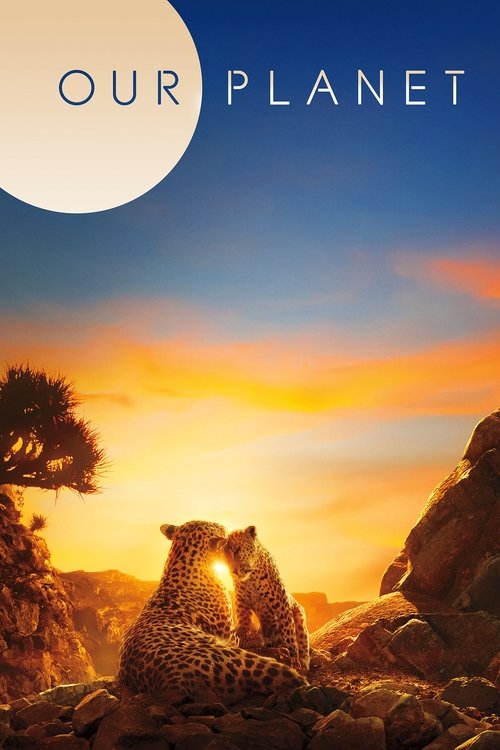
Our Planet
"Experience life's extraordinary journeys."
Overview
"Our Planet" is a landmark documentary series narrated by Sir David Attenborough, created by Silverback Films in collaboration with the World Wildlife Fund (WWF). Building on the legacy of acclaimed series like "Planet Earth," this show distinguishes itself with a more direct and urgent environmental message woven throughout its narrative. The first season's eight episodes each explore a different key biome—from the Arctic's frozen worlds to the dense jungles and the vast high seas—showcasing the breathtaking beauty and intricate interconnectedness of life on Earth.
Unlike its predecessors, which often saved conservation themes for the final episode, "Our Planet" integrates the harsh realities of climate change, habitat loss, and human impact into every chapter. Viewers are presented with stunning, never-before-seen footage of animal behavior, captured over four years in 50 countries by more than 600 crew members, while simultaneously being confronted with the fragility of these ecosystems. The series serves as both a celebration of the planet's remaining natural wonders and a stark, compelling call to action, emphasizing that the stability of nature can no longer be taken for granted and that the next few decades are critical for the future of all life.

Core Meaning
The core meaning of "Our Planet" is to demonstrate the profound interconnectedness of all life on Earth and to issue an urgent, unambiguous warning about the devastating impact of human activity on the planet's delicate ecosystems. The creators move beyond mere spectacle, aiming to fundamentally shift the nature documentary genre by placing the climate and nature crisis at the forefront of the narrative. The series argues that we are the first generation to fully comprehend the scale of our destruction and potentially the last with the opportunity to reverse the damage.
Through a combination of awe-inspiring beauty and heartbreaking truths, the series carries a message of shared responsibility and fragile hope. It posits that the health of the natural world is inseparable from human well-being and that restoring biodiversity is essential for global stability. Ultimately, "Our Planet" is not just a documentary but a global impact project designed to "mainstream green" by educating millions, inspiring urgent action, and proving that while the threats are real, so is our capacity for change.
Thematic DNA
Interconnectedness of Ecosystems
Throughout the series, a central theme is that all life is intricately linked. Each episode demonstrates how different habitats, from coastal seas to deep forests, are codependent. The first episode, "One Planet," explicitly establishes this concept, showing how ocean currents influence weather patterns that deliver life-giving rain to continents far away. The series repeatedly illustrates that a change in one part of the system, like melting sea ice in the poles, has cascading consequences for global wildlife and human life, emphasizing that no habitat exists in isolation.
Human Impact and Climate Change
Unlike many previous nature documentaries, "Our Planet" makes human-caused environmental damage its most prominent and urgent theme. The narrative doesn't shy away from showing the direct consequences of climate change, deforestation, and overfishing. This is powerfully illustrated by moments like the caribou herd being 70% smaller than it was 20 years ago or the now-infamous scene of walruses falling from cliffs because their sea-ice habitats have disappeared. The series argues that in a single human lifetime, wildlife populations have plummeted by an average of 60%, framing the environmental crisis as an immediate, undeniable reality.
Fragility and Resilience of Nature
The series masterfully juxtaposes the immense power and beauty of nature with its profound vulnerability. While showcasing heartbreaking scenes of loss, it also highlights nature's incredible capacity to recover when given a chance. Sequences showing the return of wild dogs to the Serengeti or the regeneration of forests serve as powerful symbols of hope. This theme underscores the core message that it is not too late to act; if humanity takes decisive steps to protect and restore ecosystems, nature can and will bounce back.
A Call to Action and Responsibility
"Our Planet" is structured as an explicit call for global action. Each episode blends spectacular visuals with sobering facts, aiming to move audiences from passive awe to active concern and engagement. The partnership with WWF provides viewers with tangible steps and further information via the OurPlanet.com platform. The series' ultimate goal is to inspire widespread behavioral and political change, making the destruction of nature socially and economically unacceptable. It frames conservation not as a choice but as a collective responsibility for the survival of all life, including our own.
Character Analysis
The Narrator
David Attenborough
Motivation
Attenborough's motivation is to use his trusted voice and the stunning visuals of the natural world to awaken a global audience to the severity of the environmental crisis. Having spent a lifetime showcasing Earth's wonders, his goal now is to communicate the urgent need to protect them before they disappear. He aims to bridge the gap between scientific understanding and public action, making the threat of biodiversity loss personal and immediate for hundreds of millions of viewers.
Character Arc
Across the series, David Attenborough's role evolves from the beloved, knowledgeable guide of past documentaries into a passionate, urgent advocate for change. His tone shifts from one of pure wonder to one tinged with melancholy and a profound sense of responsibility. In earlier works, the conservation message was often subtle; here, it is the central thesis. His narration becomes a 'witness statement,' chronicling the beauty that remains while simultaneously mourning what has been lost within his own lifetime and pleading for its protection. This series marks his transition into an explicit eco-warrior.
Symbols & Motifs
Melting Glaciers and Sea Ice
The cracking, calving, and shrinking ice of the polar regions serves as the most direct and visually dramatic symbol of climate change. It represents the immediate, large-scale destruction of habitats and the tangible, measurable impact of rising global temperatures.
This symbol is central to the "Frozen Worlds" episode. The series shows vast glaciers crumbling into the sea at an accelerated rate. The plight of polar bears struggling to find seals without sea ice and the tragic walrus haul-outs on land are used as heartbreaking case studies of the consequences of this melting, directly linking the abstract concept of climate change to the suffering of individual animals.
The Walrus Cliff Fall
The scene of walruses falling to their deaths has become the series' most iconic and harrowing symbol of an ecosystem thrown out of balance by climate change. It symbolizes desperation, displacement, and the lethal consequences of habitat loss, serving as a visceral, unforgettable image of the unfolding crisis.
In the "Frozen Worlds" episode, the lack of sea ice forces tens of thousands of walruses to crowd onto a single small beach. To escape the deadly stampedes in the crowd, some walruses scale a high, steep cliff. With poor eyesight, they are unable to comprehend the height and fall to their deaths when trying to return to the sea to feed. The filmmakers have described it as one of the hardest things they've ever had to film, and it sparked widespread discussion and emotional reactions from viewers.
Chernobyl's Returning Wildlife
The footage of wildlife thriving in the Chernobyl Exclusion Zone is a powerful, albeit complex, symbol of nature's resilience. It demonstrates that when human industrial activity is removed, even from a place of extreme disaster, ecosystems can begin to recover, highlighting nature's enduring power to reclaim and regenerate.
Though more prominently featured in the follow-up film "David Attenborough: A Life on Our Planet," the concept of nature's recovery is a recurring motif in the series. The filmmakers spent four years capturing footage of the wildlife in Pripyat, showing how life is slowly returning in humanity's absence. This serves as a hopeful counterpoint to the series' more dire warnings, suggesting that if humanity steps back and allows nature space, recovery is possible.
Memorable Quotes
In the last 50 years, wildlife populations have, on average, declined by 60%. For the first time in human history, the stability of nature can no longer be taken for granted.
— David Attenborough
Context:
This statement appears in the opening minutes of the first episode, "One Planet," setting the stage for the entire series and defining its core message.
Meaning:
This quote, delivered early in the series, immediately establishes the show's urgent and different tone. It quantifies the immense loss of biodiversity within a single human lifetime, shattering any illusion that the natural world is thriving and framing the entire series as a response to this crisis.
What we do in the next 20 years will determine the future for all life on Earth.
— David Attenborough
Context:
This impactful statement is used toward the end of the series to summarize its overarching thesis and leave the audience with a final, powerful plea for immediate action.
Meaning:
This is the series' ultimate call to action. It imparts a profound sense of urgency and responsibility, clearly defining a critical window for humanity to change its course. The quote transforms the documentary from a piece of entertainment into a direct appeal to the viewer.
If we take care of nature, nature will take care of us.
— David Attenborough
Context:
This idea is a recurring theme, particularly in the concluding segments of episodes that focus on solutions and the potential for a restored, balanced relationship between humans and nature.
Meaning:
This quote encapsulates the theme of interconnectedness between humanity and the natural world. It reframes conservation not as a selfless act, but as a crucial act of self-preservation, highlighting that our own survival is fundamentally dependent on the health of the planet's ecosystems.
Episode Highlights
One Planet
This episode serves as a powerful introduction to the series' grand scope and urgent message. It showcases a breathtaking diversity of life, from vast herds of wildebeest in the Serengeti to seabirds hunting in the oceans, while immediately establishing the central theme of interconnectedness and the devastating impact of human activity on wildlife populations.
"One Planet" is significant for immediately differentiating the series from its predecessors. It wastes no time in presenting the stark statistic that wildlife populations have declined by 60% in 50 years, framing the entire series not just as a celebration of nature, but as a critical examination of its fragility in the face of human-induced change.
Frozen Worlds
This episode transports viewers to the Arctic and Antarctic, showcasing the beauty of these icy realms and the peril their inhabitants face. It contains some of the series' most powerful and disturbing footage, including polar bears struggling with melting ice and the now-infamous sequence of walruses falling from a cliff due to loss of their sea-ice habitat.
"Frozen Worlds" became the most talked-about episode due to the graphic and emotionally devastating walrus scene. This sequence became a global symbol of the real-world consequences of climate change, sparking widespread debate and making the environmental threat visceral and unforgettable for millions of viewers.
Jungles
Exploring the richest habitats on Earth, this episode reveals the incredible biodiversity of the world's jungles. It features stunning footage of rare animals, including the elaborate and comical mating dance of the Western Parotia bird of paradise and the intimate lives of orangutans. It also highlights the shocking behavior of parasitic fungi taking over insects.
The episode is significant for its use of cutting-edge camera technology to reveal behaviors never seen before, like the female bird's perspective of a mating dance. It balances this wonder with the stark reality of deforestation, reminding viewers of the fragility of these vital ecosystems.
Forests
The final episode of the first season examines the critical role of forests, highlighting the fragile interdependence between their residents. It features exceptionally rare footage of a Siberian tiger, captured after a camera crew spent two winters in a hide, accumulating 37,000 hours of film for a few breathtaking shots.
This episode encapsulates the series' message of hope and resilience. While acknowledging the immense threats from deforestation, it concludes by emphasizing that forests can recover if given the chance. The incredible effort to film the tiger underscores the preciousness and rarity of what we stand to lose, ending the season on a poignant and motivational note.
Philosophical Questions
What is humanity's role and responsibility within the natural world?
The series consistently challenges the notion of humanity as separate from or superior to nature. Instead, it places us squarely within the interconnected web of life, portraying us as the single most powerful force shaping the planet's future. It explores our dual capacity for immense destruction (deforestation, pollution, causing climate change) and profound healing (conservation efforts, restoring ecosystems). The central question posed is not whether we are part of nature, but whether we will choose to be a destructive force or a responsible steward.
Can awe and grief coexist as motivators for change?
"Our Planet" masterfully employs a dual emotional strategy. It inspires profound awe with its breathtaking visuals of natural wonders, while simultaneously invoking deep grief and sadness by showing the destruction of those same wonders. The series implicitly asks whether this combination is more powerful than a purely positive or purely negative message. The heart-stopping beauty of a glacier is immediately followed by the horror of it collapsing into the sea. This juxtaposition forces the viewer to confront what is at stake, exploring the idea that true motivation to act comes from loving something deeply while simultaneously understanding the imminent threat of its loss.
Alternative Interpretations
While overwhelmingly praised, "Our Planet" did face some criticism and alternative interpretations. Some critics, like Ed Power of The Telegraph, found the series visually stunning but thematically familiar, arguing it was clichéd in its portrayal of nature and lacked the groundbreaking innovations of Attenborough's previous BBC work. Another point of debate centered on the intense and often brutal depiction of animal suffering. The walrus scene, while impactful, was criticized by some parents for being too graphic and emotionally distressing for younger viewers watching with their families, prompting Netflix to add time-stamped warnings for potentially upsetting content.
Furthermore, a subtle scientific debate emerged around the walrus scene itself. While the series directly links the behavior to climate change forcing them ashore, some scientists noted that such falls have been documented in the past, even when sea ice was more plentiful. However, others who worked with the film crew confirmed that the size and frequency of these dangerous land-based "haul-outs" have dramatically increased in recent years due to shrinking ice, making such deadly events more common. This discussion highlights the complexities of attributing any single event solely to climate change, even when it fits into a larger, well-documented pattern of environmental disruption.
Cultural Impact
"Our Planet" marked a significant turning point in the genre of nature documentaries. Created by the veterans of the BBC's Natural History Unit, it was Netflix's first major foray into the field and was designed as a "global impact project" in partnership with the WWF. Its primary innovation was shifting the conservation message from a subtle epilogue to the central, driving force of the narrative. This explicit focus on the threats of climate change and biodiversity loss was a direct response to criticism that previous documentaries presented a falsely idyllic vision of a thriving natural world.
Upon its release in 2019, the series became a global media event, reaching an estimated 100 million households within two years and sparking widespread conversation. The harrowing scene of walruses falling from a cliff, in particular, became an iconic and viral moment, viscerally demonstrating the consequences of climate change and leading to intense emotional reactions and debates among viewers. Critically, the series received universal acclaim for its stunning 4K cinematography, immersive sound design, and powerful storytelling, earning a 93% approval rating on Rotten Tomatoes.
The series' influence was measurable; research conducted by the WWF showed that viewers reported increased awareness, concern, and knowledge about environmental issues. It proved that content with a hard-hitting environmental message could be commercially successful with mainstream audiences and helped elevate the climate and nature conversation among the public and policymakers. The legacy of "Our Planet" is its success in "mainstreaming green," demonstrating that awe-inspiring entertainment can also be a powerful and effective tool for advocacy and education on a global scale.
Audience Reception
"Our Planet" was met with overwhelmingly positive audience reception, achieving massive global viewership and critical acclaim. Netflix reported that 25 million households were expected to watch in its first month, a number that grew to 100 million by March 2021. On review aggregator sites, it holds a 93% approval rating from critics on Rotten Tomatoes and a weighted average score of 88 out of 100 on Metacritic, indicating "universal acclaim".
Audiences widely praised the series' breathtaking cinematography, calling the visuals exceptional and spectacular. However, the most significant point of discussion was its direct and emotionally impactful environmental message. Many viewers found the series to be a powerful, essential, and urgent call to action. The walrus scene in the "Frozen Worlds" episode became a major talking point, with many describing it as heartbreaking and harrowing, yet crucial for understanding the real-world impact of climate change. While this frankness was lauded by most, it was also a point of minor criticism, with some viewers finding the "we're killing this planet" message heavy-handed, and some parents expressing concern over the graphic nature of certain scenes for young children. Overall, the series was seen as a monumental and important work that successfully educated and inspired millions.
Interesting Facts
- The series was an unprecedented four-year project, filmed in 50 countries across all seven continents by a crew of over 600 people.
- In total, the production involved more than 3,500 filming days to capture the footage for the series.
- The ratio of footage shot to what actually appears in the final cut is estimated to be between 500 and 1,000 to one.
- The challenging sequence of the Siberian tiger in the "Forests" episode required a cameraman to live in a small hide for two winters, resulting in 37,000 hours of film to get the final shots.
- The creators, Alastair Fothergill and Keith Scholey of Silverback Films, were also the visionaries behind the acclaimed BBC series "Planet Earth" and "The Blue Planet".
- Netflix reported that 100 million households had watched the series as of March 2021, making it a massive global event.
- The series won two Emmy Awards in 2019 for Outstanding Documentary Series and Outstanding Narrator for David Attenborough.
- For international audiences, Netflix enlisted other famous narrators, including Penélope Cruz for Spain and Salma Hayek for Latin America.
⚠️ Spoiler Analysis
Click to reveal detailed analysis with spoilers
Frequently Asked Questions
Explore More About This Movie
Dive deeper into specific aspects of the movie with our detailed analysis pages
Comments (0)
No comments yet. Be the first to share your thoughts!