Skip to content
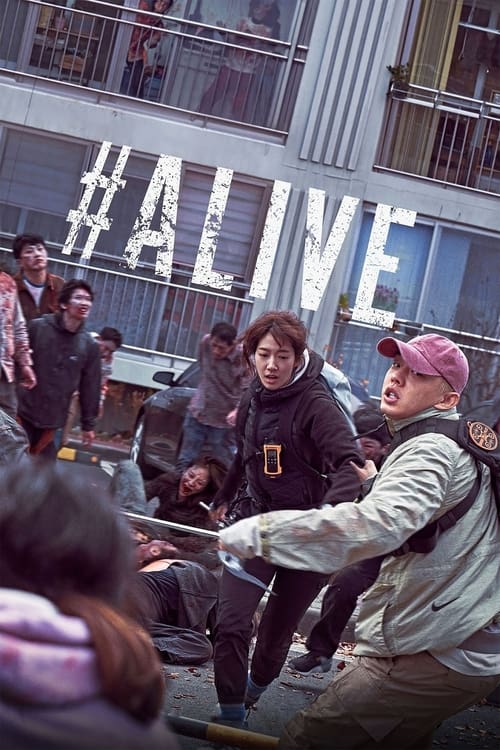
#Alive
Claustrophobic urban horror meets desperate digital longing, as a glowing smartphone screen becomes a flickering lighthouse in a suffocating ocean of feral flesh.
#Alive

#Alive

#살아있다

"You must survive."

24 June 2020 South Korea 98 min 7.2 (2,086)

Director: Cho Il

Cast: Yoo Ah-in, Park Shin-hye, Lee Hyun-wook, Jin So-yeon, Kim Hak-sun

Action Science Fiction Horror Isolation and Mental Solitude Human Connection and Solidarity Modern Technology vs. Analog Survival Morality and Human Preservation
Budget: $6,300,000
Box Office: $13,416,285

Overview

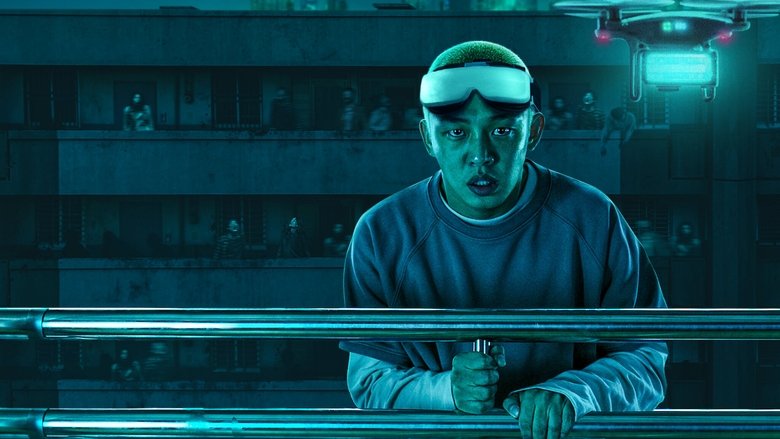
When a sudden, mysterious viral outbreak transforms the population of Seoul into ferocious, flesh-eating monsters, young video game live-streamer Oh Joon-woo wakes up to find himself trapped inside his family’s high-rise apartment. Cut off from the outside world as cellular networks, Wi-Fi, and running water gradually collapse, Joon-woo is forced into absolute isolation. As days stretch into weeks, his food supplies vanish, and the terrifying reality of his family’s fate sets in, driving him to the brink of utter despair.

Just as Joon-woo reaches his lowest point and prepares to give up, a tiny red laser light shines through his window from across the courtyard. Kim Yoo-bin, a pragmatic and highly disciplined survivor living in the opposite apartment block, reveals herself. Her presence sparks a vital lifeline between two isolated souls.

Using drones, improvised ziplines, and walkie-talkies, the pair form an unlikely partnership to share supplies and emotional support. As infected hordes breach their respective buildings, Joon-woo and Yoo-bin must abandon their safe zones and navigate infested hallways to reach the highest floors in a desperate gamble for survival.

Core Meaning

At its core, #Alive is an exploration of the fundamental human need for connection and shared purpose in times of extreme isolation. Director Cho Il-hyung uses the zombie apocalypse not merely as a spectacle of horror, but as a visceral metaphor for modern social alienation, digital hyper-connectivity vs. physical solitude, and the psychological toll of quarantine.

The film posits that physical survival—shelter, food, and barricades—is meaningless without psychological survival. Joon-woo deteriorates rapidly when alone, despite having a safe apartment. It is only when he connects with Yoo-bin that his will to live is reignited. The director's core message is clear: survival is not an individual endeavor, but a collective human responsibility. In a world that forces us apart, staying human requires reaching out across the chasm to say, "I am still here, and you are not alone."

Thematic DNA

Isolation and Mental Solitude 30%
Human Connection and Solidarity 30%
Modern Technology vs. Analog Survival 20%
Morality and Human Preservation 20%

Isolation and Mental Solitude

The film examines how prolonged isolation breaks down the human mind. Joon-woo's descent into hallucinations, lethargy, and suicidal ideation highlights that solitude can be as lethal as the monsters outside.

Human Connection and Solidarity

Represented by the relationship between Joon-woo and Yoo-bin. The narrative emphasizes that empathy, shared struggle, and mutual aid are the ultimate tools for enduring a crisis.

Modern Technology vs. Analog Survival

Joon-woo relies on digital technology (drones, smartphones, power banks, livestreams), while Yoo-bin utilizes analog survivalist skills (mountaineering gear, axes, physical traps). Their synergy proves that while technology offers tools, human ingenuity and practical adaptability determine survival.

Morality and Human Preservation

Explored through the contrasting actions of the survivors. While Joon-woo and Yoo-bin risk their lives to save each other, other survivors succumb to monstrous selfishness, demonstrating how crisis tests the boundaries of human ethics.

Character Analysis

Oh Joon-woo

Yoo Ah-in

Archetype: Reluctant Everyday Hero / Relatable Gamer Key Trait: Technological adaptiveness and emotional sincerity

Motivation

Honoring his family’s final command to stay alive and keeping Yoo-bin safe.

Character Arc

Evolves from a pampered, tech-dependent, emotionally fragile homebody into a courageous, resourceful, and self-sacrificing survivor.

Kim Yoo-bin

Park Shin-hye

Archetype: Pragmatic Survivalist / Action Heroine Key Trait: Tactical composure, physical toughness, and sharp reflexes

Motivation

Surviving through tactical discipline and escaping the apartment complex.

Character Arc

Begins as a hyper-vigilant, guarded loner prepared to die quietly, but opens up and embraces collective hope after forming a bond with Joon-woo.

All 3 characters and cast

Symbols & Motifs

The Laser Pointer

Meaning:

Symbolizes hope, awareness, and a literal bridge across isolation.

Context:

Yoo-bin uses it to stop Joon-woo's suicide attempt, turning a simple toy into a beacon of life.

The Drone

Meaning:

Symbolizes modern perspective, agency, and technological connection.

Context:

It acts as Joon-woo's eyes in the sky, a tool for transporting ropes, and a decoy to protect Yoo-bin.

The Refrigerator

Meaning:

Represents the ticking clock of physical survival.

Context:

Initially jammed against the front door as an inadequate barricade, its emptying contents reflect Joon-woo’s dwindling life resources.

Walkie-Talkies

Meaning:

Symbolize intimate, unmediated human communication.

Context:

Stripped of social media performativity, the devices allow Joon-woo and Yoo-bin to share genuine vulnerabilities and build trust.

Ramen / Food

Meaning:

Represents comfort, normalcy, and the instinctual drive to satisfy basic human needs amidst chaos.

Context:

Shared and consumed during desperate moments as a reminder of everyday life and nourishment.

Memorable Quotes

아들, 꼭 살아남아야 한다.
— Joon-woo's father

Context

Sent via text message right as communications collapse.

Meaning

It becomes Joon-woo’s moral anchor and core mantra whenever he faces existential despair.

살고 싶으니까, 지금 살아있는 거예요.
— Kim Yoo-bin

Context

Spoken during a quiet conversation across the courtyard.

Meaning

It grounds their survival not in grand heroic ideals, but in the raw, innate dignity of choosing life.

All 4 quotes

Philosophical Questions

What is the boundary between living and merely surviving?

The movie contrasts physical existence (staying locked in a room eating canned food) with meaningful living (connecting with others and risking safety for human warmth).

When does holding onto love turn into monstrous selfishness?

Explored through the Masked Man, who preserves his zombie wife by murdering strangers. It asks whether love stripped of moral boundaries degenerates into evil.

Is technology a bridge or a wall?

The narrative questions whether modern screens isolate humans or serve as life-saving tools during crises.

Alternative Interpretations

Literal Survival Narrative: The most common reading—a straightforward, pulse-pounding thriller about two young people surviving a biohazard outbreak through technology and teamwork.

Full ending explanation

Cultural Impact

Filmed in late 2019 before COVID-19 emerged, #Alive was released in South Korean theaters in June 2020. Its themes of home confinement, social distancing, supply shortages, and reliance on social media resonated intensely with global audiences navigating real-world lockdowns.

It became the first film in South Korea to cross 1 million theater admissions during the COVID-19 box office slump, revitalizing domestic cinema distribution. Alongside Train to Busan and Kingdom, #Alive solidified South Korea's leadership in the modern zombie genre, shifting the focus from wide-scale action to intimate, micro-budget spatial thrillers.

Audience Reception

Praise:

  • Strong lead chemistry and acting performances by Yoo Ah-in and Park Shin-hye.
  • Creative, relatable use of modern apartment spaces, drones, and everyday items.
  • Extremely effective, tense first act depicting isolation and panic.

Criticism:

  • Plot conveniences in the third act (convenient timing, sudden rescue).
  • Inconsistencies in utilities (phone battery lasting days, power supply glitches).
  • Underserved villain subplot with the Masked Man.

Overall Verdict: A highly enjoyable, atmospheric, and resonant modern zombie entry (holding ~88% on Rotten Tomatoes) that succeeds through its grounded lead performances and timely premise.

Interesting Facts

  • The film is based on an original script titled Alone by Hollywood writer Matt Naylor, co-adapted for Korea while Johnny Martin directed a parallel US version titled Alone (2020).
  • To capture the specific claustrophobia of Korean residential complexes, the production team spent 3 months constructing a 1,000-pyeong (~3,500 sq meter) open-air set in Gunsan after visiting over 200 complexes.
  • The film's working title was #Alone, but director Cho Il-hyung changed it to #Alive in early 2020 as the COVID-19 pandemic broke out to project a message of survival and hope.
  • When the production team contacted food company Ottogi regarding the ramen eating scene, the company allowed them to use their actual trademark jingle free of charge.
  • Professional breakdancers, mimes, and physical theater performers were hired to portray infected bodies attempting to use former human muscle memory with unnaturally contorted movements.
  • The figure of 50,000 infected mentioned in radio reports was added during post-production sound design to create a localized, contained, and claustrophobic feel.

Easter Eggs

"Bug Killer" Smoke Trick

When Joon-woo tries to distract zombies, he uses a fogging canister that close inspection reveals to be a household cockroach fogger (바퀴킬라), emphasizing his makeshift civilian strategy.

Zombie Muscle Memory

Infected individuals retain specific skills from their living habits, such as a firefighter climbing a rope or a security officer opening doors, paying homage to George A. Romero's Dawn of the Dead.

ROKAF SART Unit

The rescue helicopter in the climax features real markings of the Republic of Korea Air Force 6th Search and Rescue Group (SART), providing a grounded military touch.

Yeouido & 63 Building

Maps shown on screen set the story in Yeouido, Seoul, an island district surrounded by the Han River where closing bridges creates a realistic quarantine bubble.

Frequently Asked Questions

Explore More About This Movie

Dive deeper into specific aspects of the movie with our detailed analysis pages

Comments (0)

Leave a comment

No comments yet. Be the first to share your thoughts!

Similar Movies