Skip to content
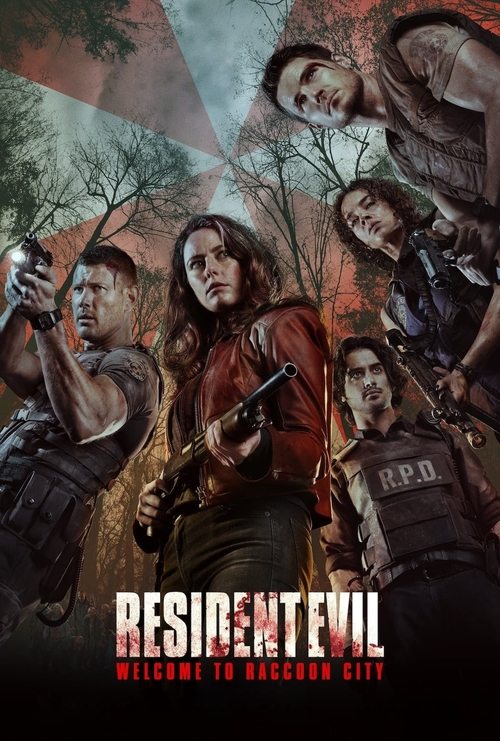
Resident Evil: Welcome to Raccoon City
A rain-soaked survival-horror nightmare lit by flickering flashlights, where a dying company town rots from the inside and a handful of strangers race the clock through corridors full of hungry shadows.
Resident Evil: Welcome to Raccoon City

Resident Evil: Welcome to Raccoon City

"Witness the beginning of evil."

24 November 2021 Germany 107 min 5.9 (2,803)

Director: Johannes Roberts

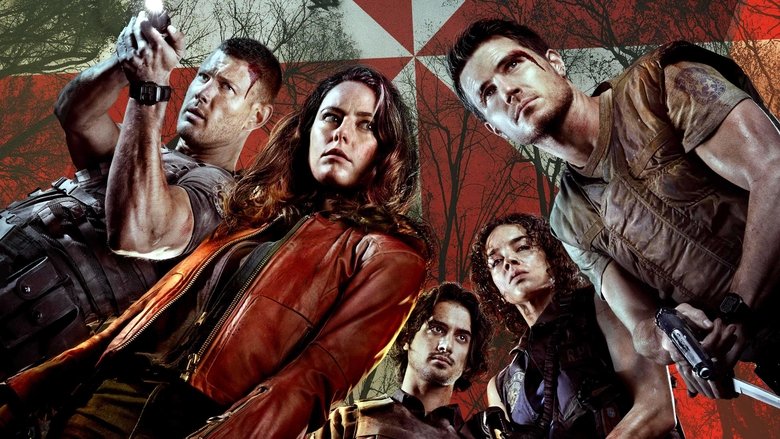
Cast: Kaya Scodelario, Hannah John-Kamen, Robbie Amell, Tom Hopper, Avan Jogia

Action Science Fiction Horror Corporate greed and the disposable town Family, estrangement and reconciliation Survival under scarcity Betrayal and hidden loyalties Nostalgia and origins
Budget: $25,000,000
Box Office: $41,914,915

Overview

Resident Evil: Welcome to Raccoon City is a reboot of the Resident Evil film series, written and directed by Johannes Roberts. It sets aside the Milla Jovovich-era continuity and returns to the source material, the original 1990s Capcom video games. It combines the stories of the first two games: one half of the film takes place in the decaying Midwestern town of Raccoon City as a zombie outbreak begins, and the other half follows members of the Raccoon City police as they investigate the Spencer mansion.

Claire Redfield (Kaya Scodelario) comes back to the town she ran away from, convinced the pharmaceutical giant Umbrella Corporation is hiding something deadly. Her estranged brother Chris (Robbie Amell) is sent to the mansion with Jill Valentine (Hannah John-Kamen) and Albert Wesker (Tom Hopper). Meanwhile, rookie cop Leon S. Kennedy (Avan Jogia) gets through his first night on the job at a police station that is steadily being overrun.

Over one long night, the two storylines move toward each other as the survivors run short of ammunition and time, and a town built by a corporation gets ready to pay for that corporation's secrets.
Core Meaning

Roberts has said he wanted a faithful adaptation of the games, and the film's main purpose is to bring back the claustrophobic survival horror of the originals: limited ammunition, oppressive darkness and a slowly revealed conspiracy. Underneath the fan service, the film tells a story of corporate rot and abandonment. Raccoon City is a company town that Umbrella feeds on and then throws away, and the only answer the film offers is a small, fragile solidarity among damaged people, especially the estranged Redfield siblings, who have to rebuild trust to survive.

Thematic DNA

Corporate greed and the disposable town 30%
Family, estrangement and reconciliation 25%
Survival under scarcity 20%
Betrayal and hidden loyalties 15%
Nostalgia and origins 10%

Corporate greed and the disposable town

Umbrella built Raccoon City's economy and then abandons it. The outbreak shows that the company sees citizens, orphans and even its own employees as expendable test material.

Family, estrangement and reconciliation

Claire and Chris start the film as strangers divided by the past. Chris calls Umbrella scientist William Birkin "like a father" and Claire does not trust him. The night forces them to rebuild their bond.

Survival under scarcity

In keeping with the games, the characters have limited ammunition and are surrounded by darkness, so every encounter becomes a question of resourcefulness rather than firepower.

Betrayal and hidden loyalties

Not everyone in the police force is who they seem to be. Divided loyalties inside the S.T.A.R.S. team echo the wider betrayal of the town by its patron.

Nostalgia and origins

The film presents itself as an origin story, set in the late 1990s and full of recreated game locations, and it asks what it means to go back to the beginning of a long-running franchise.

Character Analysis

Claire Redfield

Kaya Scodelario

Archetype: Hero / Truth-seeker Key Trait: Stubborn distrust of authority

Motivation

To expose Umbrella's secrets and to warn and protect Chris.

Character Arc

Claire comes back to the town she ran away from as an outsider whose warnings nobody believes. Over the night she becomes a decisive survivor and reconnects with her brother.

Chris Redfield

Robbie Amell

Archetype: Loyal soldier Key Trait: Loyalty

Motivation

Duty to his S.T.A.R.S. team and the need for the family he lost.

Character Arc

Chris starts out trusting the Umbrella-connected world he grew up in, calling William Birkin "like a father". He is then forced to face the truth and side with his sister.

All 5 characters and cast

Symbols & Motifs

The Raccoon City Police Station

Meaning:

A symbol of civic order that fails from within and becomes a trap instead of a refuge.

Context:

It is carefully recreated as it appears in Resident Evil 2. Leon and his colleagues become besieged there as the outbreak spreads.

"Itchy. Tasty" written in blood

Meaning:

Stands for the loss of humanity in a person, the moment hunger replaces identity.

Context:

Claire sees it on an infected neighbor's window at her brother's house. It refers to the Keeper's Diary from the first game, which records a man's decline under the T-virus.

The Raccoon City Orphanage

Meaning:

Stands for childhood innocence that has been corrupted and for Umbrella's abuse of the most vulnerable.

Context:

The Redfield siblings' past is tied to the orphanage. A First Aid Spray poster there nods to the games' healing item.

Darkness and flashlight beams

Meaning:

Represent fear of the unknown and the partial vision of characters who only half-understand the conspiracy.

Context:

Reviewers noted that Roberts deliberately recreates the games' oppressive darkness in the mansion and station sequences.

Memorable Quotes

He's been like a father to me... After you ran away, William was the closest thing I had to a family.
— Chris Redfield

Context

Chris defends William Birkin to Claire after she returns to Raccoon City.

Meaning

Shows how closely Chris is tied to Umbrella's people and sets up the siblings' conflict and later reckoning.

I see you wax your chest now.
— Claire Redfield

Context

Claire teases Chris when they first meet again.

Meaning

A sibling jab that relieves tension and shows how long the two have been apart.

All 5 quotes

Philosophical Questions

What do corporations owe the communities they create?

Umbrella shaped Raccoon City and then abandons it. The film asks whether a town built by a company can ever be more than a resource to be used up.

Can family be rebuilt after abandonment?

Claire left and Chris stayed, and each feels betrayed by the other. The crisis tests whether shared danger can repair old wounds.

When does a person stop being human?

The "Itchy. Tasty" writing and the infected townsfolk dramatize the slow loss of identity to hunger, which raises questions about where selfhood lives.

How It Ends

Alternative Interpretations

As a love letter: Some viewers see the film as a collage of the games meant mainly for fans, where recognition (locations, notes, items) is the main pleasure, and they forgive its looseness as intentional B-movie energy.

Full ending explanation

Cultural Impact

The film arrived after six Paul W.S. Anderson films that fans often criticized for straying from the games. Welcome to Raccoon City tried to reset the franchise by going back to the source material, and it fits into a wider trend of game adaptations built around fidelity and fan service. Critics credited its devotion to the games but felt that fidelity alone could not make a good film. One review called it an affectionately faithful adaptation that further proves its source material is ill-suited to the big screen.

Commercially, it grossed about $42 million worldwide on a $25 million budget, and the planned sequel was cancelled. Its lasting legacy is mostly as a case study in the limits of literal adaptation.

Audience Reception

Praised: Players of the original games valued its many details and homages, especially its limited ammunition and oppressive darkness and the faithful R.P.D. station. Several viewers considered it better than some of the earlier live-action adaptations.

Criticized: Reviews pointed to a bland cast, poor special effects, forgettable action and a weak script, plus a messy structure from combining two games. Some called it bland and bungled.

Verdict: Mixed to negative. Fans found enjoyable nostalgia in it, but general audiences found an uneven B-movie, and the film's commercial disappointment ended plans for a sequel.

Interesting Facts

  • Johannes Roberts both wrote and directed the film, which reboots the Resident Evil film series.
  • The film had a budget of about $25 million and was produced by James Harris, Robert Kulzer and Hartley Gorenstein.
  • It opened in theaters on November 24, 2021.
  • The story merges the plots of the first two Resident Evil games: the Spencer mansion from the original and Raccoon City and its police station from Resident Evil 2.
  • Roberts said he wanted the reboot to be a faithful adaptation of the original 1990s games, as opposed to the earlier films starring Milla Jovovich.
  • The film grossed about $42 million worldwide.
  • A planned sequel was cancelled because the film underperformed commercially.

Easter Eggs

"Itchy. Tasty" scrawled in blood on a window

Refers to the Keeper's Diary in the first game, one of the franchise's most famous documents about a man turning into a zombie.

First Aid Spray poster in the orphanage

A nod to the games' famous healing item, which cures wounds with a single spray.

Recreated R.P.D. station

The Raccoon City Police Department building copies the layout and look of the station in Resident Evil 2.

Claire arriving on a motorcycle

Echoes Claire's introduction in Resident Evil 2.

The "Jill sandwich" joke

Refers to the infamous line "You were almost a Jill sandwich!" from the original 1996 game's badly translated dialogue.

Frequently Asked Questions

Explore More About This Movie

Dive deeper into specific aspects of the movie with our detailed analysis pages

Comments (0)

Leave a comment

No comments yet. Be the first to share your thoughts!

Similar Movies