
Skip to content
Amores Perros
A raw, grain-soaked Mexico City triptych where one violent car crash splits three lives open, and love, loyalty and cruelty all run as wild as the dogs.
Amores Perros
Amores Perros

Amores perros

"Love. Betrayal. Death."

16 June 2000 Mexico 154 min 7.6 (2,851)

Director: Alejandro G. Iñárritu

Cast: Emilio Echevarría, Gael García Bernal, Vanessa Bauche, Goya Toledo, Álvaro Guerrero

Drama Thriller Love as possession and betrayal Violence and its cycles Class collision in Mexico City Fate versus human plans Redemption and fatherhood
Budget: $2,000,000
Box Office: $20,908,467

Amores Perros — Ending Explained

⚠️ Spoiler Analysis

The car crash is the centre of everything. Octavio's story leads up to it. His dog Cofi becomes a dogfighting champion, and the rivalries and violence around the fights end with Octavio fleeing in a car chase that ends in the collision. His plans to escape with Susana collapse, which proves her grandmother's saying about telling God your plans.

Valeria's story straddles the crash. She is the passenger in the other car. Daniel has just left his family for her, the "ideal woman." After the crash he ends up pushing her in a wheelchair in their new apartment. Her career and self-image fall apart, and so does the fantasy that drove Daniel's choice.

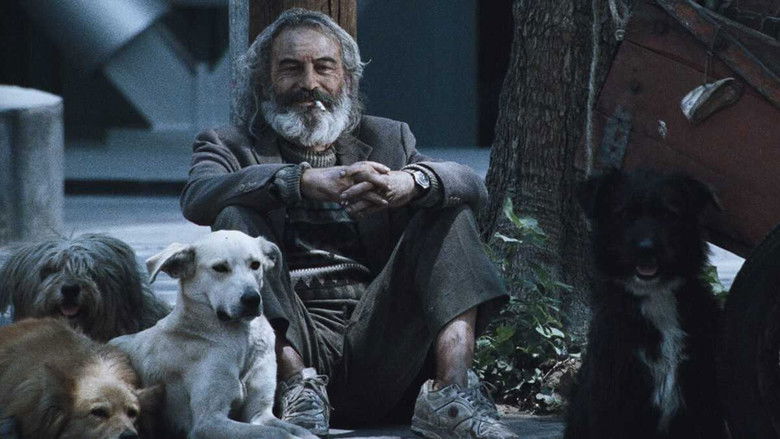
El Chivo witnessed the crash and takes the wounded Cofi home. He nurses the dog back to health, but Cofi kills El Chivo's other dogs. In the dog, El Chivo sees himself: a creature made into a killer. This leads him to refuse the killing he was hired to do. Instead, he tries to reclaim his lost loyalty to his daughter Maru, who believes he is dead. Iñárritu said the ending was always meant to be about El Chivo's redemption. The film ends with him heading into a bleak, uncertain future. Once you know this, the whole triptych reads as a movement from blind, reckless passion toward a painful moral awakening.

Alternative Interpretations

  • A Biblical parable: Some critics read the film as a retelling of betrayal stories like Cain and Abel, Joseph's brothers and Judas, set in modern Mexico City.
  • A social allegory: The crash can be read as Mexico's social classes violently running into each other at the turn of the millennium. The three stories then show the poor, the rich and the forgotten.
  • A narrative of time: One reading notes that Octavio's story lies mostly in the past before the crash, Valeria's straddles the present, and El Chivo's looks to the future. This makes the film a movement from past recklessness toward possible redemption.
  • The ending as grace or bleakness: El Chivo walking toward the horizon can be seen as real moral rebirth. It can also be seen as a lonely exile into a harsh, uncertain world.

Explore More About This Movie

Dive deeper into specific aspects of the movie with our detailed analysis pages

Similar Movies