
Skip to content
Amores Perros
A raw, grain-soaked Mexico City triptych where one violent car crash splits three lives open, and love, loyalty and cruelty all run as wild as the dogs.
Amores Perros

Amores Perros

Amores perros

"Love. Betrayal. Death."

16 June 2000 Mexico 154 min 7.6 (2,851)

Director: Alejandro G. Iñárritu

Cast: Emilio Echevarría, Gael García Bernal, Vanessa Bauche, Goya Toledo, Álvaro Guerrero

Drama Thriller Love as possession and betrayal Violence and its cycles Class collision in Mexico City Fate versus human plans Redemption and fatherhood
Budget: $2,000,000
Box Office: $20,908,467

Overview

Amores Perros was Alejandro González Iñárritu's first feature. Guillermo Arriaga wrote the screenplay. The film tells three stories in Mexico City, and a single car crash ties them together. In each story, a dog reflects something about its owner.

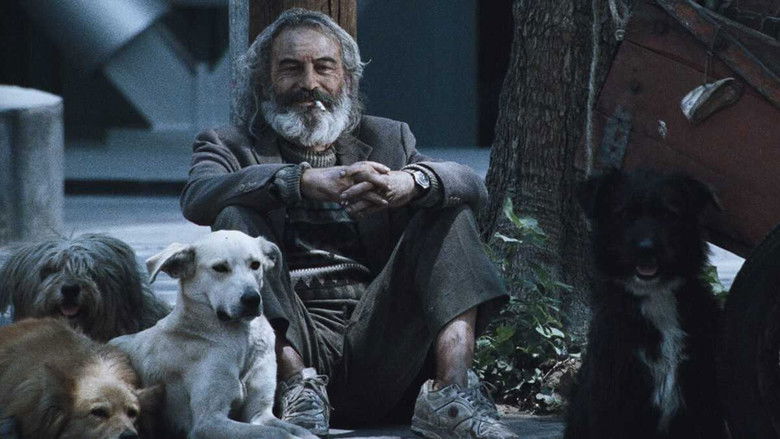
In the first story, young Octavio dreams of getting rich by entering his dog, Cofi, in underground dogfights, and he wants to escape with his brother's wife, Susana. In the second, magazine executive Daniel leaves his family for Valeria, a glamorous model he sees as the "ideal woman." In the third, El Chivo, a former guerrilla and ex-prisoner, lives in squalor surrounded by stray dogs. He works as a hitman and quietly watches Maru, the daughter he abandoned.

The stories overlap in time. The crash is seen again from different angles and changes the direction of each life. The result is a harsh but humane portrait of a city divided by class and driven by desire.


Core Meaning

Critics describe the film as a meditation on violence, sexism, poverty and the destructive way social classes collide, a "map of broken dreams." Its title is often translated as Love's a Bitch (literally "Dog Loves"). Love in the film is fierce, possessive and animal. People betray their brothers, abandon their families and destroy what they love while chasing it.

Iñárritu said the ending was always meant to focus on El Chivo's redemption. After all the chaos, the film's final hope rests on one broken man trying to become human again: he refuses to kill and tries to reconnect with the daughter he left behind. The film suggests that people cannot control their fate ("tell God your plans"), but they can still choose to change.

Thematic DNA

Love as possession and betrayal 25%
Violence and its cycles 25%
Class collision in Mexico City 20%
Fate versus human plans 15%
Redemption and fatherhood 15%

Love as possession and betrayal

Octavio's desire for his brother's wife and Daniel's escape to Valeria both show love that grows out of betrayal and ends in loss. Critics compare these rivalries to Biblical betrayals such as Cain, Joseph's brothers and Judas.

Violence and its cycles

Violence runs through all three stories: the dogfight pits, the crash and El Chivo's contract killings. The film shows how violence spreads from the dogs to the men who own them, and from one class to another.

Class collision in Mexico City

The working-class Octavio, the wealthy Daniel and Valeria, and the destitute El Chivo live in completely different worlds. The crash literally throws them into each other, turning the city's inequality into a physical collision.

Fate versus human plans

Every character makes plans: to get rich, to start a new life, to settle a score. Chance destroys those plans in an instant. Susana's grandmother's saying sums up the film's view of fate.

Redemption and fatherhood

El Chivo's story moves toward redemption. He refuses a killing he was hired to do and tries to regain the daughter he abandoned for his political ideals.

Character Analysis

El Chivo

Emilio Echevarría

Archetype: Fallen idealist / redeemed antihero Key Trait: Silent, weathered remorse

Motivation

To reconnect with Maru, who believes he is dead, and to atone for a wasted life.

Character Arc

El Chivo is a former guerrilla who left his daughter for his political cause. He now lives among stray dogs and works as a hitman. After Cofi kills his dogs, he refuses the killing he was hired for and tries to win back his daughter's love, a man falling from grace and trying to regain it.

Octavio

Gael García Bernal

Archetype: Reckless young dreamer Key Trait: Impulsive passion

Motivation

Money and freedom for himself and Susana.

Character Arc

Octavio moves from a crush on his brother's wife to a dangerous plan to fund their escape with Cofi's dogfight winnings. His plans fall apart in violence and the crash.

All 5 characters and cast

Symbols & Motifs

Dogs

Meaning:

Each dog mirrors its owner. Dogs stand for loyalty, instinct, savagery and dependence.

Context:

Cofi is Octavio's route to money. Valeria's lapdog reflects her pampered life and how fragile it is. El Chivo's strays reflect the outcasts of the city.

Cofi killing El Chivo's dogs

Meaning:

This is the moment El Chivo recognizes himself: a creature trained to kill.

Context:

After Cofi kills El Chivo's other dogs, El Chivo sees his own reflection as a hitman in the animal. The scene pushes him to question his violent life.

The car crash

Meaning:

Chance, collision between classes, and the point where every life changes direction.

Context:

The film shows the crash several times from different stories. It is the hinge of the film's broken-up timeline.

The wheelchair

Meaning:

A trapped dream: the ideal Daniel chased turns into a burden and a prison.

Context:

Daniel leaves his family for the "ideal woman" and ends up pushing her in a wheelchair.

The final landscape shot

Meaning:

A bleak, uncertain future that is still open.

Context:

El Chivo's story takes place mostly after the crash, and its last shot looks toward what one critic calls a bleak, networked future.

Memorable Quotes

You know what my grandmother used to say? If you want to make God laugh... tell Him your plans.
— Susana

Context

Susana says it to Octavio as he lays out his plans for them to run away together.

Meaning

This line states the film's central idea: human plans are fragile against chance and fate. Every storyline proves it true. (Quoted here in the English subtitle version found in the sources; the original line is in Spanish.)

Philosophical Questions

Can a person who has done terrible things be redeemed?

El Chivo, a hitman and absent father, refuses to kill and reaches out to his daughter. The film leaves open whether this is enough, but it clearly values the attempt.

Do we control our lives, or does chance decide?

The crash wipes out every character's carefully made plans. Susana's line about making God laugh states the film's scepticism about human control.

Are humans more animal than we admit?

The dogs mirror their owners' loyalty, aggression and dependence. The film suggests the line between human passion and animal instinct is thin.

Is love a virtue if it leads to betrayal?

Octavio's and Daniel's loves are sincere but built on betraying a brother and a family. The film shows how love and destruction can grow from the same root.

How It Ends

Alternative Interpretations

A Biblical parable: Some critics read the film as a retelling of betrayal stories like Cain and Abel, Joseph's brothers and Judas, set in modern Mexico City.A social allegory: The crash can be read as Mexico's social classes violently running into each other at the turn of the millennium. The three stories then show the poor, the rich and the forgotten.A narrative of time: One reading notes that O...

Full ending explanation

Cultural Impact

Amores Perros premiered at Cannes in 2000, where it won the Critics' Week Grand Prize. The festival itself later called it Iñárritu's and Gael García Bernal's breakthrough film. It became the first Mexican film nominated for the Best Foreign Language Film Oscar in 26 years and won 10 Ariel Awards at home.

The Criterion Collection has described it as a film that "heralded the millennium." It helped launch a new wave of Mexican cinema and the international careers of Iñárritu, screenwriter Guillermo Arriaga, cinematographer Rodrigo Prieto and Gael García Bernal. Its broken-up, interlocking structure and grainy, bleach-bypass look became a template for many multi-story dramas of the 2000s. Its 25th anniversary in 2025 brought retrospectives, including Cannes celebrations and Cinema Tropical tributes. Iñárritu also revisited the film in a multisensory art installation.

Audience Reception

Critics and audiences praised the film for its raw energy, its interlocking three-part structure, its strong performances (especially Gael García Bernal's breakout role and Emilio Echevarría's El Chivo) and Rodrigo Prieto's vivid, grainy cinematography. Its awards at Cannes and Chicago, 10 Ariels and an Oscar nomination reflect this strong reception.

The biggest controversy was the dogfighting scenes. Many viewers found them disturbing and questioned how the animals were treated. According to production accounts, the dogs were actually playing with their muzzles tied, and the sedation used for "dead" dogs was supervised by the Mexican SPCA. Some viewers also find the 150-minute running time and relentless brutality hard to sit through. Overall, the film is widely regarded as a landmark of modern Mexican and world cinema.

Interesting Facts

  • It was Alejandro González Iñárritu's feature directorial debut. He also produced it, from a screenplay by novelist Guillermo Arriaga.
  • Iñárritu called Arriaga's screenplay "an incredible, solid, complex script."
  • Cinematographer Rodrigo Prieto used a bleach-bypass process on the negative, a technique he and Iñárritu had first tried in advertising work, which gave the film heavy grain and hyper-saturated, high-contrast colors.
  • The film was shot over ten weeks on location in Mexico City with documentary-style camerawork.
  • Some of the shooting took place in dangerous parts of Mexico City, and the crew was reportedly robbed by street gangs more than once.
  • The dogs in the fight scenes were actually playing. Very fine fishing line covered their muzzles so they could not bite, and editing made the fights look vicious.
  • Dogs that appear dead or dying were sedated under the supervision of the Mexican SPCA. Several dogs were used so that no single dog was sedated for more than half an hour, or more than once a day.
  • The film won the Critics' Week Grand Prize at Cannes in 2000.
  • It was the first Mexican film in 26 years to be nominated for the Academy Award for Best Foreign Language Film.
  • It won awards at the Chicago film festival and won 10 Mexican Ariel Awards.

Frequently Asked Questions

Explore More About This Movie

Dive deeper into specific aspects of the movie with our detailed analysis pages

Comments (0)

Leave a comment

No comments yet. Be the first to share your thoughts!

Similar Movies