
Skip to content
UNABOMBER
A chilling psychological crime drama steeped in dread and intellectual vanity, where the fracture of a teenage prodigy's mind detonates into a lifelong campaign of domestic terror.
UNABOMBER

UNABOMBER

"Where brilliance ends, the madness begins."

25 September 2026 United States of America 101 min 6.7 (222)

Director: Janus Metz

Cast: Russell Crowe, Jacob Tremblay, Shailene Woodley, Annabelle Wallis, Alexander Ludwig

Drama Crime Thriller Institutional Abuse and Psychological Manipulation Alienation and Radicalization The Ethics of Behavioral and Linguistic Profiling Technological Despair and Scientific Hubris

Overview

Directed by Janus Metz, UNABOMBER dramatizes the origins and capture of America's notorious domestic mail bomber, Theodore "Ted" Kaczynski. Moving between two distinct eras, the narrative juxtaposes Kaczynski's formative years at Harvard University in the late 1950s with the sprawling multi-agency federal manhunt that gripped the United States during the mid-1990s.

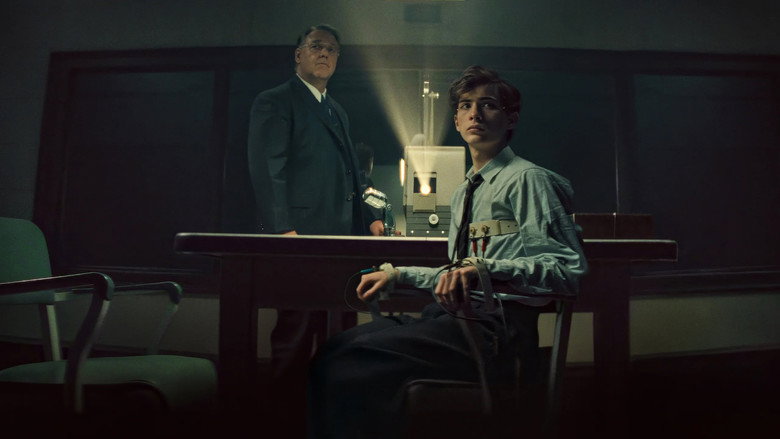
In 1958, sixteen-year-old math prodigy Ted Kaczynski arrives at Harvard academically brilliant yet socially isolated and vulnerable. Seeking intellectual mentorship, he enters the orbit of Dr. Henry Murray, a charismatic and manipulative professor carrying out covert psychological stress experiments. The dehumanizing interrogations dismantle young Ted's fragile psyche, fostering an intense hostility toward authority and the burgeoning technological apparatus.

Decades later, FBI behavioral investigator Joanne Miller leads a specialized task force struggling to decipher the elusive bomber's increasingly lethal mail campaign. When Kaczynski demands the national publication of his anti-technology manifesto under threat of further attacks, Miller risks her career by gambling on forensic linguistics to decode the bomber's distinct cadence before he strikes again.


Core Meaning

At its core, UNABOMBER is an autopsy of institutional hubris and the catastrophic cycle of trauma. Director Janus Metz exposes how elite academic cruelty, masquerading as objective psychological inquiry, can systematically strip an individual of their humanity. The film illustrates that ideological violence does not emerge in a vacuum, but rather festers when intellectual arrogance, social alienation, and unchecked institutional abuse collide.

Thematic DNA

Institutional Abuse and Psychological Manipulation 30%
Alienation and Radicalization 25%
The Ethics of Behavioral and Linguistic Profiling 25%
Technological Despair and Scientific Hubris 20%

Institutional Abuse and Psychological Manipulation

The film explores how academia and covert military-linked experiments exploit youth and vulnerability. Through Professor Murray's brutal stress tests, the film portrays how institutional power strips human dignity under the guise of scientific discovery.

Alienation and Radicalization

Kaczynski's journey from a self-proclaimed social outcast into a lethal recluse highlights the devastating trajectory of acute emotional detachment and philosophical isolation.

The Ethics of Behavioral and Linguistic Profiling

Through FBI agent Joanne Miller's investigation, the film examines the tension between bureaucratic rigidness and humanistic intuition, demonstrating how linguistic idiosyncrasies can expose deeply buried psychological signatures.

Technological Despair and Scientific Hubris

Both Kaczynski's violent crusade against modern industry and Murray's dehumanizing experimental methods embody different extremes of mid-century scientific arrogance and its dehumanizing fallout.

Character Analysis

Ted Kaczynski

Jacob Tremblay

Archetype: Tragic Antihero / Monster in the Making Key Trait: Prodigious mathematical intellect shadowed by crippling emotional alienation

Motivation

Desperately seeks intellectual validation and connection, before turning to philosophical nihilism and anti-industrial vengeance.

Character Arc

Transforms from an insecure, desperate-to-please sixteen-year-old mathematics student into a hardened, deeply resentful ideologue wounded by experimental degradation.

Professor Henry Murray

Russell Crowe

Archetype: Mephistophelean Mentor Key Trait: Commanding charisma masking cold emotional calculation

Motivation

Strives to prove his psychological theories and advance institutional research into psychological conditioning at all costs.

Character Arc

Begins as an imposing, seductive academic mentor who gradually reveals a chilling disregard for human ethics in his obsessive quest to chart the limits of human resilience.

All 4 characters and cast

Symbols & Motifs

The Two-Way Mirror

Meaning:

Symbolizes asymmetrical institutional power, surveillance, and emotional violation, separating the cold scientific observer from the exposed human subject.

Context:

Featured prominently in Henry Murray's laboratory at the Harvard Psychological Clinic, where observers silently take notes while young Ted is systematically humiliated.

Herman Melville's Moby-Dick

Meaning:

Represents obsessive, self-destructive monomania and the perils of ideological crusades that end in total catastrophe.

Context:

Murray analyzes the novel during his lectures, drawing comparisons between Ahab's futile obsession and the limits of the human will.

Handcrafted Wooden Bomb Casings

Meaning:

Reflects Kaczynski's tragic paradox: using organic, natural materials painstakingly shaped by hand to unleash mechanical devastation upon technocrats.

Context:

Shown during close-up sequences of the older recluse assembling postal devices in his secluded Lincoln, Montana cabin.

Memorable Quotes

The entire premise of this study is to show that all men can be broken.
— Professor Henry Murray

Context

Delivered by Murray to young Ted as justification for the harrowing confrontational debates.

Meaning

Encapsulates Murray's fundamental cynicism and the ruthless thesis underlying his psychological degradation experiments.

Every detonation starts with a spark.
— Agent Joanne Miller

Context

Spoken to fellow FBI investigators during a briefing when advocating for an inquiry into the bomber's academic past.

Meaning

Reflects Miller's belief that criminal actions cannot be prevented or solved without understanding the foundational trauma that ignited them.

All 3 quotes

Philosophical Questions

Can systemic institutional cruelty ever be excused by the pursuit of scientific progress?

The film examines this by contrasting Henry Murray's lofty intellectual theories with the profound psychological damage and human cost inflicted upon his young research subjects.

Does tracing the traumatic origin of an ideologue risk justifying their atrocities?

Metz navigates the line between clinical empathy and moral condemnation, illustrating Kaczynski's victimization without absolving him of his heinous acts of terror.

How It Ends

Alternative Interpretations

Some critics and viewers interpret the narrative as an indictment of American technocratic hubris, reading Kaczynski not as an anomaly, but as a direct byproduct of the Cold War military-industrial academy that created him. Conversely, other readings argue the film treats the Harvard stress experiments as an excessive rationalization, suggesting Kaczynski's misanthropy and destructive impulses were preexisting pathologies that merely adopted ideological language after his academic alienation.

Full ending explanation

Cultural Impact

Released in the autumn of 2026, UNABOMBER reignited mainstream public debate concerning the classified Cold War-era psychological experiments financed by military and intelligence agencies on American university campuses. Critics widely discussed the film's refusal to frame Kaczynski's crimes through standard true-crime tropes, instead situating his radicalization inside mid-century institutional misconduct. The film's dual-timeline structure prompted discussions in film criticism about the balance between historical biopics and procedural thrillers, solidifying director Janus Metz's standing as a versatile filmmaker across international fiction cinema.

Audience Reception

The film garnered mixed-to-positive reviews from major critics and achieved high viewership on streaming platforms. Audiences and critics praised the commanding performances of Russell Crowe and Jacob Tremblay, particularly during their claustrophobic laboratory confrontations, as well as Shailene Woodley's grounded portrayal of Joanne Miller. Main points of criticism centered on the ninety-seven-minute runtime, with several reviewers noting that the 1990s FBI procedural timeline felt comparatively conventional alongside the intense psychological depth of the 1958 Harvard storyline.

Interesting Facts

  • Screenwriters Sam Chalsen and Nelson Greaves, both Harvard alumni, conceived the project after Greaves heard an NPR radio segment discussing Ted Kaczynski's participation in unethical psychological experiments during his undergraduate years at Harvard.
  • Director Janus Metz cast Jacob Tremblay after seeing his performance in the 2025 drama Sovereign, specifically seeking an actor who could project raw vulnerability without vanity.
  • Upon its global premiere on Netflix on September 25, 2026, the film quickly reached the number one spot worldwide, amassing over 16.4 million views during its first week of release.
  • Russell Crowe was actively involved in script revisions for the Harvard sequences, using historical journals and transcripts of Dr. Henry Murray to accurately replicate the professor's rhetorical style.
  • Cinematographer Yves Bélanger intentionally differentiated the film's two timelines by shooting the 1950s Harvard segments with rich, warm Technicolor-style lighting and the 1990s FBI procedural with desaturated, cold tones.

Easter Eggs

The pseudonym 'Closet Dimension' on the 1994 parcel bomb.

A historically precise reference to the return address Kaczynski used on the package mailed to advertising executive Thomas Mosser in North Caldwell, New Jersey.

The 'Mr. C' moniker assigned to Ted's debate sparring partner.

Directly matches the real-life codename assigned to the ruthless debater employed by Henry Murray during the Harvard psychological stress experiments.

Frequently Asked Questions

Explore More About This Movie

Dive deeper into specific aspects of the movie with our detailed analysis pages

Comments (0)

Leave a comment

No comments yet. Be the first to share your thoughts!

Similar Movies