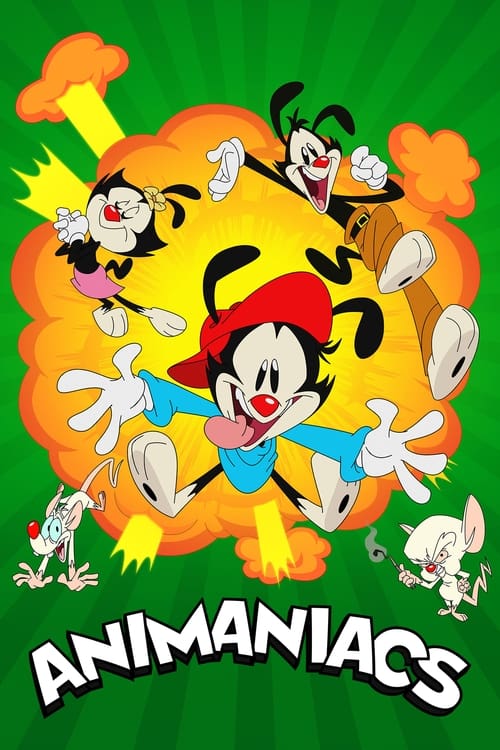
Animaniacs
"Going out with a bang!"
Overview
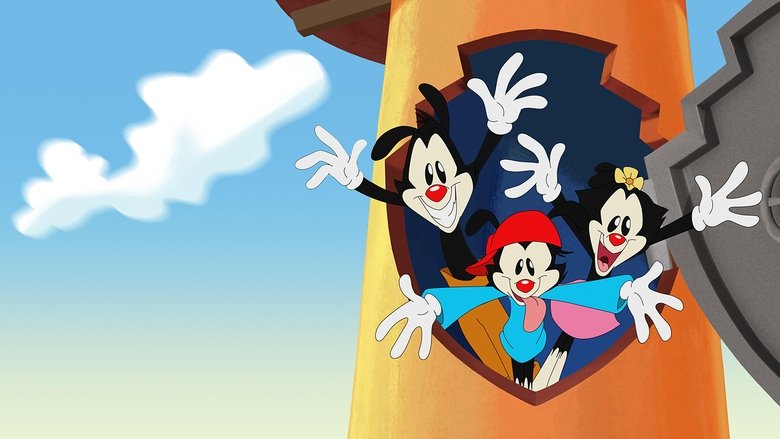
Twenty-two years after their last appearance, the Warner siblings—Yakko, Wakko, and Dot—are unleashed from their water tower home to wreak havoc on the 21st century. The series is a direct continuation, immediately acknowledging the passage of time and the current media landscape obsessed with reboots, social media, and fraught politics. Each episode is primarily composed of segments featuring the Warners' chaotic antics and a sketch with fan-favorites Pinky and the Brain, who continue their nightly attempts at world domination using modern tools like memes and political manipulation.
Across its three seasons, the show maintains its classic sketch-comedy format, forgoing a serialized plot for relentless satire and meta-commentary. The Warners run amok through history, pop culture, and the Warner Bros. studio itself, now run by a new CEO, Nora Rita Norita. The series sharpens its satirical edge, targeting contemporary culture, from streaming services and political figures to social media trends, all while constantly joking about its own existence as a reboot. The show concluded after its third season, offering a blend of nostalgic zaniness for original fans and a fresh dose of irreverent humor for a new generation.
Core Meaning
The core meaning of the 2020 "Animaniacs" is a satirical examination of nostalgia and the nature of entertainment in the modern age. The creators use the revival as a vehicle to comment on Hollywood's reliance on reboots, the absurdity of 21st-century pop culture, and the inescapable political landscape. By being relentlessly self-aware, the show questions its own purpose, suggesting that while the world has changed dramatically, the need for sharp, anarchic humor to make sense of it all is timeless. It posits that true comedic relevance comes not just from reviving the past, but from holding a funhouse mirror up to the chaotic present.
Thematic DNA
Hollywood & Reboot Culture
The series is fundamentally built on meta-commentary about its own existence as a reboot. The very first episode features a Jurassic Park parody where Steven Spielberg "reanimates" the Warners. Throughout the seasons, songs like "Reboot It" and numerous gags directly mock Hollywood's lack of originality and the commercial motivations behind reviving old properties. The show is cynically self-aware, constantly reminding the audience that it is a product of the very trend it satirizes.
Modern Social & Political Satire
The reboot dives headfirst into contemporary social and political issues with an unapologetic and irreverent tone. Segments tackle topics ranging from Russian election interference and gun control (disguised as "bun control") to the vapidness of social media culture and political division. Unlike the original, which often hid its commentary, the 2020 version is more direct, reflecting a more polarized era and using its characters to lampoon current events and figures.
Nostalgia vs. Modernity
The show exists in a constant state of tension between catering to '90s nostalgia and adapting to the 21st century. The characters themselves grapple with how much the world has changed in 22 years, as detailed in the opening "Catch-Up Song." This theme is also evident in production choices, such as updating the theme song with lyrics about being "gender-balanced, pronoun-neutral, and ethnically diverse," and the deliberate exclusion of many original supporting characters deemed outdated. It explores the difficulty of making a beloved classic relevant without losing its original charm.
The Nature of Comedy
The series often deconstructs its own humor. Slapstick violence is paired with jokes about needing stunt doubles, and educational songs are presented with a wink and a nod. By streamlining the cast to focus primarily on the Warners and Pinky and the Brain, the creators emphasized the core comedic engines of the show. Some critics noted a shift in tone to be more cynical and biting than the original, reflecting changes in adult animation influenced by shows like Family Guy.
Character Analysis
Yakko Warner
Rob Paulsen
Motivation
Yakko's motivation remains the creation of chaos for its own sake and the joy of witty wordplay. However, in the reboot, this is augmented by a drive to dissect and mock the absurdity of the modern world he's been thrust into. He is driven to prove that his brand of smart-aleck humor is timelessly relevant.
Character Arc
Yakko's arc in the reboot is one of adaptation. While he remains the fast-talking, witty leader, his role shifts to being the primary mouthpiece for the show's meta-commentary on reboots and modern culture. He is more world-weary and cynical, guiding his siblings through a 21st century he finds just as absurd as they do. His development is less about personal change and more about refining his satirical targets from '90s pop culture to today's political and social landscape.
Wakko Warner
Jess Harnell
Motivation
Primarily motivated by hunger and a love for pure, unadulterated slapstick and chaos. He wants to eat everything and hit things with a mallet, and the reboot provides him with a whole new world of things to consume and smash.
Character Arc
Wakko's arc is the most subtle, as he remains the most purely chaotic and id-driven of the siblings. His development is reflected in the broadening of his physical and absurd humor to fit new contexts. While his personality doesn't fundamentally change, the situations he finds himself in are updated, allowing his brand of mayhem (often involving his giant mallet or insatiable appetite) to satirize new targets. He is the constant, reminding the audience of the show's slapstick roots.
Dot Warner
Tress MacNeille
Motivation
Dot is motivated by a desire to be seen as both cute and clever. In the reboot, she has an added motivation to assert her agency and intelligence, challenging anyone who underestimates her and often spearheading segments that satirize gender dynamics or celebrate female empowerment, such as the "Suffragette City" song.
Character Arc
Dot's arc shows the most significant update. While still priding herself on being cute, the reboot empowers her with a sharper, more assertive intelligence. She is less reliant on her cuteness and more on her wit, often taking the lead in pointing out hypocrisy or delivering satirical punchlines, particularly around social issues. Her character was deliberately updated to better resonate with modern attitudes about female characters.
The Brain
Maurice LaMarche
Motivation
His motivation is unwavering across all seasons: to take over the world. He believes his superior intellect makes him the only one fit to rule and end global incompetence. This singular drive is the engine for all his segments.
Character Arc
The Brain's arc sees him adapting his megalomaniacal ambitions to the digital age. His core personality remains unchanged, but his methods evolve. He moves from Cold War-era schemes to plans involving social media manipulation, creating viral memes, and exploiting modern technology. Across the seasons, there's a recurring tragic element: his genius is constantly thwarted by unforeseen variables and Pinky's idiocy, but now his failures often serve as direct parodies of real-world technological or political blunders, making him a more pointed satirical figure.
Pinky
Rob Paulsen
Motivation
Pinky is motivated by a simple desire to enjoy himself and assist his best friend, The Brain, in his nightly schemes. He finds joy in the process, regardless of the outcome, and his loyalty is unwavering even if his understanding is nonexistent.
Character Arc
Pinky remains the good-natured, simple-minded foil to Brain's genius, and his character arc is one of consistent, joyful ignorance. He doesn't develop so much as he adapts his nonsensical observations to new, modern scenarios. His non-sequiturs ("Narf!") and accidental brilliance continue to sabotage Brain's plans, but now they might involve misinterpreting a social media trend or a piece of modern slang, anchoring their classic dynamic in the 21st century.
Symbols & Motifs
The Warner Bros. Water Tower
The water tower symbolizes both a prison and a cherished home. It represents the characters' legacy and their literal containment between the original series and the reboot. Their constant escape from it symbolizes their irrepressible, chaotic nature that cannot be controlled by the studio or societal norms.
The series opens with the Warners reemerging from the water tower after a 22-year absence. It is their home base and the iconic backdrop for much of the series, frequently shown as the starting point for their adventures on the studio lot.
Breaking the Fourth Wall
This is a core symbol of the show's self-awareness and its refusal to be a conventional cartoon. It represents the characters' intelligence and their understanding that they exist within a fictional, commercial construct. This meta-awareness is central to the show's satirical power.
Characters frequently address the audience, comment on the show's writing, critique the concept of being a reboot, and interact with on-screen text. This happens in nearly every segment, from the opening song's updated lyrics to direct asides during their chaotic adventures.
Memorable Quotes
Alright guys, there's a lot of pressure on our first lines. They gotta be funny, they gotta be irreverent, and most of all, they got to be carefully crafted.
— Yakko Warner
Context:
This is said in Season 1, Episode 1, right after the Warners return to their water tower home after a 22-year absence. Yakko says this to his siblings, only to have them point out he just wasted his own first line on explaining what a first line should be.
Meaning:
This quote, from the very first moments of the reboot, perfectly encapsulates the show's self-aware and meta-textual nature. It immediately acknowledges the audience's expectations and the pressure of reviving a beloved classic.
Reboots are symptomatic of a fundamental lack of originality in Hollywood. Have you no shame?
— Yakko Warner
Context:
This line is spoken by an audience member (voiced by Yakko) questioning a panel of reboot creators during a song in Season 1. The show frequently uses its characters to voice criticisms leveled against itself.
Meaning:
A direct, biting critique of the entertainment industry's trend of rebooting old properties, which is the entire premise of the show itself. It's a prime example of the show's cynical, self-deprecating humor.
Gender-balanced, pronoun-neutral, and ethnically diverse.
— The Warners (singing)
Context:
This is part of the new opening theme song used in every episode of the reboot, replacing a verse about the show's original supporting cast.
Meaning:
This lyric from the updated theme song demonstrates the show's attempt to acknowledge and adapt to modern cultural sensibilities, while also satirizing corporate diversity initiatives in a tongue-in-cheek manner.
Episode Highlights
Jurassic Lark/Suspended Animation, Part 1/Of Mice and Memes/Suspended Animation, Part 2
The premiere episode masterfully reintroduces the characters for the 21st century. It begins with a parody of Jurassic Park where Steven Spielberg resurrects the Warners, immediately setting the meta-textual tone. The episode features the "Catch-Up Song," where the siblings summarize 22 years of history, and a Pinky and the Brain segment where Brain tries to achieve world domination by creating a viral internet meme.
This episode is crucial as it establishes the reboot's entire mission statement: to blend nostalgia with sharp, contemporary satire and a heavy dose of self-awareness about its own existence as a reboot. It sets the comedic and thematic template for the rest of the series.
Bun Control/Ex Mousina/Bloopf
This episode is notable for its "Bun Control" segment, a thinly veiled and hilarious allegory for the gun control debate in America. It also features a memorable anime-style parody sequence that was widely praised for its high-energy animation. The episode showcases the reboot's willingness to engage in pointed social commentary through absurd scenarios.
It demonstrates the show's updated visual and satirical range, proving it could tackle controversial topics with its signature zany style and experiment with different animation styles to great effect.
Anima-Nyet/Babysitter's Flub/The Warners' Press Conference
The Warners discover a Russian bootleg version of their show called "Animanyet," leading to a direct confrontation with political satire. The episode features a cameo from original series songwriter Randy Rogel, who is being forced to write knock-off songs for the Russian show. The segment is a clever parody of Russian propaganda and international relations.
This episode is a prime example of the show's pointed political humor and its loving, yet self-referential, relationship with its own creative history by including one of its original creators as a character.
Ralph World/My Super Sour Sixteen/How to Brain Takes Over the World
This episode features a brilliant parody of the opening credits of HBO's Westworld, but starring the studio security guard, Ralph. It highlights the show's ability to create pitch-perfect parodies of contemporary high-concept television, demonstrating its cultural literacy beyond just political headlines.
It shows the creative team's deep engagement with modern pop culture, using a relatively minor character from the original as the centerpiece for a sophisticated and visually impressive parody that appeals directly to an adult audience.
The Warners Are Present/The Pinktator/Know Your Scroll
The Warners participate in a piece of performance art that directly satirizes the art world and its perceived pretentiousness. Meanwhile, The Brain becomes a ruthless dictator of a small island nation. The episode skillfully balances high-brow and low-brow satire.
This episode showcases the series' versatility, capable of mocking both esoteric concepts like performance art and classic political tropes like dictatorships within the same half-hour, reinforcing its broad satirical aim.
Philosophical Questions
Can nostalgia be both authentically celebrated and cynically exploited at the same time?
The series lives within this paradox. It lovingly recreates the characters, voices, and comedic style of the original, providing genuine nostalgic pleasure for fans. Simultaneously, it relentlessly mocks the very concept of reboots, portraying them as a creatively bankrupt cash-grab by Hollywood. This forces the viewer to question their own enjoyment: are they appreciating a heartfelt revival or consuming a product that openly calls itself a symptom of cultural decay? The show never resolves this tension, suggesting that in the modern media landscape, heartfelt creation and cynical commerce are inextricably linked.
How does satire have to change to remain effective in an absurd reality?
The original show's satire often came from placing its zany characters in normal situations. The reboot frequently grapples with a world that has become so absurd it's hard to satirize. The show explores this by making its commentary more direct and its scenarios more extreme. Pinky and the Brain's plans, for example, now involve manipulating social media and a political landscape that already feels like a cartoon. The series suggests that for satire to work today, it can't just be observational; it must be more aggressive, more self-aware, and sometimes, just as chaotic as the reality it's mocking.
Alternative Interpretations
One alternative interpretation views the series not as a celebration of the original, but as a deeply cynical critique of its own audience. The constant meta-jokes about reboots being a creatively bankrupt money-grab could be seen as the writers mocking the very nostalgia that allows the show to exist. From this perspective, the show is less a loving homage and more a self-hating commentary on the state of modern entertainment, using the beloved characters as a Trojan horse for its bleak assessment.
Another reading focuses on the political commentary as the show's primary purpose. Instead of being a kids' show with jokes for adults, this interpretation suggests the reboot is an adult political cartoon disguised as a kids' show. The slapstick and zaniness are merely the sugar-coating for a series whose real goal is to deliver pointed satire about contemporary American society, making it a more aggressive and less universally playful show than its predecessor.
Cultural Impact
The 2020 revival of "Animaniacs" arrived in a media landscape saturated with reboots, a fact it immediately weaponized as its central satirical target. Its creation was a direct reflection of the streaming era's content boom, where platforms like Hulu mine nostalgic properties to attract subscribers who grew up in the 1990s. The show was critically received as a mostly faithful and witty update, with praise for the returning voice cast and sharper animation. However, some critics and original fans felt it lacked the charm of the original, citing the absence of the wider supporting cast and a new, more cynical comedic sensibility influenced by modern adult animation like Family Guy (where showrunner Wellesley Wild previously worked).
The series had a notable impact on discussions around how to update older properties for modern, socially-conscious audiences. Its revised theme song and the removal of characters like Hello Nurse sparked conversations about "political correctness" in comedy, with some praising the changes as necessary evolutions and others decrying them as a betrayal of the original's edgier spirit. Ultimately, the reboot's legacy is that of a successful, if not groundbreaking, revival. It proved that the core formula of zany slapstick paired with sharp satire was durable enough to resonate in the 21st century, serving as a concentrated blast of nostalgia for its original audience while introducing the Warner siblings to a new generation.
Audience Reception
Audience reception for the "Animaniacs" reboot was generally positive, particularly among viewers who grew up with the original show. Many praised the return of the original voice cast, the updated animation, and the show's ability to retain the classic zany spirit. The Pinky and the Brain segments were consistently highlighted as a strength across all seasons. The first season was met with significant enthusiasm, with fans celebrating the successful revival of a beloved classic.
However, there were also consistent points of criticism. A significant portion of the audience lamented the absence of the original's large supporting cast, such as Slappy Squirrel, the Goodfeathers, and Rita and Runt. Some viewers found the reboot's humor to be overly reliant on meta-commentary about being a reboot, which felt repetitive to some. The show's more overt and frequent political humor was divisive; while many enjoyed the sharp, contemporary satire, others felt it was too heavy-handed compared to the original's more subtle approach and alienated viewers with different political leanings. The series ended after its third season, leaving some fans satisfied with its complete run while others wished it could have continued.
Interesting Facts
- Executive Producer Steven Spielberg was actively involved in the reboot, just as he was with the original series.
- The original voice actors for Yakko (Rob Paulsen), Wakko (Jess Harnell), Dot (Tress MacNeille), and Pinky and the Brain (Paulsen and Maurice LaMarche) all returned for the new series.
- The show's developers, Wellesley Wild and Gabe Swarr, philosophically approached the reboot by asking what "Animaniacs" would look like if it had never gone off the air in 1998 and simply evolved with the times.
- Most of the original supporting cast, such as Slappy Squirrel, the Goodfeathers, and Minerva Mink, were deliberately excluded from having their own segments to keep the focus on the Warners and Pinky and the Brain and to avoid using characters and parodies (like Goodfellas) that might feel dated to a modern audience.
- The animation team took a deep dive into the original series and decided to model the reboot's primary animation style on the episodes produced by the Japanese studio Tokyo Movie Shinsha (TMS), which they considered the gold standard of the original run.
- The music was recorded during the COVID-19 pandemic, with composers Julie and Steven Bernstein coordinating with each musician individually from remote locations.
- The series was ordered for two seasons by Hulu before the first episode even premiered in 2020.
- The controversial "Hello Nurse" character was written out of the show, with an in-universe explanation that she had left to join Doctors Without Borders. The creators felt the character's joke wouldn't resonate well with modern sensibilities.
Easter Eggs
Jurassic Park Opening Parody
The very first scene of the reboot is a shot-for-shot parody of the opening of Jurassic Park, with caricatures of Sam Neill and Laura Dern discovering the "reanimated" Warners. This is a meta-reference to Executive Producer Steven Spielberg, who directed the film and helped create the original series.
Obscure Film References
In the "Reboot It" song, posters for fake sequels and prequels to the 2013 Spike Lee remake of Oldboy and the 1994 film Don Juan DeMarco can be seen, showcasing the writers' love for deep-cut pop culture references that many viewers might miss.
Ralph the Guard's Name
In the new series, Ralph the guard is given a full name: Ralph T. Guard. This is a simple, 'dad joke' style pun that is typical of the show's humor.
Wreck-It Ralph Reference
In the background of the new CEO's office, a movie poster can be seen that appears to be a reference to the Disney film Wreck-It Ralph, a nod to a fellow animation studio and a character who shares a name with their security guard.
⚠️ Spoiler Analysis
Click to reveal detailed analysis with spoilers
Frequently Asked Questions
Explore More About This Movie
Dive deeper into specific aspects of the movie with our detailed analysis pages
Comments (0)
No comments yet. Be the first to share your thoughts!