Skip to content
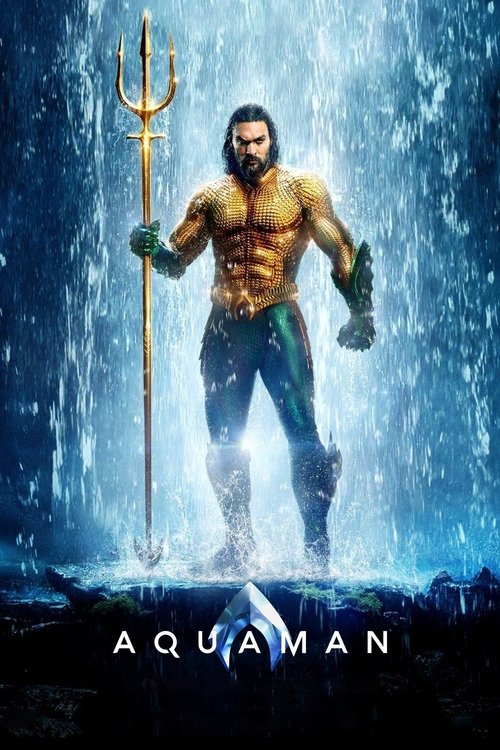
Aquaman
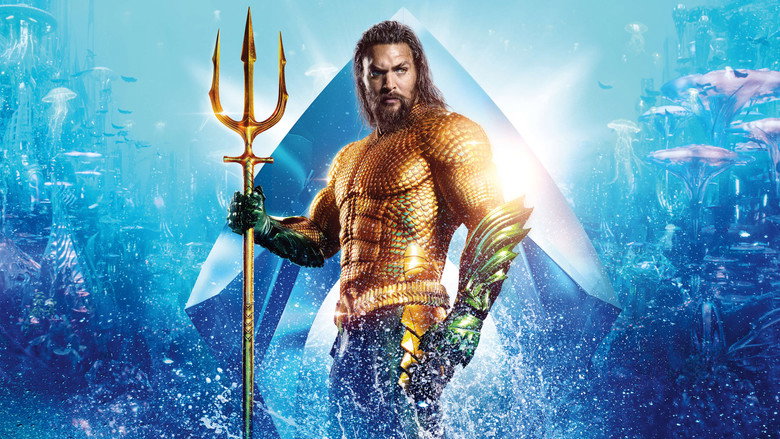
A bioluminescent fairy tale in superhero armor: thunderous, sun-warmed and strange, where a man torn between two worlds dives through oceans of light to find the crown that was always waiting for him.
Aquaman
Aquaman

"Home is calling."

07 December 2018 United States of America 143 min 6.9 (15,191)

Director: James Wan

Cast: Jason Momoa, Amber Heard, Willem Dafoe, Patrick Wilson, Nicole Kidman

Fantasy Action Adventure Divided identity and belonging Legitimacy: birthright versus worth Ecological reckoning Family, inheritance and blood feud Myth, wonder and the spectacle of the unknown
Budget: $160,000,000
Box Office: $1,152,028,393

Aquaman — Ending Explained

⚠️ Spoiler Analysis

Full spoilers follow.

The engine of the plot is Orm's campaign to unite the seven undersea kingdoms under a single banner so that he can declare himself Ocean Master and launch a war of extermination against the surface world. Arthur's counter-move is not military but mythic: to challenge Orm's claim to the throne, he and Mera undertake a seafaring, globe-spanning scavenger hunt for the lost trident of King Atlan, the first ruler of Atlantis — a weapon that confers the authority no amount of political maneuvering can.

The quest's climax is a test rather than a fight. The trident is guarded by the Karathen, an ancient leviathan (voiced by Julie Andrews) that has rejected every claimant before Arthur, and the reason it accepts him is the thing he has spent the film being mocked for. Orm's central insult is that Arthur is a half-blood mongrel; the ocean's own guardian concludes the opposite — that the mixed heir is the worthy one. In a single beat the film inverts its own hierarchy of blood, which is why the subsequent battle feels less like a contest than a coronation already decided.

The ending: Arthur claims Atlan's trident, defeats Orm, and takes the throne as King of Atlantis. Crucially, Orm is beaten but not killed — the film refuses to erase a villain whose environmental grievance it has treated as legitimate, and mercy toward a brother is the first act of a king whose whole mandate is reconciliation rather than conquest. Arthur's victory is therefore not the defeat of Orm's argument but the replacement of his method.

Black Manta survives. His thread is the film's quiet counterweight: a vengeance inherited from his father, armored in stolen Atlantean technology, and deliberately left unresolved. Read thematically, it is the story's sting — Arthur can end a war between civilizations but cannot end a private cycle of grief, and the film closes with that engine still running.

What becomes clear only in retrospect: every antagonist in the film is family or the consequence of family. Orm's ideology is really wounded jealousy over their mother; Manta's crusade is really mourning; Arthur's refusal of Atlantis is really the pain of an exiled queen. The trident quest, which looks like a MacGuffin hunt on first viewing, is on reflection a therapeutic structure — Arthur must physically travel to the place his mother's story ended before he can inherit anything at all.

Alternative Interpretations

The coronation as triumph or as absorption. The straightforward reading is that Arthur's assumption of the throne is a victory for pluralism — a mixed-heritage outsider takes command of the institution that rejected him. A colder reading notes that the rebel is ultimately crowned by the very hierarchy he mocked: the film resolves a story about not belonging by handing its hero the most exclusive title available, and monarchy itself is never questioned, only its occupant.

Is Orm actually wrong? The film's most debated element is that the villain's premise — the surface world has spent centuries poisoning the ocean — goes essentially unrefuted. Some viewers read the ending as a genuine synthesis, with a king who can now force the surface to answer for it; others see the ecological argument raised and then quietly shelved once the personal family conflict is settled, with the grievance defeated rather than addressed.

Fairy tale or superhero movie. One camp reads the film as a straight-faced myth in the tradition of the sword-in-the-stone quest, where the trident functions as Excalibur and the Karathen as the Lady of the Lake. Another reads it as deliberate camp — a film whose knowing humor, whenever it threatens to turn pompous, signals that its grandeur is meant to be enjoyed rather than believed. Both readings survive the film intact, which is part of why it divided critics while delighting audiences.

Black Manta's survival. Read narratively, it is a franchise placeholder. Read thematically, it is the film's darkest note: Arthur ends the war between nations but leaves a private cycle of inherited vengeance running, suggesting that grief is the one enemy a crown cannot resolve.

Explore More About This Movie

Dive deeper into specific aspects of the movie with our detailed analysis pages

Similar Movies