Skip to content
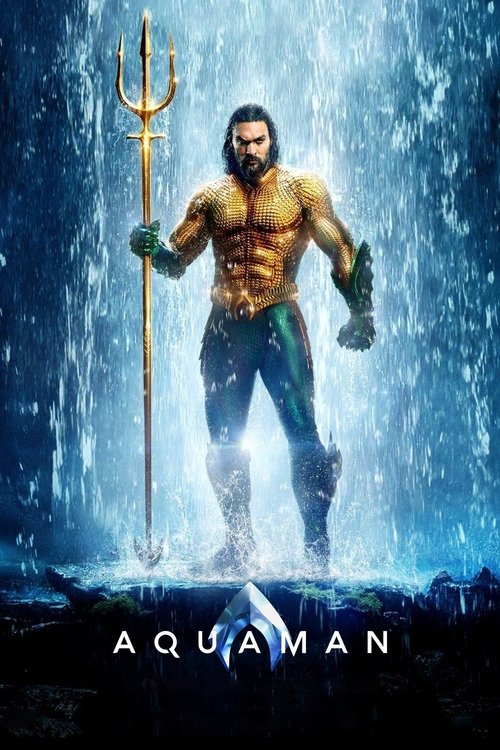
Aquaman
A bioluminescent fairy tale in superhero armor: thunderous, sun-warmed and strange, where a man torn between two worlds dives through oceans of light to find the crown that was always waiting for him.
Aquaman

Aquaman

"Home is calling."

07 December 2018 United States of America 143 min 6.9 (15,191)

Director: James Wan

Cast: Jason Momoa, Amber Heard, Willem Dafoe, Patrick Wilson, Nicole Kidman

Fantasy Action Adventure Divided identity and belonging Legitimacy: birthright versus worth Ecological reckoning Family, inheritance and blood feud Myth, wonder and the spectacle of the unknown
Budget: $160,000,000
Box Office: $1,152,028,393

Overview

Arthur Curry is the son of two worlds — a human father and an Atlantean mother — and belongs comfortably to neither. He drinks with fishermen, rescues sailors, and wants nothing to do with the drowned kingdom that exiled his mother. But beneath the waves, his half-brother Orm is gathering the seven undersea kingdoms under one banner, determined to declare war on the surface that has poisoned the ocean for centuries.

Pushed by the princess Mera and by his old Atlantean tutor Vulko, Arthur is drawn into a globe-trotting, seafaring scavenger hunt: to challenge Orm's claim to the throne, he must find the lost trident of King Atlan, the first ruler of Atlantis. The search takes him across deserts, ruins and trenches, while a second enemy — a vengeful pirate rebuilt into the armored killer Black Manta — hunts him for reasons that are entirely personal.

Director James Wan builds the film on the sturdy skeleton of a classical quest and then decorates it with everything he can imagine: seahorse cavalry, drum-playing octopuses, gladiatorial duels in lava light, and an ocean rendered as a neon cathedral. Whenever the mythology threatens to turn solemn, the film winks at itself — a blockbuster that knows it's a bedtime story told at maximum volume.
Core Meaning

At its heart, Aquaman argues that a divided identity is not a wound to be healed by choosing a side, but a bridge. Arthur spends the film being told he is too human for Atlantis and too strange for the surface; the story's answer is that precisely because he belongs to both, he is the only person capable of speaking for either.

Wan pairs that idea with a second, angrier one: Orm's war is not born of pure evil but of a real grievance — the surface world has been dumping its poison into the sea for generations. The film refuses to let the villain be simply wrong, so its resolution cannot be conquest. Leadership, it suggests, is earned by listening rather than by bloodline or by force, and the legitimate king is the one who can hold contradictory worlds together without demanding that either surrender.

Finally, it is a film about joy as a stance. Made in the shadow of a grim, grey superhero cycle, its unembarrassed color, myth and spectacle constitute their own argument: that a hero story can be sincere, silly and enormous at once.

Thematic DNA

Divided identity and belonging 28%
Legitimacy: birthright versus worth 22%
Ecological reckoning 18%
Family, inheritance and blood feud 18%
Myth, wonder and the spectacle of the unknown 14%

Divided identity and belonging

Arthur is a half-blood in the oldest sense: the son of an Atlantean queen and a surface man, mocked as a mongrel by Orm and treated as an outsider by both realms. His arc converts that liability into authority — the film's climax only works because he is the one figure who can stand between two civilizations. Mera, raised entirely inside Atlantean protocol, mirrors him in reverse, discovering the surface as a place of wonder rather than filth.

Legitimacy: birthright versus worth

The entire plot is a legal-mythic argument about who may rule. Orm holds the throne by law, blood and martial skill; Arthur holds nothing but a mother's claim and a stubborn conscience. The quest for King Atlan's trident externalizes the question — the weapon can only be claimed by someone the ocean itself accepts, so kingship is finally granted by recognition, not inheritance.

Ecological reckoning

Orm's casus belli is that humanity has turned the sea into a dump. The film stages this literally, hurling centuries of accumulated garbage and wreckage back onto the shore. The villain's rage is framed as justified even as his solution is monstrous, which keeps the ecological theme uncomfortable rather than decorative.

Family, inheritance and blood feud

Every antagonist is a relative or a consequence: a brother raised in resentment, a mother lost to exile, a father who never stopped waiting. Black Manta doubles the motif from outside the family — his vendetta is inherited from his own father, showing how grief passes down a generation exactly as crowns do.

Myth, wonder and the spectacle of the unknown

Wan treats the ocean as unexplored mythology rather than as a setting, populating it with distinct kingdoms, creatures and castes so the hero can see the world he might inherit. The film's pleasure in scale — cavalry on seahorses, cities of light, monsters in the dark — is a theme in itself: the insistence that awe still belongs in blockbuster cinema.

Character Analysis

Arthur Curry / Aquaman

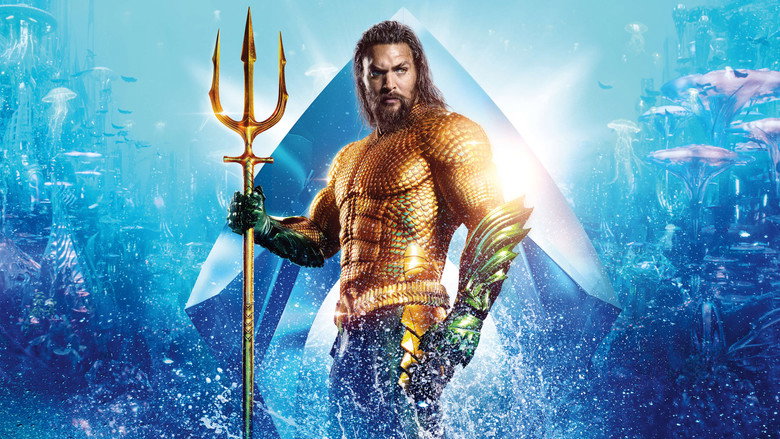
Jason Momoa

Archetype: Reluctant hero / the exile-king Key Trait: Boisterous, self-mocking defiance masking a deep sense of unworthiness

Motivation

Initially, to protect the surface people he grew up among and to honor his mother's memory; ultimately, to prevent a war that would destroy both halves of his own heritage.

Character Arc

Begins as a barroom brawler who performs heroism while refusing responsibility, insisting Atlantis is not his problem. The quest forces him to stop defining himself by what he rejects; by the end he accepts the trident and takes the throne of Atlantis, becoming the bridge between the surface and the sea.

Orm Marius / Ocean Master

Patrick Wilson

Archetype: Shadow / righteous tyrant Key Trait: Aristocratic conviction — a villain who believes himself the only patriot in the room

Motivation

To avenge the ocean's poisoning by the surface world, to erase the shame of his mother's love for a human, and to prove his own purity of blood makes him the rightful king.

Character Arc

Moves from ambitious regent to self-declared Ocean Master as he unites the undersea kingdoms for war, growing more absolute the closer he gets to total power — until defeat strips him of the mandate he believed was his by right.

All 5 characters and cast

Symbols & Motifs

The Trident of Atlan

Meaning:

The physical embodiment of legitimate authority. Unlike a crown, which can be seized, the trident must be granted; it symbolizes the idea that real power is conferred by the governed rather than claimed by the strong.

Context:

The lost weapon of the first king drives the film's entire scavenger-hunt structure, and its recovery is the hinge on which the final duel — and Arthur's claim to the throne — turns.

Water itself

Meaning:

Fluidity, ancestry and the unconscious. Water is the medium in which Arthur is most himself and the barrier that separates him from his human life — it both divides the two worlds and is the only thing they share.

Context:

Wan shoots nearly the entire film in or around the sea, with hair, robes and light in perpetual drift; the surface-dweller's fear of drowning becomes the hero's natural home.

The lighthouse

Meaning:

Constancy and the love that survives exile — a beam sent out over the water for someone who may never return, and the promise that the human half of Arthur's heritage was never a mistake.

Context:

The film's domestic anchor on the surface, standing at the border of land and sea exactly as Arthur stands between two peoples.

The garbage hurled onto the shore

Meaning:

Consequence made visible: the surface world's waste returned to sender. It symbolizes an ecological debt that can no longer be ignored and reframes the villain's assault as an accusation.

Context:

Deployed as Orm's opening demonstration of power, it is simultaneously a spectacular set piece and the film's clearest political statement.

The Karathen, guardian of the deep

Meaning:

The ocean's own judgment — an ancient intelligence that has refused every unworthy claimant. Its choice stands in for nature accepting a steward rather than a conqueror.

Context:

Voiced by Julie Andrews, the leviathan guards the trident and tests whether Arthur can speak with the sea instead of merely commanding it.

Black Manta's helmet

Meaning:

Grief hardened into armor. The mask converts a personal loss into a permanent, faceless identity, showing how vengeance consumes the man who wears it.

Context:

Built from stolen Atlantean technology, it transforms a pirate into an icon and turns a private grudge into a lasting threat.

Philosophical Questions

What makes a ruler legitimate — blood, law, or the consent of the ruled?

Orm has every formal qualification and Arthur has almost none, so the film must locate authority somewhere else. By making the trident something that is granted rather than taken, it argues that sovereignty is a relationship of recognition — but it complicates its own answer by resolving the question through a duel, letting combat stand in for consent.

Can a person belong to two worlds without betraying either?

Arthur is told he is impure by Atlantis and alien by the surface, and both halves demand exclusivity. The film's resolution rejects the premise of the demand: his mixed inheritance is reframed as the only possible foundation for peace, so identity becomes a function rather than a category.

When is a legitimate grievance no longer a justification for violence?

The ecological crime Orm names is real, and the film never pretends otherwise. What it condemns is the leap from grievance to annihilation — the moment justified anger becomes a license to decide who deserves to survive. The villain is defeated on his method, not his diagnosis.

Does vengeance ever end, or does it simply change hands?

Black Manta inherits his hatred and then survives to pass it forward, while Orm's entire ideology is inherited resentment over his mother's love for a human. The film stages the same mechanism at both the intimate and the civilizational scale and offers no clean cure for either.

What do we owe to a world we cannot see?

The surface dumps its waste into the ocean precisely because the ocean is invisible to it. By making the sea a populated civilization with kingdoms, politics and history, the film literalizes an ethical point: distance and invisibility are not moral exemptions.

Alternative Interpretations

The coronation as triumph or as absorption. The straightforward reading is that Arthur's assumption of the throne is a victory for pluralism — a mixed-heritage outsider takes command of the institution that rejected him. A colder reading notes that the rebel is ultimately crowned by the very hierarchy he mocked: the film resolves a story about not belonging by handing its hero the most exclusive title available, and monarchy itself is never questioned, only its occupant.

Full ending explanation

Cultural Impact

Aquaman arrived at the end of 2018 as a course correction. After a run of desaturated, self-serious DC films, James Wan's movie went in the opposite direction entirely — and it worked: the film grossed $1.152 billion worldwide, an unambiguous success that introduced a wilder, wackier register to the DC film world and demonstrated that audiences would follow a comic-book universe into full-blown fantasy pulp.

Its critical reception was mixed-to-positive, but the enthusiasm of its defenders was unusually specific: reviewers praised the infectious glee of Wan's world-building and a film made 'for both types of 10-year-olds,' literal kids and those who are ten at heart, anchored by a star who was visibly having the time of his life. That pleasure-first sensibility — candy-colored, unembarrassed, built on a classical quest skeleton so the spectacle never loses the thread — became a reference point for how to make maximalist fantasy blockbusters after it.

Culturally, the film also mainstreamed a character long treated as a punchline, rebuilding Aquaman as a swaggering, tattooed outsider rather than a man who talks to fish. Its commercial scale guaranteed a continuation, Aquaman and the Lost Kingdom, and its ecological framing — a war declared because the surface has poisoned the sea — gave a superhero tentpole an unusually direct environmental argument.

Audience Reception

What was praised. Audiences responded above all to the film's sheer entertainment value and its unapologetic sense of fun — a 'wild, candy-colored affair' described by reviewers as some of the most enjoyable time they'd had in a theater. Jason Momoa's performance was the near-universal high point, with the actor visibly relishing the role, and Wan's world-building drew consistent admiration: the undersea kingdoms, creature design and enormous set pieces gave viewers a spectacle genuinely unlike the rest of the superhero field. The film's sincere, myth-forward tone was a relief to many after a stretch of grimmer DC entries.

Main criticisms. Critics were more divided, and the film's overall reception landed mixed-to-positive. The most common complaint was tonal whiplash — the story periodically turns pompous, and Wan's remedy is to puncture it with jokes, which some viewers found deft and others found self-undermining. The plot's foundation is a deliberately traditional quest structure, which delivers clarity at the cost of predictability, and the sustained CGI density left some audiences fatigued.

Verdict. The gap between critical hedging and audience enthusiasm was resolved decisively at the box office: $1.152 billion worldwide. The consensus that emerged is that Aquaman is not a subtle film and does not want to be — it is a maximalist adventure that succeeds precisely to the degree that a viewer is willing to meet its earnestness halfway.

Interesting Facts

  • Director James Wan approached the film's action the way he approaches horror — with obsessive attention to detail and a drive to stage visuals audiences 'haven't quite seen before' — applying his set-piece philosophy from the genre that made his name to a superhero epic.
  • Wan repeatedly framed the production as character-first: 'The most important thing is the story that I'm telling, whether it's a scary set piece or a dramatic moment, it all comes down to the characters and if you care about them.'
  • The shoot required an enormous volume of underwater photography and underwater stunt work, and the crew described bringing an entire undersea world to life as the production's central technical challenge.
  • Wan deliberately split the film's aesthetic in two, wanting the surface world to feel romantic and classical while Atlantis felt modern.
  • A core design goal was that the hero should travel through and see the different kingdoms he would eventually rule, populated by many different races and peoples — which shaped the film's globe-trotting structure.
  • Julie Andrews voices the Karathen, the ancient leviathan guarding the trident.
  • Dolph Lundgren plays King Nereus, ruler of the Xebel kingdom.
  • The score was composed by Rupert Gregson-Williams.
  • The film premiered in London on November 26, 2018, and opened in the United States on December 21, 2018.
  • It grossed $1.152 billion worldwide, an outright blockbuster success for DC.

Easter Eggs

Julie Andrews as the voice of the Karathen

Casting one of cinema's most beloved musical stars as a monstrous, ancient sea leviathan is a deliberate against-type joke — and a fitting one, since the film's climactic test is about the power of a voice that the ocean will obey.

Dolph Lundgren enthroned as King Nereus

Putting an icon of 1980s action cinema in Atlantean armor is part of the film's affectionate retro-blockbuster texture, stacking the cast with faces that carry decades of genre history.

Black Manta's survival

The film pointedly leaves Black Manta alive rather than disposing of him, preserving Aquaman's most iconic comics nemesis for future stories — a piece of franchise seed-planting hidden inside a character beat about vengeance that never ends.

Frequently Asked Questions

Explore More About This Movie

Dive deeper into specific aspects of the movie with our detailed analysis pages

Comments (0)

Leave a comment

No comments yet. Be the first to share your thoughts!

Similar Movies