Skip to content
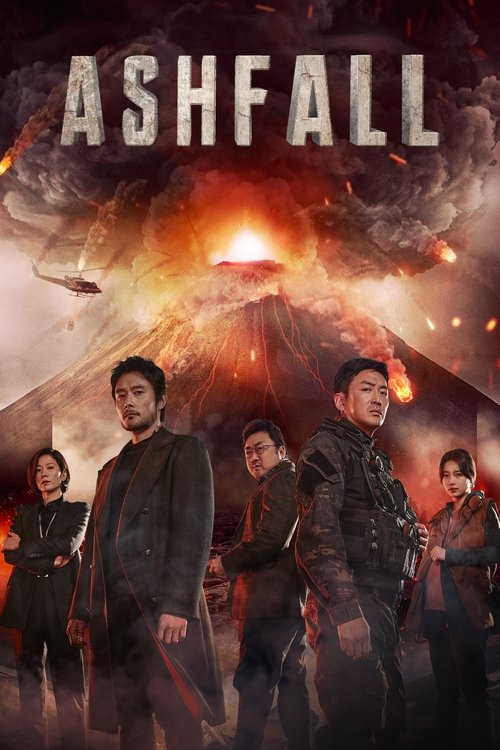
Ashfall
A pulse-pounding geopolitical disaster thriller driven by desperation and poignant camaraderie, where collapsing skylines and suffocating volcanic ash give way to an explosive underground crucible of fatherly redemption and cross-border brotherhood.
Ashfall

Ashfall

백두산

"Only one chance to save the nation."

19 December 2019 South Korea 128 min 6.8 (635)

Director: Kim Byung-seo, Lee Hae-jun

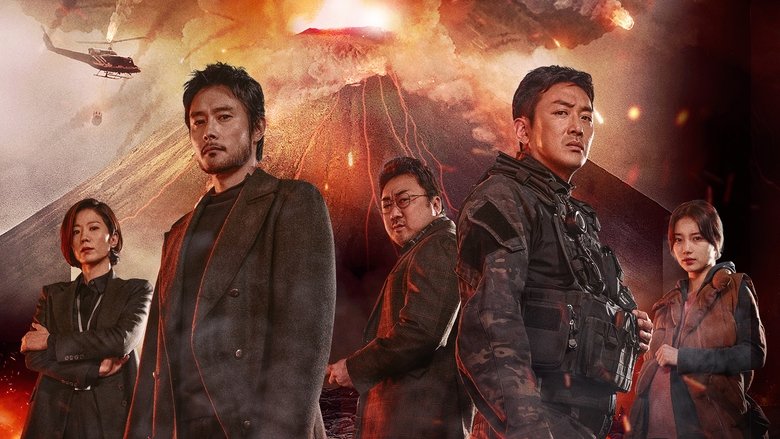
Cast: Lee Byung-hun, Ha Jung-woo, Don Lee, Jeon Hye-jin, Suzy

Action Thriller Adventure Inter-Korean Brotherhood & Transcending Ideology Fatherhood, Guilt, and Sacrificial Legacy National Sovereignty vs. Foreign Hegemony Human Resilience Against Apocalyptic Nature Cynicism vs. Hopeful Commitment to Family
Budget: $17,700,000
Box Office: $61,321,941

Overview

When Mount Baekdu—an active supervolcano straddling the North Korea–China border—suddenly erupts, catastrophic seismic waves shatter major infrastructure across the entire Korean Peninsula. With seismologists projecting further, far more devastating eruptions that could obliterate the peninsula entirely, the South Korean government turns to a high-risk theoretical contingency devised by Korean-American geologist Kang Bong-rae (Robert Kang): detonating a nuclear explosive inside a subterranean mine beneath the volcano to depressurize the magma chamber.

Because South Korea does not possess nuclear weaponry, the government initiates a covert operation into the unstable territory of North Korea to extract nuclear warheads. Jo In-chang, a South Korean Explosive Ordnance Disposal (EOD) captain on the brink of military discharge, is reluctantly drafted to lead the bomb-technician squad. The mission hinges on locating and extracting Ri Joon-pyeong, a disgraced former North Korean intelligence officer imprisoned as a double agent who holds the coordinates to the nuclear cache.

As In-chang’s heavily pregnant wife, Ji-young, struggles for survival among millions of panicking civilians in the collapsing ruins of Seoul, In-chang and Joon-pyeong form an uneasy, volatile alliance. Navigating shifting loyalties, treacherous aftershocks, and interference from foreign powers contesting regional dominance, the duo must overcome deep ideological divides before time runs out for the entire peninsula.
Core Meaning

Directors Lee Hae-jun and Kim Byung-seo frame Ashfall as an allegory for Korean reconciliation through shared existential vulnerability. The central message argues that artificial political borders, historical animosities, and foreign geopolitical maneuvers dissolve when humanity confronts universal nature and shared fatherhood. The narrative emphasizes that genuine peace and mutual salvation cannot be engineered by foreign superpowers; rather, they require empathetic cross-border trust, domestic agency, and individual self-sacrifice for the sake of future generations.

Thematic DNA

Inter-Korean Brotherhood & Transcending Ideology 30%
Fatherhood, Guilt, and Sacrificial Legacy 25%
National Sovereignty vs. Foreign Hegemony 20%
Human Resilience Against Apocalyptic Nature 15%
Cynicism vs. Hopeful Commitment to Family 10%

Inter-Korean Brotherhood & Transcending Ideology

Explored through the friction and eventual bond between In-chang (the South) and Joon-pyeong (the North). Initially viewing each other with deep suspicion and strategic deceit, their mutual banter, cultural overlap, and shared humanity illustrate how cultural brotherhood surpasses political partition.

Fatherhood, Guilt, and Sacrificial Legacy

Mirrored between In-chang, an expectant father terrified of failing his unborn child, and Joon-pyeong, an estranged father consumed by guilt over abandoning his daughter, Soon-ok. Both men are ultimately driven not by abstract patriotism, but by the instinct to secure a habitable world for their children.

National Sovereignty vs. Foreign Hegemony

Illustrated through the political tension between South Korean leadership, U.S. armed forces asserting military command, and Chinese clandestine interests. The film critiques foreign military paternalism, showing that the fate of the Korean Peninsula must be determined by Koreans themselves.

Human Resilience Against Apocalyptic Nature

Conveyed through Ji-young’s survival journey in Seoul and the EOD unit’s tenacity amidst earthquakes, collapsing bridges, and toxic ash clouds.

Cynicism vs. Hopeful Commitment to Family

Represented by Kang Bong-rae's transformation from a detached, cynical academic attempting to flee to the US into a committed scientist taking ownership of his ancestral homeland.

Character Analysis

Jo In-chang

Ha Jung-woo

Archetype: Reluctant Hero / Ordinary Man Key Trait: Resourceful, self-effacing humor, deeply protective.

Motivation

Ensuring the safe evacuation and future of his pregnant wife and child.

Character Arc

Evolves from an insecure, retirement-seeking EOD officer into a brave leader willing to sacrifice everything for his country and family.

Ri Joon-pyeong

Lee Byung-hun

Archetype: Cynical Antihero / Tragic Mentor Key Trait: Unpredictable, razor-sharp wit, lethal tactical intellect.

Motivation

Finding and securing the safety of his estranged daughter Soon-ok.

Character Arc

Shifts from a ruthless, opportunistic double agent focused on personal survival to a loving father who embraces sacrificial redemption.

All 5 characters and cast

Symbols & Motifs

Mount Baekdu (백두산)

Meaning:

The sacred ancestral cradle of the Korean nation across both sides of the DMZ. Its violent eruption symbolizes the pent-up historical trauma of the divided nation, while calming it requires total peninsular unity.

Context:

Acts as the central natural catalyst of the disaster threatening both North and South Korea.

The Sonogram / Ultrasound Picture

Meaning:

Represents innocence, the unborn future, and the personal anchor that prevents despair.

Context:

Carried by Jo In-chang throughout his dangerous mission to remind him of what he is fighting to return to.

The Sweet Candy / Sorghum Sweet (엿)

Meaning:

Symbolizes lingering paternal love, remorse, and the simple sweetness of ordinary family life stolen by espionage and conflict.

Context:

Handed between Joon-pyeong and his daughter Soon-ok, and shared with In-chang during their journey.

Handcuffs

Meaning:

Transitions from a tool of physical captivity to a humorous motif of mutual dependence, and finally a voluntary bond of brotherhood.

Context:

Used repeatedly to restrain and link In-chang and Joon-pyeong during the operation.

The Nuclear Detonator

Meaning:

A paradox of destructive capability repurposed into an instrument of geological salvation, symbolizing the transformation of instruments of war into tools of survival.

Context:

Harvested from a North Korean ICBM and transported into the subterranean mine beneath the volcano.

Memorable Quotes

뒤통수에 왜 눈깔이 없는 줄 아네? ... 과거를 보지 말고 앞을 보라고 그런 거다.
— Ri Joon-pyeong

Context

Delivered to In-chang during their journey through North Korea.

Meaning

It defines Joon-pyeong’s stoic philosophy and foreshadows his decision to let go of his past mistakes through a forward-looking ultimate sacrifice.

지자... 지랄하고 자빠졌네.
— Ri Joon-pyeong

Context

Joon-pyeong mimics South Korean abbreviation slang taught to him by In-chang.

Meaning

A comedic yet tense moment showcasing their evolving buddy-cop rapport.

All 5 quotes

Philosophical Questions

Can existential crises erase entrenched political and ideological dogmas?

The film asks whether common survival instincts are enough to unite divided peoples when systemic politics fail.

What constitutes the moral threshold of self-sacrifice?

Through Joon-pyeong’s ultimate decision, the film explores whether an individual’s past sins can be redeemed by a single act of total altruism.

How does individual paternal responsibility intersect with civic duty?

The narrative examines the moral dilemma of choosing between protecting one’s immediate family and risking one’s life for the collective good.

Alternative Interpretations

Geopolitical Parable vs. Hollywood Action Romp: While international critics often view the film as a standard disaster blockbuster utilizing American cinematic tropes, Korean analysts interpret the volcanic eruption as an allegory for the explosive, unresolved division of the peninsula.

Full ending explanation

Cultural Impact

Ashfall was conceived during a period of shifting diplomatic dynamics between North and South Korea following the 2018 Inter-Korean Summits. Mount Baekdu holds mythic significance as the spiritual birthplace of the Korean people in Dangun mythology. By choosing Baekdu as the origin of mutual doom, the filmmakers positioned the natural threat as a unifying force transcending 70 years of national partition. The film also resonated strongly with South Korean popular discourse regarding national self-determination, particularly in scenes depicting foreign military dominance being pushed aside in favor of inter-Korean agency.

Audience Reception

Critical & Audience Consensus:

  • Praise: Critics and general audiences lauded the electric chemistry and witty banter between Lee Byung-hun and Ha Jung-woo, the high-budget VFX spectacles of Seoul’s collapse, and Ma Dong-seok’s comedic pivot.
  • Criticism: Multiple reviews pointed out scientific absurdities (e.g., using a nuclear bomb inside a mine shaft to safely relieve volcanic magma pressure) and standard Korean melodramatic tropes (shinpa) in the final act.
  • Verdict: Regarded as an entertaining, crowd-pleasing action spectacle that effectively revitalized the domestic disaster genre through sheer star power and visual scale.

Interesting Facts

  • The film was co-directed by Lee Hae-jun (director of Castaway on the Moon) and Kim Byung-seo (acclaimed cinematographer of Cold Eyes and Along with the Gods). Lee spearheaded narrative drama and character acting, while Kim oversaw cinematography, staging, and technical VFX integration.
  • Dexter Studios, South Korea’s leading visual effects studio founded by director Kim Yong-hwa, produced over 1,500 VFX shots for the film, recreating devastating seismic destructions across Gangnam and the Han River bridges.
  • Famous for playing physical juggernauts, Ma Dong-seok (Don Lee) was deliberately cast as an intellectual academic (Professor Robert Kang), intentionally without a single physical fight scene.
  • The lively buddy dynamics between Lee Byung-hun and Ha Jung-woo were heavily refined through on-set improvisation, notably the Korean acronym humor and banter.
  • Produced with a budget of approximately $17.7 million (₩26 billion KRW), the film grossed over $61.3 million worldwide, drawing more than 8.25 million admissions in South Korea alone and ranking among the biggest domestic hits of 2019.

Easter Eggs

Jeon Do-yeon Cameo

Cannes Best Actress winner Jeon Do-yeon makes a surprise cameo as Sun-hwa, the sickly wife of Ri Joon-pyeong, anchoring a poignant emotional scene that exposes Joon-pyeong’s family heartbreak.

Homage to Armageddon (1998)

The premise of an inexperienced blue-collar bomb squad drilling into a subterranean cavern to detonate a nuclear weapon directly nods to Michael Bay’s disaster classic Armageddon.

A-List Cast Synergy and Cameos

Early background newsreels and cameos feature notable Korean screen personalities, including a bit part by actor Byeon Woo-seok as a presidential security agent.

Frequently Asked Questions

Explore More About This Movie

Dive deeper into specific aspects of the movie with our detailed analysis pages

Comments (0)

Leave a comment

No comments yet. Be the first to share your thoughts!

Similar Movies