Along with the Gods: The Last 49 Days
신과함께-인과 연
"Unveiling millennium-old secrets."
Overview
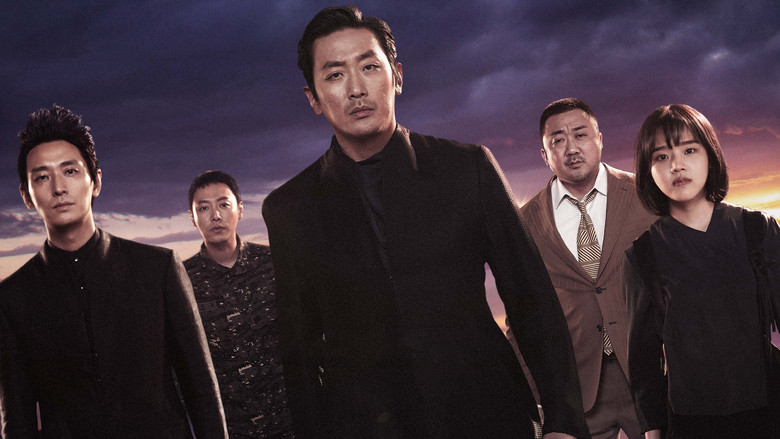
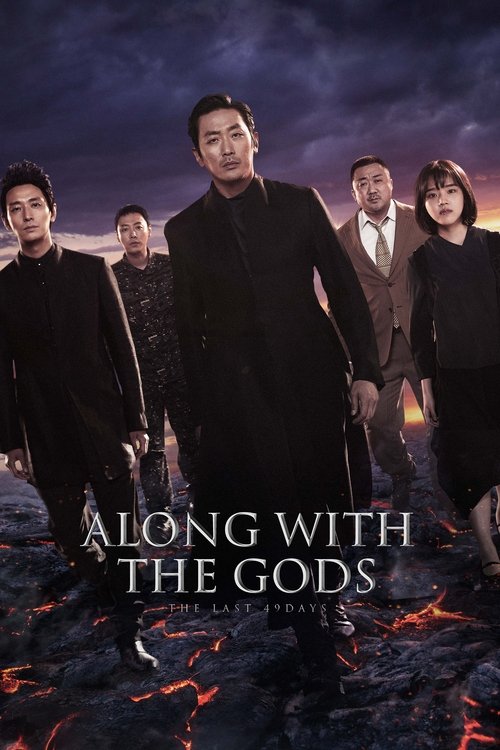
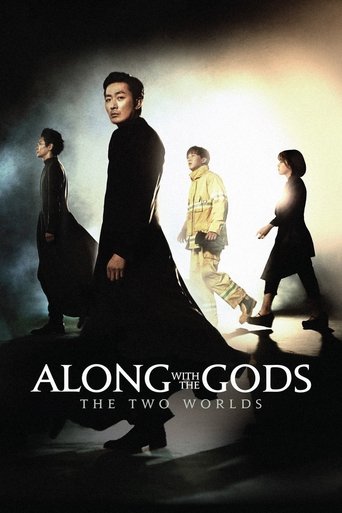
Following the events of the first film, the three grim reapers, Gang-rim, Haewonmak, and Deok-choon, are set to guide their 49th soul, Kim Soo-hong, through the trials of the afterlife. If successful, they will finally earn their own reincarnation. However, Soo-hong's status as a vengeful spirit complicates his trial, and King Yeomra adds a condition: the guardians must also ascend an elderly man, Heo Choon-sam, who has long evaded death.
Their mission on Earth is obstructed by the formidable yet benevolent Household God, Seongju, who protects the old man and his young grandson. In exchange for delaying the man's departure, Seongju begins to unravel the grim reapers' forgotten memories from a thousand years prior. The film masterfully interweaves three storylines: Soo-hong's perilous journey through the hells of the underworld, the guardians' mission in the human world, and the tragic, interconnected past that binds the three reapers together.
Core Meaning
The central message of Along with the Gods: The Last 49 Days is a profound exploration of forgiveness, atonement, and the enduring consequences of past actions. The director, Kim Yong-hwa, suggests that there are no inherently evil people, only individuals shaped by difficult circumstances. The film posits that true redemption is not about erasing the past, but about confronting it, seeking forgiveness, and accepting the weight of one's mistakes. Through the 1,000-year penance of its protagonists, the movie carries a message that atonement is a long and arduous journey, but forgiveness—both from others and for oneself—is ultimately possible and necessary for liberation.
Thematic DNA
Forgiveness and Atonement
This is the film's primary theme. The entire narrative is built around Gang-rim's 1,000-year-long atonement for the sins he committed in his past life. He carries the full weight of his memories as punishment, while Haewonmak and Deok-choon live in ignorance. The story culminates in their discovery of the truth and their eventual, difficult decision to forgive Gang-rim, illustrating the painful but liberating power of forgiveness. The film suggests that asking for forgiveness is never too late.
Interconnected Fates and Past Lives
The film delves deep into the concept of in-yeon (인연), the Korean idea of fate and interconnectedness, particularly from past lives. The central mystery is the revelation of how the three guardians were tragically linked a millennium ago as a Goryeo general, a fierce warrior, and a compassionate caregiver. Their present-day dynamic as a team of grim reapers is a direct consequence of their unresolved past, showing that current relationships are often echoes of historical ties and karmic debt.
The Nature of Judgment and Sin
The film questions the rigid criteria of judgment in the afterlife. Soo-hong is considered a 'paragon' not for living a virtuous life, but because he suffered an unjust death. This shifts the focus of the trials from a judgment of his life's sins to proving the injustice of his death. Furthermore, the film repeatedly explores the idea that 'bad situations' rather than inherent evil are the cause of wrongdoing, challenging the audience to look at sin with more empathy and understanding of context.
Family and Sacrifice
The theme of family is explored through multiple storylines. In the human world, the Household God's fierce protection of Heo Choon-sam and his grandson highlights the sacrifices made to keep a family together. The backstory of the guardians reveals a complex familial drama involving Gang-rim, his father, and his adopted brother Haewonmak, where jealousy and betrayal shatter family bonds. This contrasts with the found-family dynamic the three guardians have formed over a millennium, which is tested by the revelation of their past.
Character Analysis
Gang-rim
Ha Jung-woo
Motivation
His primary motivation is atonement. While he appears to be defending Soo-hong, he is also relitigating his own past sins. He risks his own reincarnation to prove Soo-hong's case because he understands the pain of an unjust death, having caused them himself. His ultimate goal is to earn forgiveness from the two people he wronged the most.
Character Arc
Gang-rim begins as a stoic, burdened leader of the guardians, singularly focused on Soo-hong's trial. His arc is internal, as the trial forces him to confront his own millennium-old guilt. Flashbacks reveal him as a Goryeo general who, consumed by jealousy, betrayed his adopted brother (Haewonmak) and killed an innocent girl (Deok-choon). He is the only one who retains his memories, a punishment orchestrated by his father, King Yeomra. His journey is one of quiet suffering, culminating in a silent plea for forgiveness and acceptance of his eternal duty.
Haewonmak
Ju Ji-hoon
Motivation
Initially, his motivation is simply to complete the mission and earn reincarnation. However, upon learning about his past, his motivation shifts to understanding his identity and past connections. His curiosity drives him to make a deal with Seongju, which sets the entire revelation in motion.
Character Arc
Haewonmak starts as a sarcastic and action-oriented reaper with no memory of his past. Through Seongju's stories, he discovers he was a formidable Goryeo general known as the 'White Tiger'. He learns of his compassionate side in his interactions with Deok-choon's past self and the orphans she protected. His arc is one of rediscovery, shock, and ultimately, grace. Upon learning that his trusted brother, Gang-rim, was his killer, he overcomes his anger and chooses forgiveness, demonstrating immense growth from a cynical reaper to a compassionate being.
Lee Deok-choon
Kim Hyang-gi
Motivation
Deok-choon is motivated by a deep-seated empathy and a desire to help others, both souls in the afterlife and the humans they encounter. Like Haewonmak, she becomes driven by the need to understand her past and the strange connection she feels to her fellow guardians.
Character Arc
Deok-choon is the kind, psychic heart of the trio, also with no memories. Her journey reveals that she was a Jurchen girl who cared for war orphans. She was protected by Haewonmak before they were both killed by Gang-rim. Her core personality remains consistent with her past self. Her arc is less about change and more about reaffirming her compassionate nature. Faced with the horrifying truth of her death, she is the first to move towards forgiveness, solidifying her role as the group's moral center.
Seongju
Don Lee (Ma Dong-seok)
Motivation
His motivation is twofold: first, to protect the vulnerable human family under his care from both grim reapers and mortal hardships. Second, he feels a sense of responsibility to Haewonmak and Deok-choon, whose pasts he knows, and seeks to restore their memories so they can find peace and closure.
Character Arc
Seongju, the God of House, initially appears as an antagonist protecting an over-due soul. He quickly becomes the catalyst for the entire film's emotional journey. He was a former grim reaper who guided the souls of Gang-rim, Haewonmak, and Deok-choon to the afterlife a thousand years ago. His arc is that of a guardian who, moved by human suffering, breaks the rules to protect a family. He barters the guardians' history in exchange for time, serving as the storyteller who holds the key to their redemption. He ultimately sacrifices himself to protect the family he has grown to love.
Symbols & Motifs
The Shaking Hand
This recurring motif symbolizes willful ignorance and the moment a person chooses to abandon another out of fear or selfishness. It represents a pivotal moral failure that leads to immense guilt.
This is seen in two parallel storylines. In the present, Soo-hong's army colleagues see his shaking hand but bury him alive anyway out of fear. In the past, Gang-rim sees his father's hand waving from beneath a pile of bodies on the battlefield but walks away due to his jealousy and resentment. This parallel powerfully links Gang-rim's past sin to the injustice Soo-hong faces.
The White Fur Scarf
The scarf, worn by Haewonmak in his past life as the 'White Tiger', represents his identity as a fierce but honorable warrior. It also symbolizes his connection and sense of responsibility towards Deok-choon.
In the flashbacks, Haewonmak is a renowned general of the Khitan forces. Before his final battle, he gives the scarf to Deok-choon, asking for her forgiveness and as a gesture of protection before sending her away. This act of kindness stands in stark contrast to his reputation as a formidable warrior.
Seongju's Earthenware Pot (Onggi)
The pot is the physical vessel of the Household God, Seongju. It symbolizes his existence, his power, and his connection to the human household he protects. Its fragility represents the precarious position of benevolent gods in a modern, cynical world.
Seongju's powers are tied to the pot. When loan sharks ransack the house, they accidentally break the pot, causing Seongju to fade away and disappear from the mortal plane. His final moments are spent revealing the last pieces of the guardians' pasts before he vanishes.
Memorable Quotes
나쁜 인간은 없다는 거. 나쁜 상황이 있는 거지.
— Seongju
Context:
Seongju says this to Haewonmak and Deok-choon while recounting their pasts and the difficult choices people had to make during a brutal war. It serves as a piece of wisdom that foreshadows the complex truths they are about to learn about Gang-rim's betrayal.
Meaning:
In English: "There's no such thing as a bad person. There are only bad situations." This quote encapsulates the film's core message about empathy and circumstance. It argues against absolute judgments of good and evil, suggesting that people's actions are often a result of the difficult circumstances they face.
원망스럽고 원통하고 이해가 안 될 때, 모든 걸 거꾸로 생각해 봐.
— Seongju
Context:
Seongju offers this advice to the guardians as they struggle to comprehend the fragments of their past. It becomes a key piece of wisdom for Haewonmak, who recalls it at the film's climax, allowing him to understand the full scope of Gang-rim's suffering and find a path to forgiveness.
Meaning:
In English: "When you feel resentful, aggrieved, and can't understand, try to think of everything upside down." This line is a piece of advice about changing one's perspective to find the truth and achieve understanding. It suggests that the obvious interpretation of events is not always the correct one and that empathy requires looking at a situation from a different angle.
Philosophical Questions
Is true forgiveness possible without memory?
The film centrally explores this question through Haewonmak and Deok-choon. For 1,000 years, they work alongside their killer, Gang-rim, without any knowledge of his betrayal. Their relationship is functional, even familial. However, the film suggests that true resolution can only come after the painful truth is revealed. Their eventual forgiveness, offered with full knowledge of the past, is what truly liberates them and Gang-rim. The film posits that while ignorance may allow for peaceful coexistence, conscious, informed forgiveness is what leads to genuine emotional and spiritual closure.
What constitutes a just punishment?
Gang-rim's punishment is to serve as a grim reaper for a millennium, burdened with the full memory of his horrific sins while his victims work beside him, memory-free. The film asks the audience to consider if this is a just sentence. Is the psychological torment of memory a fitting punishment for his crimes? Does guiding 49 souls to reincarnation balance the scales for the lives he took? The final revelation that the judge is his own father adds another layer, questioning whether justice can ever be impartial when familial love and disappointment are involved.
Are people defined by their worst actions or their capacity for redemption?
Through the quote "There are only bad situations," the film champions the idea that circumstances heavily influence actions. Gang-rim's betrayal was born of jealousy and a feeling of being wronged by his father. Haewonmak, a noble warrior, was on the opposing side of a brutal war. The film follows these characters long after their mortal sins, showing their capacity for duty, teamwork, and eventually, forgiveness. It suggests that while people must be held accountable for their actions, their entire being is not defined by their darkest moments, but by their long, arduous journey toward making things right.
Alternative Interpretations
While the film presents a clear narrative of sin and redemption, some elements are open to interpretation.
King Yeomra's Judgment: One interpretation sees King Yeomra (who is revealed to be Gang-rim's father) as a benevolent, albeit severe, figure who designed the 1,000-year trial as the only way for his son to achieve true atonement and reunite with those he wronged. An alternative view could see his actions as a cruel and unusual punishment. By forcing his son to relive his guilt for a millennium while his victims remain ignorant, is he facilitating redemption or prolonging suffering for his own sense of justice?
The Nature of a 'Paragon': The film defines a paragon as someone who lived a just life OR suffered an untimely, unjust death. This second clause offers a different perspective on worthiness. It suggests that innocence and victimhood can be as powerful a claim to reincarnation as active virtue. This could be interpreted as a critique of a justice system that only rewards proactive good deeds, arguing that cosmic justice should also account for immense suffering and wrongful death.
Cultural Impact
Along with the Gods: The Last 49 Days, along with its predecessor, had a monumental impact on the South Korean film industry. It proved that a locally produced, large-scale fantasy epic could compete with and even surpass Hollywood blockbusters on home turf, smashing box office records and becoming one of the highest-grossing films in Korean history.
The film's story is rooted in Korean shamanism and Buddhist beliefs about the afterlife, introducing concepts like the seven hells, reincarnation, and karmic fate (in-yeon) to a massive global audience in an accessible, entertaining format. While adapted from a popular webtoon, the films created their own distinct narrative, and their success spurred further interest in webtoons as a source for cinematic adaptations.
Critically, the reception was more mixed than that for the first film, with some reviewers finding the plot overly complex and sentimental. However, audiences responded powerfully to its emotional core, particularly the themes of forgiveness and familial regret. The character of Seongju, played by the immensely popular Don Lee, became a fan favorite, blending humor and pathos. The series demonstrated the global appeal of Korean storytelling, combining high-concept fantasy visuals with universally relatable human emotions.
Audience Reception
Audience reception for Along with the Gods: The Last 49 Days was overwhelmingly positive, especially in South Korea, leading to its massive box office success. Viewers widely praised the film's powerful emotional core, with many citing the themes of forgiveness and regret as deeply moving. The performance of Don Lee (Ma Dong-seok) as the Household God Seongju was a standout, providing both comic relief and heartfelt pathos. The expansion of the guardians' backstories was also highly anticipated and well-received, providing a satisfying explanation for the hints dropped in the first movie.
However, there were also points of criticism. Some viewers and critics found the narrative to be more convoluted and less focused than its predecessor, as it juggled three separate plotlines across different time periods. The pacing was occasionally described as draggy, particularly during the lengthy historical flashbacks. While the visual effects were generally praised for their ambition, some viewers found certain CGI sequences, like the dinosaur chase, to look clunky compared to Hollywood productions.
Interesting Facts
- Both 'Along with the Gods: The Two Worlds' and 'The Last 49 Days' were shot simultaneously, a massive undertaking for a Korean film production.
- The total production budget for both films was ₩40 billion (approximately US$36.6 million).
- The film broke numerous box office records in South Korea, including the highest pre-sale tickets, the biggest opening day with over 1.2 million admissions, and the fastest film to reach 10 million viewers.
- Two actors, Oh Dal-su and Choi Il-hwa, were originally cast in supporting roles but were replaced following sexual harassment allegations. Their scenes were reshot with new actors, Jo Han-chul and Kim Myung-gon, respectively.
- The film is based on a highly popular webtoon by Joo Ho-min, though the plot of the films deviates significantly from the source material to focus more on the guardians' backstories.
Easter Eggs
During one of the trials in Hell, Kim Soo-hong mentions his fear of dinosaurs from 'Jurassic Park', which immediately causes velociraptors to materialize and attack him and Gang-rim.
This is a direct and humorous homage to the iconic 1993 Steven Spielberg film. It provides a moment of levity and pop culture reference amidst the epic fantasy setting, while also cleverly illustrating how this particular Hell manifests a person's deepest fears.
⚠️ Spoiler Analysis
Click to reveal detailed analysis with spoilers
Frequently Asked Questions
Explore More About This Movie
Dive deeper into specific aspects of the movie with our detailed analysis pages
Comments (0)
No comments yet. Be the first to share your thoughts!