Skip to content
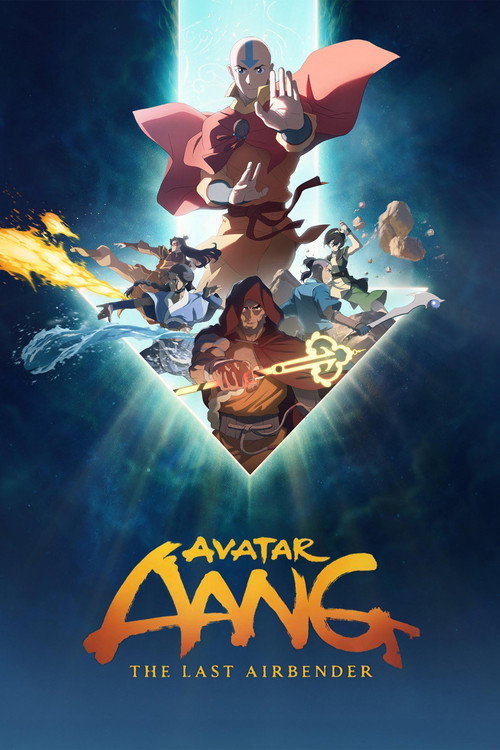
Avatar Aang: The Last Airbender
An atmospheric animated action-fantasy soaring with melancholic longing, where a solitary hero's grief reflects like a fractured breeze across towering glaciers before dissolving into a serene storm of hope.
Avatar Aang: The Last Airbender

Avatar Aang: The Last Airbender

"The legacy reawakens."

24 July 2026 United States of America 99 min 9.4 (200)

Director: Lauren Montgomery

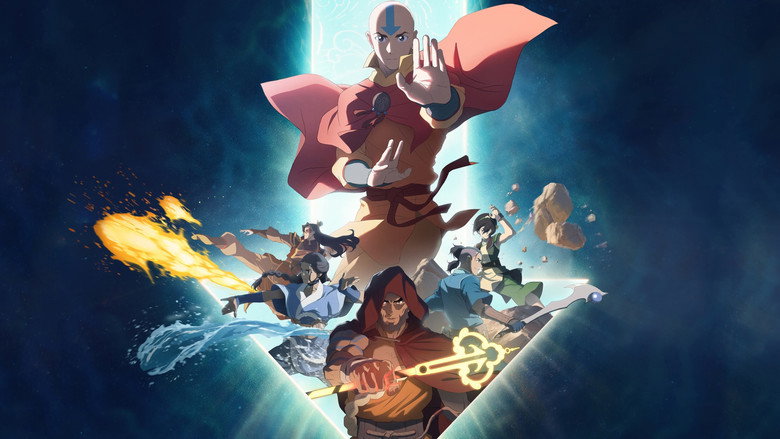
Cast: Eric Nam, Dave Bautista, Jessica Matten, Román Zaragoza, Steven Yeun

Animation Fantasy Action Adventure Grief, Isolation, and the Burden of Legacy The Ethics of Power and Systemic Inequality Restraint vs. Retribution and Spiritual Balance Found Family and Interpersonal Connection Organical Restoration vs. Forced Creation

Overview

Set thirteen years after the end of the Hundred Year War, Avatar Aang: The Last Airbender catches up with Avatar Aang and Team Avatar in their young adult years. Now twenty-five years old, Aang works alongside Katara, Sokka, Toph, and Fire Lord Zuko to rebuild a broken world and lay the foundations for Republic City—a sanctuary intended to unify all nations. However, despite his monumental achievements and the peace he brought to the globe, Aang remains deeply isolated, haunted by the crushing realization that he remains the world's last living Air Nomad.

When Aang discovers whispers of an ancient relic—the spiritual staff of Avatar Sonam—and uncovers Tagah, a mysterious airbender preserved inside a glacier, his lifelong search for his lost culture takes an unexpected turn. Reunited with his closest friends, Aang embarks on a high-stakes global voyage across sacred grounds and uncharted lands to recover the relic.

Yet Team Avatar is not alone on this quest. An extremist faction of non-benders known as "The Denied" seeks the exact same power to alter the balance of world power. Aang must navigate complex loyalties, ancient secrets, and his own internal struggle between the desire to restore his people and the sacred duty to preserve global harmony.
Core Meaning

Directed by Lauren Montgomery, Avatar Aang: The Last Airbender explores the heavy burden of legacy, the temptation of magical shortcuts to heal deep trauma, and what it truly means to preserve a culture. The film posits that true restoration cannot be forced through raw power or artificially created overnight. Instead, a culture lives through the values, philosophy, and peaceful spirit carried forward by those who choose to embody them. It emphasizes that healing requires accepting grief rather than letting pain corrupt one's moral compass.

Thematic DNA

Grief, Isolation, and the Burden of Legacy 30%
The Ethics of Power and Systemic Inequality 25%
Restraint vs. Retribution and Spiritual Balance 20%
Found Family and Interpersonal Connection 15%
Organical Restoration vs. Forced Creation 10%

Grief, Isolation, and the Burden of Legacy

The story centers on Aang's quiet sorrow over being the sole survivor of the Air Nomad genocide. Even in a world celebrating peace, Aang's identity is defined by absence. The film demonstrates how unaddressed grief can blind even the noblest hero to dangerous temptations.

The Ethics of Power and Systemic Inequality

Through "The Denied"—a faction of non-benders who feel oppressed in a society dominated by elemental benders—the film examines class structure and resentment. It highlights how systemic imbalance breeds extremism when non-benders seek power at any cost.

Restraint vs. Retribution and Spiritual Balance

Contrasting Tagah's vengeance-driven philosophy with Monk Gyatso's teachings, the narrative explores the fine line between justice and tyranny. Aang's climax tests whether he can conquer his anger when confronted by someone who perverts his sacred heritage.

Found Family and Interpersonal Connection

While Aang searches for lost Air Nomads, Katara, Sokka, Toph, and Zuko remind him that lineage is not the sole definition of family. Team Avatar's enduring bond grounds Aang when his spiritual burden threatens to overwhelm him.

Organical Restoration vs. Forced Creation

The quest for Avatar Sonam's staff forces Aang to realize that using an artifact to forcibly create benders violates natural balance. True revival must grow organically through education, living philosophy, and patience.

Character Analysis

Avatar Aang

Eric Nam

Archetype: The Reluctant Savior / Maturing Hero Key Trait: Compassionate, spiritually attuned, yet emotionally vulnerable to the weight of his solitary legacy.

Motivation

To bring back the Air Nomads and ensure his culture does not die with him.

Character Arc

Moves from overwhelming grief and desperation to restore his culture through shortcuts to accepting his grief and committing to organic rebuilding.

Tagah

Dave Bautista

Archetype: The Tragic Anti-Villain / Extremist Shadow Key Trait: Imposing, uncompromising, fierce, yet capable of ultimate reflection.

Motivation

To build a militarized Air Empire and eliminate any threat to airbenders.

Character Arc

An ancient non-bender gifted airbending by Avatar Sonam who witnessed the historical slaughter of airbenders; his drive to protect his culture twisted into militaristic tyranny before finding peace in death.

All 5 characters and cast

Symbols & Motifs

Avatar Sonam's Staff

Meaning:

Symbolizes the dangerous allure of magical shortcuts, representing both hope for restoration and the threat of spiritual corruption.

Context:

It promises the power to grant airbending to non-benders and becomes the central relic sought by both Aang and The Denied.

Glacial Ice / Unfreezing

Meaning:

Symbolizes frozen trauma and unhealed past wounds.

Context:

Just as Aang was once preserved in ice, unfreezing Tagah releases ancient, unexamined vengeance into the modern world.

Frayed Piece of Air Nomad Cloth

Meaning:

Symbolizes memory, spiritual lineage, and emotional grounding.

Context:

Caught in the wind during the climax, it reminds Aang of Monk Gyatso's love and pulls him back from committing an act of vengeance.

The Temple of Jharana

Meaning:

Symbolizes the forgotten golden era of ancient airbenders and the thin boundary between the physical realm and the Spirit World.

Context:

Serves as the sacred site where Avatar Sonam used the staff and where the final conflict takes place.

Surviving Sky Bison Herd

Meaning:

Symbolizes quiet, natural rebirth and resilient hope.

Context:

Found at the end of the film, representing the organic revival of the Air Nomad ecosystem.

Memorable Quotes

You may be the last airbender, but you're not alone, Aang. None of this would exist without you. You made the city possible with your heart and your mind.
— Katara

Context

Spoken early in Republic City to comfort Aang.

Meaning

Reminds Aang that his value extends beyond his bending status and that his friends share his burden.

I thought if I found another airbender, I wouldn't be carrying this weight alone anymore.
— Aang

Context

Spoken after unfreezing Tagah.

Meaning

Exposes Aang's deep emotional isolation and vulnerable desire for cultural fellowship.

All 5 quotes

Philosophical Questions

Can trauma justify the pursuit of absolute power to prevent future suffering?

Explored through Tagah's belief that non-violence caused the Air Nomad genocide and that military might is required for safety.

Is artificial equality ethical if achieved through stolen or forced means?

Explored through "The Denied" accepting airbending from Sonam's staff to challenge bender hegemony.

What truly defines the survival of a culture—its population or its core ethics?

Explored when Aang chooses to destroy the staff rather than compromise Air Nomad principles of peace and restraint.

Alternative Interpretations

The Tragedy of "The Denied": Some critics and viewers interpret "The Denied" not as true villains, but as victims of a bender-centric world order. In this reading, Aang's destruction of the staff preserves a flawed status quo that ignores non-bender inequality.

Full ending explanation

Cultural Impact

Created as the flagship project for Avatar Studios, Avatar Aang: The Last Airbender arrived during a renaissance for the franchise, following Netflix's live-action series and preceding the upcoming animated series Avatar: Seven Havens. The decision to recast adult characters with Asian and Indigenous actors was widely praised as an industry benchmark for authentic representation.

Critics praised the film as an engaging TV-to-movie transition that expanded the franchise's lore while delivering thrilling bending action. Public discourse surrounding its direct-to-streaming distribution highlighted ongoing industry debates regarding theatrical animation versus streaming releases.

Audience Reception

Audience reception was overall positive, with the film securing an 8.1/10 rating on IMDb. Longtime fans and critics praised the visually stunning animation combining hand-drawn aesthetics with dynamic 3D camera movements, fluid high-stakes bending choreography, voice performances by Eric Nam and Dave Bautista, and the emotional maturity in handling Aang's grief.

Main points of criticism focused on the compressed 99-minute runtime, which left secondary characters like Zuko, Toph, and Katara sidelined, and rapid plot progression that made it resemble an extended TV pilot. Controversial aspects included the decision to destroy the staff leaving non-bender inequality unaddressed, as well as Paramount's decision to forgo a wide global theatrical release.

Interesting Facts

  • Avatar Studios Debut: It is the inaugural feature film produced by Avatar Studios, founded in 2021 by original creators Bryan Konietzko and Michael Dante DiMartino.
  • Online Leak Controversy: In April 2026, the entire high-quality final cut leaked online after an internal file distribution error, leading to the arrest of a 26-year-old man in Singapore.
  • Release Schedule Shifts: Originally slated for a wide theatrical release in October 2025, the film was delayed before shifting to a direct Paramount+ premiere on July 25, 2026, accompanied by an Oscar-qualifying limited run in New York and Los Angeles.
  • Complete Voice Recasting: The adult versions of Team Avatar were recast with actors of authentic Asian and Indigenous backgrounds (Eric Nam as Aang, Jessica Matten as Katara, Román Zaragoza as Sokka, Steven Yeun as Zuko).
  • Hybrid Animation Style: Co-produced by Flying Bark Productions and Studio Mir, combining hand-drawn 2D character animation with 3D CGI environments.
  • Voice Reprise: Dee Bradley Baker returned to voice both Appa and Momo, remaining the sole original voice actor in the primary main cast.
  • In-Game Crossover: Tagah was announced as a free DLC character for Avatar Legends: The Fighting Game.

Easter Eggs

Cabbage Merchant Cameo

Ken Jeong voices the descendant/version of the iconic Cabbage Merchant operating in early Republic City.

Ancient Avatars

Features voice cameos by Ke Huy Quan as ancient Earthbender Avatar Xian and Freida Pinto as Avatar Sonam.

Flashback Glider Race

The opening scene depicts a young Aang (voiced by Sander Argabrite) glider-racing with Air Nomad children at the Southern Air Temple, featuring Monk Gyatso (voiced by Francois Chau).

Bridge to The Legend of Korra

Visual designs explicitly map out early Republic City construction, including the location for the iconic Avatar Aang Memorial Statue.

Seeds of the Equalist Movement

"The Denied" and their anti-bender ideology directly foreshadow Amon's Equalist revolution seen decades later in The Legend of Korra Season 1.

Gorillavark Spirit

Taika Waititi voices "Gorillavark," a spirit inhabiting the Spirit World bridge.

Frequently Asked Questions

Explore More About This Movie

Dive deeper into specific aspects of the movie with our detailed analysis pages

Comments (0)

Leave a comment

No comments yet. Be the first to share your thoughts!

Similar Movies