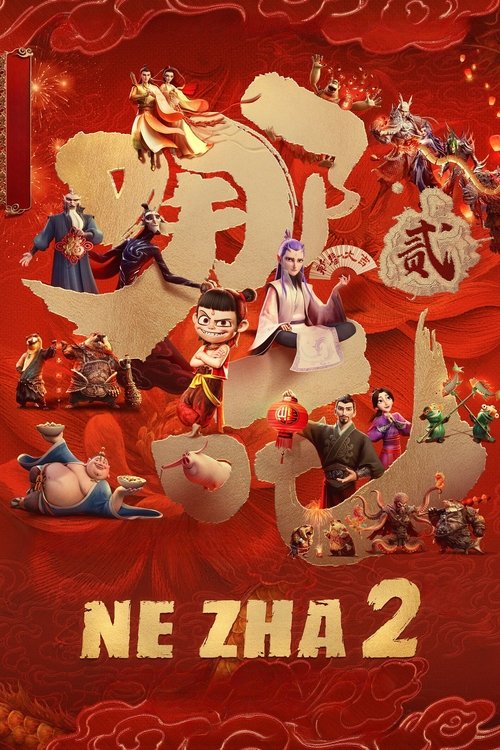
Ne Zha 2
哪吒之魔童闹海
"Witness a hero reborn."
Overview
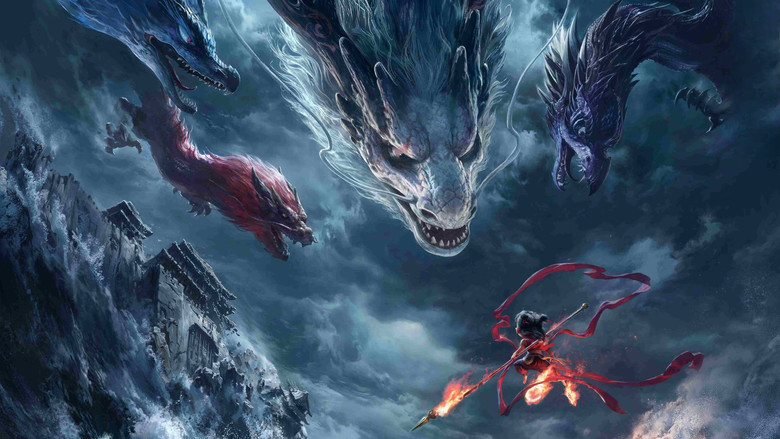
Picking up immediately after the first film, the spirits of Ne Zha and Ao Bing survive the heavenly lightning strike that destroyed their bodies. Their master, Taiyi Zhenren, uses a sacred Seven-Colored Lotus to reconstruct their physical forms, but the process is interrupted. Ao Bing's new body quickly disintegrates after he defends Chentang Pass from an attack ordered by his vengeful father, the Dragon King Ao Guang, who believes his son is dead.
Forced to share Ne Zha's newly-reformed body, the two friends must embark on a perilous journey. To save Ao Bing and prevent the destruction of Chentang Pass, they must complete three trials set by the immortal Master Wuliang to gain an elixir that can create a new body for Ao Bing. Their quest becomes a test of their bond and identity, challenging the rigid hierarchies of the celestial realm and uncovering a deeper conspiracy that threatens both gods and mortals.
Core Meaning
The core message of "Ne Zha 2" is a powerful assertion of self-determination against the constraints of destiny and societal prejudice. Director Yang Yu (Jiaozi) emphasizes the theme of defying one's prescribed fate, encapsulated in the idea, “My fate is in my hands, not controlled by heaven." The film explores the idea that one's identity is not defined by birth or prejudice (as a 'demon' or 'spirit' pearl) but by one's choices and actions.
Furthermore, the film is deeply rooted in the importance of family and unconditional love. The director has stated that his own life experiences and the unwavering support of his parents heavily influenced the portrayal of Ne Zha's relationship with his family, highlighting that acceptance and love are crucial in allowing one to forge their own path.
Thematic DNA
Fate vs. Free Will
This is the central theme of the film. Ne Zha, born of the Demon Orb, is destined for destruction but repeatedly fights to control his own path. The narrative constantly questions whether destiny is predetermined or if individuals have the power to shape their own outcomes. Ne Zha's famous line, "My fate is in my hands, not controlled by heaven," serves as the movie's defiant thesis statement against a rigid, hierarchical celestial order.
Prejudice and Acceptance
The film explores societal prejudice through the treatment of both Ne Zha as a 'demon' and the Dragon Clan, who are oppressed and imprisoned. A significant subplot involves the systematic hunting of 'Yaoguai' (demons) by a celestial sect, questioning the morality of a system that judges beings based on their nature rather than their actions. The friendship between Ne Zha and Ao Bing, reincarnations of opposing forces, is a testament to overcoming these prejudices.
The Nature of Good and Evil
"Ne Zha 2" challenges simplistic definitions of good and evil, reflecting Taoist principles of yin and yang. The supposed 'demons' exhibit honor and camaraderie, while the established 'good' celestial sect, led by Master Wuliang, is revealed to be corrupt, manipulative, and responsible for massacring civilians to maintain power. The film suggests that morality is complex and that true villainy often hides behind a mask of righteousness.
Family and Unconditional Love
The unwavering love and support of Ne Zha's parents, Li Jing and Lady Yin, are a crucial grounding force. Unlike in some traditional tellings of the myth, his parents accept him despite his demonic nature and stand by him. Director Jiaozi has explicitly stated that this theme is a reflection of his own gratitude for his parents' support during his difficult early career, infusing the film with genuine emotion.
Character Analysis
Ne Zha
Lu Yanting (young), Joseph (adolescent)
Motivation
His primary motivation is to save his friend Ao Bing by acquiring an elixir to restore his body. This is intertwined with the need to protect his hometown, Chentang Pass, from the threat of the Dragon King and the darker, hidden threat of the immortal sect.
Character Arc
Ne Zha continues his journey from a misunderstood and ostracized 'demon child' to a true hero who defines his own identity. In this sequel, his rebellious nature is channeled into a fight against a corrupt celestial system. His arc is defined by his fierce loyalty to his friend Ao Bing and his family, forcing him to mature and learn to collaborate, literally sharing his body and mind to save those he loves.
Ao Bing
Han Mo
Motivation
Ao Bing is motivated by his friendship with Ne Zha and his innate desire to do what is right, even if it means defying his father, the Dragon King. He seeks to protect the innocent people of Chentang Pass and find a just solution that can save both the town and his own Dragon Clan.
Character Arc
As the reincarnation of the Spirit Pearl, Ao Bing is Ne Zha's opposite: calm, gentle, and noble. Having also defied his fate in the first film, his arc here is one of sacrifice and resilience. He loses his body again while protecting Chentang Pass and must rely entirely on his bond with Ne Zha to survive. His journey is about learning to assert himself and fight for justice alongside his friend, even when stripped of his physical form.
Master Wuliang
Wang Deshun
Motivation
His motivation is the consolidation of power and the enforcement of his rigid, prejudiced worldview. He seeks to eliminate those he deems unworthy—demons and dragons alike—and instigate a "Deification War" to cement the dominance of his Chan sect.
Character Arc
Introduced as the leader of a heavenly sect who sets the trials for Ne Zha, Master Wuliang is revealed to be the true villain. His arc is a descent from a figure of authority into a ruthless tyrant. He represents the corruption and hypocrisy of the established order, willing to massacre innocent people and frame the Dragon Clan to maintain his power and control.
Ao Guang (The Dragon King)
Yu Chen (human form), Li Nan (dragon form)
Motivation
His primary motivation is revenge for his son's supposed death and the liberation of the Dragon Clan, who are forced to act as jailers for demons in their underwater prison.
Character Arc
Ao Guang begins as an antagonist, driven by grief and rage over the perceived death of his son, Ao Bing. He threatens to destroy Chentang Pass in an act of revenge. However, his character is more complex than a simple villain; he is the leader of an oppressed people (the Dragon Clan) and his actions, while destructive, stem from a desire for justice for his son and his clan.
Symbols & Motifs
Seven-Colored Sacred Lotus
The lotus symbolizes purity, rebirth, and redemption. In Chinese culture, the lotus rising from muddy water represents purity emerging from chaos. Its seven colors can be linked to the Buddhist "Seven Treasures," signifying cosmic harmony. Its use to reconstruct Ne Zha and Ao Bing's bodies is a powerful metaphor for the belief that destruction must precede renewal and that a second chance is possible.
Master Taiyi Zhenren uses the Seven-Colored Sacred Lotus at the beginning of the film to rebuild the physical bodies of Ne Zha and Ao Bing after they were destroyed by heavenly lightning. The fragile and incomplete nature of this rebirth sets the central conflict in motion.
Shared Body
The sharing of Ne Zha's body by both his and Ao Bing's spirits symbolizes their deep bond and the Taoist concept of yin and yang—two opposing but complementary forces creating a whole. It physically represents their interdependence and forces them to reconcile their different natures—Ne Zha's impulsiveness and Ao Bing's calmness—to achieve a common goal.
After Ao Bing's reconstructed body is destroyed, his spirit takes refuge within Ne Zha's body. Throughout their trials to become immortal, they must learn to alternate control, with the calm Ao Bing often taking over during delicate tasks while Ne Zha sleeps.
Jade Void Palace / Yuxu Palace
The Jade Void Palace, designed with the structure of the Eight Trigrams (Bagua), symbolizes the rigid, hierarchical order of the heavens and the Taoist philosophy of cosmic balance. However, it also comes to represent a corrupt and oppressive authority, as its leader, Master Wuliang, uses its power to enforce an unjust system and secretly orchestrates atrocities to consolidate power.
This is the destination of Ne Zha and Ao Bing's quest. It is the home of the immortal sect where they must undergo three trials to earn an elixir to restore Ao Bing's body. The palace's grandeur hides the dark secrets of its leadership.
Memorable Quotes
小爷是魔,那又如何。我偏要踏出一条自己的路!
— Ne Zha
Context:
This line is used in promotional materials and reflects the core attitude Ne Zha carries throughout the film as he confronts those who judge him based on his origin as the Demon Orb.
Meaning:
Translated as, "So what if I'm a demon? I will walk my own path!" This quote powerfully encapsulates the film's central theme of self-determination and rebellion against prejudice and fate. It is Ne Zha's declaration of independence from the destiny that the heavens have assigned to him.
Philosophical Questions
Is our identity defined by our origin or our choices?
The film delves deeply into this question through its two protagonists. Ne Zha is born from the 'Demon Orb' and is pre-judged as evil and destructive, while Ao Bing is from the 'Spirit Pearl' and expected to be righteous. The entire narrative is a rejection of this deterministic view. Ne Zha consistently chooses to be a protector and a loyal friend, proving that his actions, not his birth, define him. The film argues powerfully for existential choice over essentialist destiny, suggesting that one's character is forged through the path they choose to walk.
What is the nature of justice in a corrupt system?
The film presents a world where the official arbiters of justice—the celestial sect at Jade Void Palace—are the most corrupt and unjust entities. They commit mass murder and scapegoat an entire race (the Dragon Clan) to preserve their authority. This forces the characters and the audience to question what 'justice' means when the system itself is the source of evil. The film suggests that true justice may require rebellion against established authority and the formation of alliances among the oppressed to overthrow the oppressors.
Alternative Interpretations
Beyond its surface-level fantasy-adventure plot, "Ne Zha 2" has been interpreted as a complex political allegory. Some analyses suggest the oppression of the Dragon Clan by the celestial Jade Void Palace is a metaphor for geopolitical struggles and the manipulation of narratives through propaganda. The film's villains are not monstrous outsiders but the established, unelected authorities who commit atrocities against their own people to maintain power.
This reading views the film as a surprisingly anti-authoritarian text, exploring how corrupt institutions defend themselves and how oppressed groups can sometimes become defenders of the very systems that oppress them. Ne Zha's rebellion is therefore not just against his personal fate but against an unjust and tyrannical power structure, making the final alliance between the heroes, dragons, and other 'demons' a powerful call for solidarity among the marginalized against a common oppressor.
Cultural Impact
"Ne Zha 2" represents a landmark achievement for Chinese animation on the global stage. Released on January 29, 2025, to coincide with the Chinese New Year, the film was not just a commercial juggernaut but a cultural phenomenon. It shattered numerous box office records, becoming the highest-grossing film in Chinese history and the highest-grossing animated film worldwide, surpassing major Hollywood productions. This success was fueled by a sense of national pride and government support, which subsidized some ticket sales.
Critics and audiences lauded the film for its stunning visual artistry, which blended traditional Chinese art styles like ink painting with cutting-edge 3D animation, creating a unique aesthetic. The story, while based on the 16th-century novel Investiture of the Gods, was modernized to explore universal themes of rebellion, self-determination, and family, making it resonate with contemporary audiences both domestically and internationally. The film's reinterpretation of classic myths and philosophies—including Taoism, Confucianism, and Legalism—sparked widespread discussion about Chinese cultural identity in a modern context. Its success demonstrated that a story deeply rooted in Chinese folklore could achieve massive global appeal, marking a potential shift in the landscape of international animation.
Audience Reception
Audience reception for "Ne Zha 2" was overwhelmingly positive, catapulting it to become a massive cultural and commercial success. Viewers in China showed immense support, driven by national pride, with the film selling an estimated 300 million tickets within two months. Globally, audiences praised the film's breathtaking and visually spectacular animation, with many critics stating it rivals or exceeds the quality of top Hollywood and Japanese productions. The action sequences were frequently described as massive, epic, and awe-inspiring.
The story's emotional depth, particularly its focus on friendship, family loyalty, and the theme of defying one's fate, resonated deeply with viewers. The humor, which included a fair amount of kid-friendly toilet humor, was also a highlight for many. Points of criticism were minor but sometimes pointed to the complex and convoluted plot, which can be difficult to follow without familiarity with the first film or the underlying mythology. Despite this, the overall verdict was that "Ne Zha 2" was a rare sequel that successfully amplified everything that made the first film great, delivering a heartfelt, thrilling, and visually stunning blockbuster.
Interesting Facts
- The film became the highest-grossing animated film of all time, surpassing $2.2 billion at the global box office.
- Production was a massive undertaking, involving over 4,000 people across 138 animation companies.
- The film has more than 2,400 shots, including over 1,900 special effects shots, a significant increase from the first movie.
- With a budget of US$80 million (¥600 million), it became China's most expensive animated film.
- Director Yang Yu (Jiaozi) became the first non-Hollywood director to produce a movie earning over $2 billion.
- Before becoming a successful director, Yang Yu was unemployed for over three years and relied on his mother's small monthly pension to survive, an experience that heavily influenced the film's theme of parental love.
- A documentary about the making of the film, titled "Bùpò-bùlì" ('No innovation without destruction'), was released online on February 10, 2025.
- For the English-language release, Academy Award winner Michelle Yeoh was cast to voice Lady Yin, Ne Zha's mother.
Easter Eggs
Barrier Beast design inspired by Sanxingdui artifacts
The design of the Barrier Beasts, particularly their prominent, bulging eyes and golden-faced appearance, is a direct visual reference to real-life ancient Chinese artifacts. Specifically, they are modeled after the golden-faced bronze human head and the bronze "vertical-eye" masks discovered at the Sanxingdui archaeological site in Sichuan, the home province of the director. This serves as a nod to China's rich and mysterious ancient history.
⚠️ Spoiler Analysis
Click to reveal detailed analysis with spoilers
Frequently Asked Questions
Explore More About This Movie
Dive deeper into specific aspects of the movie with our detailed analysis pages
Comments (0)
No comments yet. Be the first to share your thoughts!