Skip to content
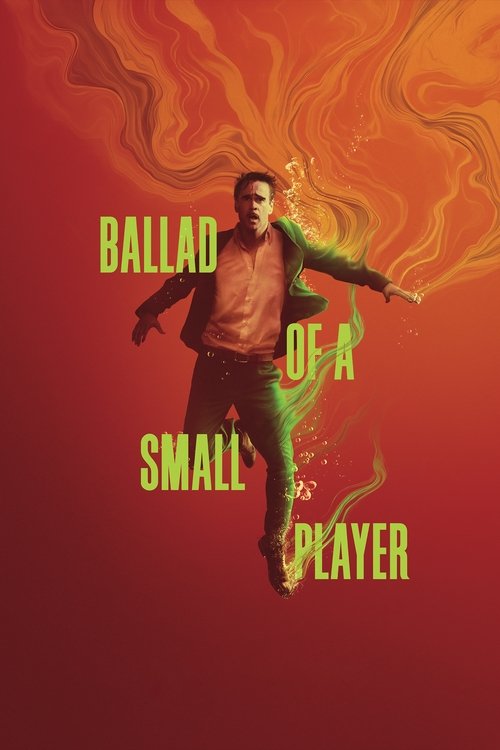
Ballad of a Small Player
Draped in intoxicating neon haze and spiritual melancholia, the film functions like a feverish roulette spin on the edge of the abyss—a gilded masquerade where soul-deep addiction drowns in velvet green and phantom smoke.
Ballad of a Small Player

Ballad of a Small Player

15 October 2025 Germany 101 min 5.8 (348)

Director: Edward Berger

Cast: Colin Farrell, Fala Chen, Tilda Swinton, Deanie Ip, Alex Jennings

Drama Crime The Cycle of Addiction and Self-Deception Spiritual Haunting and the Hungry Ghost Guilt, Expiation, and Redemption Identity Fraud and Colonial Displacement

Overview

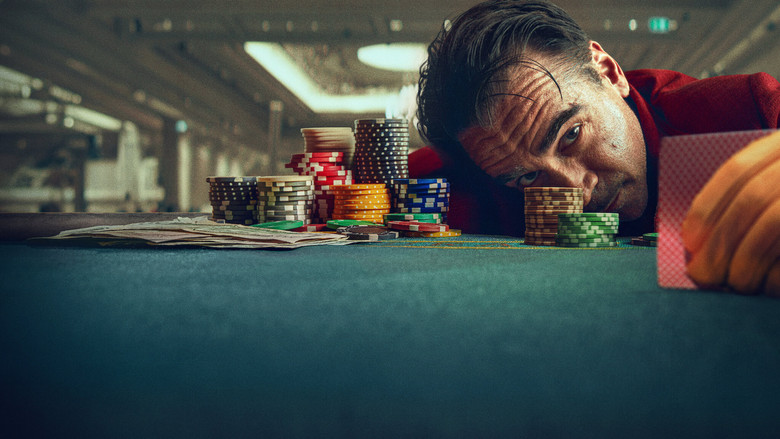
Set against the cavernous, opulent casino halls of Macau—often called the "gambling capital of the universe"—Ballad of a Small Player follows the self-destructive spiral of "Lord" Freddy Doyle. Dressed in tailored velvet suits and sporting kid gloves and an impeccably dapper pencil mustache, Doyle presents himself as a wealthy British aristocrat enjoying a life of effortless luxury. Beneath the veneer, however, Doyle is drowning: heavily in debt, hunted by casino management to clear his mounting arrears, and nursing a crippling baccarat addiction.

As Doyle’s fraudulent world threatens to cave in, two very different women enter his orbit. The first is Cynthia Blithe, a relentless private investigator sent to confront him over the dark financial crimes he fled back in the United Kingdom. The second is Dao Ming, an enigmatic casino moneylender and hostess who provides him with a lifeline at his lowest ebb. Drawn together during the ominous atmosphere of Macau’s Hungry Ghost Festival, Doyle begins to mistake their bond for a cosmic stroke of luck—unaware that the forces circling him may demand far more than money.

Core Meaning

Director Edward Berger and screenwriter Rowan Joffé use Lawrence Osborne’s literary source to examine the corrosive nature of addiction and the illusion of reinvention. The film posits that compulsive gambling is not merely a hunger for wealth, but a desperate, spiritual attempt to escape personal guilt and existential emptiness. Berger juxtaposes Western consumerist greed with Eastern ghost folklore, illustrating that true redemption cannot be bought or won on a lucky roll, but requires shedding one's fraudulent ego and making peace with past transgressions.

Thematic DNA

The Cycle of Addiction and Self-Deception 35%
Spiritual Haunting and the Hungry Ghost 25%
Guilt, Expiation, and Redemption 20%
Identity Fraud and Colonial Displacement 20%

The Cycle of Addiction and Self-Deception

Explores the psychological prison of compulsive gambling, where every catastrophic loss is rationalized away by the gambler's conviction that the next hand will solve everything.

Spiritual Haunting and the Hungry Ghost

Echoing Buddhist and Chinese folklore, the film portrays insatiable appetites as a form of purgatorial torment, where lost souls wander sated by nothing.

Guilt, Expiation, and Redemption

Doyle’s journey explores whether a deeply compromised person can earn genuine moral forgiveness without seeking an easy financial escape.

Identity Fraud and Colonial Displacement

Focuses on the depiction of the Western gwai lo (foreigner) adopting a hollow aristocratic persona in a former colonial outpost, using an exoticized landscape to hide from his true self.

Character Analysis

Lord Freddy Doyle / Brendan Reilly

Colin Farrell

Archetype: Tragic Antihero Key Trait: Dandyish, self-destructive, and charm-driven.

Motivation

Driven by a compulsive need to escape past crimes, maintain his noble facade, and find impossible salvation at the baccarat tables.

Character Arc

A disgraced Irish lawyer posing as British nobility who shifts from compulsive denial and desperation to spiritual reckoning and self-sacrifice.

Dao Ming

Fala Chen

Archetype: Spectral Guide / Shadow Mentor Key Trait: Serene, melancholic, and otherworldly.

Motivation

Guiding another doomed soul toward moral absolution during Ghost Month.

Character Arc

A casino broker and spirit whose intervention leads Doyle through his moral labyrinth toward ultimate release.

All 5 characters and cast

Symbols & Motifs

The Kid Gloves and Velvet Suits

Meaning:

They symbolize Doyle's manicured, artificial persona of nobility and serve as a physical barrier preventing him from directly feeling the filth and consequence of his deeds.

Context:

Worn by Doyle whenever he plays high-stakes baccarat in Macau's casino halls.

The Baccarat Table

Meaning:

Represents life reduced to pure randomness, where divine favor is futilely sought within mathematical probability.

Context:

Featured across the casino floor as the focal point of Doyle's destructive addiction and confrontations.

The Hungry Ghost Festival (Ghost Month)

Meaning:

Mirrors Doyle’s own half-dead existence, highlighting his insatiable spiritual thirst through wandering spirits and paper offerings.

Context:

Serves as the atmospheric and cultural backdrop during which Doyle encounters Dao Ming and navigates Macau.

Burning Money / Offerings

Meaning:

Acts as a bridge between the physical and spirit worlds, symbolizing the destruction of materialistic vice in exchange for spiritual purification.

Context:

Seen in street altar fires throughout Ghost Month and utilized by Doyle in his final act of ritual expiation.

Memorable Quotes

My name is Doyle. Lord Doyle. I'm a high roller on a slippery slope. A gambler with a pair of lucky gloves. Washed up on the shores of Macau... but I no longer believe in miracles.
— Lord Doyle

Context

Delivered as an opening voiceover as Doyle awakens to a wrecked suite in Macau.

Meaning

Establishes Doyle's self-aware, tragic persona and highlights his internal conflict between cynical despair and compulsive hope.

I may be a gwai lo, but I still have a soul. As far as I can see, it's no more lost than yours.
— Lord Doyle

Context

Spoken by Doyle to Dao Ming along the Macau waterfront.

Meaning

Bridges the cultural and existential divide between Doyle and Dao Ming, acknowledging their shared desolation.

All 5 quotes

Philosophical Questions

What is the true cost of reinventing oneself on stolen foundations?

The narrative demonstrates that adopting new titles, accents, and aristocratic attire cannot erase underlying moral corruption or quiet an unresolved conscience.

Can an addict ever find satisfaction through the object of their addiction?

Framed through the Buddhist archetype of the hungry ghost—beings possessing massive bellies but pinhole mouths—the film reveals that material accumulation cannot quench spiritual emptiness.

Is redemption possible through sacrifice rather than victory?

Doyle achieves spiritual peace not by beating the casino odds, but by abandoning his quest to win and relinquishing all earthly gains.

Alternative Interpretations

The film invites three primary readings:

Full ending explanation

Cultural Impact

The film sits at the intersection of modern globalized capitalism and East Asian spiritual traditions, using Macau—the world’s most lucrative gaming hub—as an emblematic theater where Western decay collides with ancient cosmologies.

Released across international film festivals and Netflix in late 2025, the film achieved mixed-to-positive critical reception with an approval rating around 65% on Rotten Tomatoes. Reviewers praised Colin Farrell's lead performance and James Friend's visual craftsmanship, while debating the script's blend of grounded noir and spectral folklore.

Audience Reception

Critical and audience reception highlighted several key strengths and weaknesses:

  • Praise: Colin Farrell’s magnetic, vulnerable lead performance; James Friend’s neon-drenched cinematography; and Volker Bertelmann’s atmospheric, tension-building musical score.
  • Criticism: Narrative pacing lags during the second act, and Tilda Swinton’s investigator character felt somewhat underwritten and tonally disconnected from the central spiritual drama.
  • Verdict: Regarded as a visually intoxicating, moody psychological thriller that serves as a compelling acting showcase, despite occasional structural flaws.

Interesting Facts

  • This marks Edward Berger’s direct follow-up feature to his back-to-back awards contenders All Quiet on the Western Front (2022) and Conclave (2024).
  • Berger reunited key craft collaborators from All Quiet on the Western Front, including cinematographer James Friend, composer Volker Bertelmann (Hauschka), and costume designer Lisy Christl.
  • Production took place between June and August 2024 directly in the casinos, historical alleys, and waterfronts of Macau and Hong Kong, lending authentic spatial claustrophobia and neon brilliance.
  • The film had its world premiere at the 52nd Telluride Film Festival on August 29, 2025, before screening at the Toronto International Film Festival and San Sebastián.
  • Screenwriter Rowan Joffé adapted Lawrence Osborne's 2014 novel, which was heavily influenced by Osborne’s personal experiences wandering Asian casino capitals.

Easter Eggs

Graham Greene Archetypes

The characterization of Doyle as a sweating, morally collapsed expatriate hiding in a former European colony is a direct cinematic homage to Graham Greene’s classic novels such as The Quiet American and The Heart of the Matter.

Dao Ming's Name Meaning

The name translates roughly to "path of light" or "guiding light," telegraphing her role as a spiritual psychopomp rather than an earthly romantic partner.

The Hungry Ghost Visual Motifs

Characters frequently pass smoke pits and street shrines burning joss paper, visually mirroring how Doyle incinerates fiat currency at the casino tables.

Frequently Asked Questions

Explore More About This Movie

Dive deeper into specific aspects of the movie with our detailed analysis pages

Comments (0)

Leave a comment

No comments yet. Be the first to share your thoughts!

Similar Movies