Skip to content
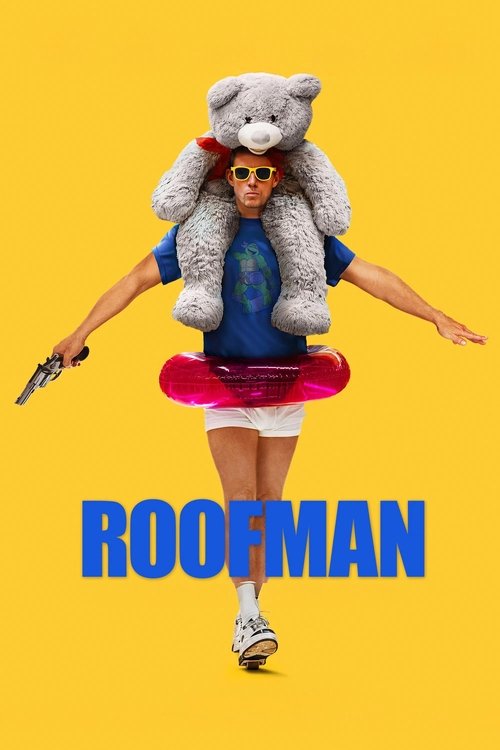
Roofman
A bittersweet, nostalgic crime-romance bathed in late-90s fluorescent glow, capturing the aching longing for family and belonging through the image of a runaway trapped inside a vibrant, lonely cathedral of toys.
Roofman

Roofman

"Based on actual events. And terrible decisions."

06 October 2025 United States of America 126 min 7.0 (976)

Director: Derek Cianfrance

Cast: Channing Tatum, Kirsten Dunst, Ben Mendelsohn, LaKeith Stanfield, Juno Temple

Drama Crime Comedy The Illusion of Sanctuary and Domesticity Duality and Performance of Identity Economic Alienation and the Working-Class Struggle The Paradox of Nonviolent Crime and Moral Compromise
Budget: $18,000,000
Box Office: $34,852,212

Overview

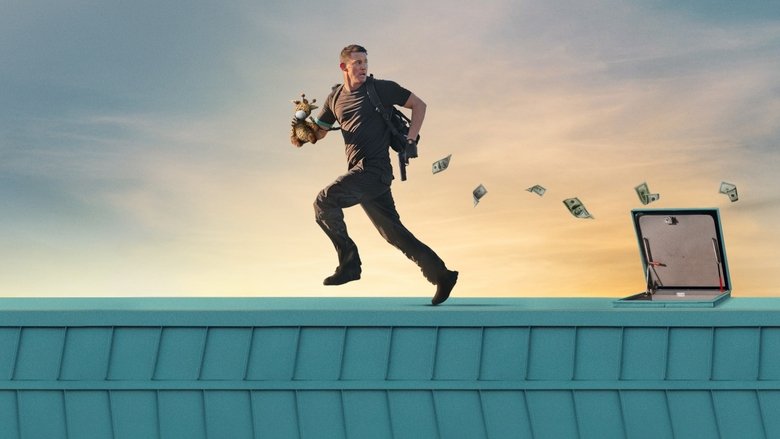
Directed and co-written by Derek Cianfrance alongside Kirt Gunn, Roofman is a fact-based crime comedy-drama inspired by the stranger-than-fiction life of Jeffrey Manchester. A financially struggling U.S. Army veteran and devoted father, Manchester resorts to a string of polite armed robberies across dozens of McDonald’s restaurants—consistently dropping in through roofs after hours, never firing a weapon, and displaying disarming gentleness toward terrified workers. When he is finally apprehended and sentenced to 45 years in a North Carolina penitentiary, Jeffrey refuses to accept separation from a normal life and stages an audacious escape.

Finding himself on the lam in Charlotte without an immediate exit route, Jeffrey slips into an expansive Toys "R" Us store. Using his military reconnaissance training, he covertly carves out an elaborate secret hideout in the hollows of a bicycle display wall. Living undetected on vending-machine snacks and monitoring store life with baby monitors, his survival strategy shifts when he catches sight of Leigh, a resilient single mother working customer service under an overbearing store manager.

Assuming the quiet civilian persona of "John Zorn," Jeffrey ventures into the outside community, joins Leigh's church congregation, and begins courting her. What unfolds is an extraordinary balance between a covert survival thriller and an earnest, melancholic romantic caper, exploring whether a fugitive living in borrowed spaces can ever truly find a legitimate home.


Core Meaning

Derek Cianfrance uses Jeffrey Manchester’s bizarre real-life case to interrogate the American myth of domestic redemption and the invisible walls constructed by economic desperation and systemic failure. Rather than framing Manchester as a hardened criminal or purely an eccentric punchline, Cianfrance depicts him as an emotionally displaced soldier seeking domestic sanctuary in corporate consumerist spaces.

The film's core message suggests that human connection, dignity, and love cannot flourish when rooted in deception and avoidance of reality. While Manchester creates a whimsical, private playground to insulate himself from the harsh outside world, the film underscores that genuine belonging requires accountability and truth, illustrating how romantic self-delusion eventually collapses under the weight of real-world consequences.

Thematic DNA

The Illusion of Sanctuary and Domesticity 30%
Duality and Performance of Identity 25%
Economic Alienation and the Working-Class Struggle 25%
The Paradox of Nonviolent Crime and Moral Compromise 20%

The Illusion of Sanctuary and Domesticity

Jeffrey’s hideout inside a commercial toy megastore represents an artificial haven—a surrogate childhood home where he can play house, hide from the law, and project the idealized domestic life he lost.

Duality and Performance of Identity

Explored through Manchester’s contrasting personas: the courteous "Roofman" robber, the invisible inhabitant behind the store shelves, and the wholesome churchgoer "John Zorn" trying to win a family's heart.

Economic Alienation and the Working-Class Struggle

Exemplified by the contrast between disenfranchised veterans and overworked hourly workers like Leigh, who are pushed to the fringes by inflexible corporate management.

The Paradox of Nonviolent Crime and Moral Compromise

Jeffrey genuinely views himself as a nonviolent "Robin Hood" who only takes insured cash from multi-billion-dollar conglomerates, yet his rationalizations blind him to the psychological trauma and practical danger his deception inflicts on loved ones.

Character Analysis

Jeffrey Manchester ("Roofman" / "John")

Channing Tatum

Archetype: The Antihero / Tragic Dreamer Key Trait: Disarming politeness, tactical resourcefulness, and emotional denial.

Motivation

To provide for family and experience genuine domestic love.

Character Arc

Evolves from a desperate ex-soldier committing tactical robberies into a fugitive playing house, ultimately facing the reality of his destructive dual identity.

Leigh Wainscott

Kirsten Dunst

Archetype: The Grounded Heart / Everyday Survivor Key Trait: Hardworking resilience, emotional vulnerability, and integrity.

Motivation

To provide safety, stability, and affection for her children.

Character Arc

Navigates the grind of single motherhood and workplace exploitation, cautiously opening her heart to a gentle stranger before confronting his immense betrayal.

All 4 characters and cast

Symbols & Motifs

The Toys "R" Us Wall Cavity / Fort

Meaning:

Serves as a physical manifestation of Jeffrey's arrested development and emotional displacement—an adult living hidden among children's toys.

Context:

Constructed in the hollows of a bicycle display wall inside the toy megastore to serve as his secret living quarters and hideout.

Bastion of refuge while on the run.

The Winter Jacket

Meaning:

Symbolizes his desperate need to be perceived as inherently "good" and polite, even while committing a felony.

Context:

Shown during his habit of offering his own warm coat to restaurant employees before locking them in walk-in freezers during robberies.

Baby Monitors

Meaning:

Visually and audibly symbolize his voyeuristic detachment from regular society, listening in on authentic human life without fully participating.

Context:

Used by Jeffrey from within his wall hideout to maintain surveillance over the store floor and employees.

Rooftops and Ceilings

Meaning:

Represent liminal spaces between societal order and criminal transgression; dropping down from the rafters mirrors his descent into people's private routines.

Context:

Utilized during his break-ins into McDonald's restaurants and retail spaces from above.

Donated Christmas Toys

Meaning:

Symbolizes Jeffrey’s misguided attempt to convert illicit gains into spiritual and communal grace.

Context:

High-end merchandise stolen from store inventory and gifted to the local church toy drive for Leigh's congregation.

Memorable Quotes

I’m not here to hurt anyone. Put this on—it gets cold in that freezer.
— Jeffrey Manchester (Channing Tatum)

Context

Spoken during an early morning McDonald's holdup as he hands his winter jacket to a shivering employee.

Meaning

Establishes Jeffrey's paradoxical criminal ethos of gentle consideration during high-stakes armed robbery.

You built an entire kingdom out of cardboard and plastic just so you wouldn't have to face the ground.
— Leigh Wainscott (Kirsten Dunst)

Context

During their climactic confrontation following Jeffrey's exposure as an escaped fugitive.

Meaning

Pinpoints the tragedy of Jeffrey’s psychological retreat into the toy store as an avoidance of real-life consequences.

All 3 quotes

Philosophical Questions

Can an act of crime ever remain truly victimless if it relies on coercion and fear?

Explored through the tension between Jeffrey’s polite behavior and the inherent terror experienced by fast-food employees staring down a weapon.

Is a constructed identity capable of cultivating genuine love?

Examined through "John Zorn’s" courtship of Leigh, questioning if real intimacy can exist upon a foundation of total fabrication.

Where does personal moral responsibility end when systemic economic safety nets fail?

Illustrated by Jeffrey's initial descent into armed robbery after exhausting traditional avenues to support his children.

Alternative Interpretations

The film can be approached through several distinct lenses:

Full ending explanation

Cultural Impact

Roofman reflects a modern cinematic resurgence of character-driven, auteur crime-comedies (alongside titles like Richard Linklater’s Hit Man), where real-life crime serves as a prism for humanistic, bittersweet storytelling rather than violent spectacle.

The film premiered at the Toronto International Film Festival (TIFF) on September 6, 2025, before its North American theatrical release on October 10, 2025, by Paramount Pictures. It was warmly received by critics (holding an 83% Rotten Tomatoes score and 63 Metacritic score), with widespread praise directed at Cianfrance's ability to infuse a true-crime caper with warmth, and Channing Tatum delivering one of the most charming, emotionally mature performances of his career. Produced on a $19 million budget, it earned $34.8 million worldwide, finding further legs on digital and holiday viewing.

Audience Reception

Aggregated reviews for the film reflected strong positive engagement alongside targeted critiques:

  • Praise: Critics highlighted the chemistry between Tatum and Dunst, the surprisingly light and tender tone maintained by Cianfrance, Peter Dinklage’s standout comedic turn, and the nostalgic, tactile world-building of the retail hideout.
  • Criticism: Minor critiques noted that the film occasionally softens the darker psychological implications of armed robbery and voyeurism, maintaining a breezy crowd-pleaser tone rather than a devastating deconstruction.
  • Verdict: A charming, emotionally resonant, and delightfully strange crime-caper that balances vintage nostalgia with genuine human pathos.

Interesting Facts

  • Director Derek Cianfrance spent four years speaking with the real Jeffrey Manchester via weekly phone calls from maximum security prison, where Manchester jokingly nicknamed Cianfrance "Dr. Derek" because their talks felt like therapy.
  • The production did not use digital environments for the store interior; they leased an abandoned commercial retail warehouse in Charlotte, North Carolina, and completely rebuilt an authentic period-accurate Toys "R" Us stocked with vintage late-90s/early-2000s inventory.
  • Channing Tatum underwent significant physical conditioning to capture Manchester’s agile frame, allowing him to believably squeeze into narrow crawl spaces, air ducts, and wall cavities on set.
  • To foster natural on-screen romantic tension and unfamiliarity, Cianfrance kept Tatum and Kirsten Dunst separated during pre-production until shooting their first official date scene.
  • Filming took place on location in Charlotte, North Carolina, around Carolina Place Parkway, near the actual shopping center where the 2004–2005 events occurred.

Easter Eggs

Kirsten Dunst / Spider-Man Meta-Reference

In the background of the reconstructed toy store, promotional posters and toy lines from early-2000s Columbia Pictures films, including the original Spider-Man series (starring Dunst as Mary Jane Watson), are visible on display racks.

The "My Name Is Jeff" Meme Nod

Tatum's casting as Jeffrey Manchester provided an intentional, humorous meta-layer acknowledged by the production team following Tatum’s viral line from 22 Jump Street.

Circuit City Integration

True to history, the set features the vacant, adjoining Circuit City building that Manchester used in real life as an expanded hideout and dental hygiene staging room.

Frequently Asked Questions

Explore More About This Movie

Dive deeper into specific aspects of the movie with our detailed analysis pages

Comments (0)

Leave a comment

No comments yet. Be the first to share your thoughts!

Similar Movies