Batman: Under the Red Hood
"Dare to Look Beneath the Hood."
Overview
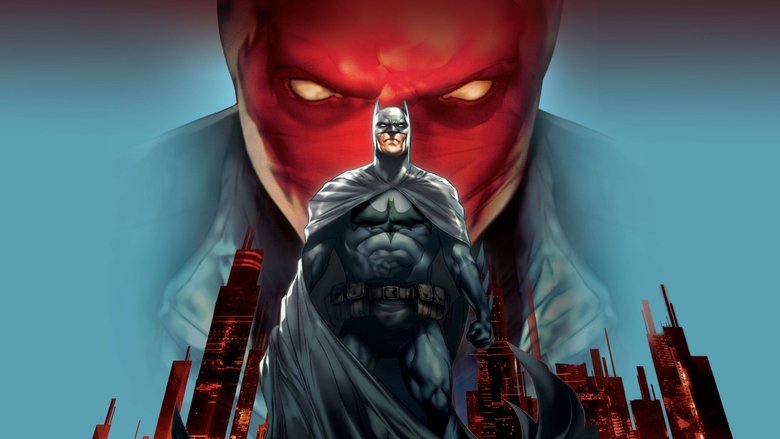
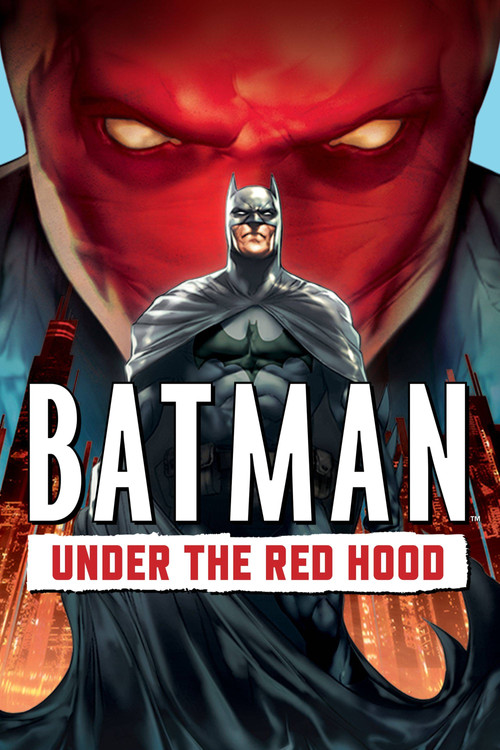
In Batman: Under the Red Hood, a mysterious and lethal vigilante known as the Red Hood sweeps through Gotham, violently seizing control of the drug trade from the crime lord Black Mask. Unlike other criminals, the Red Hood has a strict code: drug dealing is permitted, but selling to children is punishable by death. His efficiency and knowledge of Batman's tactics quickly draw the Dark Knight's attention.
As Batman and Nightwing investigate, they uncover disturbing clues linking the new vigilante to a tragic event from Batman's past: the brutal murder of the second Robin, Jason Todd, by the Joker. The film weaves a complex narrative of mystery and action, leading Bruce Wayne to question his own sanity and the possibility that his greatest failure has returned from the grave.
The conflict escalates into a three-way war between Batman, the Red Hood, and the Joker, who is broken out of Arkham Asylum to add chaos to the fire. The story culminates in a heart-wrenching confrontation where ideological lines are drawn in blood, forcing Batman to face the ultimate test of his principles.
Core Meaning
The film is a tragic examination of the price of morality and the limits of redemption. It posits that Batman's greatest strength—his refusal to kill—is also his greatest weakness, one that allows evil to persist and suffering to multiply. Through the character of Jason Todd, the director challenges the viewer to ask if saving the criminal is worth the lives of their future victims. Ultimately, it is a story about a father's love clashing with his duty, and the agonizing realization that some broken things cannot be fixed.
Thematic DNA
The Morality of Lethal Force
The central conflict is ideological: Batman's deontological ethics (killing is inherently wrong) vs. Red Hood's utilitarianism (killing one monster saves thousands). The film does not simply paint Jason as a villain; it frames his arguments as logically sound, making Batman's steadfast refusal to cross that line seem both noble and maddeningly stubborn.
The Cycle of Violence and Trauma
Jason Todd is a product of violence—born in it, killed by it, and resurrected into it. The film explores how trauma transforms a victim into a victimizer. Jason's method of dealing with his PTSD is to control the very crime that destroyed him, creating a tragic loop where he becomes what he hates to destroy what he hates.
Parenthood and Failure
Bruce Wayne's guilt over Jason's death is the emotional anchor of the film. He acts not just as a vigilante, but as a grieving father. The tragedy lies in his inability to save his "son" a second time—not from death, but from the darkness that has consumed his soul.
Character Analysis
Batman / Bruce Wayne
Bruce Greenwood
Motivation
To protect Gotham without becoming a criminal himself; to uphold the law and order even when it feels unjust.
Character Arc
Bruce starts as a man haunted by a past failure, only to have that ghost materialize. His arc is one of steadfast resistance; he is pushed to the absolute brink of his code but refuses to break, even when it costs him his relationship with Jason. He ends the film in the same state of mourning, but with a fresh, deeper wound.
Red Hood / Jason Todd
Jensen Ackles
Motivation
To purge Gotham of crime by controlling it; to force Batman to kill the Joker as proof of love.
Character Arc
Jason transitions from a memory of a victim to a dominant, controlling force. He seeks validation from his father figure—not for his crimes, but for his logic. His journey is a desperate plea for love disguised as a violent rebellion.
The Joker
John DiMaggio
Motivation
To create chaos and torment Batman; to prove that everyone is corruptible.
Character Arc
The Joker remains a static force of pure anarchy. He serves as the catalyst for the conflict, delighting in the pain he causes both Batman and Jason. He has no redemption arc; he exists to test the heroes.
Symbols & Motifs
The Red Hood Mask
A symbol of mockery and reclaiming trauma. The Joker originally wore the Red Hood; by adopting it, Jason is wearing the face of his killer. It signifies his obsession with the past and his attempt to own the tragedy that defined him.
Jason wears the polished red helmet throughout the film, hiding his face until the climactic reveal, physically separating his human identity from his violent mission.
The Crowbar
Represents brutality and unresolved pain. It is the mundane tool used to torture Jason, symbolizing the gritty, unglamorous reality of violence.
In the final act, Jason tosses a crowbar to the Joker, inviting him to a duel. It is a perverse reenactment of his own murder, an attempt to rewrite the ending of his life story.
The Glass Case in the Batcave
A monument to guilt and memory. It preserves the image of the innocent boy Jason was, contrasting sharply with the violent man he has become.
Bruce keeps Jason's Robin suit on display. At the end of the film, despite everything, he refuses to remove it, signifying that he still honors the memory of his son.
Memorable Quotes
I'm doing what you won't, I'm taking them out.
— Red Hood
Context:
During their first major rooftop confrontation, explaining his takeover of the drug trade.
Meaning:
The thesis statement of the Red Hood. It highlights the pragmatic difference between his method (elimination) and Batman's method (incarceration).
I forgive you for not saving me. But why... why on God's earth... is he still alive?!
— Jason Todd
Context:
In the final showdown, Jason holds a gun to the Joker, screaming at Batman with tears in his eyes.
Meaning:
The emotional climax of the film. It reveals that Jason's anger isn't about his death, but about Batman's refusal to avenge him. It fundamentally challenges Batman's love.
No! God Almighty, no. It'd be too damned easy. All I've ever wanted to do is kill him. A day doesn't go by that I don't think about subjecting him to every horrendous torture he's dealt out to others and then... end him.
— Batman
Context:
Batman responding to Jason's accusation that his code is just weakness.
Meaning:
A rare moment of vulnerability where Batman admits he wants to kill. It proves his restraint isn't lack of desire, but fear of losing himself.
You can't stop crime. That's what you never understood. I'm controlling it.
— Red Hood
Context:
Jason explaining to Batman why he became a crime lord instead of just a vigilante.
Meaning:
Jason's cynical philosophy: if crime is inevitable, it must be managed rather than fought.
Philosophical Questions
Is the refusal to kill a moral strength or a moral failing?
The film uses the Joker's continued existence to ask if a hero is responsible for the future crimes of a villain they spare. Is Batman's code a noble standard of civilization, or is it a selfish desire to keep his own hands clean at the expense of Gotham's safety?
Can retributive justice heal trauma?
Jason believes that killing the Joker will balance the scales and heal his wound. The film leaves this ambiguous: would the death of the Joker actually bring Jason peace, or would it simply make him another killer? The narrative suggests that vengeance offers catharsis but not closure.
Alternative Interpretations
Jason as the Hero: Many viewers argue that Jason Todd is the pragmatic hero of the story. By controlling crime and killing unredeemable monsters like the Joker, he potentially saves more lives than Batman ever could. From this view, Batman is an enabler of the status quo.
The Suicide Metaphor: Some interpret Jason's final ultimatum—"I'll blow his brains out if you don't shoot me"—as a complex form of suicide. He forces his father to either kill him (completing his victimization) or kill the Joker (validating Jason). He knows he cannot return to the family, so he seeks a final, fatal validation.
Cultural Impact
Batman: Under the Red Hood is widely considered one of the pinnacles of the DC Universe Animated Original Movies. It cemented the character of Jason Todd/Red Hood as a fan-favorite anti-hero in mainstream media, leading to his inclusion in the Arkham Knight video game, the Titans TV series, and further animated adaptations.
Critically, it set a new standard for maturity in Western animation, proving that superhero stories could tackle complex ethical dilemmas and visceral trauma without relying on live-action. Jensen Ackles' performance is frequently cited as the definitive voice for Red Hood. The film's exploration of the "no-kill rule" remains the go-to reference in fan debates regarding Batman's morality.
Audience Reception
The film holds a stellar reputation, often cited as the best Batman animated movie alongside Mask of the Phantasm. Audiences praised the emotional depth, the high stakes, and the mature writing.
- Praised: The voice acting (especially Ackles and DiMaggio), the fluid animation of combat scenes, and the respectful adaptation of the source material.
- Criticized: Some purists disliked the simplification of the resurrection origin (removing the "Superboy-Prime punch"), though most agreed the movie's version was cleaner.
- Verdict: A masterpiece of the genre that successfully translated a controversial comic arc into a universally acclaimed tragedy.
Interesting Facts
- Jensen Ackles, who voices Red Hood, later went on to voice Batman himself in the 'Tomorrowverse' animated movies.
- The film is based on two comic arcs: 'A Death in the Family' (1988) and 'Under the Hood' (2005).
- Neil Patrick Harris provides the voice for Nightwing, bringing a lighter, wittier tone to the dark story.
- This was one of the first DC animated movies to receive a PG-13 rating that bordered on R due to its violence.
- Judd Winick, the author of the original 'Under the Hood' comic run, also wrote the screenplay for this film.
- The opening scene faithfully recreates the ending of 'A Death in the Family', including the specific dialogue and imagery of Batman holding Jason's body.
- Reference is made to the 'Crisis on Infinite Earths' reality-punch retcon in the comics, but the movie simplifies Jason's resurrection to use the Lazarus Pit and Ra's al Ghul.
Easter Eggs
Amazo
The android Batman and Nightwing fight is Amazo, a classic Justice League villain who can copy powers, showcasing the wider DC universe exists.
Nightwing's Injury
Nightwing gets injured and sits out the finale. This mirrors the comic event War Games where he was similarly sidelined, though the context differs.
Bob Kane and Bill Finger Credit
While standard now, the film was part of the era ensuring Bill Finger got co-creator credit alongside Bob Kane in adaptations.
⚠️ Spoiler Analysis
Click to reveal detailed analysis with spoilers
Frequently Asked Questions
Explore More About This Movie
Dive deeper into specific aspects of the movie with our detailed analysis pages
Comments (0)
No comments yet. Be the first to share your thoughts!