Skip to content
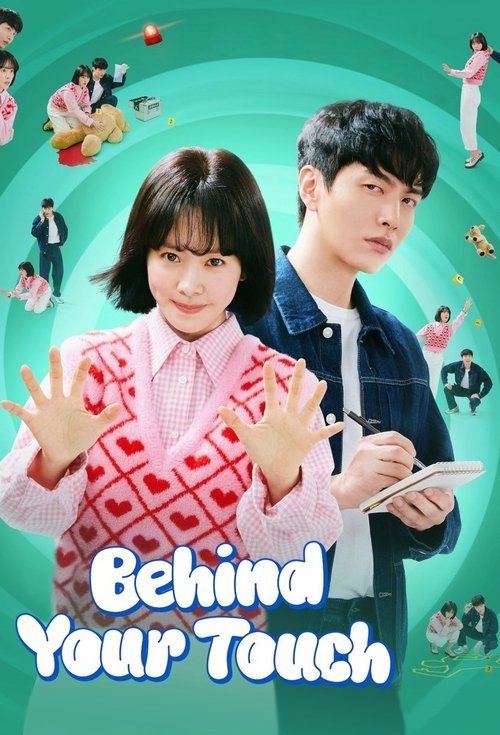
Behind Your Touch
A pastel-tinted rural comedy fractured by chilling shadows, where absurd tenderness collides with profound grief: beneath a sunlit pastoral canopy, an outstretched hand reaches into the quiet wounds of living souls.
Behind Your Touch

Behind Your Touch

힙하게

"Is this woman a psycho? It is psychometry!"

12 August 2023 — 01 October 2023 South Korea 1 season 16 episode Ended 8.1 (104)

Cast: Han Ji-min, Lee Min-ki, Suho, Joo Min-kyung, Yang Jae-seong

Drama Sci-Fi & Fantasy Comedy Mystery Empathy versus Invasive Observation Trauma, Grief, and Isolation Prejudice, Appearances, and Misjudgment The Pastoral Façade versus Hidden Rot Solidarity and Chosen Family

Overview

Behind Your Touch is a genre-blending 16-episode South Korean television series directed by Kim Seok-yoon and Choi Bo-yoon, and written by Lee Nam-gyu, Oh Bo-hyeon, and Kim Da-hee. Set in the deceptively tranquil, crime-free coastal town of Mujin, Chungcheong-do, the story begins when Bong Ye-bun (Han Ji-min), an earnest small-town veterinarian, is struck by a mysterious celestial meteor shower while attending to a pregnant cow. Following the encounter, Ye-bun discovers she has developed psychometry—the supernatural ability to view an animal's or human's past memories—unlocked exclusively by touching their rear end.

Her bizarre new power clashes immediately with Moon Jang-yeol (Lee Min-ki), an aggressive, hot-headed Seoul homicide detective who was demoted to Mujin's regional precinct. Desperate to solve high-profile felonies and earn a swift reinstatement back to the Seoul Metropolitan Police Agency, Jang-yeol initially brands Ye-bun a dangerous deviant before realizing the absolute accuracy of her visions. He compels her into an uneasy investigative partnership, beginning with eccentric rural disputes and pet behavioral issues, all while Kim Seon-woo (Suho), an enigmatic and soft-spoken university graduate, arrives in town working at the local convenience store, quickly capturing Ye-bun’s romantic interest and Jang-yeol’s deepest suspicions.

As the comedic dynamic solidifies, the series takes a dark turn when a poncho-clad serial killer begins stalking and murdering Mujin's residents. What starts as a lighthearted slapstick mystery evolves into a high-stakes psychological game of survival. Jang-yeol and Ye-bun must navigate local corruption, hidden past traumas, and the unsettling revelation that other psychics walk among them, ultimately questioning the cost of peering into human secrets and the fragility of trust in a tight-knit community.
Core Meaning

The core philosophical through-line of Behind Your Touch is that true empathy requires vulnerability and seeing beyond carefully curated facades. While the supernatural mechanic of the series relies on an invasive and comical physical touch, the narrative uses this psychometric gift as a metaphor for deep, unvarnished insight into the loneliness, grief, and private agony of others.

The creators present a world where outward appearances are consistently deceiving: an idyllic town conceals murderous impulses, a seemingly brusque detective masks deep loyalty and guilt, a cheerful veterinarian hides unresolved childhood trauma regarding her mother's death, and outward piety can camouflage monstrous sociopathy. Through Ye-bun and Jang-yeol's journey, the series argues that justice and healing cannot occur through mechanical detection alone; they require the courage to witness someone else’s worst memories and stand beside them regardless.

Thematic DNA

Empathy versus Invasive Observation 30%
Trauma, Grief, and Isolation 25%
Prejudice, Appearances, and Misjudgment 20%
The Pastoral Façade versus Hidden Rot 15%
Solidarity and Chosen Family 10%

Empathy versus Invasive Observation

The series constantly interrogates the boundaries between understanding someone and violating their privacy. Ye-bun’s psychometry begins as an accidental, comic intrusion, but grows into an emotional burden where bearing witness to pain demands active moral responsibility.

Trauma, Grief, and Isolation

Beneath the humorous surface, almost every central figure suffers from unresolved bereavement—Ye-bun mourns her mother’s suspicious drowning, Jang-yeol carries the guilt of a compromised informant, and Seon-woo navigates familial abandonment. Healing comes through acknowledging shared pain rather than emotional repression.

Prejudice, Appearances, and Misjudgment

Characters are chronically judged by surface eccentricities. Jang-yeol treats Mujin’s locals as simpletons or suspects, while the town treats outsiders with guarded caution. The tragic consequences of wrongful suspicion highlight how bias blinds people to real, imminent danger.

The Pastoral Façade versus Hidden Rot

Subverting the popular K-drama trope of the healing rural village, Mujin is revealed to be a hotbed of political corruption, land speculation, and buried malice. The series critiques the romanticization of insular communities where silence often protects predators.

Solidarity and Chosen Family

As biological families fail or fracture, bonds forged in crisis—such as the eccentric crew formed by Ye-bun, her best friend Ok-hee, and Jang-yeol—become the characters' true emotional lifeline.

Character Analysis

Bong Ye-bun

Han Ji-min

Archetype: The Reluctant Hero / Empath Key Trait: Radical empathy wrapped in clumsy optimism.

Motivation

To protect innocent lives and uncover the truth behind her mother’s death.

Character Arc

Starts as an insecure, timid veterinarian struggling with clinic debts and bizarre psychometric abilities; matures into a resilient investigator who bravely confronts her family's dark history and risks her life to stop a killer.

Moon Jang-yeol

Lee Min-ki

Archetype: The Hard-Boiled Antihero / Cynic Key Trait: Tenacious, sharp-witted stubbornness.

Motivation

Regaining his detective status in Seoul, evolving into a pure pursuit of justice and protecting Ye-bun.

Character Arc

Begins as a hostile, cynical detective driven purely by selfish career ambitions and a desire to flee Mujin; gradually learns humility, deep trust, and authentic community care, becoming Ye-bun's steadfast protector and romantic partner.

All 4 characters and cast

Symbols & Motifs

The Touch (Hands and Rear Ends)

Meaning:

The primary supernatural mechanic functions symbolically as the dismantling of social dignity. By forcing Ye-bun to make contact with an inherently humorous and vulnerable part of the body, the show strips away societal pretenses to reach raw, unfiltered truth.

Context:

Utilized whenever Ye-bun activates her psychometric ability on humans and animals throughout the series.

The Black Rain Poncho

Meaning:

Symbolizes hidden malice, faceless anonymity, and the pervasive gloom disrupting the brightly lit, pastoral surface of Mujin.

Context:

The signature uniform worn by the serial killer during attacks carried out in rainy weather.

Hair Loss

Meaning:

Acts as a physical reminder that gaining knowledge and altering fate carries a physical and emotional toll—echoing the burden of responsibility.

Context:

Appears as a comic motif whenever Ye-bun discovers that overusing her supernatural gifts causes her hair to shed in clumps.

The Convenience Store

Meaning:

Represents an open, brightly lit glass box that is paradoxically cloaked in secrecy, serving as an emblem of public visibility contrasted with concealed private motives.

Context:

The workplace of Kim Seon-woo, functioning as the central crossroads of Mujin where villagers cross paths and trade pleasantries.

Animals and Veterinary Medicine

Meaning:

Animals symbolize uncorrupted truth and unconditional loyalty, providing a stark contrast to human duplicity.

Context:

Featured in Ye-bun's clinic and farm visits, where she communicates with neglected pets and livestock before expanding her powers to humans.

Memorable Quotes

With great power comes great hair loss responsibility.
— Bong Ye-bun

Context

Spoken in Episode 3 after Ye-bun notices excessive hair loss from overusing her psychometric power.

Meaning

A comedic homage to the classic superhero adage, encapsulating the show's blend of superhero parody and grounded consequences.

The killer is someone you know.
— Moon Jang-yeol

Context

Spoken in Episode 9 to warn Ye-bun as paranoia sweeps through the village following successive attacks.

Meaning

Represents the dramatic pivot where Mujin shifts from a warm, quirky neighborhood into a claustrophobic psychological thriller.

All 3 quotes

Episode Highlights

The Meteor Shower

S1E1

While checking on a cow during a meteor storm, Ye-bun is hit by a mysterious light, awakening her psychometric powers. Detective Jang-yeol arrives in Mujin, setting their chaotic paths on a collision course.

Significance:

Establishes the high-concept fantasy premise and the comedic tone of the series.

Unlikely Partners

S1E3

Ye-bun inadvertently discovers an abduction/crime while touching an acquaintance's rear end, forcing Jang-yeol to take her bizarre claims seriously.

Significance:

Solidifies the investigative dynamic between Ye-bun and Jang-yeol, moving from antagonistic misunderstandings to crime-solving cooperation.

Another Psychic

S1E8

Ye-bun learns that she is not the only person gifted by the meteor; farmer Jeon Gwang-sik possesses psychometry activated by touching human calves.

Significance:

Expands the supernatural mechanics of the universe and introduces the horrifying premise that a psychic could be using these powers for murder.

The Poncho Killer Strikes

S1E10

The serial murders escalate; Ye-bun directly crosses paths with a victim and narrowly escapes the killer in the dark, leading to a lockdown in Mujin.

Significance:

Marks the definitive tonal shift into psychological suspense, obliterating any lingering sense of small-town safety.

The Mask Falls

S1E14

Suspicions fall heavily on Kim Seon-woo, but Seon-woo confronts the real killer and is fatally stabbed, leaving Ye-bun devastated.

Significance:

Destroys the primary red herring, delivers the series' most tragic emotional blow, and propels viewership ratings to record highs.

Eye to Eye

S1E15

The identity of the killer is confirmed as Shaman Park Jong-bae, who acquired eye-contact psychometry during the meteor event and murdered Gwang-sik and Seon-woo to silence them.

Significance:

The mystery is fully cracked open, shifting the plot into an urgent game of psychological cat-and-mouse.

Behind the Truth

S1E16

Ye-bun and Jang-yeol outwit the Shaman, using sensory deception to neutralize his vision-based powers and arrest him. Jang-yeol returns to Seoul, and Ye-bun later joins him on an undercover operation, culminating in mutual affection.

Significance:

Concludes the central mystery, resolves character arcs, and restores balance to Mujin.

Philosophical Questions

Can Empathy Exist Without Consent?

Ye-bun’s supernatural ability requires violating personal boundaries to discover the truth. The series asks whether an invasive act can be ethically justified if it relieves suffering or prevents greater harm.

Does Knowing the Whole Truth Lead to Justice or Despair?

Characters who uncover hidden secrets often face profound agony—Ye-bun learning her grandfather's painful burden, or Seon-woo discovering his father's cruelty. The drama questions whether blissful ignorance is sometimes preferable to crushing reality.

What Distinguishes Righteous Vengeance from Senseless Cruelty?

Through the Shaman’s justifications and Jang-yeol’s aggressive quest for retribution, the narrative explores how quickly an obsession with punishing wrongdoers can devolve into unhinged malice.

Alternative Interpretations

The Allegory of Social Surveillance: One critical perspective interprets the psychics' powers as an allegory for modern surveillance culture. In an era where digital footprints lay bare personal histories without consent, the series interrogates whether omniscience brings safety or paranoia. The contrast between Ye-bun (who reads memories to heal) and the Shaman (who reads minds to exploit and kill) illustrates how invasive information becomes toxic without an ethical compass.

Full ending explanation

Cultural Impact

Behind Your Touch debuted during a period when South Korean domestic television heavily favored hybrid genres that juxtaposed slapstick slice-of-life comedy with gritty crime thrillers. While traditional K-dramas historically maintained clear lane separation between pastoral romantic comedies and dark detective procedurals, Behind Your Touch exemplified the bold tonal fluidity popularized by modern cable networks like JTBC and global streaming platforms like Netflix.

The show also subverted standard rural portrayals, challenging nostalgic conventions by showing how close-knit village familiarity can be weaponized by a predator. The series performed strongly in domestic viewership, steadily climbing from modest 5% ratings to peak above 9.3% in its final episodes. It solidified Han Ji-min's reputation as a versatile comedic lead and demonstrated Suho's credibility as a nuanced dramatic actor.

Audience Reception

Viewers and critics lauded the dynamic chemistry between Han Ji-min and Lee Min-ki, praising their bickering partnership and non-traditional romantic buildup. Suho received widespread acclaim for playing against type with emotional depth. The inventive humor and supporting cast—particularly Joo Min-kyung as Ok-hee—were widely celebrated as highlights.

The most common critique centered on the stark, jarring tonal shifts in the series' second half. Critics and viewers noted that the sudden escalation into graphic serial murder felt discordant with the lighthearted, cartoonish humor established early on. Furthermore, several plot points regarding police procedural competence were criticized as illogical or overly contrived to stretch the mystery.

Prior to release, the drama faced online skepticism regarding its psychometry trigger (touching rear ends), with critics expressing concern that it might normalize harassment. However, once broadcast, the show's innocent, slapstick execution and self-deprecating framing largely dispelled these controversies. Overall, it was regarded as a highly entertaining, unconventional mystery-comedy that succeeded due to its charismatic lead performances, even when strained by late-stage narrative tonal turbulence.

Interesting Facts

  • Director Kim Seok-yoon and screenwriter Lee Nam-gyu previously collaborated on acclaimed projects including The Light in Your Eyes (2019) and the Detective K film franchise.
  • Han Ji-min previously worked with director Kim Seok-yoon on The Light in Your Eyes, while Lee Min-ki worked with him on the hit drama My Liberation Notes (2022).
  • Critics and fans widely praised Suho’s (Kim Jun-myeon of EXO) performance, citing the complex balance of angelic gentleness and unnerving ambiguity as a marked elevation in his acting repertoire.
  • The 16-episode series was produced by SLL and Studio Phoenix, airing on JTBC and simultaneously streaming worldwide on Netflix and TVING.
  • In pre-production press conferences, the creators addressed concerns regarding the butt-touching mechanic, emphasizing that the premise would be handled strictly through comedic, cartoonish framing rather than suggestive sensationalism.

Easter Eggs

Twenty-Five Twenty-One Parody

In early episodes, the comedic romance between Ye-bun’s aunt Jung Hyun-ok and Police Chief Won Jong-mook parodies the drama Twenty-Five Twenty-One using fencing, uniforms, and Wonstein’s OST 'Your Existence'. This also served as an inside joke, as Han Ji-min and the director previously worked with Nam Joo-hyuk (lead of Twenty-Five Twenty-One) in The Light in Your Eyes.

Superhero Tropes and Spider-Man Reference

Ye-bun’s discovery of her powers parodies traditional superhero origins, directly referencing Marvel’s Spider-Man line regarding great power and responsibility through her comical hair-loss side effect.

Director's Self-Referential Universe

Lee Min-ki’s casting as a stoic, brooding investigator subtly plays against his grounded, introspective role as Yeom Chang-hee in director Kim Seok-yoon’s preceding drama My Liberation Notes.

Frequently Asked Questions

Explore More About This Movie

Dive deeper into specific aspects of the movie with our detailed analysis pages

Comments (0)

Leave a comment

No comments yet. Be the first to share your thoughts!

Similar Movies