Skip to content
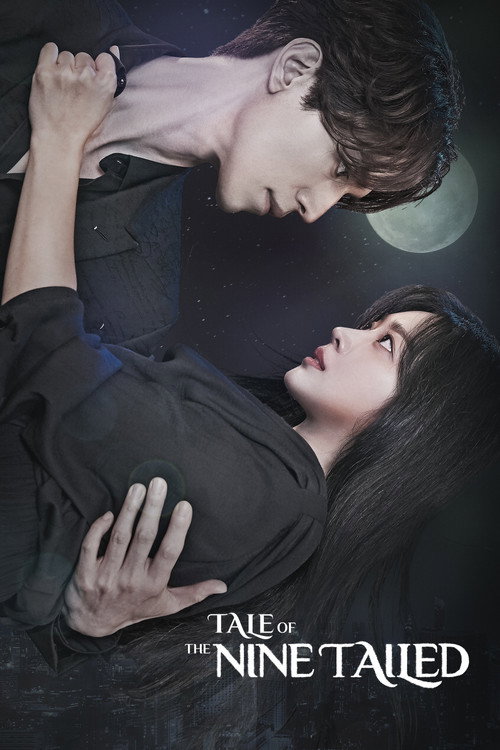
Tale of the Nine Tailed
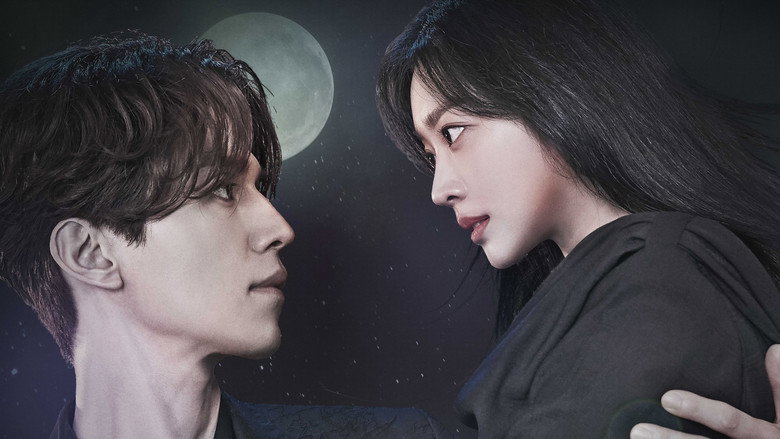
A dark urban fantasy steeped in centuries of yearning and folklore, where a scarlet umbrella cuts through rain-slicked city alleys to shield an eternal love from the slithering, inescapable shadows of fate.
Tale of the Nine Tailed

Tale of the Nine Tailed

구미호뎐

"I, too, waited for you"

07 October 2020 — 03 December 2020 South Korea 1 season 16 episode Ended 8.4 (493)

Cast: Lee Dong-wook, Cho Bo-ah, Kim Bum, Kim Yong-ji, Hwang Hee

Drama Sci-Fi & Fantasy Comedy Mystery Love Across Lifetimes & Reincarnation Brotherly Reconciliation and Family Trauma Fate, Free Will, and Moral Choice Humanity vs. Monstrosity / Alterity Impermanence, Death, and Grief

Overview

Tale of the Nine Tailed (구미호뎐) is a South Korean urban fantasy drama that reimagines traditional East Asian mythology within a modern metropolis. The story follows Lee Yeon, a mythical nine-tailed fox (gumiho) and former mountain god of Baekdudaegan who gave up his divine status after the tragic death of his mortal human love, Ah-eum. In contemporary Seoul, Yeon works as a civil servant for the Afterlife Immigration Office, hunting rogue supernatural entities that breach the boundary between the living and spirit worlds, all while searching for the reincarnation of his long-lost beloved.

His life changes when he encounters Nam Ji-ah, a smart, tenacious television producer hosting a program on urban legends. Ji-ah has been investigating a mysterious car accident from her childhood at Fox Ridge, where her parents vanished into thin air while leaving her unscathed. Suspicious of Yeon’s supernatural presence, Ji-ah relentlessly pursues him, setting off a chain of events that exposes deep connections between her childhood trauma, Yeon’s painful past, and an ancient evil waiting to awaken.

As their relationship deepens, a dark force known as the Imoogi—an insidious serpent monster—resurfaces, intent on devouring Ji-ah, seizing Yeon’s power, and plunging the mortal world into chaos. Coupled with the volatile interference of Yeon’s estranged half-brother, Lee Rang, the show weaves a sprawling tale of ancient grudges, familial reconciliation, and the ultimate test of sacrifice across lifetimes.

Core Meaning

The creators utilize Korean mythology to explore the overarching message that love, devotion, and familial reconciliation transcend time, mortality, and pre-ordained destiny. The series posits that fate is not an unyielding curse imposed by higher deities, but rather a trajectory that can be rewritten through selfless choices, forgiveness, and active moral courage. Through Lee Yeon’s willingness to surrender his godhood and Lee Rang’s journey toward brotherly redemption, the narrative emphasizes that the true weight of living lies in protecting those we love, even when the cost requires ultimate personal sacrifice.

Thematic DNA

Love Across Lifetimes & Reincarnation 30%
Brotherly Reconciliation and Family Trauma 25%
Fate, Free Will, and Moral Choice 20%
Humanity vs. Monstrosity / Alterity 15%
Impermanence, Death, and Grief 10%

Love Across Lifetimes & Reincarnation

Central to the narrative is the eternal bond between Lee Yeon and Ah-eum/Ji-ah. Reincarnation is portrayed not as a mere coincidence, but as a deliberate bargain maintained through centuries of patient waiting, endurance, and unshakeable fidelity.

Brotherly Reconciliation and Family Trauma

The rift between the half-gumiho brothers, Lee Yeon and Lee Rang, forms the emotional backbone of the series. Rang’s deep resentment stems from feeling abandoned by Yeon, while Yeon’s stoic distance conceals a protective, agonizing affection. Their evolution from deadly adversaries to mutually self-sacrificing brothers represents the healing of deep familial trauma.

Fate, Free Will, and Moral Choice

The underworld deities enforce strict cosmic rules, treating tragic outcomes as inevitable. However, the human and supernatural protagonists continuously challenge destiny, asserting that individual actions and selflessness can break ancient cycles of doom.

Humanity vs. Monstrosity / Alterity

By presenting mythical monsters living among humans in modern Seoul, the series examines what truly defines a 'monster' versus a 'human'. Monsters like the Imoogi destroy out of greed and malice, whereas supernatural beings like Yeon, Shin-joo, and Rang discover that empathy and love elevate them beyond mere beastly instinct.

Impermanence, Death, and Grief

As immortals who outlive human lifespans, gumiho experience the agonizing burden of grief. The show highlights the beauty of mortal life precisely because of its brevity, showing that love gains meaning through its vulnerability.

Character Analysis

Lee Yeon

Lee Dong-wook

Archetype: Fallen Deity / Heroic Protector Key Trait: Cynical yet deeply romantic, fiercely loyal, possessive of a sharp wit.

Motivation

Initially motivated solely by finding Ah-eum’s reincarnation and completing his sentence at the Afterlife Immigration Office. Over time, his focus expands from self-focused longing to protecting Ji-ah, repairing his relationship with his brother Rang, and ultimately laying down his life to eliminate the Imoogi and save humanity.

Character Arc

Evolves from a lonely, cynical former mountain god seeking his lost love into a selfless savior willing to sacrifice everything for his loved ones and human world peace.

Nam Ji-ah / Ah-eum

Jo Bo-ah

Archetype: Intrepid Investigator / Resilient Heroine Key Trait: Fearless, analytical, empathetic, refuses to play the passive damsel.

Motivation

Driven initially by the desire to solve her parents' mystery. Upon realizing she is Ah-eum’s reincarnation and carries a portion of the Imoogi within her, her motivation shifts to reclaiming control of her body and fate, standing shoulder-to-shoulder with Yeon.

Character Arc

Transitions from an investigative TV producer seeking lost parents into an empowered partner who confronts supernatural darkness within herself.

All 5 characters and cast

Symbols & Motifs

The Red Umbrella

Meaning:

Symbolizes Lee Yeon's role as a guardian, shielding his beloved from external storms, as well as his hidden nature as a mountain deity navigating the modern human world.

Context:

Lee Yeon’s primary tool and weapon throughout modern Seoul.

The Fox Bead (여우구슬)

Meaning:

A mythical orb containing a gumiho’s essence and soul energy. Its presence and eventual loss serve as a physical marker of reincarnated identity and spiritual tethering.

Context:

Yeon gives it to Ah-eum to locate her in future lives.

Mint Chocolate Ice Cream

Meaning:

Serves as a visual and comedic motif grounding an ancient deity in mundane human pleasures, symbolizing the sweet simplicity of earthly living.

Context:

Lee Yeon’s favorite modern treat consumed during quiet moments.

Serpent Scales (Imoogi Scales)

Meaning:

Signify possession, corruption, and the lingering residue of the evil Imoogi.

Context:

Dark marks appearing on the skin of possessed individuals.

The Samdo River / Underworld Gates

Meaning:

Acts as a symbolic boundary of non-return, representing fate's absolute authority and the ultimate barrier the protagonists must transcend.

Context:

The cosmic river separating the living world from the afterlife.

Memorable Quotes

사람이니까. 죽는 건 싫고 갖고 싶은 건 많고.
— Kwon Hae-ryong (The Governor / Imoogi servant)

Context

Spoken when reflecting on human desire and weakness.

Meaning

Encapsulates the core theme of human vulnerability, ambition, and fear of mortality that evil entities manipulate.

여우는 한번 짝을 맞추면 절대 배신하지 않아.
— Lee Yeon

Context

Stated regarding gumiho devotion to their chosen mates.

Meaning

Expresses the lore and Yeon's unyielding, lifelong fidelity across centuries and reincarnations.

All 5 quotes

Episode Highlights

The Tale of the Nine Tailed Fox

S1E1

Establishes the urban fantasy world, introducing Yeon hunting supernatural rogue spirits in modern Seoul and Ji-ah’s search for her lost parents.

Significance:

Ends with the dramatic balcony fall where Ji-ah tests Yeon’s true identity.

Verge of Death

S1E4

Yeon is sentenced to seven days in the Hell of Freezing Ice for killing a human to save Ji-ah. Feeling Ji-ah in mortal danger on Eot-do Island, he painfully crawls through the icy abyss.

Significance:

Demonstrates the depth of Yeon's sacrifice and devotion to Ji-ah.

The Spirit of Darkness

S1E9

The Eodookshini traps Yeon, Ji-ah, and Rang in their worst subconscious fears. Yeon chooses to enter the nightmare realm to save his brother Rang.

Significance:

Cemented their emotional reconciliation and defeated the darkness through sheer mind power.

Imoogi's Offer

S1E10

The Imoogi approaches Yeon in human form and offers a bargain: hand over his body in exchange for Ji-ah, Rang, and his friends' lives.

Significance:

A critical turning point that heightens the narrative stakes.

The Other Imoogi

S1E13

Delivers a major plot twist—a piece of the Imoogi's soul has been dormant inside Ji-ah all along.

Significance:

Yeon realizes that defeating the serpent requires saving Ji-ah from her own internal monster.

Sacrifice

S1E15

The climax of the battle. Yeon willingly consumes the remaining piece of the Imoogi to absorb the entire serpent into his own body, forcing both himself and the demon into the Samdo River.

Significance:

Permanently eradicates the evil through Yeon's selfless act.

The Return of the Nine-Tailed

S1E16

Lee Rang sacrifices his life energy to the Underworld Fortune Teller to allow Yeon to be reincarnated. Yeon returns to the living world, marries Ji-ah, and lives out a seemingly mortal existence.

Significance:

Concludes the emotional arcs while leaving a mysterious final scene showing Yeon using gumiho powers at night.

Philosophical Questions

What truly defines humanity—biological mortality or the capacity for empathy and sacrifice?

The show explores this through Lee Yeon’s desire to become human purely to experience fragile, genuine love.

Is destiny an unalterable cosmic law or a construct shaped by choices?

Explored through the characters’ constant defiance of underworld decrees, demonstrating that free will can reshape fate.

Can profound resentment born from trauma be healed without destruction?

Examined through Lee Rang’s transition from destructive malice to sacrificial brotherly devotion.

Alternative Interpretations

Interpretation A: The Pure Human Ending
Yeon sacrificed his gumiho immortality completely, returning to earth as a plain mortal human. He marries Ji-ah and lives a finite human life, fulfilling his dream of experiencing mortal love. The final scene where he hunts the Spirit of Smallpox with his umbrella sword is interpreted as a symbolic metaphor or a brief, final residual duty.

Full ending explanation

Cultural Impact

Historically in East Asian folklore, the gumiho is viewed as a seductive, carnivorous female demon that consumes human livers to achieve humanity. Tale of the Nine Tailed subverted this tradition by recasting the gumiho as an honorable, male guardian deity who protects humans rather than preying on them.

The show blends shamanistic rituals, Buddhist afterlife concepts (such as the Ten Kings of Hell and the Samdo River), and contemporary Seoul urban fantasy. Upon release, it achieved strong domestic viewership ratings on tvN and gained massive international popularity on streaming platforms like Rakuten Viki and iQIYI. Its commercial success led to the greenlighting of a 2023 prequel series, Tale of the Nine Tailed 1938.

Audience Reception

Praised Aspects:

  • Exceptional screen chemistry between Lee Dong-wook and Kim Bum, with their bromance frequently cited as the show's highlight.
  • Creative incorporation of Korean folklore into a slick modern urban fantasy setting.
  • Jo Bo-ah’s portrayal of a proactive, courageous female protagonist who actively participates in plot resolution.

Main Points of Criticism:

  • A noticeable narrative slowdown during the middle episodes (Eps 11–14), shifting heavily toward melodramatic romance at the expense of horror elements.
  • Controversial mechanics in the series finale regarding Lee Rang’s sudden death/sacrifice and the ambiguous nature of Lee Yeon’s reincarnation.

Overall Verdict: Widely regarded as a memorable urban fantasy K-drama that stands alongside genre benchmarks like Goblin.

Interesting Facts

  • Lee Dong-wook became the first male actor in South Korean television history to play a male gumiho (nine-tailed fox), a creature traditionally played by female actresses in Korean media.
  • The series marked actor Kim Bum’s long-awaited return to small-screen acting after completing his mandatory military service.
  • Writer Han Woo-ri previously worked as a scriptwriter for investigative news programs like Unanswered Questions, which directly inspired Nam Ji-ah’s profession as an investigative TV documentary director.
  • Production paused airing for one week between episodes 12 and 13 to ensure higher visual effects quality for the complex CGI finale.
  • During the broadcast hiatus, tvN aired the behind-the-scenes special A 600 Year Legend and launched a three-part spin-off web series, An Unfinished Story, focused on Lee Rang and Ki Yu-ri.
  • Lee Dong-wook frequently ad-libbed comedic lines during filming, including jokes about his character's obsession with mint chocolate ice cream and humorous pop-culture references.

Easter Eggs

Parody of Goblin (Guardian: The Lonely and Great God)

Lee Dong-wook’s previous iconic role as the Grim Reaper in Goblin is playfully referenced through underworld banter, gloomy black coats, and bureaucratic afterlife jokes.

Korean Folk Village Lore

The village featured in Episodes 5–6 showcases authentic Korean folklore elements, including traditional shamans (mudang), spirit governors, and fortune-telling flags (obangi).

The Gundam Robot Handshake

In Ep 16, when Lee Rang reluctantly agrees to help Ji-ah, he uses a plastic Gundam robot arm to shake her hand instead of his own, adding a touch of childlike eccentricity to his dangerous character.

Eodookshini Double Role

Actress Shim So-young played both the terrifying Juice Vendor monster (Eodookshini) and the Spirit of Darkness in Episode 9, embodying human nightmares.

Frequently Asked Questions

Explore More About This Movie

Dive deeper into specific aspects of the movie with our detailed analysis pages

Comments (0)

Leave a comment

No comments yet. Be the first to share your thoughts!

Similar Movies