
Skip to content
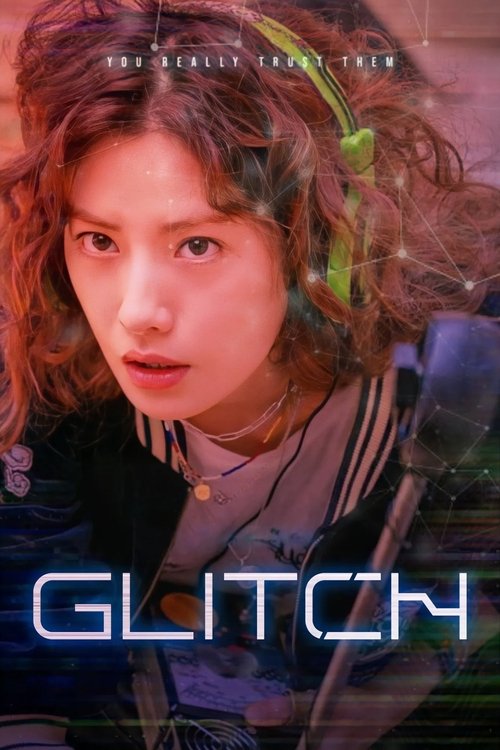
Glitch
A neon-tinged, eccentric sci-fi mystery wrapped in quiet existential yearning, Glitch navigates modern alienation like a cracked CRT screen flickering between cosmic wonder and inner grief.
Glitch

Glitch

글리치

"You really trust them."

07 October 2022 — 07 October 2022 South Korea 1 season 10 episode Ended 6.8 (104)

Cast: Jeon Yeo-been, Nana, Lee Dong-hwi, Ryu Kyung-soo, Ko Chang-seok

Drama Sci-Fi & Fantasy Comedy Mystery Female Solidarity and Queer-Coded Intimacy Alienation versus Social Conformity Faith, Cult Dogma, and the Longing for Deliverance Repressed Memory and Subjective Reality Technology, Digital Obscurity, and Surveillance

Overview

Glitch centers on Hong Ji-hyo, an ordinary woman in her early thirties from an affluent family who works a stable corporate job obtained through familial connections. To everyone around her, Ji-hyo leads an enviable, settled life with a loving boyfriend of four years, Lee Si-kook. Beneath this pristine veneer of suburban normalcy, however, Ji-hyo conceals an unsettling secret: she has intermittent visual glitches and hallucinatory encounters with an extraterrestrial figure wearing a baseball helmet. Choosing quiet conformity over confronting her psyche, Ji-hyo suppresses these visions until her boyfriend vanishes overnight without a trace, his electronic devices glitching at the exact moment of his disappearance.

Driven to determine whether Si-kook was abducted by aliens, Ji-hyo seeks out the community of a fringe occult internet show run by Heo Bo-ra, an eccentric, chain-smoking content creator and UFO obsessive. The reunion reopens deep adolescent bonds and unresolved trauma; the two were once inseparable childhood companions who drifted apart after a mysterious incident in a reed field where Ji-hyo vanished for several days. Accompanied by Bo-ra’s quirky circle of UFO hobbyists and an idiosyncratic local police detective, Ji-hyo and Bo-ra plunge down an investigative rabbit hole.

What begins as an amateur extraterrestrial hunt soon collides with the dangerous machinations of an eschatological religious cult known as the Divine Light Church. The group preaches technological and spiritual ascension through extraterrestrial communion. Across its ten-episode arc, the series shifts dynamically between biting deadpan comedy, psychological thriller, and coming-of-age exploration. Rather than adhering to conventional sci-fi tropes, Glitch crafts an unconventional narrative of female camaraderie, self-reckoning, and the search for authentic identity in a society that enforces sterile conformity.

Core Meaning

At its core, Glitch is a subversion of classical extraterrestrial narratives; the titular "glitch" is not merely a malfunction in technology or perception, but an emblem of neurodivergence, unhealed trauma, and emotional estrangement. Director Roh Deok and screenwriter Gin Han-sai utilize UFO conspiracies and alien encounters as allegories for society's pressure to suppress one's idiosyncrasies in favor of rigid social expectations.

The narrative posits that what society frequently labels as madness, delusion, or failure is often a desperate soul's defense mechanism against an emotionally suffocating reality. Through the central bond between Ji-hyo and Bo-ra, the show asserts that true healing does not come from conforming to institutional "normalcy," nor from joining dogmatic belief systems that promise transcendent escape. Instead, meaning and freedom emerge from radical self-acceptance, confronting forgotten childhood wounds, and finding even a single kindred person who believes your truth unconditionally.

Thematic DNA

Female Solidarity and Queer-Coded Intimacy 30%
Alienation versus Social Conformity 25%
Faith, Cult Dogma, and the Longing for Deliverance 20%
Repressed Memory and Subjective Reality 15%
Technology, Digital Obscurity, and Surveillance 10%

Female Solidarity and Queer-Coded Intimacy

The narrative engine of the entire series is the rekindling of the broken bond between Ji-hyo and Bo-ra. Beginning as an awkward reunion colored by unresolved teenage grievances, their partnership matures into an unshakeable, deeply protective alliance. Their relationship transcends standard K-drama romance formulas, exploring emotional devotion where companionship becomes the anchor pulling both women out of their respective existential ruts.

Alienation versus Social Conformity

Ji-hyo’s initial life represents the quintessential modern Korean ideal—corporate job, family connections, stable partner—yet she experiences this stability as a numbing paralysis. Her visions of aliens materialize the profound sense of detachment she feels toward societal expectations. By choosing the chaotic, absurd world of UFO chasers over the predictable confines of marriage and corporate climbing, she claims autonomy over her life trajectory.

Faith, Cult Dogma, and the Longing for Deliverance

Through the Divine Light cult, the show examines the insidious appeal of organized delusion. Vulnerable individuals seeking meaning in an indifferent world fall prey to predatory messianic leaders who weaponize their longing for transcendence. The series contrasts genuine, grounded belief with dogmatic fanaticism that sacrifices human life in pursuit of ascension.

Repressed Memory and Subjective Reality

Ji-hyo’s childhood disappearance in the reed field functions as the central psychological riddle of the show. As the series unfolds, memory is revealed to be malleable—distorted by fear, religious conditioning, psychiatric intervention, and sheer denial. The story explores how an individual reconstructs their past when memory refuses to offer objective certainty.

Technology, Digital Obscurity, and Surveillance

From glitching smartphones, electromagnetic interference, and wrist smartwatches to streaming setups and virtual reality headsets used in cult rituals, digital technology operates as both a barrier and a conduit. Characters either hide behind screens to evade society or repurpose technological static to trace hidden phenomena.

Character Analysis

Hong Ji-hyo

Jeon Yeo-been

Archetype: Reluctant Hero / Awakened Soul Key Trait: Perceptive, deeply anxious yet surprisingly resolute when pushed to extremes

Motivation

Initially motivated by the obligation to locate her missing partner, her quest rapidly shifts into a profound journey of self-discovery—seeking to understand what happened during her lost childhood days and whether she is truly broken.

Character Arc

At the series' onset, Ji-hyo lives a life of quiet resignation, relying on neuroleptics and rigid routines to suppress her bizarre visions of aliens. Over the ten episodes, she evolves from a passive participant into an audacious investigator who confronts a manipulative suicide cult, extracts the metaphorical and physical thorn of her past, and reclaims personal agency.

Heo Bo-ra

Nana (Im Jin-ah)

Archetype: Trickster Guide / Fiercely Loyal Rebel Key Trait: Bold, fiercely authentic, confrontational, and deeply compassionate

Motivation

Driven by an insatiable hunger to prove that extraordinary phenomena exist, which masks a deep-seated childhood need to be validated and not abandoned by the one friend who understood her.

Character Arc

Bo-ra lives on the fringes as an underground streamer and occult investigator, hiding vulnerability beneath tattoos, casual swearing, and aggressive skepticism. Reconnecting with Ji-hyo reignites her long-suppressed loyalty, transitioning her from a disaffected youth into a steadfast protector who places her friend's survival above all else.

All 5 characters and cast

Symbols & Motifs

The Alien in the Baseball Helmet

Meaning:

The central surreal emblem of the series. Rather than presenting a terrifying invader or a sleek modern alien, the motif evokes retro, quirky innocence, symbolizing Ji-hyo's stunted inner child and unresolved memories that refuse to be forgotten.

Context:

Appears repeatedly as a recurring visual hallucination of a green extraterrestrial sporting a baseball helmet throughout Ji-hyo's daily life.

The Sturgeon and the Tracker

Meaning:

The central motif for cosmic curiosity, maternal/alien benevolence, and personal self-determination, representing being observed and allowed to swim freely rather than being captured or controlled.

Context:

Introduced via Ji-hyo's metaphor comparing marine biologists tagging rescued sturgeons before releasing them into the open river to see how far they will swim, culminating in her Episode 10 philosophical monologue.

The Reed Field / Abandoned Caravan

Meaning:

Represents liminality—the boundary zone between ordinary life and the anomalous unknown, as well as the birthplace of Ji-hyo and Bo-ra’s mutual secret.

Context:

Recurs repeatedly in visions, dreams, and flashbacks as the physical site where young Ji-hyo vanished in middle school.

Screens, Monitors, and Electromagnetic Static (Glitching)

Meaning:

Visually articulates moments when the façade of consensus reality breaks down, signaling that an underlying truth is about to rupture through.

Context:

Manifested through electronic artifacts, flickering fluorescent tubes, and malfunctioning device displays acting as indicators of anomalous phenomena.

VR Headsets and Glowing Green Liquids

Meaning:

Embodies synthetic transcendence, symbolizing how institutions commodify genuine spiritual wonder into controlled mass hallucination and psychological servitude.

Context:

Used extensively inside the Divine Light cult compound during pseudocommunion rituals and indoctrination sessions.

Memorable Quotes

외계인이 날 데려갔던 건 맞을까? 아니면 내가 그냥 미쳤던 걸까?
— Hong Ji-hyo

Context

Spoken in Episode 1 as Ji-hyo watches her mundane office existence fracture.

Meaning

Establishes the core ambiguity of the series between objective sci-fi phenomena and psychological breakdown.

너 아직도 외계인 보이냐?
— Heo Bo-ra

Context

Bo-ra's direct interrogation upon reuniting with Ji-hyo at the UFO club meeting in Episode 2.

Meaning

Dissolves a decade of silence, cutting directly to the core of their shared childhood obsession.

All 5 quotes

Episode Highlights

Episode 1

S1E1

Establishes Ji-hyo’s constrained corporate life, her suppressed sightings of the baseball-helmet alien, her break-up with Si-kook, and his sudden disappearance under supernatural electrical static.

Significance:

Hooks viewers by setting up a quirky blend of domestic mystery and cosmic absurdity while launching the core investigative plotline.

Episode 2

S1E2

Features the pivotal reunion between Ji-hyo and Heo Bo-ra within the eccentric UFO streaming hub.

Significance:

Establishes the central buddy dynamic, juxtaposing Ji-hyo's reserved neurosis with Bo-ra's brazen, delinquent charisma.

Episode 4

S1E4

Ji-hyo and Bo-ra uncover systemic missing-person records linked to mysterious real estate and psychiatric clinics.

Significance:

Marks the narrative transition from amateur extraterrestrial sleuthing to an encounter with an organized, dangerous cult.

Episode 6

S1E6

Delves deep into the flashback sequence of middle school, illustrating the exact day Ji-hyo went missing in the reed field caravan.

Significance:

Exposes the origin of Ji-hyo’s memory gaps and the emotional fracture that drove her and Bo-ra apart for fifteen years.

Episode 8

S1E8

Ji-hyo is captured and brought directly into the inner sanctum of the Divine Light Church, where cult leaders claim she is a messianic conduit ("the Host").

Significance:

Confronts Ji-hyo with the chilling truth of how the cult has stalked her since childhood due to her alleged alien implant.

Episode 9

S1E9

Bo-ra, the UFO misfits, and Detective Kim stage an infiltration into the cult's massive ascension congregation while Ji-hyo faces severe psychological manipulation.

Significance:

Delivers the devastating reversal where the Father attempts to convince Ji-hyo that aliens do not exist and that her past is merely exploited psychiatric delusion.

Episode 10

S1E10

As the cult attempts mass ascension, an authentic extraterrestrial light ship manifests above the building, throwing the congregation into pandemonium while Ji-hyo reclaims her agency.

Significance:

The climactic finale that resolves the core mysteries, confirms the reality of aliens, frees Ji-hyo from her trauma, and sets her on an independent path alongside Bo-ra.

Philosophical Questions

What constitutes 'normalcy' in an alienated society?

The series examines whether an individual who conforms to an emotionally deadening corporate routine is truly saner than an eccentric outsider chasing anomalous lights in the wilderness.

Why do humans gravitate toward dogmatic faith?

Through the Divine Light sect, the show investigates why vulnerable, lonely individuals surrender their autonomy to predatory messianic leaders rather than navigate existential uncertainty on their own.

Can memory ever be trusted as objective truth?

Interrogates the malleability of human recollection, highlighting how memories are continually reshaped by fear, trauma, institutional suggestion, and the desire for emotional coherence.

Is benign neglect superior to forced salvation?

Contrasting the cult's coercive spiritual ascension with the detached observation of the aliens (exemplified by the tagged sturgeon), the narrative explores whether true freedom requires allowing beings to swim freely without forced control.

Alternative Interpretations

The narrative accommodates several distinct interpretive frameworks:

Full ending explanation

Cultural Impact

Released in late 2022 during an era of creative expansion within South Korean serialized television, Glitch reflected contemporary anxieties including skyrocketing real estate costs, the burnout of corporate "salaryman" life, and the quiet despair of millennials who followed societal expectations only to feel empty. Furthermore, it directly addressed and satirized South Korea's long history with apocalyptic fringe cults and predatory pseudo-religions that prey on social isolation.

Critics celebrated the show as an audacious anomaly—a female-centric, non-romantic, genre-fluid mystery characterized by indie-cinema sensibilities. Although it polarized mainstream viewers accustomed to conventional romantic comedies, it earned a loyal cult following and stands as an influential milestone for unconventional genre experiments on global streaming platforms.

Audience Reception

Upon release, Glitch polarized audiences between casual K-drama viewers and alternative genre enthusiasts:

  • Mainstream Audiences: Many casual viewers were frustrated by the deliberate, meandering mid-series pacing during the cult investigation, the deadpan comedic delivery, the absence of standard romantic subplots, and the low-fidelity alien CGI.
  • Critical & Cult Reception: Television critics and cinephiles praised the show as daring, refreshing, and auteur-driven. Exceptional praise was directed at the chemistry and magnetic performances of Jeon Yeo-been and Nana, Roh Deok's distinctive direction, and an emotionally resonant finale that elevated its core existential themes.

Interesting Facts

  • Director Roh Deok had been independently developing a narrative about identity and alien sightings for five to six years before receiving the script for Glitch.
  • Roh Deok considered Glitch a fundamental turning point in her artistic career, requiring nearly three times the turnaround schedule of an ordinary feature film.
  • The series was written by Gin Han-sai, the acclaimed creator behind the breakout Netflix Korean crime drama Extracurricular.
  • Nana actively contributed to Heo Bo-ra's visual design, suggesting her extensive tattoos, bold streetwear, and chain-smoking habits to break standard K-drama tropes.
  • Jeon Yeo-been adopted a method approach to portray dissociation, intentionally maintaining stiff posture, unfocused eyes, and irregular blinking to convey sensory overload.
  • The first four episodes of Glitch received their world premiere at the 27th Busan International Film Festival in October 2022 in the 'On Screen' section.

Easter Eggs

Nod to The X-Files ('The Unnatural')

The design of the little green alien with an oversized baseball helmet is an overt, loving homage to vintage sci-fi television, specifically The X-Files Season 6 episode where an extraterrestrial falls in love with baseball.

Subversion of My Love from the Star

Unlike contemporary Korean sci-fi that casts extraterrestrials as handsome, godlike romantic paramours, Glitch intentionally uses short, spindly, classic pulp creatures to strip away romantic idealization in favor of mystery and absurdity.

Retro Arcade and Hardware Details

Bo-ra's streaming space and the club hideouts feature analog equipment, CRT monitors, camcorders, and cassette recorders, referencing 1990s hacker and cyber-thriller cinema.

The Sturgeon Allegory Foreshadowing

Early fleeting dialogue regarding migratory fish and tracking tags deliberately sets up Ji-hyo's concluding philosophical thesis in Episode 10.

Frequently Asked Questions

Explore More About This Movie

Dive deeper into specific aspects of the movie with our detailed analysis pages

Comments (0)

Leave a comment

No comments yet. Be the first to share your thoughts!

Similar Movies