Belle
A visually dazzling sci-fi fairy tale of grief and healing. A silenced girl finds her voice in a boundless virtual world, bridging the gap between digital masks and raw human vulnerability to save a wounded soul.
Belle

Belle

竜とそばかすの姫

"You are no longer alone."

16 July 2021 Japan 121 min ⭐ 7.6 (843)
Director: Mamoru Hosoda
Cast: Kaho Nakamura, Ryo Narita, Shota Sometani, Tina Tamashiro, Lilas Ikuta
Drama Animation Science Fiction Music
Trauma, Grief, andHealing The Duality of Online Identity Child Abuse and Systemic Helplessness Empathy and Compassion
Box Office: $63,501,160

Overview

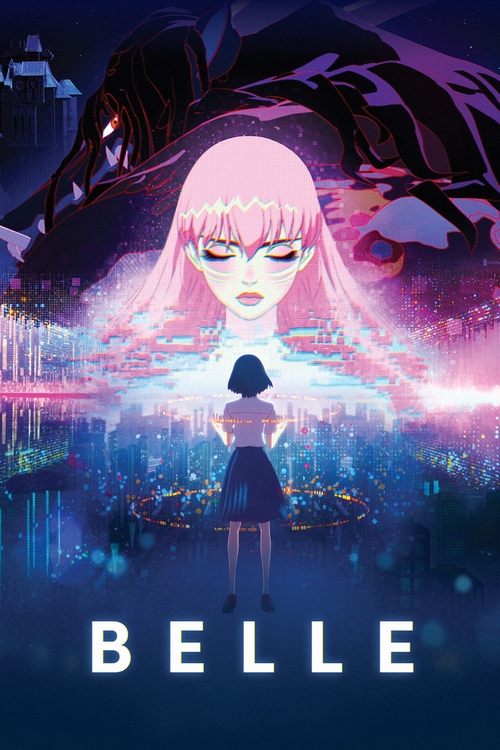
Suzu Naito is a shy 17-year-old high school student living in rural Japan who has been unable to sing since the traumatic death of her mother. Seeking an escape from her grief and social isolation, she enters "U," a massive virtual reality world with five billion members where users are assigned avatars based on their hidden strengths.

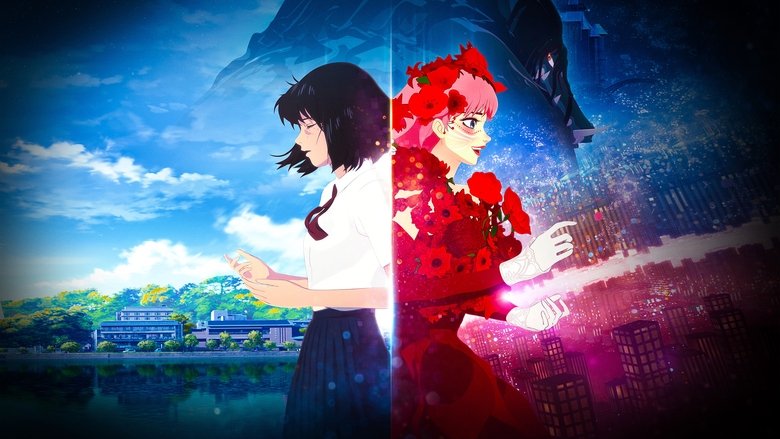
In U, Suzu transforms into Belle, a stunningly beautiful pop star who quickly becomes a global sensation. Her newfound digital life is disrupted when one of her concerts is crashed by "The Dragon," a monstrous, heavily scarred avatar who is fiercely hunted by self-righteous digital vigilantes. Drawn to his pain, Belle embarks on a quest to uncover his true identity.

The film intertwines a modern homage to Beauty and the Beast with a grounded mystery, as Suzu investigates who the Dragon is in the real world. Ultimately, it becomes a story of extreme empathy, where Suzu must unmask her own vulnerabilities and confront her past trauma to save a stranger suffering in the physical world.
Core Meaning

Mamoru Hosoda aims to show the internet not merely as a dystopian wasteland of trolls and toxic behavior, but as a space of immense potential for healing, empowerment, and global connection. The core message is that while digital anonymity provides a shield, true liberation and the ability to help others only come when we bravely reveal our authentic selves. The film also examines the enduring nature of grief and how an act of extreme empathy—like Suzu's mother sacrificing herself for a stranger, or Suzu risking herself for an abused boy—can bridge the deepest human divides.

Thematic DNA

Trauma, Grief, andHealing 35%
The Duality of Online Identity 30%
Child Abuse and Systemic Helplessness 20%
Empathy and Compassion 15%

Trauma, Grief, andHealing

ThisisrevealedthroughSuzu'sinabilitytosingandherstrainedrelationshipwithherfatherafterhermother'sdeath[1.1]. Her journey is about processing this psychological trauma and coming to understand the profound empathy behind her mother's sacrifice.

The Duality of Online Identity

Explored through the contrast between the quiet, insecure Suzu and her confident, beloved avatar Belle. The virtual world "U" physically manifests people's hidden inner strengths, demonstrating that our digital masks can sometimes help us discover our truest selves.

Child Abuse and Systemic Helplessness

Represented by Kei and Tomo, who suffer at the hands of their abusive father in the real world. The film critiques societal and bureaucratic paralysis in the face of domestic violence, highlighting how adults often look away from suffering.

Empathy and Compassion

The driving force of the narrative. Suzu's mother dies to save a stranger, and Suzu ultimately faces a dangerous abuser to protect a boy she has never met, proving that compassion transcends physical and digital boundaries.

Character Analysis

SuzuNaito/Belle

KahoNakamura

Archetype: TheWoundedHealer
Key Trait: Deeply empathetic

Motivation

To find her voice again, escape her oppressive grief, and ultimately understand the meaning behind her mother's selfless death.

Character Arc

Startsasatraumatized, withdrawngirlwhohidesbehindadigitalavatartoexpressherself[1.1]. She eventually finds the courage to expose her true self to the entire world to save someone else, reconciling with her past in the process.

Kei / The Dragon

Takeru Satoh

Archetype: The Misunderstood Beast
Key Trait: Fiercely protective

Motivation

To protect his younger brother, Tomo, from their emotionally and physically abusive father at all costs.

Character Arc

Transitions from a defensive, angry boy lashing out at the digital world to someone who learns to trust in the kindness of strangers. With Suzu's support, he finds the strength to stand up to his real-world abuser.

Shinobu Hisatake

Ryo Narita

Archetype: The Guardian
Key Trait: Stoic and observant

Motivation

To keep Suzu safe and emotionally guarded until she is ready to face the world on her own.

Character Arc

Acts as a self-appointed protector for Suzu since childhood, but learns to step back and let her stand on her own two feet as she grows into her confidence.

Justin

Toshiyuki Morikawa

Archetype: The False Hero / Vigilante
Key Trait: Self-righteous

Motivation

To unmask the Dragon, destroy his anonymity, and maintain absolute authority within the world of "U".

Character Arc

Remains stubbornly obsessed with order and control throughout the narrative. He uses the guise of justice to violently enforce his own will on the virtual world, attempting to dox those who defy him.

Symbols & Motifs

TheDragon'sBruises

Meaning:

TheyserveasavisualrepresentationofthephysicalandpsychologicalabuseKeienduresintherealworld[1.1]. Unlike real-life emotional scars that can be hidden, "U" manifests his pain openly.

Context:

Seen prominently on the Dragon's avatar in the virtual world, which other naive users mistake for villainous tattoos or battle markings.

The Raging River

Meaning:

Symbolizes death, trauma, and the terrifying, uncontrollable force of grief.

Context:

Appears in the recurring flashbacks of Suzu's mother drowning. This visual motif creates a mental block that physically stops Suzu from singing or expressing joy in reality.

Freckles

Meaning:

A symbol of Suzu's true, unvarnished self, her physical reality, and her deepest insecurities.

Context:

Belle's avatar famously retains Suzu's real-life freckles, which are initially mocked by internet users but ultimately become a beloved hallmark of her authenticity.

Memorable Quotes

I'll help you. I'll help you. I'll help you.

— Kei / The Dragon

Context:

Kei angrily repeats this to Suzu, mocking and rejecting her offers of help because he assumes she is just giving empty promises from behind a digital mask.

Meaning:

Showcases Kei's absolute lack of trust in adults or society to help him, a heartbreaking reflection of the isolation felt by abused children [2.6].

You can't save anyone with a secret identity.

— Shinobu Hisatake

Context:

Shinobu urges Suzu to unmask herself in "U" to prove to Kei that she is genuine and truly cares about his well-being.

Meaning:

Highlights the film's thesis that while the internet can empower us, true connection and salvation require raw vulnerability and authenticity.

Philosophical Questions

Isourdigitalpersonaanyless'real'thanourphysicalself?

Thefilmexploresthisbyshowingthattheavatargenerationsystemin'U'pullsfromauser'sbiometricdataandhiddenpsychologicalstrengths[1.2]. Belle is not a fake version of Suzu; she is the manifestation of Suzu's suppressed potential, suggesting our online masks can sometimes reveal our truest selves.

What are the ethical boundaries and costs of extreme empathy?

Suzu resents her mother for sacrificing her life for a stranger's child, leaving her own daughter behind. The film questions whether this self-sacrificing altruism is a flaw or the highest form of humanity, a philosophical dilemma Suzu resolves when she herself risks her safety for Kei.

Alternative Interpretations

The film's ending has sparked significant debate and alternative readings among critics and fans. The climax features Suzu traveling alone to Tokyo to confront an adult abuser, successfully stopping him with nothing but a defiant stare. Many viewers interpret this scene not as literal realism, but as a heightened fairy-tale metaphor. In this reading, the father represents the abstract manifestation of Suzu's conquered fears, and her victory is symbolic of her newfound internal strength rather than a realistic instruction on stopping domestic abuse. Additionally, the relationship between Suzu and her childhood friend Shinobu is frequently analyzed. While initially framed with romantic undertones, the conclusion—where Shinobu states he no longer needs to be her "guardian"—can be interpreted as the dissolution of a trauma-bonded codependency, allowing them to finally exist as healthy equals rather than as traditional romantic partners.

Cultural Impact

Belle stands out as a unique cinematic exploration of the modern digital age. While much of contemporary sci-fi and cinema paints the internet and social media as inherently dystopian or isolating, Mamoru Hosoda provides a much more balanced, optimistic view. He presents the virtual world as a place where marginalized or traumatized individuals can find their voice, build community, and ultimately discover healing. Critically, the film was a massive success, becoming the third highest-grossing Japanese film of 2021 and receiving five Annie Award nominations. It was heavily praised for successfully updating the classic Beauty and the Beast fable for the VTuber and social media generation, redefining digital escapism as a valid tool for self-discovery.

Audience Reception

Overall, Belle received highly positive reviews from audiences and critics alike. Viewers universally praised the breathtaking animation, the stark contrast between the beautifully mundane rural Japan and the chaotic, hyper-colorful world of U, and the incredible vocal performance and music by Kaho Nakamura. However, the film was not without its criticisms. The primary point of contention among audiences was the final act. Many felt that Suzu confronting a violent abuser by herself without the police or child protective services was dangerously unrealistic and rushed. Additionally, some viewers felt the narrative struggled to juggle its many subplots, sometimes letting the expansive world-building of 'U' overshadow the grounded emotional reality of the supporting characters.

Interesting Facts

  • RenownedDisneycharacterdesignerJinKim(whoworkedonTangled, Frozen, andMoana)specificallydesignedtheavatarforBelleaftermeetingMamoruHosodawhen'Mirai'wasnominatedforanOscarinLosAngeles[1.10].
  • The incredibly detailed virtual world of 'U' was conceptualized by Eric Wong, a London-based architect who was discovered by Hosoda online.
  • The film received a massive 14-minute standing ovation at its world premiere at the 2021 Cannes Film Festival.
  • Hosoda deliberately cast singer Kaho Nakamura as Suzu/Belle based heavily on her singing abilities, as music serves as the emotional core of the film.
  • The acclaimed Oscar-nominated Irish animation studio Cartoon Saloon (creators of Wolfwalkers and Song of the Sea) collaborated on the background art for the world of 'U'.

Easter Eggs

TheBallroomDance

ThesequencewhereBelleandtheDragonfloatanddanceinhisruinedcastleisadirect, nearframe-by-framehomagetotheiconicballroomsequencefromDisney's1991BeautyandtheBeast[1.10].

Covering his face in shame

When Belle enters a forbidden area of the castle, the Dragon yells at her to leave, then covers his face in shame and despair. This intentionally mirrors the Beast's reaction in the West Wing scene of the Disney classic.

Rose Motifs

Roses are prominently featured around the Dragon's castle in 'U', paying tribute to the enchanted rose that serves as a ticking clock and central symbol in the original fairytale.

⚠️ Spoiler Analysis

Click to reveal detailed analysis with spoilers

Frequently Asked Questions

Explore More About This Movie

Dive deeper into specific aspects of the movie with our detailed analysis pages

Comments (0)

Leave a comment

No comments yet. Be the first to share your thoughts!