Skip to content
Beyblade Burst
A high-spinning shōnen sports saga where childhood dreams are launched from ripcords, clashing across glowing stadiums until armor shatters and friendship stays whole.
Beyblade Burst

Beyblade Burst

ベイブレードバースト

04 April 2016 — 18 March 2022 Japan 6 season 335 episode Ended 8.2 (345)

Cast: Marina Inoue, Junya Enoki, Ryoko Shiraishi, Tomoko Ikeda, Fumihiro Okabayashi

Animation Sci-Fi & Fantasy Action & Adventure Family Comedy Kids Friendship and Rivalry Joy of the Game over Victory Power and Corruption Finding Your Own Path Legacy and Generational Succession

Overview

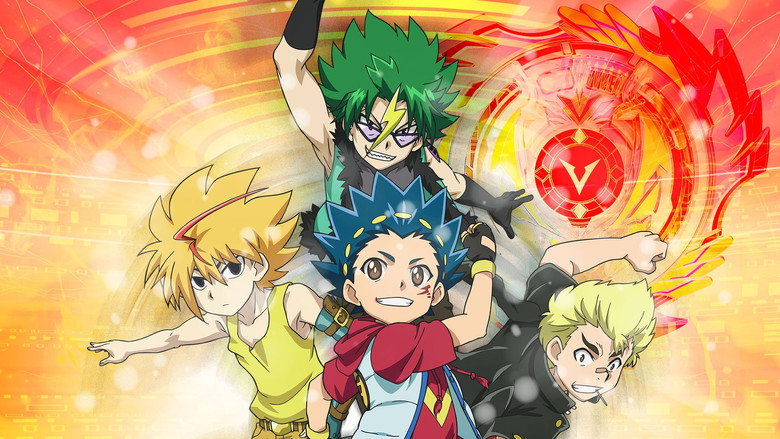
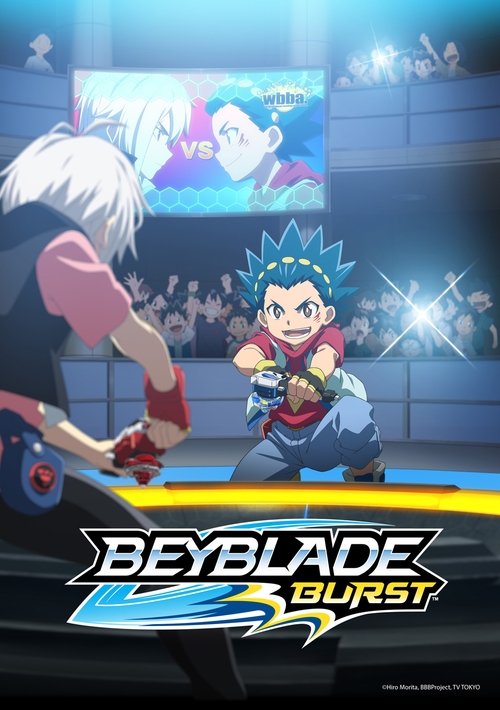
Beyblade Burst (ベイブレードバースト) is the anime adaptation of Hiro Morita's manga and Takara Tomy's toyline. It is the third incarnation of the Beyblade franchise, following the Metal Series. It began on TXN stations in Japan on April 4, 2016. Energetic, big-hearted Valt Aoi and his spirit Bey Valtryek start in a small school club and climb toward the national and international stages. Along the way they gather friends, rivals and mentors.

Across its run the series moved through several named seasons: Burst, Evolution, Turbo, Rise, Surge, QuadDrive and, finally, QuadStrike (2023). The later seasons pass the spotlight to new protagonists, such as the Aiger-era Bladers and self-proclaimed "Dark Prince" Bel Daizora. Earlier heroes return as veterans and legends. Each generation faces stronger opponents, new Bey systems and larger tournaments, while mysteries around special Beys grow.

At its core the series follows a tournament structure. Each season builds toward a championship, with training arcs, team rivalries and personal duels in between. The tone stays upbeat and comedic. Underneath, it deals with friendship, rivalry, obsession with power, and what makes someone a true Blader.
Core Meaning

Across all its seasons, Beyblade Burst argues that competition is worth most when it builds connection instead of dominance. Valt's motto that "it doesn't matter whether you lose or win, it's about having fun" is the series' moral compass. Characters who chase power alone, or give in to darker forces inside their Beys, are eventually drawn back by the bonds they form with rivals.

The show also celebrates self-determined growth. As Free De La Hoya puts it, strength comes from "finding your own path." New generations inherit the stadium, and the series suggests that passion, not titles, is the real legacy passed down.

Thematic DNA

Friendship and Rivalry 30%
Joy of the Game over Victory 20%
Power and Corruption 20%
Finding Your Own Path 15%
Legacy and Generational Succession 15%

Friendship and Rivalry

The friendship between Valt and Shu drives the early seasons. Valt credits Shu as "the only reason I'm able to stand here today." Their rivalry peaks in the Evolution finale. Later seasons repeat the pattern with new pairs of rivals, showing that fighting hard and caring deeply can go together.

Joy of the Game over Victory

Valt's belief that winning or losing matters less than having fun is set up early and tested against cold, results-driven Bladers such as Free and Lui. Over time this attitude becomes the series' definition of a true champion.

Power and Corruption

Dark forces in the Beys keep coming back. Shu is controlled by Spryzen, and Aiger shows a dangerous "dark resonance" that Free spots at once. The series treats raw power as something that has to be mastered through bonds, or it will take over the Blader.

Finding Your Own Path

Free's philosophy, "You don't get stronger by accepting how everyone else does things," runs through every generation. Each protagonist has to develop a personal style instead of copying the champions who came before.

Legacy and Generational Succession

The protagonist changes from Valt to the next generations, ending with Bel Daizora in QuadDrive and QuadStrike. The series becomes a story about inheritance, as veterans turn into legends that newcomers measure themselves against.

Character Analysis

Valt Aoi

Marina Inoue (Japanese)

Archetype: Hero / eternal optimist Key Trait: Relentless, joyful determination

Motivation

At first he wants to become stronger and catch up to Shu. Later he wants to share the joy of Beyblade and protect his friends.

Character Arc

Valt starts as a clumsy club Blader. He reaches the Japanese Nationals final against Lui in season 1, then becomes World Champion by defeating Shu in the Evolution finale. In later seasons he is a veteran legend who returns for major battles, such as the Legend Festival grand finale against Lain in Surge.

Shu Kurenai

Not confirmed in sources

Archetype: Rival / fallen friend Key Trait: Cool, driven talent

Motivation

Proving his strength and dealing with the burden of power, which becomes a test of his friendship with Valt.

Character Arc

Shu is Valt's childhood friend and early idol. He falls under Spryzen's control, and Valt refuses to give up on him. The two meet again as equals in the International Blader's Cup final.

All 5 characters and cast

Symbols & Motifs

The Burst

Meaning:

A dramatic, total defeat, and also a reset: the Bey comes apart but can be rebuilt.

Context:

The central gimmick of the toyline and the anime. Every match can end in a burst finish, which is why the series is named after it.

Spirit Beys (Valtryek, Spryzen, Belfyre)

Meaning:

Outer forms of each Blader's personality and emotional state.

Context:

Valt's Valtryek reflects his optimism. Spryzen's control over Shu shows a Bey's spirit turning against its owner. Bel's Destruction Belfyre matches his Dark Prince persona.

Dark Resonance

Meaning:

Power that has lost its moral anchor, and the danger of losing yourself.

Context:

Seen in Aiger, whom Free calls "dangerous" after witnessing it. It echoes Shu's possession in earlier seasons.

Elemental Beys

Meaning:

Ancient, mysterious power and the final mystery of the franchise.

Context:

In QuadStrike, Quadra and her brother Pax investigate the secrets of the Elemental Beys, including Lightning Pandora.

Memorable Quotes

It doesn't matter whether you lose or win. It's about having fun.
— Valt Aoi

Context

Said to Free De La Hoya during their Evolution-era rivalry.

Meaning

The series' thesis: joy over victory.

It's not right! Shu's still in there! I'M NOT GONNA STAND FOR THIS!!
— Valt Aoi

Context

Valt tells Shu he knows Spryzen is controlling him.

Meaning

Shows Valt's refusal to abandon a friend who is being corrupted by power.

All 6 quotes

Episode Highlights

Final Showdown! Victory Valtryek!

S1E51

The first season finale. Valt and Lui finish their battle in the finals of the Individual Tournament at Nationals. It aired March 27, 2017.

Significance:

Ends Valt's rise from club Blader to national contender and sets up the international stage.

A Champion is Crowned!

S2E51

Valt and Shu finish their International Blader's Cup final, and Valt wins to become World Champion. It aired March 26, 2018.

Significance:

The emotional peak of the Valt–Shu rivalry. It turns Valt into the legend that later generations look up to.

Grand Finale! Valt vs. Lain!

S5E31

The Legend Festival ends with Valt facing Lain, whose Flare has grown stronger with every battle. It aired October 23, 2020. The episode number follows the Japanese Superking numbering.

Significance:

Pits the veteran champion against the new generation and shows the series' theme of legacy being passed on.

Philosophical Questions

Is winning meaningful if you don't enjoy the struggle?

Valt's focus on fun is set against the dominance-driven attitudes of Lui and Free. The series suggests that lasting champions are the ones who love the game.

Can someone be saved from power that has taken them over?

Shu under Spryzen's control and Aiger's dark resonance both ask whether friendship can bring someone back. The show consistently answers yes.

Should strength come from tradition or from your own path?

Free's philosophy pushes each Blader to build an individual style instead of copying earlier champions.

How It Ends

Alternative Interpretations

One reading sees the series mainly as toy marketing: each season introduces a new Bey system for Takara Tomy's product line. A more generous reading treats it as a sincere coming-of-age sports drama. In that view, possessed and "dark" Beys stand for how ambition can take over young people, and friends' loyalty is what saves them.

Full ending explanation

Cultural Impact

Beyblade Burst revived the Beyblade franchise in the mid-2010s as its third generation, after the original series and the Metal Series. It was built as part of a Takara Tomy toy launch together with a CoroCoro Comic manga, a model typical of Japanese children's media.

The anime ran every year from 2016 to 2023 across seven named seasons, and the franchise's next generation, Beyblade X, followed. Fan communities such as WorldBeyblade still debate and rank its battles. Valt vs. Shu matchups and later clashes such as Aiga vs. Phi are among the most celebrated.

Audience Reception

The sources found give little aggregated critic data, so this summary relies on fan discussion. Fans often rank the early Valt–Shu story, especially the Evolution World Championship final, among the high points of the franchise. Later battles such as Aiga vs. Phi also get strong fan praise.

The series was renewed every year from 2016 to 2023, which suggests it kept a steady audience. Beyond that, the sources did not provide detailed reviews for each season.

Interesting Facts

  • Beyblade Burst was created by Hiro Morita and is the third incarnation of Takara Tomy's Beyblade franchise, after the Metal Series.
  • The Beyblade Burst toyline launched on July 15, 2015, before the anime premiered.
  • The manga was serialized in Shogakukan's CoroCoro Comic from August 2015 and was compiled into sixteen tankōbon volumes.
  • The anime was produced by OLM and TMS Entertainment and premiered on TXN stations in Japan on April 4, 2016.
  • Katsuhito Akiyama directed the first series, with character designs by Toshiaki Ōhashi and series scripts by Hideki Sonoda.
  • For Beyblade Burst GT (known in English as Rise), Katsuhito Akiyama was chief director and Ojing directed at OLM.
  • Each season aired on an April-to-March schedule: Burst (2016–17), Evolution (2017–18), Turbo (2018–19), Rise (2019–20), Surge (2020–21) and QuadDrive (2021–22).
  • QuadStrike (April 3 – December 2, 2023) is the seventh and final Burst season and the fourteenth season of the Beyblade anime overall.

Frequently Asked Questions

Explore More About This Movie

Dive deeper into specific aspects of the movie with our detailed analysis pages

Comments (0)

Leave a comment

No comments yet. Be the first to share your thoughts!

Similar Movies