Amphibia
A vibrant portal fantasy that blossoms from a found-family comedy into an emotional epic, painted with the lush, dangerous beauty of a world where friendship must evolve to survive.
Amphibia

Amphibia

"Life’s never boring when you’re amphibious."

17 June 2019 — 14 May 2022 United States of America 3 season 106 episode Ended ⭐ 8.6 (309)
Cast: Amanda Leighton, Brenda Song, Justin Felbinger, Bill Farmer, On Braly
Animation Sci-Fi & Fantasy Action & Adventure Family Comedy Kids
Friendship and Toxicity Change and Transformation Found Family

Overview

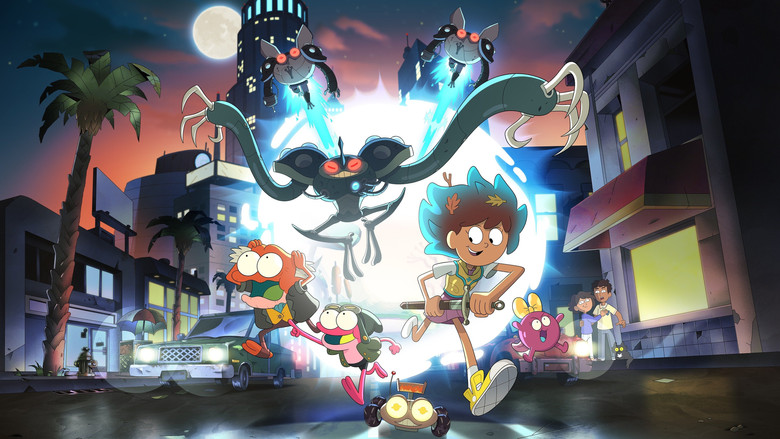
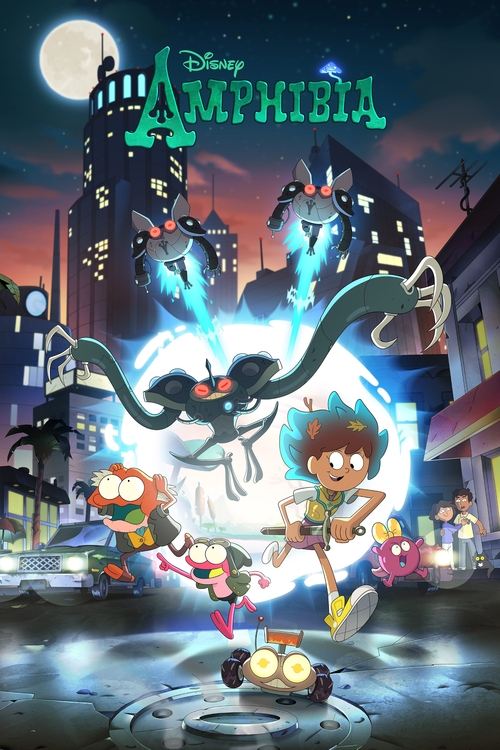
"Amphibia" follows the adventures of Anne Boonchuy, a self-centered 13-year-old Thai-American girl who is magically transported to the world of Amphibia, a marshland inhabited by anthropomorphic frogs, toads, and newts. Along with her two best friends, Sasha Waybright and Marcy Wu, who are also transported but separated, Anne must navigate this strange new world. She is taken in by the Plantars, a family of frogs: the adventurous young Sprig, the rambunctious tadpole Polly, and the traditional, overprotective grandfather Hop Pop.

The first season focuses on Anne's adaptation to Amphibia, her burgeoning friendship with Sprig, and her transformation into a local hero in the town of Wartwood, all while searching for her friends. The second season expands the world as Anne and the Plantars embark on a road trip to the capital city of Newtopia to uncover the secrets of the magical Calamity Box that brought them there. Here, they reunite with Marcy, while Sasha rises through the ranks of the toad army, setting the stage for a dramatic confrontation. The third and final season brings the conflict to Earth, as Anne and the Plantars are transported to Los Angeles. They must navigate the human world while trying to find a way back to Amphibia to stop the tyrannical King Andrias from conquering the multiverse.
Core Meaning

At its core, "Amphibia" is a story about the complex nature of change and the evolution of friendship. Created by Matt Braly, the series was inspired by his childhood trips to Bangkok, Thailand, and the feeling of being an outsider who eventually finds a deep connection to a new place. The show explores how people, especially young people, grow and transform through experience. It posits that true friendship isn't static; it requires acknowledging toxicity, setting boundaries, and allowing individuals to grow apart and come back together as better, more complete people. The series delves into themes of letting go, self-sacrifice, and the idea that the hardest changes often lead to the most profound growth, ultimately celebrating the strength found in both found family and self-acceptance.

Thematic DNA

Friendship and Toxicity 40%
Change and Transformation 35%
Found Family 25%

Friendship and Toxicity

The series' central theme is the evolution of the friendship between Anne, Sasha, and Marcy. Initially presented as a close trio, the show slowly reveals the toxic dynamics at play: Sasha's controlling nature, Marcy's escapism, and Anne's passive codependence. Throughout their time in Amphibia, separated from each other, they are forced to confront their flaws. Anne learns to be independent and responsible, Sasha learns to trust and respect others, and Marcy confronts the consequences of her desire to escape reality. Their journey is not about simply reuniting but about deconstructing their unhealthy friendship and rebuilding it on a foundation of genuine love, respect, and mutual support.

Change and Transformation

Creator Matt Braly chose frogs as the central inhabitants of Amphibia because they represent transformation. This theme is central to the entire series. The characters undergo immense personal change: Anne evolves from a self-absorbed teen to a selfless hero, Sasha from a manipulative leader to a loyal protector, and Hop Pop from a stubborn traditionalist to an open-minded guardian. The show argues that change, while often painful and scary, is necessary for growth. The series finale, "The Hardest Thing," fully embraces this, emphasizing that growing up means accepting that people and relationships must change, and sometimes, letting go is the ultimate act of love.

Found Family

While Anne searches for her human friends, she finds a new family in the Plantars. Her bond with Sprig, Polly, and Hop Pop becomes the emotional heart of the series. This found family provides her with the unconditional love and support she lacked, allowing her to grow into her best self. The show contrasts this healthy, nurturing dynamic with her initially toxic friendship with Sasha and Marcy, highlighting that family is not just about blood but about the people who choose to love and support you. Hop Pop eventually refers to Anne as his granddaughter, cementing her place in their family.

Character Analysis

Anne Boonchuy

Brenda Song

Archetype: Hero
Key Trait: Heart

Motivation

Initially, her sole motivation is to find her friends and return home. As the series progresses, her motivation shifts to protecting the Plantars and the people of Wartwood. By the final season, her goal is to save both Amphibia and Earth from King Andrias, driven by a deep love for both of her homes and all the people she cares about.

Character Arc

Anne begins her journey as a codependent and somewhat irresponsible teenager, easily swayed by her more dominant friend, Sasha. Her transportation to Amphibia forces her into self-reliance. Living with the Plantars, she learns about responsibility, community, and true friendship. Across the seasons, she evolves into a courageous and selfless leader, willing to stand up for her new family and the entirety of Amphibia. Her arc culminates in her willingness to make the ultimate sacrifice to save the world, demonstrating her complete transformation from a follower into a true hero. In the end, she grows up to become a herpetologist, dedicating her life to the study of amphibians, forever honoring her found family.

Sasha Waybright

Anna Akana

Archetype: Anti-hero / The Redeemer
Key Trait: Strength

Motivation

Sasha's initial motivation is to maintain control over her friends and her environment, believing she always knows best. This evolves into a desire to conquer Amphibia alongside Captain Grime. After her fall from grace, her motivation becomes earning back Anne's trust and protecting the people she has grown to care about, ultimately seeking to atone for her past mistakes.

Character Arc

Sasha starts as the manipulative and controlling antagonist of Season 1. Her arc is one of redemption. After her defeat at the end of the first season, she is forced to confront the toxicity of her leadership style. Throughout Season 2, she genuinely grows to care for Grime and the toad army, learning that true strength lies in earning loyalty, not demanding it. Her turning point comes in "True Colors," where she recognizes the harm she's caused and sacrifices herself to help Anne and the Plantars escape. In Season 3, she fully embraces her heroic side, leading the resistance against Andrias. By the end, she has rebuilt her friendship with Anne and Marcy on a foundation of trust and becomes a child psychologist, using her understanding of control and anger to help others.

Marcy Wu

Haley Tju

Archetype: The Innocent / The Traitor
Key Trait: Wit

Motivation

Marcy's primary motivation is to escape from a reality she finds painful—specifically, the prospect of moving away and losing her friends. She wants to live in a fantasy world where they can be together forever on endless adventures. After her actions are revealed, her motivation shifts to atoning for her betrayal and helping her friends save the world she put in danger.

Character Arc

Marcy is introduced in Season 2 as a brilliant, charming, and slightly clumsy strategist who has thrived in Newtopia. Her arc is about confronting the consequences of escapism. It's revealed that she orchestrated their arrival in Amphibia to avoid moving away from her friends, a selfish act born from fear of loneliness. This revelation shatters her friendships and leads to her being possessed by the Core, Andrias's master. After being freed, she is consumed by guilt but works tirelessly to help save Amphibia, proving her remorse through her actions. In the epilogue, she has moved on to become a successful webcomic creator, channeling her love for fantasy worlds in a healthy way while maintaining her rekindled friendships.

Sprig Plantar

Justin Felbinger

Archetype: The Sidekick / The Best Friend
Key Trait: Loyalty

Motivation

Sprig is motivated by a thirst for adventure and a desire to prove himself. His deepest motivation, however, is his fierce loyalty to his family and to Anne. He wants to explore the world and protect the people he loves, especially Anne, whom he considers his sister.

Character Arc

Sprig is an adventurous, curious, and often reckless young frog who is the first inhabitant of Amphibia to befriend Anne. His arc is about maturing and learning about responsibility from Anne, just as she learns about friendship from him. Initially, he is an outcast in Wartwood, but through his adventures with Anne, he becomes a respected hero. His unwavering loyalty to Anne is the emotional core of the series. He grows from a troublemaking kid into a brave adventurer who understands the complexities of friendship and loss, eventually developing his own journal to document his future adventures.

Symbols & Motifs

The Calamity Box

Meaning:

The Calamity Box symbolizes both connection and disruption. It is the object that transports the girls to Amphibia, severing their ties to home but also initiating their transformative journeys. It represents a powerful, chaotic force that can be used for good or ill, reflecting the potential within the girls themselves. The three colored gems on the box represent the core qualities of the three friends: blue for Anne's heart/kindness, pink for Sasha's strength, and green for Marcy's intelligence/wit.

Context:

The box is the central MacGuffin for the first two seasons. The girls' primary goal is to find it, understand it, and use it to return home. Its history, revealed in Season 2, is tied to an ancient prophecy and the tyrannical King Andrias, elevating its importance from a simple portal device to a key element in a multiversal conflict.

Herons

Meaning:

Herons are depicted as monstrous, terrifying predators in Amphibia, representing the dangers of the world and the deep-seated traumas that characters carry. They are mindless, instinct-driven beasts that cause destruction.

Context:

The most significant use of the herons is in relation to the Plantar family's past. It is revealed that Sprig and Polly's parents were killed by herons, a traumatic event that shaped Hop Pop's overprotective nature. In the Season 3 episode "All In," the Plantars must confront their past by fighting off herons that attack the Boonchuy's home, showing how they've grown strong enough to face their fears together.

Leaves in Anne's Hair

Meaning:

The leaves and twigs constantly stuck in Anne's hair symbolize her connection to and integration with the wild world of Amphibia. Initially, they mark her as an unkempt outsider, but they become a signature part of her look, showing that Amphibia has become a part of her identity. Even after returning to Earth, she keeps them. According to the creator, she takes them out every night, but they always get stuck again the next day, signifying her enduring, inseparable bond with the frog world.

Context:

The leaves are a constant visual motif from the moment Anne arrives in Amphibia in Season 1. They remain throughout her adventures, her return to Earth in Season 3, and are even present in the time-skip at the end of the series, showing her lasting connection to her experiences.

Memorable Quotes

Now look what you've made me do.

— Sasha Waybright

Context:

This is said in the Season 2 finale, "True Colors," after King Andrias reveals his true intentions and drops Sprig from the castle window. Sasha says this to Anne as Andrias impales Marcy, positioning herself as a victim of circumstance rather than an architect of the conflict.

Meaning:

This line, delivered after Sasha seemingly betrays Anne, encapsulates the core of her toxic mindset in the early seasons. It's a classic phrase of blame-shifting, revealing her inability to take responsibility for her own manipulative actions and the pain she inflicts on others.

That's the thing about friends, isn't it? The more you love them, the more it hurts when they go. Allow me to demonstrate.

— King Andrias

Context:

Spoken in the Season 2 finale, "True Colors," just before King Andrias reveals his true evil nature and attacks the Plantars. It is a pivotal moment that shifts the entire tone of the series from a lighthearted adventure to a high-stakes drama.

Meaning:

This quote reveals the tragic backstory and twisted philosophy of King Andrias. It explains that his villainy is rooted in the pain of betrayal by a friend he loved. He uses this past trauma to justify his cruel actions, projecting his own heartbreak onto Anne and her friends before dropping Sprig, seemingly to his death.

Change can be difficult, but it's how we grow. It can be the hardest thing to realize you can't hold on to something forever. Sometimes, you have to let it go. But, of the things you let go, you'd be surprised what makes its way back to you.

— Anne Boonchuy (voiceover)

Context:

This is the final voiceover from Anne in the series finale, "The Hardest Thing," playing over a montage of the characters' lives ten years after the events of the show. It serves as the definitive statement on the show's core philosophy.

Meaning:

This final monologue encapsulates the entire message of the series. It's a mature reflection on the show's central theme: the necessity of change and letting go. It beautifully summarizes the character arcs of Anne, Sasha, and Marcy, who had to separate and grow as individuals before they could come back together and form a healthier, stronger friendship.

Episode Highlights

Anne or Beast?

S1E1

The series premiere introduces Anne Boonchuy as she arrives in Amphibia and is discovered by the Plantar family. Sprig, an adventurous young frog, befriends the strange "beast," and together they must save the town of Wartwood from a giant praying mantis, convincing the townsfolk to accept Anne.

Significance:

This episode establishes the show's premise, introduces the main cast, and sets up the central relationship between Anne and Sprig. It lays the groundwork for Anne's journey from a monster to be feared into a hero to be celebrated.

Reunion

S1E20

Anne and the Plantars attend a party at Toad Tower, where Anne is finally reunited with her friend Sasha. However, she discovers that Sasha has become the commander of the toad army and plans to subjugate the frogs of Wartwood. Anne must choose between her old friend and her new family, leading to a dramatic duel.

Significance:

The Season 1 finale is a major turning point. It reveals the toxic nature of Anne and Sasha's friendship, introduces high-stakes emotional conflict, and ends with Sasha's apparent death, setting a more serious tone for the seasons to come.

Marcy at the Gates

S2E6

Upon arriving in Newtopia, Anne and the Plantars are shocked to find her other lost friend, Marcy Wu. Marcy has not only survived but thrived, becoming the chief ranger and a trusted advisor to King Andrias. She joins their quest to get back home.

Significance:

This episode introduces the final member of the human trio, Marcy, and expands the world of Amphibia significantly by showing the grand city of Newtopia. Marcy's cheerful and brilliant personality immediately endears her to the audience, making later revelations more impactful.

True Colors

S2E20

The girls attempt to use the charged Calamity Box to return home, but King Andrias reveals his true plan: to use the box to conquer other worlds. Sasha and Grime's rebellion converges with Andrias's betrayal, leading to a devastating battle. In the climax, Andrias reveals Marcy knew about the box's powers all along, and he stabs her before Anne is teleported back to Earth with the Plantars.

Significance:

Considered by many to be the series' most pivotal and shocking episode. It completely changes the stakes of the show, reveals two major betrayals, and ends on a dark, dramatic cliffhanger that sets up the entire final season. It elevates "Amphibia" from a fun adventure to a complex, emotionally resonant epic.

The Hardest Thing

S3E18

In the series finale, Anne, Sasha, and Marcy use the full power of the Calamity Gems to defeat the Core. Anne makes the ultimate sacrifice, destroying the Core and dying in the process. She is resurrected by a cosmic guardian who offers her a future role as its replacement. She declines for now, returns to say her goodbyes, and the three girls go back to Earth for good. A time-skip shows them ten years later as well-adjusted adults who have grown but remain friends.

Significance:

This episode provides a definitive and emotionally powerful conclusion to the series. It resolves the central conflict while delivering a mature message about change, sacrifice, and the bittersweet nature of growing up. The finale was praised for its emotional weight and satisfying character resolutions.

Philosophical Questions

What is the true nature of friendship and how does it survive change?

The series constantly challenges the idealistic, static view of friendship. It begins with a friendship that is possessive and toxic. Through the forced separation of Anne, Sasha, and Marcy, the show explores whether a bond can be rebuilt after being broken. It asks if people who have hurt each other can truly forgive and grow together. The conclusion suggests that true, lasting friendship isn't about being inseparable or unchanging, but about supporting individual growth, even if it means growing apart for a time, and then coming back together with newfound maturity and respect.

Is it possible to escape the consequences of one's actions?

"Amphibia" strongly argues that it is not. Marcy's decision to trap her friends in another world, born from a desire to escape her own problems, has catastrophic consequences for everyone. Sasha's manipulative behavior leads to broken trust and physical danger. Even the villain, King Andrias, is driven by the ancient guilt and pain of his own past betrayals. The series shows that every major character must confront and atone for their mistakes. Redemption is possible, but it is earned through action, accountability, and a genuine desire to change, not through avoidance.

What defines 'home'?

Initially, 'home' for Anne is simply Earth and her family. Her primary goal is to return. However, over time, the town of Wartwood and the Plantar family become a second home. The series explores the idea that home is not just a place, but the people who provide love, safety, and a sense of belonging. By the end, Anne is torn between two worlds she loves. The finale suggests that while you may have to physically leave a place, the impact it has on you and the relationships you form there become a permanent part of who you are, something you carry with you forever.

Alternative Interpretations

One of the most discussed alternative interpretations of "Amphibia" revolves around its allegorical representation of colonialism and cultural assimilation. King Andrias, with his technologically advanced nation and desire to conquer other worlds, can be seen as a symbol of imperialist powers. His ancestors' peaceful exploration turned into a mission of conquest, mirroring historical empires. Amphibia's hierarchical society, with the educated newts at the top, the militaristic toads in the middle, and the rustic frogs at the bottom, reflects a class-based or caste system often imposed by colonial rule. Anne's journey can be interpreted as that of an outsider who, rather than imposing her own culture, assimilates and learns from the native population, ultimately helping them fight back against the imperialist threat.

Another interpretation, particularly popular among fans, explores the series through a queer-coded lens. The intense, emotionally complex relationships between Anne, Sasha, and Marcy are often read as having romantic undertones. The journey of the trio from a toxic, codependent dynamic to a healthy, mutually supportive one is seen by some viewers as an allegory for navigating complex queer relationships and finding self-acceptance. While not explicitly confirmed in the show, this reading resonates with many and adds another layer of depth to the characters' emotional arcs.

Cultural Impact

"Amphibia" is a significant series within the modern landscape of Western animation, often discussed alongside shows like "Gravity Falls," "Steven Universe," and "The Owl House." It premiered in 2019 as part of a wave of story-driven, character-focused animated series that appealed to both children and adults. One of its most notable cultural impacts is its contribution to representation. Anne Boonchuy is widely recognized as the first Thai-American lead character in an animated series, a deliberate choice by creator Matt Braly to reflect his own heritage. The show authentically incorporates Thai culture, especially in its third season, which was praised for its thoughtful depiction of family, community, and food within a Thai-American household.

Critically, the show was well-received for its character development, world-building, and emotional depth. While Season 1 was seen as a fun but somewhat episodic "monster-of-the-week" series, the reception grew significantly more positive with the Season 2 finale, "True Colors." This episode was lauded for its dramatic tonal shift, shocking plot twists, and mature handling of themes like betrayal and consequence, cementing the show's legacy as a compelling serialized narrative. The series has had a lasting impact on its fanbase, fostering a dedicated online community that engaged deeply with its lore, characters, and themes. "Amphibia" is remembered as a key example of how a children's show can tackle complex emotional subjects with nuance and heart, leaving behind a legacy of great storytelling and important cultural representation.

Audience Reception

"Amphibia" received a generally positive and increasingly enthusiastic reception from audiences throughout its run. The first season was enjoyed for its humor, charming characters, and vibrant world-building, though sometimes criticized for its slower, more episodic pacing. Audience opinion began to solidify into strong praise during the second season, which deepened the lore and character relationships. The Season 2 finale, "True Colors," was a watershed moment for the series, generating massive online buzz and critical acclaim from viewers who were shocked and impressed by its dark tone and emotional intensity. This episode is frequently cited as the point where the show ascended to greatness in the eyes of many fans. The third season was praised for its humor in the Earth-based episodes and its handling of the high-stakes war in Amphibia, though some viewers found the split focus between the two settings uneven at times. The series finale, "The Hardest Thing," was overwhelmingly well-received, with audiences lauding its emotional weight, satisfying character conclusions, and mature handling of the theme of change, solidifying the show's place as a beloved modern classic in animated storytelling. The show commanded impressive audience demand, often placing in the top percentile of all TV shows during its run.

Interesting Facts

  • Creator Matt Braly was inspired to create the series based on his childhood trips to visit his mother's family in Bangkok, Thailand.
  • The character design for Anne Boonchuy was inspired by an old photograph of Braly's grandmother as a young girl.
  • Anne's last name, "Boonchuy," roughly translates in Thai to "one who encourages or performs good deeds."
  • The series is animated by three South Korean studios—Rough Draft Korea, Sunmin Image Pictures, and Saerom—that use traditional hand-drawn animation, a style Braly specifically wanted for the show.
  • The voice of Anne's mother, Mrs. Boonchuy, is provided by Matt Braly's own mother, On Braly.
  • The town of Wartwood has a population of 88, which is a nod to Braly's birth year, 1988.
  • The music for the series was composed by T.J. Hill, who also composed the theme music for Disney's "The Owl House."
  • King Andrias's design was inspired by King Vendrick from the video game "Dark Souls."

Easter Eggs

In the Season 2 episode "Wax Museum," there are wax figures of The Curator and Soos from "Gravity Falls," another Disney show on which Matt Braly worked.

This is a direct nod to Braly's previous work and a fun crossover for fans of both shows. Alex Hirsch, the creator of "Gravity Falls," even provides the voice for The Curator in the episode.

Throughout the series, numerous references to video games can be spotted, including "The Legend of Zelda" (the Master Sword and Hylian Shield appear in one episode), "Street Fighter," "Dance Dance Revolution," and "Mario Kart."

Creator Matt Braly has cited games like "The Legend of Zelda" and "Chrono Trigger" as inspirations for the show's sense of adventure and world-building. These easter eggs pay homage to those influences.

A Sprig Plantar plushie appears multiple times in the Disney series "The Owl House," including in the episode "Hunting Palismen."

This is a friendly crossover nod between two contemporary Disney Channel shows that shared a similar fanbase and were often compared for their serialized storytelling. The Calamity Box also makes a cameo in "The Owl House."

In the Season 3 episode "Spider-Sprig," there are numerous visual and thematic references to "Spider-Man," including a costume design and poses that directly mimic the superhero.

This is a fun homage to classic superhero tropes and the popular Marvel character, playing on Sprig's newfound desire to be a hero on Earth.

⚠️ Spoiler Analysis

Click to reveal detailed analysis with spoilers

Frequently Asked Questions

Explore More About This Movie

Dive deeper into specific aspects of the movie with our detailed analysis pages

Comments (0)

Leave a comment

No comments yet. Be the first to share your thoughts!