Skip to content
Doraemon
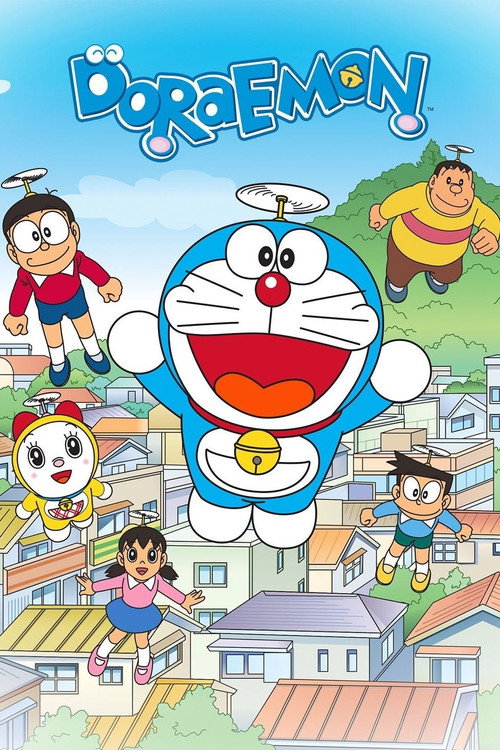
In a vibrant world where suburban innocence collides with 22nd-century wonder, a blue robotic cat channels infinite technological dreams into the life of a struggling boy. This whimsical sci-fi comedy blends tear-jerking warmth with slapstick magic.
Doraemon

Doraemon

ドラえもん

22 April 2005 — 16 June 2026 Japan 1 season 1464 episode Returning Series 8.1 (237)

Cast: Megumi Oohara, Wasabi Mizuta, Yumi Kakazu, Tomokazu Seki, Subaru Kimura

Animation Sci-Fi & Fantasy Action & Adventure Family Comedy Kids Personal Responsibility vs. Reliance on Technology Unconditional Friendship and Empathy Self-Improvement, Perseverance, and Overcoming Failure Family, Nostalgia, and Intergenerational Connection Environmental Stewardship and Compassion for Living Things

Overview

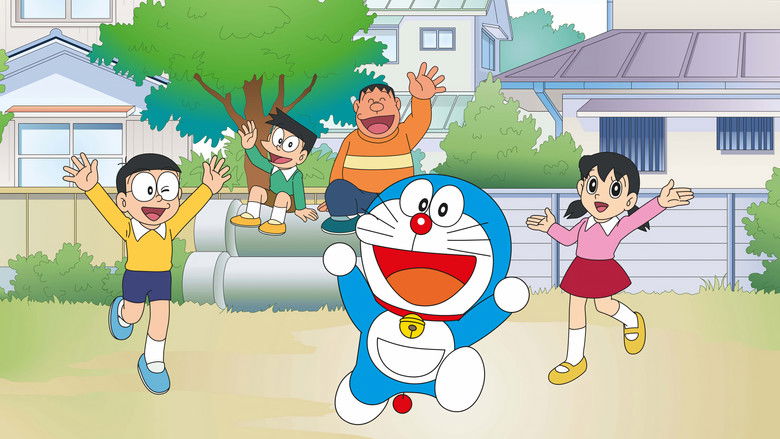
The 2005 Doraemon television series (often referred to as the "Mizuta Edition" or Shin-Doraemon) serves as a comprehensive, modern reboot of Fujiko F. Fujio’s legendary franchise. The narrative centers on Nobita Nobi, an unfortunate, lazy, and academically challenged ten-year-old boy in suburban Tokyo whose future is destined for poverty, failure, and unhappiness. To prevent this grim destiny, his great-great-grandson Sewashi sends Doraemon—an earless, blue robotic cat from the 22nd century—back in time to guide Nobita onto a better path. Equipped with a four-dimensional pocket filled with miraculous gadgets from the future, Doraemon becomes Nobita's constant companion, mentor, and protector.

Across its extensive run of over 1,400 segment episodes and numerous television specials, the series operates primarily through an episodic structure. Each story follows a classic dynamic: Nobita encounters a real-world difficulty—such as severe bullying from Takeshi "Gian" Gouda, boastful rivalry from Suneo Honekawa, or failing a test—and begs Doraemon for a gadget to solve his problem instantly. Although the gadget initially grants Nobita short-term triumph or revenge, his greed, carelessness, or over-reliance on shortcuts inevitably causes the situation to backfire hilariously and chaotically. Through these misadventures, Nobita learns hard-won lessons about effort, honesty, responsibility, and perseverance.

While individual episodes maintain a lighthearted status quo, the overarching series arc subtly tracks the long-term emotional maturation of its core cast and the gradual shifting of time. Flash-forwards and time-travel narratives periodically show Nobita growing into a kind-hearted, responsible adult who earns the love of his childhood crush, Shizuka Minamoto, and builds a stable future. Through its mix of everyday domestic life, magical sci-fi escapades, and deeply moving seasonal specials, the 2005 series re-establishes Doraemon as a timeless story of unconditional friendship and human growth.

Core Meaning

The central thesis of Doraemon is that no futuristic shortcut or technology can replace genuine personal effort, moral integrity, and emotional growth. While technology (embodied by Doraemon’s gadgets) can temporarily alleviate suffering or grant desires, relying entirely on magical solutions breeds laziness, moral decay, and unexpected disaster.

The creators emphasize that a person's future is not set in stone, nor is it determined by innate talent or background; rather, the future is actively shaped by the choices and effort one makes in the present moment. Furthermore, the show argues that true strength lies not in never failing, but in having the resilience to stand back up after every defeat, supported by the power of unconditional love and empathy.

Thematic DNA

Personal Responsibility vs. Reliance on Technology 30%
Unconditional Friendship and Empathy 25%
Self-Improvement, Perseverance, and Overcoming Failure 20%
Family, Nostalgia, and Intergenerational Connection 15%
Environmental Stewardship and Compassion for Living Things 10%

Personal Responsibility vs. Reliance on Technology

Throughout every season, gadgets represent the temptation of easy shortcuts. Nobita frequently seeks technological fixes for ordinary human challenges—studying, physical exercise, social standing, or household chores. The series consistently reveals that abusing technology to bypass life's hard work results in crisis, reinforcing that human moral agency and personal responsibility must govern technological use.

Unconditional Friendship and Empathy

The bond between Doraemon and Nobita forms the emotional backbone of the series. Doraemon is not a cold machine or a strict disciplinarian, but a flawed, dorayaki-loving friend who feels genuine sorrow and joy alongside Nobita. Similarly, despite Gian’s bullying and Suneo’s arrogance, the neighborhood children share a deep, unbreakable bond, regularly uniting to face major crises, explore nature, or protect one another in times of real danger.

Self-Improvement, Perseverance, and Overcoming Failure

Nobita represents the universal human struggle with inadequacy. He is neither fast, smart, nor brave, and he fails constantly. However, the series celebrates his ultimate virtue: a gentle heart and an ability to keep trying despite endless setbacks. The show reassures viewers that failure is a natural step toward growth and that small, daily efforts compound into a transformed future.

Family, Nostalgia, and Intergenerational Connection

Family dynamics in Doraemon ground its sci-fi elements in relatable warmth. Episodes involving Nobita’s parents, his deceased grandmother, and his future descendants demonstrate how love, sacrifice, and memory span across generations. The series frequently uses time travel to allow characters to understand their parents' childhood struggles, fostering deep empathy between generations.

Environmental Stewardship and Compassion for Living Things

A recurring motif across seasonal specials and regular episodes is respect for nature, animals, and neglected objects. Gadgets are often used to bring abandoned toys, stray animals, or plants to life, showing that empathy must extend beyond human society to encompass the environment and all living beings.

Character Analysis

Doraemon

Wasabi Mizuta

Archetype: Mentor / Guardian / Non-Human Companion Key Trait: Deeply compassionate, fiercely loyal, but prone to panic when mice appear or when gadgets malfunction.

Motivation

Evolves from fulfilling a programmed mission for Sewashi into a genuine, selfless desire to see Nobita grow up happy and independent.

Character Arc

Sent from the 22nd century as a discarded, earless, secondary-market cat robot. Initially acting as a strict caretaker to fix Nobita's future, Doraemon transforms into Nobita’s truest soulmate.

Nobita Nobi

Megumi Oohara

Archetype: Everyday Underdog / Flawed Hero Key Trait: Pure-hearted, highly empathetic, extremely skilled at cat’s cradle (ayatori) and marksmanship.

Motivation

Driven to overcome his shortcomings, avoid punishment, protect his friends, and ultimately win the love of Shizuka while securing a stable future.

Character Arc

Begins as an exceptionally lazy, clumsy, and timid ten-year-old boy who relies on Doraemon for everything. Over hundreds of episodes and time-bending adventures, Nobita develops emotional resilience, moral courage, and selfless empathy. While his academic and athletic abilities remain modest, his capacity to care for others transforms him into a worthy adult.

All 5 characters and cast

Symbols & Motifs

Secret Gadgets (ひみつ道具, Himitsu Dōgu)

Meaning:

Symbolize human desires, technological advancement, and the illusion of easy shortcuts.

Context:

They demonstrate how hyper-advanced tools can amplify human flaws if used without wisdom.

The Four-Dimensional Pocket (四次元ポケット)

Meaning:

Symbolizes infinite human imagination, potential, and the boundless mystery of the future.

Context:

Tucked neatly into Doraemon's belly, it brings magical future possibilities directly into daily suburban life.

The Anywhere Door (どこでもドア, Dokodemo Door)

Meaning:

Symbolizes freedom, curiosity, and the breakdown of geographical and emotional barriers.

Context:

Allows characters to escape mundane reality or explore the universe instantaneously.

The Bamboo Copter (タケコプター, Takekoputā)

Meaning:

Symbolizes childhood liberation, perspective shifts, and rising above life's grounded anxieties.

Context:

Attached to the characters' heads to view the world with optimism from high above suburban Tokyo.

The Time Machine (タイムマシン)

Meaning:

Symbolizes consequences, memory, and the fluidity of destiny.

Context:

Located inside Nobita's desk drawer, proving that extraordinary temporal journeys begin in ordinary everyday spaces.

Dorayaki (どら焼き)

Meaning:

Symbolizes simple, grounding human pleasures that bring comfort, happiness, and innocence.

Context:

Doraemon's favorite red-bean pancake snack that grounds an otherwise high-tech entity in simple pleasures.

Test Papers Marked with '0' (Zero Mark)

Meaning:

Symbolize Nobita's perceived worthlessness and fear of academic failure.

Context:

Appears repeatedly when Nobita receives failing grades, representing his ongoing journey toward self-worth and effort.

Memorable Quotes

ぼく、ドラえもん!
— Doraemon

Context

The iconic catchphrase used whenever Doraemon introduces himself or appears on screen, recurring throughout the entire series across seasons.

Meaning

Signifies reassurance, friendship, and the arrival of wonder whenever Doraemon introduces himself.

ドラえも〜ん!なんとかして〜!
— Nobita Nobi

Context

Said in almost every episode when Nobita runs into his bedroom crying after being bullied or failing.

Meaning

Captures Nobita’s initial dependency on shortcuts and sets the inciting incident for almost every episode.

All 5 quotes

Episode Highlights

All the Way From the Country of the Future / Nobita's Wife

S1E1

Re-establishes Doraemon emerging from Nobita's desk drawer, explaining his terrible future with Jaiko and showcasing the initial dynamic of the secret gadgets.

Significance:

The premiere episode of the 2005 reboot. Sets the production tone, updated animation style, and voice cast for the next two decades.

The Dictator Switch

S1E2

Nobita gets a gadget that erases anyone he dislikes from existence. After erasing Gian, Suneo, and eventually all of humanity, he experiences total isolation and realizes that conflict is better than solitude.

Significance:

Establishes the show's dark philosophical depth and moral complexity early in the reboot.

The Day When I Was Born

S3E206

Feeling unloved after a severe scolding, Nobita uses the Time Machine to travel back to the day he was born. He witnesses his parents' overwhelming joy and their dreams for him to grow up healthy.

Significance:

One of the highest-rated emotional episodes; deepens Nobita's bond with his parents and transforms his gratitude for life.

Memories of Grandma

S2E70

Nobita travels back in time to visit his deceased grandmother when he was a toddler. She recognizes the older Nobita instantly and expresses a wish to see him in a school uniform.

Significance:

Frequently voted by audiences as the most heartbreaking and beautiful episode in the entire series.

Goodbye, Doraemon

S2E120

Doraemon is ordered to return permanently to the 22nd century. To let Doraemon leave without worrying, Nobita gets into a fistfight with Gian and refuses to yield despite taking a beating, proving he can stand on his own feet.

Significance:

The emotional turning point of the entire franchise, proving Nobita's true growth.

The Night Before Nobita's Wedding

S4E300

Nobita and Doraemon travel to the future to witness the evening before Nobita marries Shizuka. Shizuka talks with her father, who delivers an iconic monologue about Nobita's gentle nature.

Significance:

Validates Nobita's lifelong character development and confirms his ultimate redemption.

Doraemon Takes a Day Off

S5E400

Focuses on Doraemon's own vulnerability, showing him falling in love or taking a rare rest while Nobita works hard to protect Doraemon's peace.

Significance:

Flips the caretaker roles, highlighting that their friendship is a mutual two-way relationship.

Philosophical Questions

Determinism vs. Free Will in Time Travel

If the future can be rewritten by altering small everyday actions, the series explores whether human destiny is fundamentally fluid or predetermined by character and choices.

The Ethics of Technological Singularity

When technology reaches a point where any desire can be instantly satisfied by pressing a button, the series examines whether human life loses its inherent meaning, effort, and moral value.

The Nature of Love and Merit

The show investigates whether a person deserves love and happiness because of their talents and status, or simply because of their capacity for empathy and kindness toward others.

The Paradox of Convenience

Through gadgets backfiring, the narrative explores whether simplifying human existence through automation builds character or atrophies the human spirit.

Alternative Interpretations

The Time Loop / Self-Fulfilling Destiny Interpretation: A prominent narrative reading suggests that Nobita’s life is an enclosed temporal loop. Adult Nobita in the future realizes that his growth, courage, and marriage to Shizuka were only possible because Doraemon was sent to his childhood. Therefore, adult Nobita ensures Sewashi sends Doraemon back in time, creating a stable bootstrap paradox where childhood memory creates future reality.

Full ending explanation

Cultural Impact

Launching in April 2005, the series was designed to bridge 20th-century nostalgia with 21st-century digital youth culture. Coming right after Japan's "Lost Decades," the reboot revitalized family bonding time on television, providing comfort, moral guidance, and gentle escapism.

Doraemon is a cultural juggernaut across East Asia, Southeast Asia, South Asia, Latin America, and southern Europe. In countries like India, Vietnam, and Spain, Doraemon achieves multi-generational popularity rivaling Mickey Mouse, shaping childhood literacy and serving as a major conduit for Japanese cultural diplomacy.

Critically lauded for preserving Fujiko F. Fujio’s humanitarian spirit, the 2005 series has maintained high television ratings for over two decades, standing as one of the longest-running, highest-grossing animated franchises in global television history.

Audience Reception

The 2005 series holds an overall audience rating of 8.4/10 on IMDb, receiving widespread praise for its heartfelt emotional depth and wholesome character dynamics. Reviewers consistently highlight its ability to move viewers of all ages during seasonal specials like "Goodbye, Doraemon" and "The Day When I Was Born".

Critics and audiences also lauded the reboot's clean, family-friendly humor and fidelity to Fujiko F. Fujio's original manga artwork. However, reception faced minor criticisms, including initial fan backlash in 2005 over the new voice cast (which was eventually embraced) and divisive reactions to the 2017 visual overhaul toward brighter poster colors. Despite these minor debates, it remains an extraordinarily loved, generational masterpiece.

Interesting Facts

  • After 26 continuous years of the 1979 anime, the entire main voice cast was replaced in April 2005, with Wasabi Mizuta taking over as Doraemon.
  • The 2005 series was rebuilt from scratch for widescreen high-definition digital broadcasting, replacing the traditional 4:3 cel-animation format.
  • Unlike the 1979 version, the 2005 series explicitly reshaped character proportions and facial expressions to match Fujiko F. Fujio's original manga artwork.
  • On July 28, 2017 (Episode 490 onwards), the series underwent a major visual renewal under directors Shinnosuke Yakuwa and Hirofumi Ogura.
  • In March 2008, Japan's Ministry of Foreign Affairs officially appointed Doraemon as the nation's first Anime Ambassador.
  • When Viz Media and Disney XD licensed the series for US broadcast in 2014, heavy localizations occurred: Nobita became Noby and yen bills were changed to US dollars.
  • Subaru Kimura, who voices Gian, was cast in 2005 when he was only 14 years old.

Easter Eggs

Fujiko F. Fujio Multiverse Cameos

Characters from Fujiko F. Fujio's other works such as Perman, Esper Mami, Chimpui, and Ultra B regularly appear on Nobita's television set, as posters in his room, or as background pedestrians.

Real-Life Celebrity Cameos

Famous Japanese actors, musicians, and comedians regularly guest star as animated versions of themselves, such as actor/singer Masaharu Fukuyama appearing as the idol Fukuyama Masahi.

2112: The Birth of Doraemon Continuity Nods

Subtly references Doraemon's origins—explaining that his ears were nibbled by a robotic mouse and his crying washed off his yellow paint, leaving him blue and mouse-phobic.

Manga Covers in Nobita's Room

Comic books scattered across Nobita's floor display real covers of CoroCoro Comic and volumes of the original Doraemon manga.

Dora-the-Cat Cameo in Backgrounds

Mii-chan, Doraemon's white cat girlfriend, can frequently be seen sitting on neighborhood fences in ordinary background shots long before she plays an active role in an episode.

Frequently Asked Questions

Explore More About This Movie

Dive deeper into specific aspects of the movie with our detailed analysis pages

Comments (0)

Leave a comment

No comments yet. Be the first to share your thoughts!

Similar Movies