
Skip to content
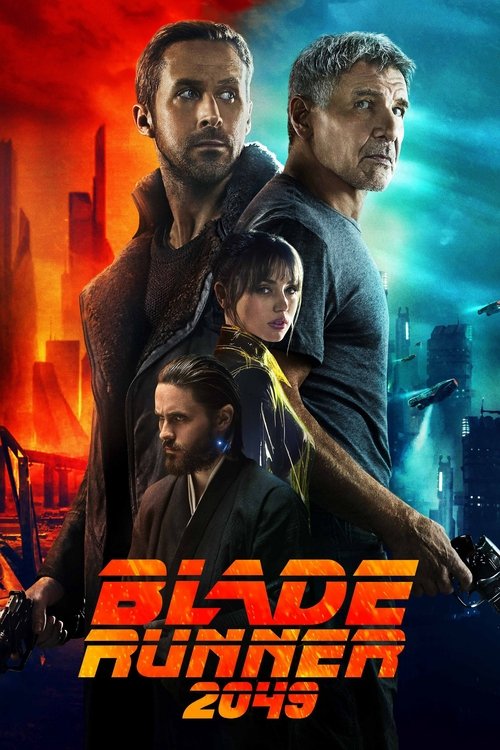
Blade Runner 2049
Draped in the melancholic, neon-drenched haze of a decaying cyberpunk dystopia, the film evokes an ache of profound existential loneliness—a solitary snowflake melting against a synthetic hand, searching for a ghost of a soul.
Blade Runner 2049
Blade Runner 2049

"The key to the future is finally unearthed."

04 October 2017 Canada 164 min 7.6 (15,514)

Director: Denis Villeneuve

Cast: Ryan Gosling, Harrison Ford, Ana de Armas, Dave Bautista, Robin Wright

Drama Science Fiction Nature of Humanity, the Soul, and Free Will The Authentic vs. The Simulated (Hyperreality & Memory) Deconstruction of the "Chosen One" and Self-Determination Exploitation, Corporate Hubris, and Environmental Ruin
Budget: $150,000,000
Box Office: $259,239,658

Blade Runner 2049 — Ending Explained

⚠️ Spoiler Analysis

The Central Twist Subversion: Throughout the second act, clues lead K—and the audience—to believe he is the miraculous biological child of Deckard and Rachael: he possesses a vivid memory of hiding a carved wooden horse in a furnace at an orphanage to protect it from bullies; he discovers the exact wooden horse hidden in the furnace at the San Diego ruins inscribed with matching birthdate records; and memory designer Dr. Ana Stelline breaks down in tears while analyzing the memory, confirming that it is authentic and not a synthetic fabrication.

However, the late-game revelation shatters this assumption: K is not the child. The real child is female: Dr. Ana Stelline herself. Because she suffered from a severe immune disorder, she was hidden in plain sight inside an isolated glass containment facility and tasked with designing synthetic memories for Wallace replicants. She wept because she recognized her own real childhood memory, which she had illegally embedded into the memory libraries of Nexus-9 models, including K.

The Climax and Resolution: Niander Wallace captures Deckard and attempts to coerce him into revealing the whereabouts of the child. When Deckard refuses, Wallace has a clone of Rachael brought in to entice him; Deckard rejects the clone, noting that her eyes were green, prompting Luv to execute the clone on the spot. Wallace orders Luv to transport Deckard off-world for torture.

K intercepts Luv’s transport spinner at the Los Angeles seawall. In a vicious battle in rising ocean waters, K kills Luv and rescues Deckard. Rather than delivering Deckard to the replicant resistance (who wanted Deckard dead to protect the secret) or back to the LAPD, K fakes Deckard’s drowning death to grant him freedom. K drives Deckard to the memory laboratory so he can finally meet his daughter, Ana Stelline. Mortally wounded from the fight with Luv, K sits outside on the snow-covered steps, peacefully staring into the falling snow as he succumbs to his injuries, his final breath underscored by the notes of "Tears in Rain".

Alternative Interpretations

The film invites multiple interpretations across several core plot points and character arcs:

  • The Nature of Joi’s Sentience and Love: The Programmed Product Reading views Joi’s dialogue, compliments, and adoration as merely sophisticated commercial code designed by Wallace Corporation to satisfy the user's emotional needs ("Everything you want to see, everything you want to hear"). The Emergent Consciousness Reading argues that by choosing to risk permanent deletion by asking to be moved exclusively onto the portable emanator and expressing selfless care for K, Joi transcended her programming and experienced authentic affection.
  • Is Rick Deckard Human or Replicant?: The Human Stance notes Deckard has physically aged over three decades and demonstrates natural biological weariness. The Replicant Stance notes Wallace's implication that Deckard may have been engineered specifically by Eldon Tyrell to cross paths with and impregnate Rachael as an experiment. The film deliberately leaves this question unanswered, honoring the ambiguity of the original.
  • K's Transcendence: Some viewers interpret K’s final sacrifice as a tragic manipulation by the Replicant Underground army, trading one master (the LAPD) for another (a revolution). The dominant cinematic reading holds that K defied both organizations: he ignored orders to kill Deckard, choosing instead an individual act of mercy and love.

Explore More About This Movie

Dive deeper into specific aspects of the movie with our detailed analysis pages

Similar Movies