Skip to content
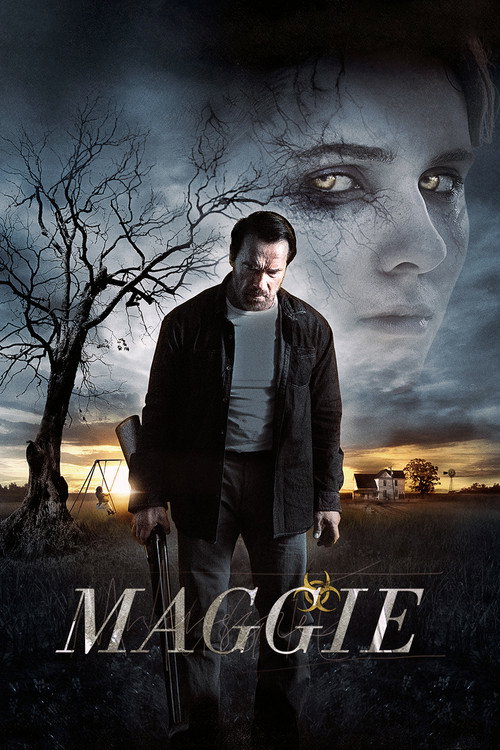
Maggie
A hushed apocalypse told at the speed of grief: a farmer keeps vigil over his infected daughter while autumn light drains from the fields, and love becomes the last thing left to bury.
Maggie
Maggie

"Don't Get Bitten."

08 May 2015 Switzerland 95 min 5.4 (1,710)

Director: Henry Hobson

Cast: Arnold Schwarzenegger, Abigail Breslin, Joely Richardson, Douglas M. Griffin, J.D. Evermore

Drama Science Fiction Horror Terminal illness as horror Fatherhood and the limits of protection Dignity, autonomy and the right to choose one's death Loss of innocence and a vanishing rural world Community, quarantine and institutional cruelty
Budget: $4,000,000
Box Office: $187,112

Maggie — Ending Explained

⚠️ Spoiler Analysis

Full spoilers follow.

Wade Vogel finds his teenage daughter Maggie in a quarantined city after she has run away — she left precisely to spare her family from watching her die, having already been bitten. A doctor who is a friend of the family allows Wade to take her home under an explicit condition: when the disease reaches its terminal phase, she must be delivered to quarantine. Everyone involved understands what quarantine means, and the film makes clear it is not treatment.

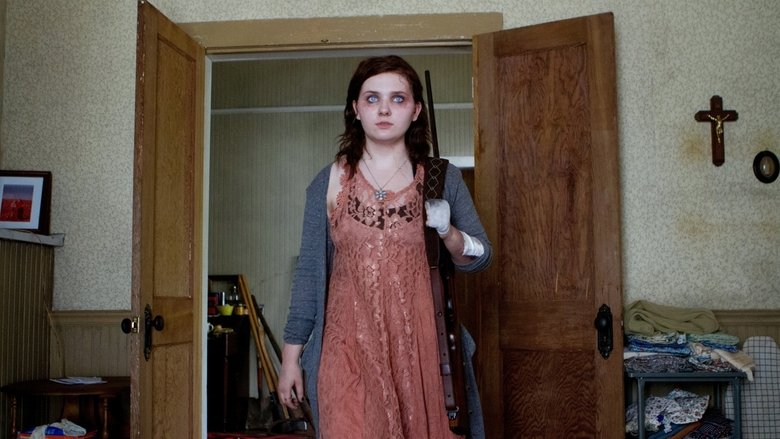
The middle movement is a decline, not a plot. Maggie's veins blacken, her wound rots, her senses dull, her appetite changes. Caroline sends the younger children away to relatives. Maggie sees friends — including other infected teenagers living out their last days — and the ordinary business of adolescence proceeds in parallel with the disease, which is the source of most of the film's pain. Neighbors and law enforcement apply steady pressure on Wade to do what rural people do with dying animals, and the film shows him confronting exactly what that would require of him.

The three endings the film refuses. Wade will not surrender her to quarantine. He cannot bring himself to kill her, though he is armed and the option is constantly present. And Maggie, seeing both the deputies circling and the ruin it would make of her father, will not let either happen.

The ending. With the final stage of the infection arriving, Maggie leaves her sleeping father, climbs onto the roof of the farmhouse, and lets herself fall. She dies on her own terms and by her own hand. In her last moments she sees herself as a small child, running through flowers with her mother — the film's single image of warmth, sunlight and innocence, in a film that has otherwise withheld the sun entirely.

What becomes clear in retrospect. Wade's sleep is the hinge of the whole film. Having spent the entire running time being unable to act, his final inaction is the only mercy available to him — whether he consciously permits it or is simply broken by exhaustion is deliberately unreadable, and the ambiguity is the point. Maggie's leap also retroactively reframes her flight to the city in the opening: both are the same act, a daughter removing herself to protect her father from having to choose. And the vision of the mother reveals what the infection has really been doing all along — not creating a monster, but taking back a child. The title is not a warning label; it is an insistence that she remained Maggie to the last second.

Alternative Interpretations

The euthanasia reading. The most common interpretation treats the entire film as an argument about assisted dying. Maggie's leap is a suicide that the film frames as merciful and self-authored — she takes the burden off her father, denies the state its quarantine, and dies as herself. Under this reading the film is unambiguously on her side.

The reading of failure. A darker interpretation holds that Maggie's death is not triumph but defeat, the end product of a society that has offered her only three flavors of annihilation. Her 'choice' is only free in the narrowest sense: everyone around her, including the sheriff's deputies and eventually her stepmother, has already decided she should be gone. The dignity is real, but it is dignity granted by the absence of alternatives.

Wade's complicity. Some viewers read the ending as Wade's quiet permission. He falls asleep — or allows himself to — in the hours when he had promised to act; whether that is exhaustion, unconscious mercy or a deliberate gift is left open. If it is the last of these, the film's final act of fathering is looking away.

The elegy reading. A less literal interpretation sets the virus aside entirely and treats the film as an elegy for rural America: the dying farm, the burned fields, the children shipped off, the community that no longer knows how to care for its own. Maggie is the last harvest, and the infection is only the name the film gives to a decline that was already underway.

The closing vision. Maggie's final image of herself as a child in a field of flowers with her mother is variously read as a dying hallucination, a moment of genuine grace, or the film's one concession of sentiment — an authorial kindness that softens what is otherwise an unrelieved study of decay.

Explore More About This Movie

Dive deeper into specific aspects of the movie with our detailed analysis pages

Similar Movies