Skip to content
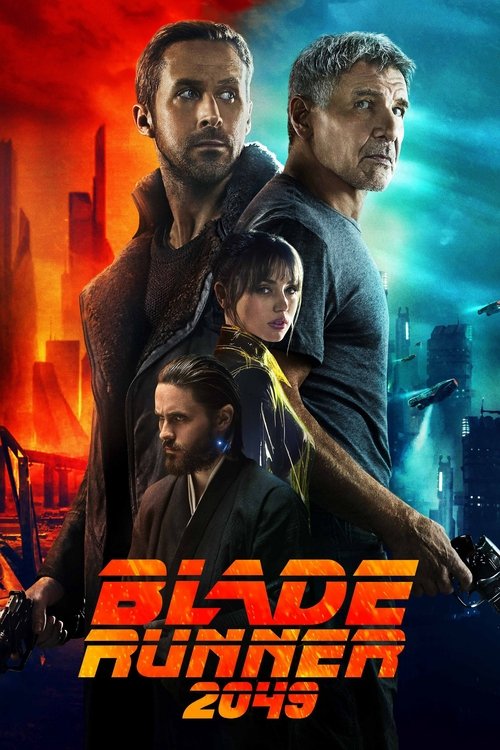
Blade Runner 2049
Draped in the melancholic, neon-drenched haze of a decaying cyberpunk dystopia, the film evokes an ache of profound existential loneliness—a solitary snowflake melting against a synthetic hand, searching for a ghost of a soul.
Blade Runner 2049

Blade Runner 2049

"The key to the future is finally unearthed."

04 October 2017 Canada 164 min 7.6 (15,514)

Director: Denis Villeneuve

Cast: Ryan Gosling, Harrison Ford, Ana de Armas, Dave Bautista, Robin Wright

Drama Science Fiction Nature of Humanity, the Soul, and Free Will The Authentic vs. The Simulated (Hyperreality & Memory) Deconstruction of the "Chosen One" and Self-Determination Exploitation, Corporate Hubris, and Environmental Ruin
Budget: $150,000,000
Box Office: $259,239,658

Overview

Set thirty years after the events of Ridley Scott’s 1982 cult classic, Blade Runner 2049 returns to a sprawling, environmentally collapsed future where synthetic humans known as replicants are engineered for servitude. KD6-3.7 (referred to simply as "K") is a newer, compliant Nexus-9 replicant working as a "blade runner" for the Los Angeles Police Department. His primary duty is to locate and "retire" (execute) obsolete, rogue older-generation models who have gone into hiding across the desolate wasteland.

During a routine assignment to retire a rogue replicant farmer on the outskirts of the city, K unearths a long-buried secret: the skeletal remains of a female replicant who died undergoing an emergency Caesarean section. The realization that replicants can biologically reproduce threatens to shatter the fragile societal hierarchy that depends on artificial beings remaining disposable property. Fearing societal upheaval and war, K’s superior, Lieutenant Joshi, orders him to track down and eliminate all traces of the child.

Concurrently, Niander Wallace—the blind, messianic industrialist whose corporation rescued human civilization through synthetic agriculture and refined replicant manufacturing—learns of the discovery and dispatches his ruthless enforcer, Luv, to secure the secret of reproduction to expand his interstellar empire. As K’s investigation leads him to delve into his own implanted memories and cross paths with former blade runner Rick Deckard, who vanished three decades prior, the mystery becomes a deeply personal quest to uncover the truth of his own origin and identity.
Core Meaning

Director Denis Villeneuve expands upon Philip K. Dick's foundational philosophy by deconstructing traditional "chosen one" mythology. The film argues that humanity is neither an inherent biological right nor defined by miraculous birth. Instead, humanity is an ethical choice—manifested through empathy, self-sacrifice, and love. In a world dominated by hyper-capitalist simulation and disposable commodities, true consciousness and a "soul" are forged when an individual exercises free will and chooses to act beyond their programmed destiny.

Thematic DNA

Nature of Humanity, the Soul, and Free Will 35%
The Authentic vs. The Simulated (Hyperreality & Memory) 25%
Deconstruction of the "Chosen One" and Self-Determination 20%
Exploitation, Corporate Hubris, and Environmental Ruin 20%

Nature of Humanity, the Soul, and Free Will

The film questions what elevates a being to "human" status. Replicants bleed, feel, and aspire, while human characters often act with bureaucratic cruelty or god-like detachment. The ultimate expression of humanity is demonstrated through autonomous moral agency and the willingness to die for a cause greater than oneself.

The Authentic vs. The Simulated (Hyperreality & Memory)

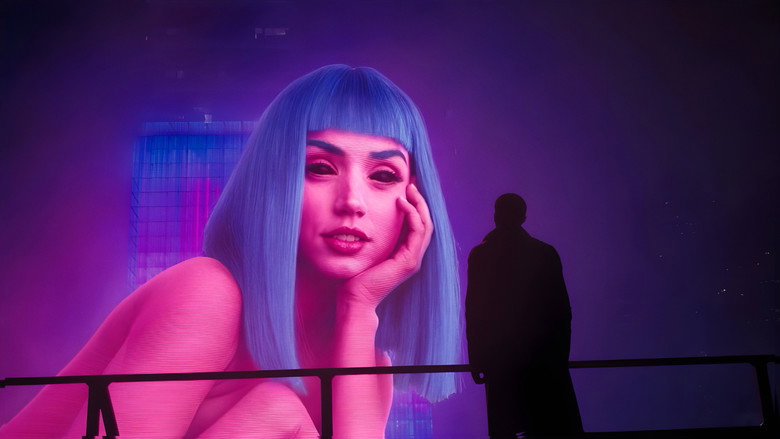
Through K’s relationship with his holographic companion Joi and the manufactured memories designed by Dr. Ana Stelline, the film explores whether emotional authenticity depends on organic reality. Even if an emotion or memory originates from artificial code or programming, the feelings it evokes remain genuine to the experiencing consciousness.

Deconstruction of the "Chosen One" and Self-Determination

K spends much of the narrative believing he is the miraculous child born of a replicant. When this belief is shattered, the film subverts standard heroic tropes. K discovers that greatness does not lie in special parentage, but in deciding what to do with an ordinary, synthetic life.

Exploitation, Corporate Hubris, and Environmental Ruin

Through Niander Wallace and the stark, ecologically devastated landscapes (the smog of Los Angeles, the trash heaps of San Diego, and the radioactive orange ruins of Las Vegas), the narrative critiques unrestrained technological dominance, late-stage capitalism, and the commodification of conscious beings.

Character Analysis

KD6-3.7 / "Joe" (K)

Ryan Gosling

Archetype: Tragic Hero / Searching Soul Key Trait: Stoic restraint masking a deep capacity for empathy and emotional yearning.

Motivation

To uncover the truth of his identity, discover whether his feelings and memories are genuine, and protect what matters.

Character Arc

Begins as an obedient, detached tool of the state resigned to second-class status; undergoes an existential crisis believing he is unique and born of a mother; falls into despair upon learning he is ordinary; and ultimately achieves transcendence by defining his own purpose through sacrifice.

Rick Deckard

Harrison Ford

Archetype: Reluctant Mentor / Weary Veteran Key Trait: World-weary skepticism driven by fierce parental loyalty.

Motivation

To safeguard the child he fathered with Rachael and preserve the memory of their love.

Character Arc

Lives in self-imposed exile in the radioactive ruins of Las Vegas, having severed all ties with his past to protect his child; reconciles with his history and accepts vulnerability through K’s intervention.

All 5 characters and cast

Symbols & Motifs

The Wooden Toy Horse

Meaning:

Inscribed with the date "6-10-21," this physical artifact bridges the gap between memory and reality. Initially representing K's belief in his biological birth, it later symbolizes Dr. Ana Stelline’s hidden past and Rick Deckard’s enduring love for Rachael.

Context:

Seen in K's implanted memory, discovered physically hidden in the furnace of the San Diego orphanage, and later referenced when speaking to Deckard and Stelline.

Falling Snow vs. Falling Rain

Meaning:

Snow represents the transition of life, quiet acceptance, and the chilling isolation of modern existence, contrasting with the toxic acid rain of the original film.

Context:

Used throughout the desolate world and culminating in K's final moments on the steps of Dr. Stelline’s facility as he looks up into the falling snow.

Eyes and Impaired Vision

Meaning:

Symbolizes identity, biological verification, and perception of reality.

Context:

Niander Wallace is blind and relies on cybernetic implants; Sapper Morton cleans his thick spectacles; and replicants are cataloged via serial numbers stamped directly into their right irises.

Water and Reflections

Meaning:

Mirrors artificial creation, divine posturing, the fluid ambiguity of identity, life, death, and baptism through violence.

Context:

Present in the rippling light across geometric walls in Wallace Corporation headquarters and in the dark, crashing waves at the Los Angeles seawall during the climax.

The Post-Trauma Baseline Test ("Cells Interlinked")

Meaning:

Symbolizes state-enforced psychological compartmentalization and the suppressive boundaries placed upon synthetic workers.

Context:

A verbal test with rhythmic repetition drawn from Vladimir Nabokov’s Pale Fire, administered by LAPD technicians to measure K's emotional deviation after field missions.

Memorable Quotes

I've never seen a tree. It's pretty.
— Joi

Context

Spoken when K shows her the withered, dead tree trunk outside Sapper Morton’s farmhouse.

Meaning

Highlights the environmental desolation of 2049, where nature is extinct and virtual beings romanticize natural remnants.

Dying for the right cause is the most human thing we can do.
— Freysa

Context

Addressed to K in the replicant underground resistance hideout.

Meaning

Delivers the moral thesis of the film, redefining humanity not as biological birth, but as moral choice and self-sacrifice.

All 5 quotes

Philosophical Questions

What constitutes the authenticity of a soul?

The film explores whether moral value derives from organic biology or the capacity to feel empathy, bear pain, and sacrifice for others.

Does the synthetic simulation of love diminish its emotional truth?

Through the virtual relationship between K and Joi, the narrative questions whether an emotion constructed out of algorithms is any less meaningful if it genuinely affects the recipient.

How much does memory define personal identity?

If personal memories can be fabricated and implanted into multiple bodies, the film asks whether identity is rooted in the past we remember or the choices we make in the present.

Alternative Interpretations

The film invites multiple interpretations across several core plot points and character arcs:

Full ending explanation

Cultural Impact

Arriving 35 years after Ridley Scott’s original film, Blade Runner 2049 was produced in an era dominated by high-speed, franchise-driven superhero blockbusters. Denis Villeneuve challenged contemporary Hollywood norms by crafting a $150M+ art-house blockbuster with slow, meditative pacing, minimal action exposition, and long takes.

Philosophically, the film synthesizes cyberpunk traditions with modern hyperreality concepts, exploring artificial intelligence, loneliness in digital spaces, algorithmic domesticity, and the climate apocalypse. Although its box office run was soft, the film was universally celebrated by film critics and won two Academy Awards (Best Cinematography and Best Visual Effects). It has since attained modern masterpiece status, influencing cinematic worldbuilding, high-concept sci-fi production design, and internet visual aesthetics (such as synthwave and the "literally me" cultural trope associated with Gosling’s character).

Audience Reception

Review aggregators recorded high critical acclaim (holding an 88% on Rotten Tomatoes and an 81 Metascore). Critics praised Roger Deakins' cinematography, Denis Villeneuve’s deliberate direction, Dennis Gassner’s grand production design, and Ryan Gosling’s nuanced performance, frequently hailing it as one of the finest sci-fi sequels ever produced that matched and expanded the depth of the original.

However, some critics and audiences felt the 163-minute runtime suffered from occasional self-indulgence and lethargic pacing. Other commentators debated the narrative's treatment of female characters, noting that several women appear as holographic commodities, sex workers, or violent subordinates in service to a male journey. Overall, it was received as a visually transcendent, cerebral science-fiction masterpiece valuing atmosphere, existential inquiry, and thematic weight over mindless blockbuster spectacle.

Interesting Facts

  • Cinematographer Roger Deakins secured his first Academy Award for Best Cinematography for Blade Runner 2049 after 14 career nominations.
  • Producer Cynthia Yorkin considered the working title Blade Runner: Time to Live, an intentional inversion of Roy Batty’s famous "time to die" line.
  • Rather than relying entirely on CGI green screens, Denis Villeneuve and visual effects supervisor John Nelson utilized massive physical miniature cityscapes built by Weta Workshop and practical sets constructed in Budapest, Hungary.
  • During the choreography of the Las Vegas casino brawl, Harrison Ford accidentally punched Ryan Gosling in the face for real; Ford later offered Gosling a glass of scotch in his trailer to apologize.
  • Villeneuve's frequent musical collaborator, composer Jóhann Jóhannsson, originally scored the film; he parted ways with the production after Villeneuve felt the film needed a sound palette closer to Vangelis' original synthesizer aesthetic, leading to Hans Zimmer and Benjamin Wallfisch joining the project.
  • The visual effects team worked for months to recreate a photo-real digital double of 1982-era Sean Young (Rachael) using motion capture actor Loren Peta, supervised directly by Young herself.
  • The film cost an estimated $150–$185 million to produce. Despite universal critical acclaim, it grossed approximately $267 million worldwide, falling short of commercial studio expectations due to its nearly three-hour runtime and deliberate pacing.

Easter Eggs

Vladimir Nabokov’s Pale Fire

The book seen in K's apartment is Vladimir Nabokov’s Pale Fire, from which the LAPD baseline test ("system of cells interlinked within cells...") is directly excerpted.

The Origami Sheep and Origami Horse

When K visits former blade runner Gaff (Edward James Olmos) at the retirement care home, Gaff folds a small origami sheep, a direct homage to Philip K. Dick’s original source novel, Do Androids Dream of Electric Sheep?, echoing his origami unicorn from the 1982 film.

Vintage Nostalgic Brands

Giant luminous neon billboards feature corporate logos for Pan Am and Atari—both real-world companies that collapsed or diminished after the 1982 film's release, maintaining the alternate-timeline continuity of the Blade Runner universe.

Prokofiev’s Peter and the Wolf

The chime sound that plays whenever Joi activates from her console or emanator is the musical melody representing "Peter" from Sergei Prokofiev’s Peter and the Wolf, symbolizing her role as a guiding spirit to an innocent protagonist.

"Tears in Rain" Musical Cues

During K’s death sequence on the snowy steps of the facility, Hans Zimmer and Benjamin Wallfisch’s score incorporates the musical motif from Vangelis’ iconic original track "Tears in Rain".

Frequently Asked Questions

Explore More About This Movie

Dive deeper into specific aspects of the movie with our detailed analysis pages

Comments (0)

Leave a comment

No comments yet. Be the first to share your thoughts!

Similar Movies