BLUE EYE SAMURAI
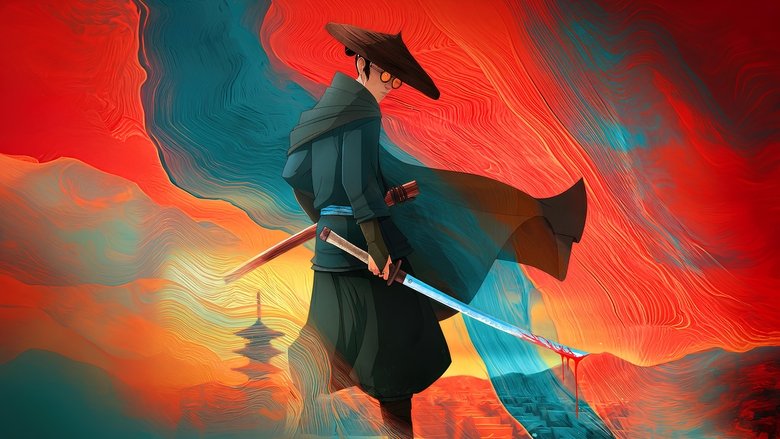
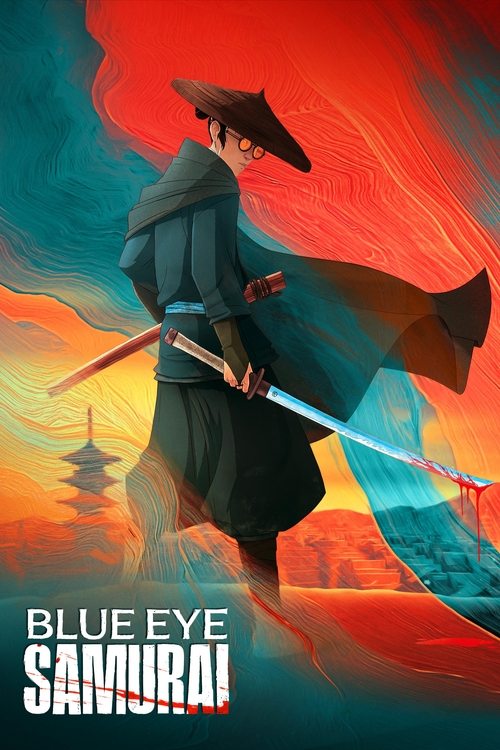
A blood-soaked ballad of vengeance in Edo Japan, where the glint of blue eyes mirrors the cold, sharp edge of a master's katana.
BLUE EYE SAMURAI

BLUE EYE SAMURAI

03 November 2023 — 03 November 2023 France 2 season 8 episode Returning Series ⭐ 8.5 (618)
Cast: Maya Erskine, George Takei, Masi Oka, Cary-Hiroyuki Tagawa, Brenda Song
Animation Action & Adventure
Revenge and Its Cost Identity and Otherness Gender and Power in a Patriarchal Society Tradition vs. Foreign Influence

Overview

Set in 17th-century Edo-period Japan, "BLUE EYE SAMURAI" follows the journey of Mizu, a mixed-race sword master ostracized for her half-white, half-Japanese heritage, identifiable by her piercing blue eyes. Forced to disguise herself as a man to survive and navigate a fiercely xenophobic society, Mizu embarks on a relentless quest for revenge. Her targets are four white men who illegally remained in Japan during its period of closed borders, one of whom she believes is her father and the cause of her life as a "creature of shame."

Her solitary path is complicated by the arrival of unlikely companions: Ringo, a kind-hearted, handless soba maker who dreams of greatness and becomes her self-appointed apprentice; Taigen, an arrogant but talented samurai whose life and honor are upended by Mizu; and Princess Akemi, a nobleman's strong-willed daughter who seeks to forge her own destiny in a patriarchal world. Across a beautifully animated and brutally violent landscape, Mizu must confront her past, the nature of her rage, and whether the connections she makes are a weakness or a newfound strength.

Core Meaning

"BLUE EYE SAMURAI" explores the profound pain of being an outcast and the corrosive nature of a life dedicated solely to revenge. The series posits that one's perceived weaknesses or deformities—the very things that cause society to label them as 'monsters' or 'impure'—can be forged into their greatest strengths. It delves into the multifaceted nature of identity, particularly for those of mixed heritage, questioning what it means to belong in a world that refuses to see you as whole. Ultimately, the creators examine whether a path paved with vengeance can ever lead to peace or self-acceptance, suggesting that true strength lies not just in the perfect, flawless sword, but in embracing the 'impurities' that give one resilience, including the connections made with others.

Thematic DNA

Revenge and Its Cost 35%
Identity and Otherness 30%
Gender and Power in a Patriarchal Society 25%
Tradition vs. Foreign Influence 10%

Revenge and Its Cost

The central driving force of the series is Mizu's all-consuming quest for vengeance. The narrative consistently questions the price of this path, showing how it isolates Mizu, forces her to make morally compromising choices, and brings immense collateral damage, culminating in the Great Fire of 1657. Her journey highlights the idea that revenge is a self-destructive force; even as she hones her skills to a razor's edge, her singular focus threatens to destroy her humanity and any chance at happiness. The series contrasts her path with other characters who also seek to reclaim honor or power, exploring different facets of ambition and retribution.

Identity and Otherness

As a mixed-race woman with blue eyes in isolationist Japan, Mizu is the ultimate 'other,' treated as a demon or monster. Her disguise as a man is not just a practical choice for a warrior but a necessity to hide her identity. The series is a deep exploration of intersectionality, examining how Mizu's race and gender compound the prejudice she faces. This theme is mirrored in other characters like Ringo, who is ostracized for being born without hands, creating a fellowship of outcasts. The story was inspired by co-creator Amber Noizumi's own experience as a mixed-race person, channeling the feeling of not truly belonging anywhere.

Gender and Power in a Patriarchal Society

The series starkly contrasts two paths for women seeking agency in Edo Japan. Mizu achieves power by shedding her femininity and adopting a male persona, allowing her the freedom to travel and fight. In contrast, Princess Akemi learns to wield power from within the confines of patriarchal expectations, using her intelligence and perceived helplessness to manipulate the powerful men around her and seize control of her own life. Her journey from a pampered daughter seeking romantic love to a calculating political player provides a compelling counterpoint to Mizu's brute-force approach to empowerment.

Tradition vs. Foreign Influence

The series is set against the backdrop of Japan's Sakoku period, where foreign influence was outlawed. The antagonist, Abijah Fowler, represents the corrupting force of the West, seeking to overthrow the shogunate with firearms and open Japan to trade. The gun is presented as a powerful symbol—a dishonorable weapon that destroys the artistry and honor of sword fighting, much as Fowler's ambitions threaten to destroy Japan's traditional structures. This conflict is embodied within Mizu herself, who is a product of this forbidden mixing of cultures.

Character Analysis

Mizu

Maya Erskine

Archetype: Antihero / The Outcast
Key Trait: Relentless

Motivation

Her primary motivation is to kill the four white men who could be her father, whom she blames for her painful existence as a mixed-race outcast. This quest for revenge is the organizing principle of her entire life. It is both a source of immense strength and a self-destructive prison.

Character Arc

Mizu begins as a cold, vengeful warrior, emotionally walled-off and driven by a singular, bloody purpose. Her journey is initially about pure revenge. Throughout Season 1, her interactions with Ringo and Taigen slowly chip away at her hardened exterior, forcing her to confront the humanity she has suppressed. She grapples with whether to maintain her solitary path or accept the help and companionship of others. A pivotal moment occurs in her past when a brief, happy marriage ends in betrayal, solidifying her belief that she is a monster incapable of being loved. By the end of the season, after defeating Fowler but learning her quest is not over, she chooses to continue her path of vengeance to London alone, but her experiences have undeniably changed her, even if she isn't ready to fully embrace them.

Ringo

Masi Oka

Archetype: The Sidekick / The Heart
Key Trait: Optimistic

Motivation

Ringo's motivation is to be great at something and to find his place in a world that scorns him for his disability. He initially believes apprenticing himself to a powerful samurai like Mizu is the only way to achieve this.

Character Arc

Ringo starts as an optimistic but looked-down-upon cook, born without hands and desperate to find a purpose and achieve greatness. He sees Mizu, another outcast, as a figure of immense strength and idolizes her, becoming her apprentice. His journey is one of finding his own worth. He serves as Mizu's moral compass, often questioning her ruthless methods. He eventually grows disillusioned with the sheer violence of Mizu's path and her coldness, leaving her when she abandons Akemi. His arc is about discovering that true 'greatness' may not lie in being a samurai, but in loyalty and kindness.

Princess Akemi

Brenda Song

Archetype: The Maiden / The Sovereign
Key Trait: Ambitious

Motivation

Initially, her motivation is to marry Taigen and live a life of her own choosing. This evolves into a desire for control and power after realizing that true freedom in her world cannot be achieved through romance, but through seizing influence.

Character Arc

Akemi begins as a pampered but determined princess who wants to escape an arranged marriage to be with the man she loves, Taigen. Her initial goals are romantic and centered on personal freedom. After being thwarted and forced into the patriarchal structures she despises, her arc transforms dramatically. She learns to navigate the treacherous world of politics and power from within, using her intelligence and understanding of social conventions to manipulate her father and husband. She evolves from someone seeking to escape control to someone who seeks to wield it, choosing power and the potential to rule over love, declaring, "I want to be great."

Taigen

Darren Barnet

Archetype: The Rival
Key Trait: Proud

Motivation

His primary motivation is to restore his honor by defeating Mizu. This is deeply intertwined with his love for Akemi, as his defeat cost him his engagement to her. Over the season, his motivation shifts from revenge to a desire to protect Akemi.

Character Arc

Taigen is introduced as a prodigious but arrogant swordsman from a humble background, whose bright future and engagement to Akemi are shattered by his humiliating public defeat at Mizu's hands. His arc is initially driven by a need to reclaim his lost honor by defeating Mizu in a rematch. This pursuit forces him into an unwilling alliance with her. Over time, his obsession with honor is challenged by his experiences, especially after being captured and tortured. He eventually chooses his love for Akemi over his feud with Mizu, but is rejected, leaving him stripped of both honor and love, and forcing him to re-evaluate what truly matters.

Symbols & Motifs

Blue Eyes

Meaning:

Mizu's blue eyes are the literal and metaphorical mark of her 'otherness.' In 17th-century Japan, they are seen as a sign of impurity and demonic heritage, making her an outcast. They symbolize the source of all her pain and the motivation for her revenge. The series subverts the Western idealization of blue eyes, turning them into a symbol of monstrosity within this specific cultural context.

Context:

Mizu's eyes are a constant presence throughout the series. She hides them under her hat and glasses to avoid detection and prejudice. The reveal of her eyes is often a pivotal moment in her interactions, eliciting fear, disgust, or shock. They are the physical manifestation of the identity she cannot escape.

The Meteorite Sword

Meaning:

Mizu's unique katana, forged from a meteorite by her and Swordfather, symbolizes her own origins. Like the metal from the stars, she is a foreign element in Japan, something not of this world. The process of forging the sword—folding the steel to remove impurities while leaving just enough to give it strength—is a direct metaphor for Mizu's own journey of self-acceptance. Her initial sword, made 'too pure,' breaks, symbolizing how her refusal to accept the 'impurities' of friendship and vulnerability makes her brittle.

Context:

The sword is introduced in flashbacks in Episode 1, showing how Mizu and Master Eiji find the meteorite as a child. It is her signature weapon throughout her quest. The sword breaking during her first confrontation with Fowler in Episode 6 is a major turning point, forcing her to return to her master and re-learn the lesson that some 'impurities' are necessary for resilience.

Bunraku Puppets

Meaning:

The Bunraku puppet theater, featured prominently in Episode 5, symbolizes manipulation and the struggle for agency. The puppets are controlled by unseen masters, reflecting how characters like Akemi and Mizu feel controlled by societal expectations and their own destinies. The play itself, 'The Tale of the Ronin and the Bride,' parallels Mizu's own tragic story of love and betrayal. The character designs themselves were inspired by the elegant, elongated forms of these puppets.

Context:

Episode 5 intercuts a Bunraku performance with flashbacks to Mizu's arranged marriage. The puppet show's narrative directly mirrors Mizu's own experiences, creating a powerful, layered storytelling device that explores themes of fate, betrayal, and female rage.

Memorable Quotes

Revenge is a path that ends in a puddle of blood. Mine, or his. It makes no difference.

— Mizu

Context:

This is part of Mizu's internal monologue and narration, establishing her worldview early in the series as she begins her hunt.

Meaning:

This quote encapsulates Mizu's fatalistic and all-consuming dedication to her quest. It shows that she has accepted the high probability of her own death and sees no other possible outcome for her life beyond vengeance. It highlights the nihilism at the heart of her journey.

You're deformed. But you're still strong.

— Ringo

Context:

Spoken in Episode 1, "Hammerscale," after Mizu saves Ringo in his father's noodle shop. It's the moment Ringo decides he must become Mizu's apprentice.

Meaning:

Ringo says this to Mizu, seeing a kinship between her blue eyes (a 'deformity' in their society) and his own lack of hands. It's the first time someone has reframed Mizu's defining 'flaw' as something that coexists with strength, rather than negating it. The line is the crux of the show's theme of outcasts finding strength in what makes them different.

I want to be in control of my life. I want to be great.

— Princess Akemi

Context:

Said in the final episode, "The Great Fire of 1657," after the attack on the castle, when Taigen offers to run away with her. She refuses, cementing her new path.

Meaning:

This marks the culmination of Akemi's transformation from a romantic idealist into a pragmatic and ambitious woman. She rejects the path of love offered by Taigen, choosing instead to remain in a political marriage to pursue power and agency. It's a pivotal moment where she defines her own version of freedom.

Episode Highlights

Hammerscale

S1E1

This episode masterfully establishes the series' brutal world, stunning visual style, and core characters. It introduces Mizu's relentless pursuit of revenge, her chance encounters with the optimistic Ringo and the arrogant Taigen, and Princess Akemi's desire for freedom. The final scene, which reveals Mizu is a woman, is a powerful twist that re-contextualizes her entire struggle.

Significance:

It sets the entire plot in motion, establishes the central themes of being an outcast and the quest for revenge, and introduces the key relationships that will drive the narrative. The episode's quality immediately signaled to audiences that the show was something special.

Peculiarities

S1E4

Mizu and Akemi's paths cross at Madame Kaji's unique brothel, where the women are empowered and trained. The episode explores different facets of female agency and features a charged interaction between the two women, revealing Mizu's jealousy of Akemi's conventional femininity. Akemi begins her journey of learning to wield power within her prescribed role.

Significance:

This episode deepens the show's exploration of gender and power by contrasting Mizu's and Akemi's methods of survival and ambition. It develops Akemi's character significantly and forces Mizu to confront a life she could never have.

The Tale of the Ronin and the Bride

S1E5

Widely considered the best episode of the season, it uses a Bunraku puppet show to parallel a devastating flashback of Mizu's past. We see her attempt to leave her quest for revenge for a life of domesticity and love with a husband, only to be betrayed when he calls her a 'monster' after seeing her fighting prowess. The betrayal shatters her, solidifying her path of vengeance and her belief that she is unlovable.

Significance:

This episode provides the crucial emotional core for Mizu's character. It explains the depth of her pain and why she is so resistant to connection, transforming her from a simple revenge-seeker into a tragic figure. The layered, artistic storytelling is a high point for the entire series.

All Evil Dreams and Angry Words

S1E6

An action-packed spectacle, this episode showcases Mizu's bloody, one-woman assault on Fowler's fortress. The fight choreography is brutal and inventive as Mizu navigates a 'dungeon' of traps and elite assassins. It's a testament to her skill and determination, though it also pushes her to her absolute physical and mental limits.

Significance:

This episode is the peak of the series' action, demonstrating the incredible quality of the animation and choreography. Mizu's confrontation with Fowler and the breaking of her sword serve as a major turning point in the plot, setting up the final arc of the season.

The Great Fire of 1657

S1E8

The season finale sees all the storylines converge during Fowler's assault on the shogun's castle. Mizu confronts Fowler, Akemi seizes power in the ensuing chaos, and Taigen chooses love over honor. Mizu defeats Fowler but spares him when he reveals the other two white men are in London, setting up her journey for the next season.

Significance:

It provides a climactic, if not entirely conclusive, end to the season's arcs. It finalizes Akemi's transformation, leaves Taigen at a crossroads, and expands the scope of Mizu's quest from Japan to the wider world, successfully creating anticipation for Season 2.

Philosophical Questions

Can a life defined by revenge ever lead to peace?

The series constantly explores this question through Mizu. Her singular focus gives her immense strength and skill but leaves her emotionally hollow and isolated. The brief glimpse of happiness she finds in her marriage is contingent on abandoning her quest, suggesting that peace and revenge are mutually exclusive. The show asks viewers to consider whether the satisfaction of vengeance is worth the destruction of one's own soul and the collateral damage inflicted on the world, as seen in the devastating fire Mizu inadvertently causes.

Is identity forged by birth, or by choice and action?

Mizu is defined by her birth as a 'monster' due to her mixed parentage. She spends her life fighting against this imposed identity. The series delves into whether she can ever escape the label society has given her. By disguising herself as a man and becoming a master swordsman, she attempts to forge a new identity through her actions. However, her blue eyes always remain, a permanent reminder of her origins. The show explores the tension between the identity society forces upon us and the one we strive to create for ourselves.

Alternative Interpretations

One alternative interpretation focuses on Mizu's journey not as a literal quest for revenge, but as an allegory for self-acceptance. In this reading, the 'four white men' are not just external targets but symbolic representations of the 'foreign' part of herself that she despises. Her mission to destroy them is a mission to destroy the part of her own identity she has been taught to hate. Her eventual journey to London, a 'white' land, could then be interpreted as a necessary step to confront the source of this self-hatred directly, rather than just its symptoms in Japan.

Another perspective critically examines the show's depiction of gender. While on the surface it presents empowered female characters, some might argue they only achieve agency by adopting masculine traits (Mizu) or manipulating a patriarchal system rather than dismantling it (Akemi). This view suggests the series, while celebrating their strength, also reinforces the idea that female power must operate within or mimic male-defined structures. Mizu's rejection of domesticity and love in Episode 5 can be seen as either a tragic necessity for her quest or a critique of how exceptional women are often forced to choose between personal fulfillment and their 'greater' purpose.

Cultural Impact

"BLUE EYE SAMURAI" was released to near-universal acclaim from critics and audiences, achieving a 97% rating on Rotten Tomatoes and being praised as one of the best animated series of the year. Its success demonstrates a growing appetite for adult animation that tells complex, mature stories, a space previously dominated by a few standout shows. The series has been lauded for its stunning visual style, which blends traditional Japanese aesthetics like ukiyo-e woodblock prints with modern, dynamic 3D-assisted animation, setting a new benchmark for the medium.

The show's exploration of mixed-race identity has resonated deeply with many viewers, offering a powerful narrative about the feeling of being an outsider that is both culturally specific and universally relatable. By centering its story on a character navigating the complexities of a bicultural heritage within a xenophobic society, it brings a fresh perspective to the samurai genre. While some have noted it is a Westernized take on Japanese culture, many Japanese viewers have also praised its quality and compelling storytelling. Renewed for a second season, the series' legacy will likely be its role in elevating adult animation as a vehicle for sophisticated, beautiful, and emotionally resonant storytelling.

Audience Reception

Audience reception for "BLUE EYE SAMURAI" has been overwhelmingly positive. The series quickly gained a passionate fanbase, praising its breathtaking animation, brutal and beautifully choreographed action sequences, and complex character development. On review aggregator sites like Rotten Tomatoes and IMDb, it holds exceptionally high audience scores. Viewers frequently highlight Episode 5, "The Tale of the Ronin and the Bride," as a masterpiece of storytelling and a season highlight. The main points of praise are often directed at the mature narrative, the emotional depth of Mizu's journey, and the nuanced arcs of the supporting cast, particularly Princess Akemi. Some minor criticisms have been raised by a portion of the audience regarding perceived plot armor for Mizu or the use of modern music in certain scenes, which some felt broke the immersion. However, the overall verdict from viewers is that the series is a stunning achievement and one of Netflix's best original animated productions, with anticipation for the second season being extremely high despite a reported long wait.

Interesting Facts

  • The series was created by husband-and-wife team Michael Green and Amber Noizumi. The initial idea came to them when their own child was born with blue eyes, prompting them to think about when and where that physical trait might be seen not as beautiful, but as monstrous.
  • The animation is a hybrid of 2D and 3D techniques, produced by French studio Blue Spirit. The creators wanted the show to look like a 'moving painting' or a Japanese woodblock print come to life.
  • The character designs were heavily inspired by the elegant, elongated forms of traditional Japanese Bunraku puppets.
  • To ensure authenticity, the production team consulted with experts, including a Harvard researcher on Japanese culture, an expert on Edo-period food, and used a costume designer who researched historical fabrics and patterns.
  • The creators, Michael Green and Amber Noizumi, have stated they envision the story as a three or four-season arc.
  • In a special release, Netflix posted the entirety of Episode 6 online in a black-and-white version with an altered soundtrack, emphasizing its cinematic quality.
  • Co-creator Michael Green also co-wrote the screenplay for the film "Logan," and sees parallels between Wolverine's relentless nature and Mizu's character.

⚠️ Spoiler Analysis

Click to reveal detailed analysis with spoilers

Frequently Asked Questions

Explore More About This Movie

Dive deeper into specific aspects of the movie with our detailed analysis pages

Comments (0)

Leave a comment

No comments yet. Be the first to share your thoughts!