
Skip to content
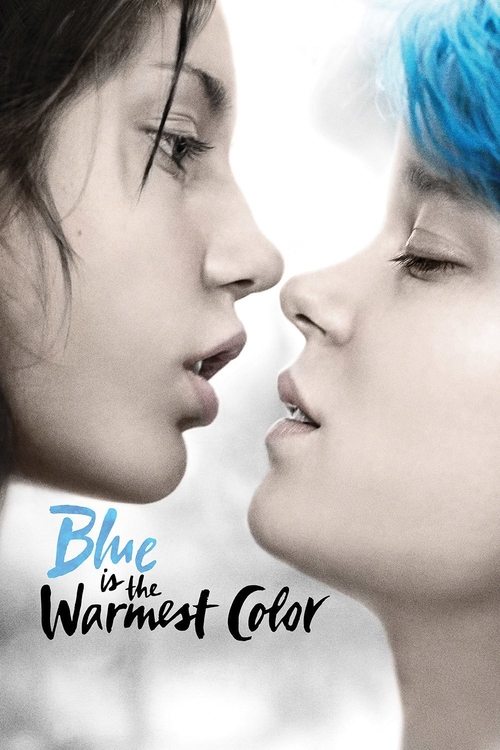
Blue Is the Warmest Color
An intimate, slow-burning coming-of-age romantic drama steeped in raw physical yearning and tender heartbreak, where first love blossoms like vibrant blue dye submerging pristine canvas before slowly fading into wistful ocean depths.
Blue Is the Warmest Color

La Vie d'Adèle - Chapitres 1 et 2

"To love."

09 October 2013 Belgium 180 min 7.1 (4,915)

Director: Abdellatif Kechiche

Cast: Léa Seydoux, Adèle Exarchopoulos, Salim Kéchiouche, Aurélien Recoing, Catherine Salée

Drama Romance Fluidity of Desire and Coming-of-Age / Self-Discovery Class Disparity and Cultural Capital The Visceral Body, Consumption, and Sensuality Alienation, Loneliness, and Emotional Drift Art, Subjectivity, and The Gaze
Budget: $4,300,000
Box Office: $19,796,489

Blue Is the Warmest Color — Ending Explained

⚠️ Spoiler Analysis

The narrative spans several formative years across two distinct chapters:

Chapter 1: The Awakening
Adèle attempts a conventional romance with classmate Thomas, but feels detached and unfulfilled. After locking eyes with the blue-haired Emma on a Lille street, Adèle has erotic dreams about her. She explores a local gay bar, encounters Emma, and the two strike up a deep connection. Despite homophobic bullying at school, Adèle falls completely in love with Emma, culminating in an intense sexual relationship.

Chapter 2: Domesticity and Rupture
Years later, Adèle and Emma live together. Adèle works as a devoted nursery school teacher, while Emma builds an art career. Cultural fissures widen: at a party hosted for Emma's art friends, Adèle spends the night cooking and serving food like domestic help, alienated by the pretentious intellectual discourse. As Emma begins spending more time with an art gallerist named Lise, Adèle feels increasingly lonely and neglected. In an act of emotional desperation, Adèle has a brief sexual encounter with a male colleague. When Emma discovers the infidelity, an explosive, physically aggressive confrontation erupts in their apartment, and Emma ruthlessly throws Adèle out on the street.

The Café Reunion and The Gallery Ending
Years later, Adèle invites Emma to meet at a café. Still deeply in love, Adèle weeps and propositions Emma, who admits she still harbors infinite tenderness and desire for Adèle, but explains she has built a stable life, family, and home with Lise and cannot return. Later, Adèle attends Emma’s solo art gallery exhibition wearing a blue dress. She sees portraits of herself on the walls alongside paintings of Emma's new family. Samir, an empathetic acquaintance from the past, tries to talk with her, but Adèle quietly slips out of the gallery and walks briskly down the street alone, finally letting Emma go and stepping into her own independent future.

Alternative Interpretations

The film offers several viable interpretative angles:

  • The Bildungsroman / Maturation Reading: Adèle walking away from Emma’s art gallery into the bustling street at the end represents the completion of her coming of age. Having loved, suffered, and found her vocation in teaching, she leaves the blue aesthetic behind and enters her own unwritten future as an autonomous adult.
  • The Sociological / Class Determinism Reading: The relationship was doomed not by lack of love, but by rigid socio-cultural stratification. Emma’s bourgeois art world thrives on ambition, intellectual networking, and aesthetic capital; Adèle’s working-class worldview values emotional authenticity and domestic stability. They inhabited fundamentally incompatible social realities.
  • The Muse / Exploitation Reading: Adèle was merely raw material for Emma's art. At the final exhibition, Emma’s new partner, child, and paintings show that Emma has incorporated Adèle into her portfolio and moved on, while Adèle remains privately haunted by the emotional sacrifice she made.

Explore More About This Movie

Dive deeper into specific aspects of the movie with our detailed analysis pages

Similar Movies