Skip to content
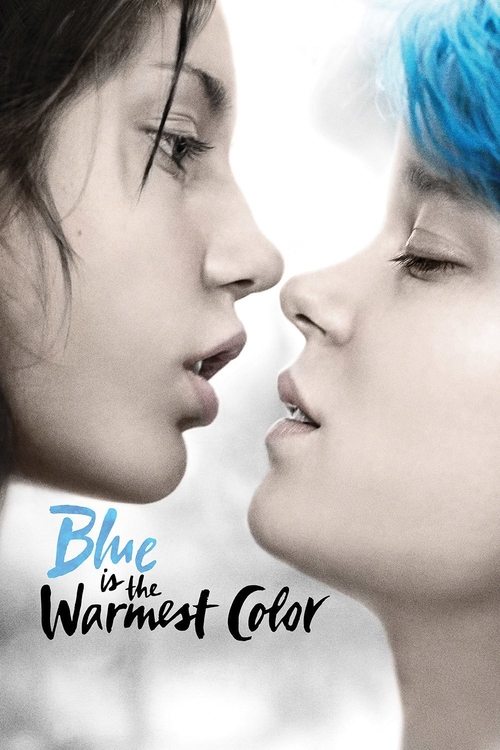
Blue Is the Warmest Color
An intimate, slow-burning coming-of-age romantic drama steeped in raw physical yearning and tender heartbreak, where first love blossoms like vibrant blue dye submerging pristine canvas before slowly fading into wistful ocean depths.
Blue Is the Warmest Color

Blue Is the Warmest Color

La Vie d'Adèle - Chapitres 1 et 2

"To love."

09 October 2013 Belgium 180 min 7.1 (4,915)

Director: Abdellatif Kechiche

Cast: Léa Seydoux, Adèle Exarchopoulos, Salim Kéchiouche, Aurélien Recoing, Catherine Salée

Drama Romance Fluidity of Desire and Coming-of-Age / Self-Discovery Class Disparity and Cultural Capital The Visceral Body, Consumption, and Sensuality Alienation, Loneliness, and Emotional Drift Art, Subjectivity, and The Gaze
Budget: $4,300,000
Box Office: $19,796,489

Overview

Set in the northern French city of Lille, Blue Is the Warmest Color chronicles the formative years of Adèle, an introspective high school student navigating adolescence, social expectations, and burgeoning sexuality. While she goes through conventional motions—reading 18th-century French literature and briefly dating a male classmate—Adèle senses an unspoken emptiness in her emotional life. A fleeting crosswalk encounter with an older, blue-haired fine-arts student named Emma instantly sparks an electric, inescapable fascination that pulls Adèle into an unfamiliar world.

As Adèle and Emma cross paths again at a local bar and begin conversing, their chemistry quickly evolves from tentative intellectual and artistic dialogue into an all-consuming romance. The narrative follows the progression of their relationship across several years, observing the intense passion of young devotion alongside the quiet friction of contrasting domestic backgrounds, personal ambitions, and social milieus. Emma pursues an ambitious career as a painter in an upscale bohemian circle, while Adèle finds purpose and stability in elementary education.

Director Abdellatif Kechiche stages their connection through a hyper-naturalistic, deeply sensory lens. The film avoids conventional melodramatic tropes to immerse viewers in the mundane textures of living: shared meals, quiet domestic routines, classroom discussions, and intimate vulnerabilities. The result is a grand yet delicate portrait of youth, identity discovery, and the profound imprint that a first transcendent romance leaves upon a person's soul.

Core Meaning

At its core, Blue Is the Warmest Color explores the transformative and devastating power of first love as a vehicle for self-actualization and identity formation. Abdellatif Kechiche depicts desire not as an abstract, romantic ideal, but as an intensely embodied, visceral human experience intertwined with food, touch, speech, and physical presence.

The film conveys that while emotional and physical chemistry can transcend societal boundaries, the enduring architecture of social class, intellectual divergence, and domestic expectations fundamentally shapes human relationships. Ultimately, the director delivers a poignant meditation on how profound connections sculpt who we become: even when love does not survive the passage of time, the emotional and psychological imprint of having loved completely remains indelibly woven into our identity.

Thematic DNA

Fluidity of Desire and Coming-of-Age / Self-Discovery 30%
Class Disparity and Cultural Capital 25%
The Visceral Body, Consumption, and Sensuality 20%
Alienation, Loneliness, and Emotional Drift 15%
Art, Subjectivity, and The Gaze 10%

Fluidity of Desire and Coming-of-Age / Self-Discovery

The film tracks Adèle's transition from an uncertain adolescent suppressing her authentic desires to a mature woman grounded in her choices. It treats sexual orientation not through programmatic labels or coming-out dogmas, but through personal awakening, yearning, and intuitive attraction.

Class Disparity and Cultural Capital

A central engine of tension in the narrative is socioeconomic divergence. Emma comes from an upper-middle-class, open-minded family of artists who enjoy oysters and wine while discussing philosophy; Adèle hails from a conservative, working-class home focused on financial security (symbolized by family dinners of plain spaghetti bolognese). This disparity creates an unbridgeable cultural divide as they age.

The Visceral Body, Consumption, and Sensuality

Kechiche links emotional and intellectual appetite with physical hunger. Eating, weeping, sleeping, laughing, and lovemaking are captured with the same raw, unfiltered intensity. The characters' bodies serve as the primary emotional text of the film.

Alienation, Loneliness, and Emotional Drift

Despite deep intimacy, Adèle experiences a lingering sense of detachment. She hides her relationship from her homophobic peers and parents, and remains an outsider within Emma’s circle of artistic intellectuals.

Art, Subjectivity, and The Gaze

Emma’s painting acts as a mirror for the relationship. Adèle begins as Emma’s muse and living inspiration, but over time feels reduced to an aesthetic object rather than an equal partner.

Character Analysis

Adèle

Adèle Exarchopoulos

Archetype: The Seeker / Reluctant Hero Key Trait: Raw emotional transparency and visceral sensory engagement

Motivation

To love freely, satisfy an inner emotional emptiness, and find peace in everyday human connection.

Character Arc

Begins as an insecure, sexually confused schoolgirl; evolves into a passionate, deeply vulnerable partner; after devastating heartbreak, emerges as an independent, self-possessed kindergarten teacher.

Emma

Léa Seydoux

Archetype: The Mentor / Catalyst / Artist Key Trait: Intellectual confidence, aesthetic idealism, and emotional pragmatism

Motivation

Intellectual and artistic self-expression; creating a curated life of cultural ambition.

Character Arc

Starts as a self-assured, charismatic, blue-haired bohemian art student who guides Adèle into intellectual and queer spaces; matures into a pragmatic, professionally ambitious painter whose priorities harden around career and family.

All 4 characters and cast

Symbols & Motifs

The Color Blue

Meaning:

Represents initial fascination, intense desire, and transcendent warmth, but later shifts to symbolize emotional coldness, sadness, and distance.

Context:

Initially seen in Emma’s dyed hair, Adèle's blue nail polish, and party lighting; as their passion wanes and Emma dyes her hair back to blonde, blue appears primarily in Adèle's final dress, evoking lingering nostalgia.

Food and Eating (Oysters vs. Spaghetti)

Meaning:

A metaphor for appetite, class difference, sensory openness, and domestic compatibility.

Context:

Emma’s parents serve fresh oysters—requiring refined taste and culinary adventure—which Adèle eats tentatively; Adèle’s parents serve heavy spaghetti bolognese, discussing practical jobs and career pensions.

Water and the Ocean

Meaning:

Symbolizes emotional surrender, the unconscious, rebirth, and isolation.

Context:

Adèle floating serenely on her back in the blue Mediterranean sea marks key emotional beats of self-reflection and therapeutic solitude.

Literature (Marivaux's La Vie de Marianne)

Meaning:

Serves as the literary blueprint for Adèle’s coming of age and inner emotional void.

Context:

Discussed extensively in Adèle's high school French class, foretelling her struggle with unfulfilled longings and unexpected encounters.

Emma’s Paintings and Sketches

Meaning:

The boundary between genuine connection and artistic objectification.

Context:

Emma obsessively sketches Adèle nude in bed during their honeymoon phase; later, at gallery exhibitions, Adèle sees herself displayed publicly as an aesthetic artifact of Emma's past.

Memorable Quotes

J’ai une tendresse infinie pour toi, pour toujours, toute ma vie.
— Emma

Context

The heartbreaking reunion scene in a café after years of separation.

Meaning

Crystallizes the tragedy of their dynamic—enduring emotional affection coexisting with irreversible romantic separation.

Tu ne m'aimes plus ? Je t'aime, moi. Tout me manque. Ton corps me manque...
— Adèle

Context

Adèle weeping across the café table, confronting the reality that Emma has moved on.

Meaning

Demonstrates Adèle's unresolved, intensely physical and psychological attachment to Emma.

All 5 quotes

Philosophical Questions

Is complete emotional transparency achievable between disparate social classes?

The film shows how domestic upbringing, family values, and intellectual privileges subtly dictate how individuals communicate, judge each other, and express affection.

Does authentic selfhood come from internal essence or active choice?

Reflecting the film's Sartre debates, Emma believes identity is constructed through active choices and ambition, while Adèle lives reactively through intuition, immediate sensations, and spontaneous feeling.

Can a past love ever be fully excised from the self?

The café reunion explores the permanence of affective memory: two people can realize they cannot live together while acknowledging that the love between them will remain forever.

Alternative Interpretations

The film offers several viable interpretative angles:

Full ending explanation

Cultural Impact

Blue Is the Warmest Color made a notable cultural imprint across several areas:

  • Socio-Political Landscape in France (2013): The film debuted at Cannes amid mass protests across France regarding the passage of the Mariage pour tous (same-sex marriage) legislation. While Kechiche maintained the film was not an overt political manifesto, critics embraced it as a cultural milestone in French LGBTQ+ representation.
  • The 'Male Gaze' Debate: The film ignited significant film-theory debates. Graphic novel creator Jul Maroh and several feminist film critics argued that the sex scenes reflected a voyeuristic, straight male fantasy of lesbian intimacy, while other critics defended the sequences as an extension of Kechiche's broader, tactile visual style.
  • Legacy in Contemporary Queer Cinema: Despite the off-screen controversies, the film won numerous international awards (including the César for Most Promising Actress for Exarchopoulos) and set a benchmark for emotional intensity, long-form character studies, and naturalistic acting in 2010s world cinema.

Audience Reception

Audience and critical reception of the film encompasses distinct perspectives:

  • Praise: Universally lauded for the raw, magnetic lead performances of Adèle Exarchopoulos and Léa Seydoux; praised for its immersive, naturalistic cinematography, emotional depth, and realistic capture of young love and devastating heartbreak.
  • Criticisms: Running time (180 minutes) felt overlong to some viewers; the extensive length and framing of the explicit sex scenes divided critics between those who viewed them as visceral art and those who found them voyeuristic or excessive.
  • Controversies: Severe friction regarding the on-set treatment of cast and crew, public disputes between the director and his stars, and objections raised by the source novel's author.
  • Overall Verdict: Regarded as a landmark, Palme d'Or-winning romantic drama and one of the defining arthouse films of the 2010s.

Interesting Facts

  • At the 2013 Cannes Film Festival, jury president Steven Spielberg took the unprecedented step of officially awarding the Palme d'Or jointly to director Abdellatif Kechiche and lead actresses Léa Seydoux and Adèle Exarchopoulos.
  • Kechiche shot roughly 800 hours of raw footage over a grueling five-month shoot in Lille and Paris, continually running takes for hours to achieve completely spontaneous, documentary-style performances.
  • The 30-second scene where Adèle and Emma first cross paths on the street took over 100 takes across multiple days; Kechiche discarded a set monitor in frustration during shooting.
  • The centerpiece graphic love scene required 10 full shooting days. Both actresses wore custom prosthetic covers and later stated in press junkets that the filming was emotionally and physically taxing.
  • Kechiche changed the graphic novel protagonist's name from Clémentine to Adèle after casting Exarchopoulos, whose open mouth, manner of eating, and natural mannerisms inspired the characterization.
  • Technicians from the French film union (SPIAC-CGT) issued public complaints alleging unpaid overtime, erratic schedules, and a high-stress working environment during principal photography.
  • A sharp public dispute erupted between Kechiche and his lead actresses during international press tours regarding directorial methods, leading Kechiche to remark in French press that the film perhaps 'should not have been released'.

Easter Eggs

Marivaux’s La Vie de Marianne

The film's French title (La Vie d’Adèle) and its opening classroom act directly reference Pierre de Marivaux’s 18th-century coming-of-age novel, framing Adèle’s story within the long French tradition of sentimental education.

Jean-Paul Sartre and Bob Dylan References

Emma introduces Adèle to existentialist philosophy (Jean-Paul Sartre) and the lyrical poetry of Bob Dylan, contrasting Emma's elite cultural repertoire against Adèle's popular cultural instincts.

Francis Bacon and Egon Schiele Art Influences

Emma's artwork and studio aesthetic draw heavily from the expressive, raw figurative work of Egon Schiele and Francis Bacon, highlighting her fixation on human flesh, vulnerability, and primal form.

Graphic Novel Divergence

In Jul Maroh’s source graphic novel Le bleu est une couleur chaude, the protagonist dies young from an accidental medication overdose, framed through posthumous diary entries; Kechiche deliberately excised the tragedy in favor of an open, living adult resolution.

Frequently Asked Questions

Explore More About This Movie

Dive deeper into specific aspects of the movie with our detailed analysis pages

Comments (0)

Leave a comment

No comments yet. Be the first to share your thoughts!

Similar Movies