
Skip to content
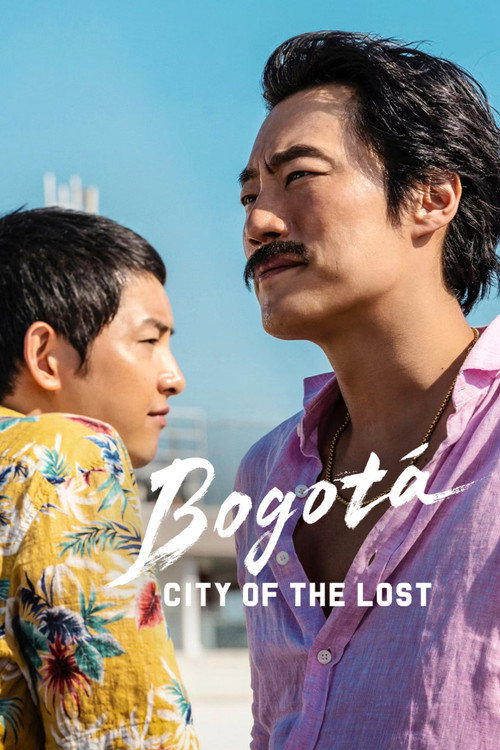
Bogotá: City of the Lost
A sun-baked neo-noir steeped in raw immigrant desperation and ruthless ambition, where human souls are bartered like black-market contraband amidst the chaotic, smog-choked streets of a foreign promised land.
Bogotá: City of the Lost

Bogotá: City of the Lost

보고타: 마지막 기회의 땅

31 December 2024 South Korea 109 min 7.0 (101)

Director: Kim Seong-je

Cast: Song Joong-ki, Lee Hee-jun, Kwon Hae-hyo, Cho Hyun-chul, Park Ji-hwan

Drama Crime Thriller Immigrant Survival and Displacement The Corrosive Illusion of Wealth and Power Generational Trauma and Korean Diaspora Fractures Transactional Morality and Loyalty vs. Betrayal Systemic Corruption and Exploitative Globalism

Overview

Set in the immediate fallout of the 1997 Asian Financial Crisis (the "IMF Crisis"), Bogotá: City of the Lost follows nineteen-year-old Song Guk-hee (Song Joong-ki) and his family as they flee financial ruin in South Korea to start over in Bogotá, Colombia. Arriving with little more than shattered hopes, Guk-hee discovers that survival in Colombia is brutally unforgiving, especially when robbed of their remaining money shortly after arriving.

To support his struggling family, Guk-hee enters the orbit of the local Korean Merchants' Association operating in the San Andresito market, commanded by the authoritarian Vietnam veteran Sergeant Park (Kwon Hae-hyo). Starting at the lowest rung of the underground garment and illicit goods trade, Guk-hee distinguishes himself through reckless courage and shrewd tenacity. His boldness catches the eye of Jeon Soo-yeong (Lee Hee-jun), a calculating customs broker maneuvering to establish his own dominance.

Caught in a high-stakes crossfire between competing immigrant factions, corrupt local customs agents, and rival Colombian cartel figures, Guk-hee climbs through the black-market underworld. His journey charts a perilous transition from an earnest youth fighting for basic subsistence to a hardened player confronting the moral decay inherent in rapid economic ascent.

Core Meaning

Director Kim Seong-je uses the Colombian setting as a crucible to interrogate the corrosive cost of survival and the myth of economic reinvention. Rather than delivering a conventional mob thriller, the film examines how displacement strips away human dignity, turning marginalized migrants into predators against their own countrymen. Kim illustrates that the cutthroat capitalism Koreans fled during the 1997 crisis was not escaped, but merely transplanted onto foreign soil in an unregulated, violent form. At its core, the film conveys that the relentless pursuit of material security in an alien land can ultimately destroy the very ties of kinship and humanity it was meant to protect.

Thematic DNA

Immigrant Survival and Displacement 30%
The Corrosive Illusion of Wealth and Power 25%
Generational Trauma and Korean Diaspora Fractures 20%
Transactional Morality and Loyalty vs. Betrayal 15%
Systemic Corruption and Exploitative Globalism 10%

Immigrant Survival and Displacement

Explores the psychological toll of becoming an outsider with no safety net, illustrating how legal precarity forces honest migrants into black-market opportunism.

The Corrosive Illusion of Wealth and Power

Depicted through Guk-hee’s gradual transformation from a protective son into an ambitious kingpin, highlighting how ambition becomes an addiction that eclipses initial intentions.

Generational Trauma and Korean Diaspora Fractures

Revealed via the clash between the older generation (imbued with military trauma and patriarchal authority, represented by Sergeant Park and Guk-hee's father) and the younger generation seeking autonomy.

Transactional Morality and Loyalty vs. Betrayal

Demonstrates how relationships in the expatriate underworld are constantly reshuffled based on profit, turning friendships and alliances into consumable assets.

Systemic Corruption and Exploitative Globalism

Examines the symbiotic parasitism between corrupt local authorities, international smuggling rings, and shifting geopolitical trade regulations.

Character Analysis

Song Guk-hee / "Cookie"

Song Joong-ki

Archetype: Antihero / Tragic Underdog Key Trait: Fearless adaptability and sharp street intelligence

Motivation

To pull his family out of poverty and achieve untouchable autonomy in a hostile world.

Character Arc

Starts as a desperate 19-year-old immigrant fighting to salvage his family's livelihood; hardens through violence and trade wars into a formidable, cynical black-market leader.

Jeon Soo-yeong

Lee Hee-jun

Archetype: Cunning Facilitator / Mephistophelean Mentor Key Trait: Calculating opportunism wrapped in charismatic pragmatism

Motivation

Gaining supreme financial control over the Bogotá import routes.

Character Arc

A smooth customs broker who spots Guk-hee's potential and weaponizes him to break Sergeant Park's monopoly, only to realize the monster he helped create.

All 5 characters and cast

Symbols & Motifs

Contraband Lingerie and Garments

Meaning:

Represents both humiliation and the seed of empire, embodying the unglamorous reality of the black market.

Context:

Used during customs raids where Guk-hee hides brassieres inside clothing, serving as his trial by fire in the illicit garment trade.

"Cookie" (Guk-hee’s Nickname)

Meaning:

Symbolizes assimilation, loss of original identity, and his reshaping into an expatriate street figure.

Context:

Adopted as a phonetic adaptation of Guk-hee by Colombian locals throughout his criminal ascent in the market.

San Andresito Market

Meaning:

Serves as a metaphor for unregulated, cutthroat capitalism where legal and illegal boundaries blur.

Context:

The physical maze of commerce and crime in Bogotá where Korean merchants and local cartels conduct their illicit trade.

Passports and Visas

Meaning:

Represent physical tokens of legitimacy, entrapment, and the desperate yearning for mobility.

Context:

Employed repeatedly to illustrate the legal vulnerability of immigrants and unfulfilled dreams of reaching destinations like the United States.

Zone 6 / Strata Divisions

Meaning:

Represents the elusive threshold between squalor and elite untouchability.

Context:

Reflects the stark socioeconomic stratification of Bogotá as characters strive to cross class boundaries.

Memorable Quotes

여긴 마지막 기회의 땅이야. 살아남지 몋하면 시체도 몋 찾아.
— Sergeant Park Jang-soo

Context

Delivered by Sergeant Park to Guk-hee when welcoming him to the realities of the underground network.

Meaning

Establishes the unyielding stakes of the Bogotá diaspora underworld upon Guk-hee’s initiation into the gang’s network.

보고타에서는 믿을 놈 하나 없어. 돈하고 네 배짱 말고는.
— Jeon Soo-yeong

Context

Spoken by Soo-yeong while advising Guk-hee on surviving and rising in Bogotá's black market.

Meaning

Highlights Soo-yeong’s core philosophy, grooming Guk-hee to sever moral qualms in favor of ruthless transactional pragmatism.

All 4 quotes

Philosophical Questions

Can moral integrity survive extreme material desperation?

Explored through Guk-hee's willingness to compromise personal ethics and descend into criminality to secure basic subsistence and protection for his family.

Does geographical relocation ever truly allow reinvention, or do we simply recreate our past trauma elsewhere?

Revealed by how the Korean immigrant community in Bogotá reconstructs the exact same authoritarian hierarchies and ruthless capitalist exploitation they fled in Seoul.

What constitutes true belonging for a displaced person?

Reflected in Guk-hee's perpetual alienation from both native Koreans and local Colombians as he navigates an expatriate identity.

Alternative Interpretations

The Sisyphus Immigrant Reading: Guk-hee’s rise and staged survival do not represent triumph, but an inescapable trap. By securing his power at the cost of legal legitimacy and moral innocence, he remains permanently displaced—unable to return to South Korea as an ordinary citizen and forever bound to the Colombian black market.

Full ending explanation

Cultural Impact

The film explores a significant historical moment when the 1997 Asian Financial Crisis crippled South Korea’s economy, leading to mass bankruptcies, suicides, and desperate emigration to hubs like Bogotá's San Andresito district for trade in wholesale clothing, textiles, and electronics.

Following its world premiere at the 29th Busan International Film Festival (BIFF) in October 2024, the film saw a domestic theatrical release on December 31, 2024, and was released globally on Netflix in February 2025. It recorded roughly 420,000 domestic admissions against a 12.5 billion KRW budget, achieving strong international streaming viewership driven by Song Joong-ki's fanbase despite criticism regarding pacing and gangster tropes.

Audience Reception

Audience and critical reception highlighted several key strengths and weaknesses:

  • Praised Elements: Song Joong-ki's intense, grounded performance shedding his clean idol persona; authentic, atmospheric cinematography capturing the gritty San Andresito market; and strong supporting turns by Lee Hee-joon and Kwon Hae-hyo.
  • Criticisms & Controversies: Uneven narrative pacing, episodic time jumps over the 1997–2008 timeline, underdeveloped secondary characters, reliance on familiar crime clichés, and frustration from Latin American viewers over stereotypical portrayals of Bogotá as purely crime-infested.
  • Overall Verdict: An ambitious, handsomely produced crime saga offering a fresh diaspora setting that is somewhat constrained by predictable genre conventions.

Interesting Facts

  • Principal photography began on location in Bogotá in January 2020 but was shut down in March 2020 due to the global COVID-19 lockdown, forcing the cast and crew to evacuate to South Korea before resuming mid-2021 and concluding in October 2021.
  • It was the first major South Korean film to utilize Colombia’s Law 1556 audiovisual production incentives and cash rebates via Proimágenes Colombia and local production partner Jaguar Bite.
  • Song Joong-ki and Lee Hee-joon underwent intensive Spanish dialect and dialogue coaching for their bilingual scenes.
  • The film marks director Kim Seong-je’s sophomore feature nine years after his acclaimed legal drama Minority Opinion (2015).
  • The film covers an eleven-year timeline (1997–2008), culminating in the real-world Colombian Anti-Smuggling Act of 2008, which cracked down on black-market imports in San Andresito.

Easter Eggs

1997 IMF Crisis Echoes

The film’s opening mirrors the true-life migration waves of bankrupt South Korean small-business owners who fled to South America (particularly Colombia, Brazil, and Argentina) in the late 1990s.

Vietnam War Veteran Diaspora

Sergeant Park and Guk-hee's father are Vietnam War veterans; their presence abroad reflects historical postwar networks where Korean veterans utilized overseas connections to establish import-export trades.

Cast Chemistry Cameos

Actors Park Ji-hwan and Cho Hyun-chul reteam after notable appearances in contemporary Korean crime and drama circuits, deliberately playing against their typical comedic or submissive archetypes.

Frequently Asked Questions

Explore More About This Movie

Dive deeper into specific aspects of the movie with our detailed analysis pages

Comments (0)

Leave a comment

No comments yet. Be the first to share your thoughts!

Similar Movies