Skip to content
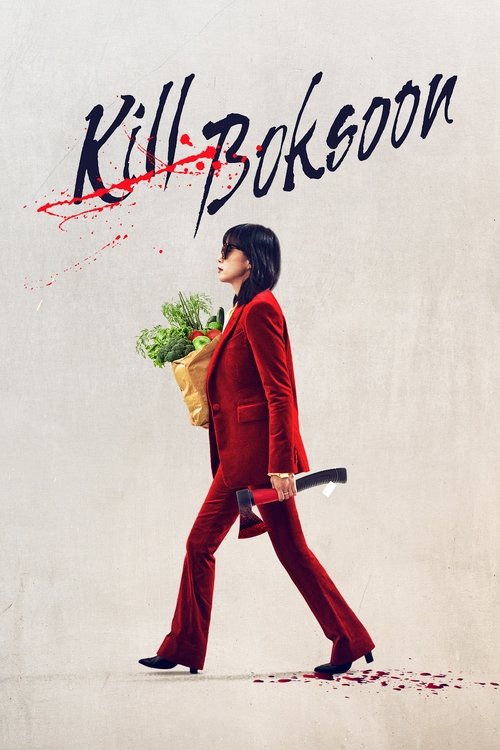
Kill Boksoon
A razor-sharp neo-noir action melodrama simmering with maternal guilt, where blood-slicked blades mirror the razor-thin tightrope between slaughter and motherhood in a neon-drenched metropolis.
Kill Boksoon

Kill Boksoon

길복순

"A life of lies can kill."

18 February 2023 South Korea 137 min 6.9 (566)

Director: Byun Sung-hyun

Cast: Jeon Do-yeon, Sul Kyung-gu, Kim Si-a, Esom, Koo Kyo-hwan

Drama Crime Action Thriller Motherhood vs. Professional Identity Corporate Exploitation and Monopolistic Hierarchy Generational Trauma and Inherited Violence Queerness, Secrecy, and the Burden of the Closet

Overview

Kill Boksoon (2023), directed by Byun Sung-hyun, introduces an underworld where the contract killing industry operates under the polished veneer of corporate entertainment. At the apex of this enterprise is MK Ent., led by Chairman Cha Min-kyu, a figure who consolidated assassin syndicates under strict institutional rules. The company’s undisputed star operative is Gil Bok-soon, a legendary hitwoman boasting a flawless 100% success rate whose lethality is matched only by her calculated discipline in the field.

Behind her lethal reputation, Bok-soon is a single mother struggling to connect with her 15-year-old daughter, Jae-young. Jae-young is navigating the stormy trials of adolescence, identity, and isolation within a private school, while believing her mother is simply a mundane corporate event planner. As the emotional chasm between mother and daughter widens, Bok-soon contemplates leaving the murder trade altogether upon the expiration of her contract to dedicate herself fully to parenting.

The narrative ignites when Bok-soon is assigned a delicate, high-profile contract—internally referred to as a "show"—that conflicts with her personal boundaries and the very rules established by MK Ent. Her unexpected choice on the job sends shockwaves through the assassin syndicate, pitting her against ambitious peers, corporate hierarchies, and her own mentor, forcing her into a desperate struggle where surviving her peers is only half as difficult as confronting the truth with her daughter.
Core Meaning

Director Byun Sung-hyun constructed Kill Boksoon as a satirical and emotional allegory comparing corporate labor and professional mastery with the chaotic realities of motherhood. The central message posits that while corporate hierarchies, violence, and social contracts can be calculated, controlled, and executed through technique, human intimacy and parenting defy all strategic control. The film deconstructs the illusion of parental perfection: true connection cannot exist under the burden of sanitized lies, and reconciliation requires embracing vulnerability and mutual acceptance of each other’s imperfect, authentic identities.

Thematic DNA

Motherhood vs. Professional Identity 35%
Corporate Exploitation and Monopolistic Hierarchy 25%
Generational Trauma and Inherited Violence 20%
Queerness, Secrecy, and the Burden of the Closet 20%

Motherhood vs. Professional Identity

The film explores the tension between extreme professional competence and domestic vulnerability. Bok-soon can simulate dozens of fatal tactical encounters in seconds, yet she is rendered helpless by her daughter’s closed bedroom door. Her journey is about learning that parenting is not a mission to be solved with control, but an unpredictable relationship built on shared vulnerability.

Corporate Exploitation and Monopolistic Hierarchy

MK Ent. operates like an entertainment conglomerate or K-pop idol agency. Killers are graded into tiers (A-tier down to D-tier), forced to sign exploitative exclusivity contracts, and managed through manufactured rules designed to maintain executive dominance. The film uses contract killing as a metaphor for ruthless modern workplace culture.

Generational Trauma and Inherited Violence

Bok-soon’s origins are rooted in domestic abuse from an authoritarian father. Flashbacks demonstrate how violence is handed down like a curse. When Jae-young acts out violently at school, Bok-soon must face the reality that her own submerged violence may have bled into her daughter's psyche despite her efforts to shield her.

Queerness, Secrecy, and the Burden of the Closet

Jae-young’s hidden romantic relationship with a female classmate runs parallel to Bok-soon’s secret career. Both characters suffer under societal and familial expectations that force them to conceal their truths. The climax bridges this divide not through explicit confession, but through unspoken understanding and acceptance of each other's hidden lives.

Character Analysis

Gil Bok-soon

Jeon Do-yeon

Archetype: Antihero / Reluctant Master Key Trait: Cold tactical calculation blended with maternal anxiety.

Motivation

Protecting her daughter's future while escaping the moral trap of her violent career.

Character Arc

Transitions from a compartmentalized, obedient corporate killer into an autonomous protector who dismantles her masters to achieve true maternal honesty.

Cha Min-kyu

Sul Kyung-gu

Archetype: Dark Mentor / Tragic Antagonist Key Trait: Ruthless authority coupled with an irrational, self-destructive personal attachment.

Motivation

Preserving MK Ent.'s control and maintaining his bond with Bok-soon.

Character Arc

Moves from an untouchable, godlike syndicate kingpin to an emotionally exposed man destroyed by his toxic obsession with Bok-soon.

All 5 characters and cast

Symbols & Motifs

The Simulated Mental Chess Sequences

Meaning:

Reflects Bok-soon's obsessive desire for order, prediction, and emotional insulation.

Context:

Visualized during major combat scenarios where Bok-soon internally pre-visualizes multiple branches and tactical outcomes of a fight before striking.

Cigarettes

Meaning:

A symbol of intergenerational trauma and suppressed rebellion.

Context:

Rooted in Bok-soon's memories of being abused by her father over smoking, recurring when she discovers cigarettes in Jae-young's pocket and confronts her fear of repeating tyrannical mistakes.

The Walmart Axe vs. The Ancient Wakizashi

Meaning:

Underscores pragmatic modernity triumphing over antiquated, romanticized honor codes.

Context:

Featured in the prologue duel between Oda, who wields a 400-year-old historic sword, and Bok-soon, who relies on a cheap store-bought axe and a concealed firearm.

Closed Doors and Food

Meaning:

Closed doors represent emotional barriers, while shared food represents clumsy, traditional attempts at maternal nourishment and emotional repair.

Context:

Illustrated through Jae-young's shut bedroom door contrasting with scenes of Bok-soon offering tteokbokki and home-cooked dinners.

Bloody Gloves and Disinfectant

Meaning:

Symbolizes failed attempts to wash away the moral stain of her violent career.

Context:

Shown through Bok-soon’s meticulous cleaning and laundering habits before stepping across her domestic threshold.

Memorable Quotes

사람 죽이는 건 심플해. 그거에 비하면 애 키우는 게 진짜 힘들지.
— Gil Bok-soon

Context

Spoken to Cha Min-kyu over tteokbokki.

Meaning

Encapsulates the central irony and philosophical core of the entire movie, contrasting professional lethality with the challenges of parenting.

칼은 마트에서 산 3만 원짜리 도끼 앞에서는 그냥 쇳조각이에요.
— Gil Bok-soon

Context

Delivered to Oda before executing him in the opening sequence.

Meaning

Establishes Bok-soon's unsentimental pragmatism over romanticized assassin tropes and traditional honor codes.

All 4 quotes

Philosophical Questions

Can authentic love and intimacy survive within an architecture of necessary lies?

The film examines whether shielding loved ones from painful realities protects them or destroys the foundation of trust between family members.

Is morality determined by codes and rules, or by personal empathy?

MK Ent. enforces strict rules to simulate order and ethics in murder, but Bok-soon proves that true moral agency occurs only when one refuses to follow institutional dogma.

Can inherited familial trauma ever be neutralized without total structural destruction?

Bok-soon can only free her daughter by completely tearing down the patriarchal house and corporate system that shaped her.

Alternative Interpretations

The Trap of Total Psychological Defeat: One prominent reading suggests that Cha Min-kyu deliberately orchestrates his own death. Unable to bear killing Bok-soon due to his obsessive love, he ensures she kills him on camera, delivering a parting blow by stripping her of her sanitized domestic facade in front of her daughter.

Full ending explanation

Cultural Impact

Kill Boksoon reflects contemporary South Korea’s hyper-competitive social and corporate ecosystem. South Korean society places enormous academic and behavioral pressure on students in elite private schools, paralleled in the film by Jae-young's school environment. Concurrently, corporate workplaces demand total institutional loyalty, mirrored satirically in the monopolistic "management agency" structure of MK Ent.

The film also contributes to Korean cinema's evolving representation of LGBTQ+ youth. Jae-young’s school scandal involves her kissing another girl, addressing conservative social stigmas and institutional blackmail in South Korean education. The film was praised internationally for its slick technical mastery and debuted at the top of Netflix's Global Non-English Top 10 film chart upon its release.

Audience Reception

Audiences and critics widely praised Jeon Do-yeon’s performance, highlighting her ability to balance visceral physical action with nuanced dramatic emotional vulnerability. The film's creative fight choreography—particularly the restaurant brawl and pre-visualization duels—along with the on-screen chemistry between Jeon Do-yeon and Kim Si-a, received strong acclaim.

Conversely, criticisms centered on an overlong runtime of 137 minutes, occasional pacing lulls between domestic drama and underworld corporate plotting, and overstuffed secondary subplots that occasionally distracted from the core mother-daughter dynamic. Controversial discussion points included Cha Min-kyu’s live-stream trap at the climax and the unresolved nature of the syndicate’s broader power structure. Overall, it was regarded as a stylish, highly entertaining, and emotionally resonant entry in modern South Korean action cinema.

Interesting Facts

  • Director Byun Sung-hyun wrote the screenplay specifically for Cannes-winning actress Jeon Do-yeon after being inspired by conversations with her about balancing her acting career with real-life motherhood.
  • Despite an illustrious 30-year filmography, Kill Boksoon marked Jeon Do-yeon's first full-length physical action lead.
  • The film marks the third major collaboration between director Byun Sung-hyun and veteran actor Sul Kyung-gu, following The Merciless (2017) and Kingmaker (2022).
  • The film received its world premiere in the prestigious Berlinale Special section at the 73rd Berlin International Film Festival in February 2023.
  • During early 2023, Jeon Do-yeon dominated global Netflix charts simultaneously in two contrasting genres: the romantic comedy series Crash Course in Romance and the action thriller Kill Boksoon.
  • Jeon trained for over four months in weapon handling, wirework, and close-quarters hand-to-hand combat to perform the vast majority of her stunts without doubles.
  • Following the film's success, Netflix greenlit a spin-off titled Mantis, focusing on an elite assassin counterpart briefly mentioned in the film's universe.

Easter Eggs

Hwang Jung-min Cameo

Megastar Hwang Jung-min makes a guest appearance in the opening sequence as Shinichiro Oda, the tattooed, underwear-clad Yakuza hit target.

Lee Jae-wook Cameo

Rising star Lee Jae-wook appears in critical flashback sequences portraying the younger version of Cha Min-kyu.

Homage to Quentin Tarantino’s Kill Bill

The title Kill Boksoon is a direct phonetic and thematic homage to Tarantino’s Kill Bill, echoing the narrative of an elite female assassin breaking free from an abusive male mentor.

Nod to John Wick

The corporate structuring of assassin agencies with strict rules, rankings, and underground etiquette pays homage to the Continental universe of John Wick while reframing it as a corporate Korean agency.

Kim Si-a / Miss Baek Continuity of Grit

Casting Kim Si-a subverts her breakout role in the child abuse drama Miss Baek, evolving her character archetype into an empowered, resilient teenager who takes agency into her own hands.

Frequently Asked Questions

Explore More About This Movie

Dive deeper into specific aspects of the movie with our detailed analysis pages

Comments (0)

Leave a comment

No comments yet. Be the first to share your thoughts!

Similar Movies