Skip to content
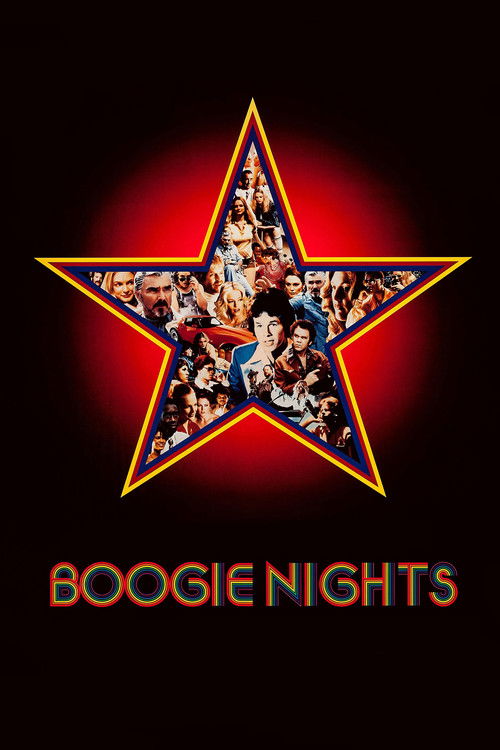
Boogie Nights
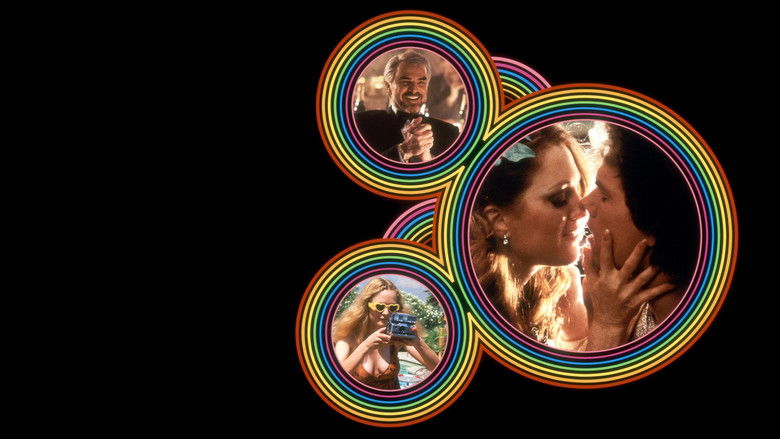
A kinetic drama blending euphoric ambition with devastating downfall. Like a glittering roller-skate gliding across a cocaine-dusted dancefloor, it captures a makeshift family's meteoric rise and subsequent plummet into the abyss of 1980s hubris.
Boogie Nights

Boogie Nights

"The life of a dreamer, the days of a business and the nights in between."

10 October 1997 United States of America 156 min 7.6 (3,475)

Director: Paul Thomas Anderson

Cast: Mark Wahlberg, Burt Reynolds, Julianne Moore, John C. Reilly, Heather Graham

Drama The Search for the Surrogate Family The Perils of Hubris and Excess Art vs. Commerce and Technological Shift Identity and Validation
Budget: $15,000,000
Box Office: $43,101,594

Overview

Set in the neon-drenched San Fernando Valley of the late 1970s and 1980s, Boogie Nights chronicles the meteoric rise and eventual downfall of Eddie Adams, a teenage high school dropout who transforms into adult film sensation Dirk Diggler. Discovered by idealistic director Jack Horner, who envisions elevating pornography to an art form, Eddie finds a surrogate family among the misfit crew of actors and technicians. He embraces his newfound fame, quickly becoming the biggest star the industry has ever seen.

As the decade shifts and the golden era of the adult film industry begins to wane with the advent of videotape, the close-knit family begins to fracture. The characters are plunged into a downward spiral of excess, ego, drug addiction, and changing technological landscapes. Pushed to their limits, they must navigate a harsh new reality while clinging desperately to the makeshift bonds they once formed.
Core Meaning

At its core, Boogie Nights explores the profound human need for acceptance and belonging. Paul Thomas Anderson uses the taboo backdrop of the adult film industry not to endorse or judge it, but to spotlight a makeshift family of outcasts trying to find their people. The film suggests that even those marginalized by mainstream society or their own biological families crave connection and purpose. Ultimately, it delivers a deeply empathetic message: despite the self-destruction, delusion, and excess, our chosen families remain a vital source of redemption and love when the glamour fades.

Thematic DNA

The Search for the Surrogate Family 40%
The Perils of Hubris and Excess 30%
Art vs. Commerce and Technological Shift 20%
Identity and Validation 10%

The Search for the Surrogate Family

Most characters in the film are estranged from their biological families. Eddie is verbally abused by his mother, and Amber Waves is denied custody of her son. Together under Jack Horner's roof, they create a chosen family that provides the love, validation, and support they lack in conventional society.

The Perils of Hubris and Excess

The narrative arc mirrors a Greek tragedy, particularly through Dirk Diggler. His initial innocence is corrupted by fame, cocaine, and a hyper-inflated ego. The film illustrates how reaching too far and losing sight of one's roots leads to a devastating downfall, as seen in the characters' plunge into the darker, drug-fueled 1980s.

Art vs. Commerce and Technological Shift

Jack Horner's primary motivation is to make adult films that are genuine cinema, treating them as an art form with lights, sound, and a real story. However, the transition from film to cheaper videotape in the 1980s forces a shift from idealistic artistry to soulless mass production, symbolizing the death of their golden era.

Identity and Validation

Every character is constantly seeking validation for their crafted personas. Dirk constantly asks if things look cool, while Buck Swope experiments with different looks to find his identity. Their profound need for acceptance dictates their life choices, pushing them to seek self-worth in an inherently exploitative industry.

Character Analysis

Eddie Adams / Dirk Diggler

Mark Wahlberg

Archetype: Tragic Hero / The Prodigy Key Trait: Narcissistic vulnerability

Motivation

To be loved, validated as a big, bright, shining star, and to escape the trauma of his biological mother's rejection.

Character Arc

Starting as a naive, starry-eyed busboy seeking escape from an abusive home, Eddie transforms into the superstar Dirk Diggler. Fueled by cocaine and ego, he alienates his chosen family, hits rock bottom in a botched drug robbery, and eventually returns home to Jack in search of redemption.

Jack Horner

Burt Reynolds

Archetype: The Patriarch / Mentor Key Trait: Idealistic and protective

Motivation

To create genuine art within the adult film industry and to maintain his makeshift family.

Character Arc

Jack begins as a successful, paternalistic director who dreams of elevating his craft. As the industry shifts to videotape, he resists the change but is eventually forced to compromise. He loses his children to the 1980s excesses but eventually welcomes Dirk back, accepting his role as the father figure of a fractured family.

All 5 characters and cast

Symbols & Motifs

The Videotape

Meaning:

Videotape represents the impending commercialization and degradation of Jack Horner's cinematic art. It symbolizes the end of the Golden Age and the death of craftsmanship, ushering in an era of cheap, soulless production.

Context:

The conflict between shooting on film versus video comes to a head through the character of Floyd Gondolli, whose New Year's Eve pitch to switch to video mirrors the turning of the decade and the unstoppable tide of change.

Rollergirl's Skates

Meaning:

The roller skates symbolize Rollergirl's eternal youth, vulnerability, and refusal to conform to traditional adult norms. They act as her emotional armor and a physical manifestation of her arrested development.

Context:

She wears them almost constantly throughout the film, even during intimate moments, an audition, and violent confrontations, anchoring her identity to this singular adolescent accessory.

The Limo and The $10 Trick

Meaning:

The tragic endpoint of Dirk's hubris and desperation for validation. It represents the ultimate commodification of his body once the glamour and fame of his peak career have vanished.

Context:

In the third act, after falling out with Jack and ruining his career, Dirk is reduced to prostituting himself in a limo for a mere ten dollars, a sharp contrast to his days of wealth and adulation.

Memorable Quotes

I'm a star. I'm a star, I'm a star, I'm a star. I'm a big, bright, shining star.
— Dirk Diggler

Context

It is the final line of the film. Dirk says it to himself while exposing himself in front of a dressing room mirror, psyching himself up before returning to the set.

Meaning

This mantra encapsulates Dirk's deep-seated need for validation and his massive, yet fragile, ego. It highlights his obsession with self-mythologizing.

You got your lights, your camera, your sound. It's not a lot of things. It's just a few things. You just gotta know how to use them.
— Jack Horner

Context

Jack explains the mechanics of making movies to an awe-struck Eddie Adams when they first meet at the nightclub.

Meaning

Demonstrates Jack's genuine passion for filmmaking. Despite the genre he works in, he views his work as a cinematic art form requiring technical skill.

All 5 quotes

Philosophical Questions

Does depiction equal endorsement?

The film explores whether pointing a camera at controversial, illegal, or taboo behavior inherently glorifies it. By portraying the adult film industry with empathy rather than judgment, PTA asks the audience to find the humanity in unsavory characters without necessarily aspiring to their lifestyle.

What defines a true family?

Boogie Nights continually questions the sanctity of the biological family versus the chosen family. It explores whether toxic blood relations should be abandoned in favor of an unconventional, yet mutually supportive community of outcasts.

Can commercialization destroy art?

Through Jack Horner's resistance to videotape, the film ponders whether the accessibility and cheapness of new technology inherently corrupts the soul and artistic integrity of a medium, forcing creators to choose between their ideals and financial survival.

Alternative Interpretations

While the film is widely interpreted as a story about finding a chosen family among societal outcasts, some critics offer a more cynical reading of the ending. The final return to Jack Horner's house can be seen not as a triumphant family reunion, but as a tragic capitulation. Dirk and the others have tried to escape their exploitative environment but, after failing in the real world, are forced back into the only toxic ecosystem that will accept them.

Full ending explanation

Cultural Impact

Released in 1997, Boogie Nights firmly established Paul Thomas Anderson, then in his mid-20s, as a prodigious auteur in American independent cinema. The film emerged during a 90s indie renaissance alongside the works of Quentin Tarantino and David O. Russell. Heavily influenced by Robert Altman's ensemble storytelling and Martin Scorsese's kinetic camerawork, the film popularized the use of long, unbroken Steadicam shots and needle-drop soundtracks for a new generation of filmmakers.

Culturally, the film sparked a re-evaluation of the 1970s and 1980s adult film industry, stripping away the pure sleaze to examine the wounded humanity of its participants. It launched Mark Wahlberg from a former rapper and underwear model into a respected, Oscar-caliber actor, and revitalized Burt Reynolds' career. The film's iconic sequences, particularly the tension-filled 'Sister Christian' drug robbery, are frequently cited in pop culture and film studies as masterclasses in building cinematic suspense and portraying the destructive shift from 70s decadence to 80s narcissistic ruin.

Audience Reception

Audience reception for Boogie Nights has been overwhelmingly positive, securing its legacy as a modern classic. Viewers frequently praise the film's incredible ensemble cast, dynamic cinematography, and a soundtrack that perfectly encapsulates the era. The seamless blend of uproarious comedy with deeply tragic moments leaves a lasting emotional impact. Mark Wahlberg's vulnerable performance and Burt Reynolds' subdued, paternal turn are universally celebrated.

However, some audiences initially found the subject matter—a nearly two-and-a-half-hour epic about the porn industry—confrontational and taboo. Certain scenes, particularly the graphic final shot and the intense violence of the third act, were points of controversy. Despite these abrasive elements, the consensus remains that the film's massive beating heart and profound empathy for its flawed characters transcend its provocative setting.

Interesting Facts

  • The film was based on Paul Thomas Anderson's high school mockumentary short film 'The Dirk Diggler Story', which was heavily inspired by the real-life adult actor John Holmes.
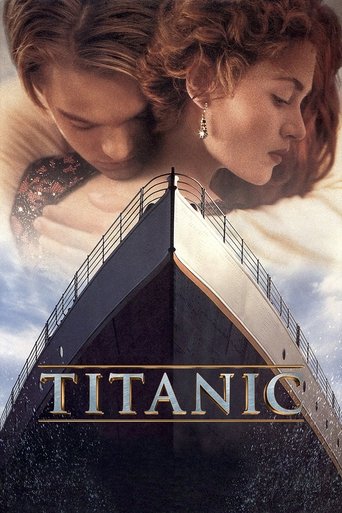
  • Leonardo DiCaprio and Joaquin Phoenix were initially offered the role of Dirk Diggler but turned it down. DiCaprio opted to do 'Titanic' instead.
  • The incredibly tense drug deal scene at Rahad Jackson's house was achieved by keeping the actors awake for a couple of days to create genuine exhaustion. When they ran out of actual firecrackers, PTA clapped two wooden boards together to keep them jumpy.
  • The film's budget was around $15 million, and it became a critical success, earning three Oscar nominations: Best Original Screenplay, Best Supporting Actor (Burt Reynolds), and Best Supporting Actress (Julianne Moore).
  • Burt Reynolds famously hated the film when he first saw it, even firing his agent, but he ended up winning a Golden Globe and earning an Oscar nomination for his career-best performance.
  • The film utilizes highly complex long takes, notably the unbroken Steadicam tracking shot at the Hot Traxx nightclub in the opening, heavily influenced by Martin Scorsese's 'Goodfellas'.

Easter Eggs

The TK421 Stereo Reference

When Buck is showing a customer stereo equipment, the customer mentions a 'TK421 crossover.' TK-421 is famously the designation of the Stormtrooper whose uniform Luke Skywalker steals in Star Wars: Episode IV - A New Hope. It was also an homage to George Lucas's THX 1138.

The Raging Bull Mirror Scene

The very last scene, where Dirk Diggler talks to himself in the mirror, is a direct visual and thematic nod to the ending of Martin Scorsese's Raging Bull, where Robert De Niro's Jake LaMotta does the exact same thing to hype himself up before a performance.

Frequently Asked Questions

Explore More About This Movie

Dive deeper into specific aspects of the movie with our detailed analysis pages

Comments (0)

Leave a comment

No comments yet. Be the first to share your thoughts!

Similar Movies