Boys
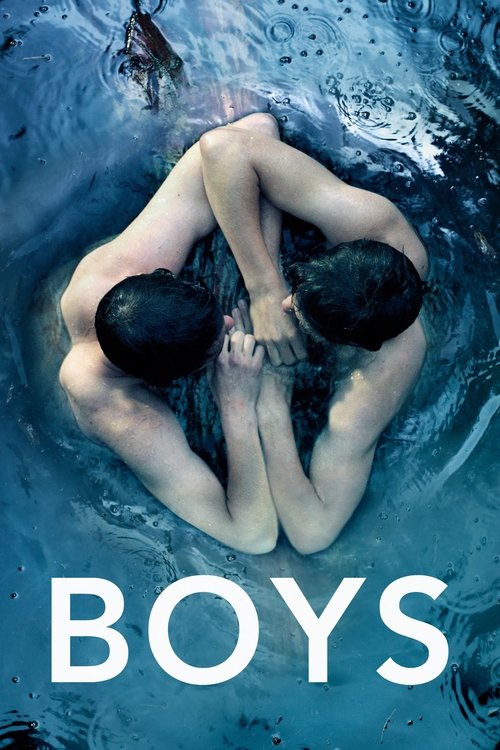
Coming-of-age Romance/Atmospheric Drama + Melancholic yearning turning into liberated joy + Two boys floating in a lake, suspended in time. A tender, sun-drenched exploration of first love that quietly sprints toward self-acceptance amidst the pressure of the finish line.
Boys

Boys

Jongens

"How does it feel to win a race when you know you lost a love?"

08 January 2014 Netherlands 78 min ⭐ 7.7 (722)
Director: Mischa Kamp
Cast: Gijs Blom, Ko Zandvliet, Jonas Smulders, Ton Kas, Stijn Taverne
Drama Romance TV Movie
The Dichotomy of Competition vs. Connection Silent Masculinity and Repression Coming of Age and Sexual Awakening Brotherhood and Grief

Overview

Boys (Dutch: Jongens) is a 2014 Dutch coming-of-age drama directed by Mischa Kamp. The story follows Sieger, a disciplined 15-year-old boy training for the national relay championships. While navigating the grief of his mother's death and a tense relationship with his rebellious brother Eddy, Sieger finds himself drawn to his spirited new teammate, Marc.

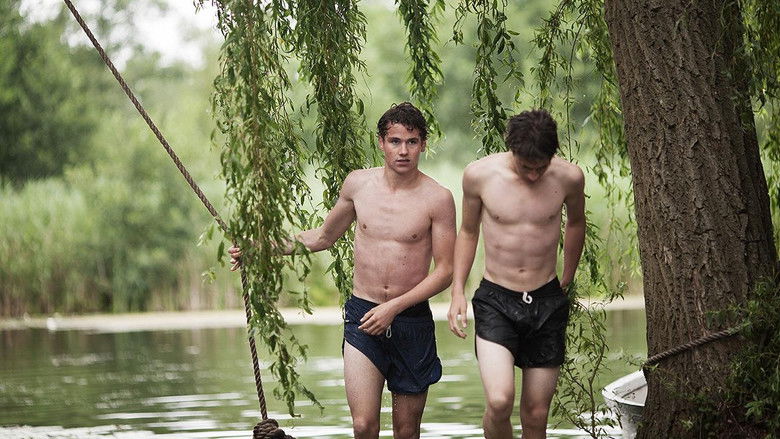
As the intense summer training progresses, a close friendship develops between the two, culminating in a moment of intimacy during a swim in a nearby lake. Sieger, confused and afraid of his feelings, tries to suppress them by dating a local girl, Jessica, and focusing on the upcoming race. The film portrays his internal struggle to balance the expectations of his father and team with the undeniable truth of his own heart.

The narrative builds to the championship race, where the pressure to win on the track collides with Sieger's need to win his own personal battle for identity. The film is celebrated for its subtle storytelling, relying on glances and body language rather than heavy dialogue to convey the turbulence of adolescent love.
Core Meaning

At its heart, Boys is a meditation on the courage to be vulnerable. Director Mischa Kamp juxtaposes the rigid, competitive world of athletics—where success is measured by speed and conformity—with the fluid, organic nature of love. The film suggests that true strength isn't found in winning a gold medal or suppressing one's emotions to 'be a man,' but in the bravery to break away from the pack and accept oneself.

Thematic DNA

The Dichotomy of Competition vs. Connection 30%
Silent Masculinity and Repression 25%
Coming of Age and Sexual Awakening 25%
Brotherhood and Grief 20%

The Dichotomy of Competition vs. Connection

The film uses sports as a framework for the characters' lives. On the track, they must stay in their lanes and focus on the finish line. Off the track (at the lake or in the woods), lines blur and genuine connection happens. Sieger learns that winning the race means nothing if he loses himself in the process.

Silent Masculinity and Repression

Sieger represents a traditional, silent masculinity enforced by his father, Theo. Emotions are swallowed, and grief (over the mother) is unspoken. Sieger's journey is about finding a voice for his desires in a world that praises stoicism and physical performance.

Coming of Age and Sexual Awakening

The film captures the confusion of first love without the heavy tragedy often found in LGBTQ+ cinema. It treats the awakening as a natural, albeit scary, part of growing up, focusing on the internal acceptance rather than external homophobia.

Brotherhood and Grief

The relationship between Sieger and his brother Eddy is defined by their shared, unaddressed loss of their mother. Eddy acts out with rebellion (motorcycles), while Sieger acts out with perfectionism (running). Their reconciliation is key to Sieger's freedom.

Character Analysis

Sieger

Gijs Blom

Archetype: The Stoic Hero / The Repressed Lover
Key Trait: Internalized conflict

Motivation

To keep the peace in his grieving family and to succeed in athletics, which conflicts with his growing desire for Marc.

Character Arc

Starts as a disciplined, closed-off athlete trying to please his father. Through his interaction with Marc, he cracks open his emotional shell. He moves from denial ("I'm not gay") to acceptance, ultimately choosing love over the safety of the closet.

Marc

Ko Zandvliet

Archetype: The Free Spirit / The Catalyst
Key Trait: Emotional intelligence

Motivation

To live authentically and connect with Sieger, but not at the cost of his self-respect.

Character Arc

Marc is comfortable in his skin from the start. He challenges Sieger not with aggression, but with openness. He gets hurt by Sieger's rejection but maintains his dignity, serving as the beacon Sieger must decide to follow.

Theo

Ton Kas

Archetype: The Protective Father
Key Trait: Overprotective love

Motivation

Protecting his remaining family from harm after his wife's death.

Character Arc

A widower gripping too tightly to his sons out of fear of losing them. He initially imposes strict control but eventually recognizes that he must let them make their own mistakes (and ride their own paths).

Eddy

Jonas Smulders

Archetype: The Rebel Brother
Key Trait: Rebellious

Motivation

Seeking attention and processing grief through defiance.

Character Arc

Acts out the grief Sieger suppresses. His rebellion serves as a foil to Sieger's obedience. By the end, the brothers find a silent understanding, and Eddy supports Sieger's breakaway.

Symbols & Motifs

The Relay Baton

Meaning:

It represents trust and connection. In a relay, you must blindly trust your teammate to be there. Sieger's inability to fully trust Marc emotionally initially threatens their "handoff" in life, even if they perfect it on the track.

Context:

Used throughout training montages; the physical act of passing the baton mirrors the transfer of emotional vulnerability between the boys.

The Motorbike

Meaning:

Symbolizes danger, rebellion, and freedom. It is linked to the mother's death (implied accident) and the father's fear. Sieger taking the bike at the end represents him overcoming fear and taking control of his own destiny.

Context:

Forbidden by the father for most of the film; used by the brother to rebel; ultimately used by Sieger in the final shot to chase after Marc.

The Lake

Meaning:

A space of fluidity and truth. Unlike the track with its hard lines and rules, the water is boundless. It is where the boys are stripped of their defenses (and clothes), allowing their true selves to emerge.

Context:

The pivotal scene where Sieger and Marc swim together and share their first intimate moment, shot from a bird's-eye view.

The Finish Line

Meaning:

Represents societal expectations. Crossing it brings applause and approval, but the film questions whether this "victory" is worth the sacrifice of personal happiness.

Context:

The climax of the film takes place at the championship race, where winning feels hollow to Sieger because Marc is distant.

Memorable Quotes

Sieger: "Ik ben geen homo." (I'm not gay.)
Marc: "Tuurlijk niet." (Of course you're not.)

— Sieger & Marc

Context:

Spoken immediately after their first kiss by the lake, as Sieger panic and tries to retreat into heteronormativity.

Meaning:

A heartbreaking moment of denial met with gentle, ironic acceptance. Marc doesn't argue; he knows the truth but allows Sieger his defense mechanism.

Marc: "Zullen we hier voor altijd blijven?" (Shall we stay here forever?)

— Marc

Context:

During a tender moment where they are alone, away from the pressure of the training camp.

Meaning:

Captures the escapist desire of first love—wanting to freeze time in a safe bubble away from the judgment of the real world.

Marc: "Succes met je poppenkast." (Good luck with your charade.)

— Marc

Context:

At the fairground, when Marc sees Sieger with Jessica and realizes Sieger is still hiding.

Meaning:

Marc calls out Sieger's fake behavior (dating Jessica to appear straight). It's the catalyst that shames Sieger into realizing he is living a lie.

Philosophical Questions

Does silence equate to lying?

The film explores whether Sieger's omission of the truth constitutes a lie to his family and friends. It asks if authenticity is a moral obligation or if privacy is a right during self-discovery.

What is the cost of victory?

By juxtaposing the gold medal with Sieger's heartbreak, the film asks what "winning" actually means. Is social success valuable if the self is fractured? It concludes that personal integrity is the only victory that sustains.

Alternative Interpretations

The 'Dream' Ending: While most view the ending—Sieger riding the motorbike with Marc on the back—as literal, some critics have suggested it has a dreamlike quality. The motorbike was previously forbidden and associated with death; Sieger riding it could symbolize a metaphorical departure from his father's rules rather than a literal road trip. However, the general consensus is that it represents a literal and triumphant choice.

The Race as Life: The relay race can be read as a metaphor for the 'script' of heteronormative life (pass the baton, finish the race, get the girl). Sieger winning the race but feeling empty is the film's rejection of this script.

Cultural Impact

Boys holds a significant place in the canon of LGBTQ+ coming-of-age cinema because it broke away from the 'tragic gay' trope common in the early 2000s. Unlike films where the protagonist is rejected, beaten, or dies, Boys offers a hopeful, happy ending.

It resonated globally, winning the Emmy Kids Award in 2015 for Best TV Movie. Its success helped pave the way for other positive European teen queer cinema (like Skam later on). It is frequently used in Dutch educational programs to discuss sexuality and self-acceptance with teenagers due to its gentle, non-explicit approach.

Audience Reception

Aggregated Verdict: Highly Positive (IMDb approx 7.5/10).
Audiences universally praised the chemistry between the two leads and the cinematography. The film is often cited as a "comfort movie" for the LGBTQ+ community.
Criticisms: Some reviewers found the plot predictable or "cliché" (the sports trope, the girlfriendbeard trope). However, most forgave this because of the execution. The lack of dialogue was seen by some as slow, but by others as realistic to the teenage male experience.

Interesting Facts

  • The film was originally made as a telefilm (TV movie) for Dutch public broadcaster NPO Zapp but became a surprise hit, earning a theatrical release and international distribution.
  • It won four awards at the Zlín International Film Festival for Children and Youth, arguably the most prestigious festival of its kind.
  • Ton Kas (the father) won a Golden Calf (the Dutch 'Oscar') for Best Supporting Actor for his performance.
  • Director Mischa Kamp specifically aimed for a PG rating to ensure the film could be shown in schools and to young teenagers who might be struggling with their sexuality.
  • The iconic 'bird's-eye view' shot of the boys in the lake was carefully storyboarded to be the film's visual signature, emphasizing symmetry and equality.
  • The actors Gijs Blom (Sieger) and Ko Zandvliet (Marc) were not a couple in real life, despite intense fan speculation due to their on-screen chemistry.
  • The film was shot in North Holland, including locations in Muiden.

Easter Eggs

Symmetry in Cinematography

Throughout the film, director of photography Melle van Essen uses symmetrical framing (the track lanes, the boys lying in the grass, the lake shot) to visually represent the concept of mirroring and the boys being equals/soulmates.

The 'Trampoline' Song

The scene where the boys jump on a trampoline is set to a specific piece of music that became a fan favorite. It visualizes the 'ups and downs' of their relationship and the feeling of weightlessness when they are together.

One Sock Up, One Down

A subtle costume detail noted by fans: during training, characters often have mismatched socks, symbolizing the chaotic, imperfect nature of adolescence hidden beneath a uniformed exterior.

⚠️ Spoiler Analysis

Click to reveal detailed analysis with spoilers

Frequently Asked Questions

Explore More About This Movie

Dive deeper into specific aspects of the movie with our detailed analysis pages

Comments (0)

Leave a comment

No comments yet. Be the first to share your thoughts!