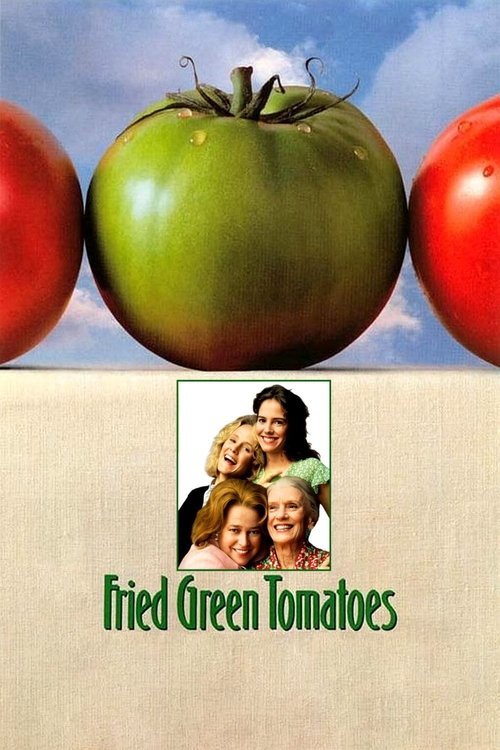
Fried Green Tomatoes
"The secret of life? The secret's in the sauce."
Overview
In the present day (1980s), Evelyn Couch, a timid and unhappy housewife feeling invisible in her middle age, meets Ninny Threadgoode, a spirited octogenarian resident at a nursing home. Through their weekly visits, Ninny recounts the vibrant and sometimes tragic history of her hometown, Whistle Stop, Alabama, during the 1920s and 30s.
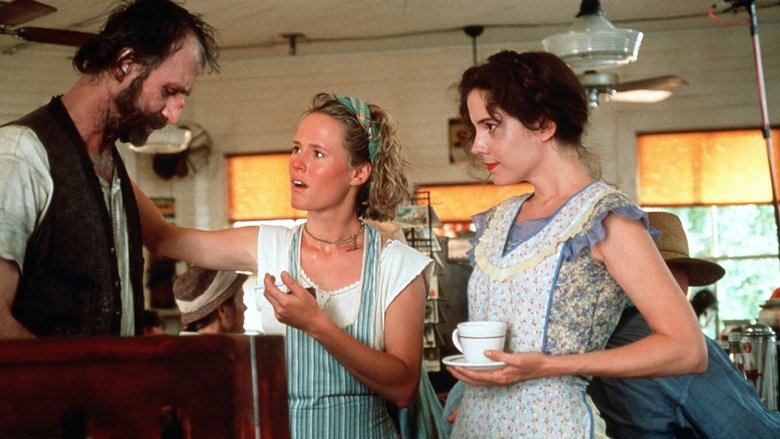
The flashbacks transport the audience to the Depression-era South, focusing on the deep bond between the rebellious daredevil Idgie Threadgoode and the gentle, lady-like Ruth Jamison. Together, they run the Whistle Stop Cafe, a sanctuary that defies the racial and social norms of the time, protecting their chosen family from the violent racism and sexism of the era. As Evelyn absorbs these tales of resilience, she finds the inspiration to reclaim her own power.
Core Meaning
At its heart, the film argues that friendship and storytelling are vital survival mechanisms. It explores how women, marginalized by age or gender, find strength in one another to overcome oppression. The narrative suggests that legacy isn't left in grand monuments, but in the recipes, stories, and acts of love passed down through generations.
Thematic DNA
Female Friendship and Sisterhood
The bond between Idgie and Ruth, mirrored by Evelyn and Ninny, forms the emotional backbone of the film. It portrays female friendship not just as social connection, but as a lifeline that provides protection against domestic abuse and societal judgment.
Empowerment and Transformation
Evelyn's journey from a repressed housewife to an assertive woman (unleashing her inner 'Towanda') is directly catalyzed by the stories of Idgie's bravery. The film validates the anger of women and the joy of taking up space.
Racism and Injustice
Set in the segregated South, the film tackles the brutal reality of the KKK and systemic racism. The cafe serves as a subversive space where Black and White communities interact with dignity, though the threat of violence remains constant.
Aging and Legacy
Through Ninny, the film challenges the dismissal of the elderly. It frames aging not as a decline but as a repository of wisdom, insisting that an old woman in a nursing home can be the spark that saves a younger woman's life.
Character Analysis
Evelyn Couch
Kathy Bates
Motivation
To find meaning and respect in a life where she feels invisible and dismissed by her husband and society.
Character Arc
Starts as a compulsive eater trying to save her marriage with plastic wrap; evolves into a confident, independent woman who tears down walls (literally and metaphorically) and invites Ninny to live with her.
Idgie Threadgoode
Mary Stuart Masterson
Motivation
Love for Ruth and a fierce moral code that rejects societal hypocrisy.
Character Arc
Transforms from a traumatized, wild child into a fierce protector of her chosen family, willing to defy the law and the KKK to keep Ruth and Big George safe.
Ruth Jamison
Mary-Louise Parker
Motivation
To protect her son and live a life of dignity and love.
Character Arc
Moves from a dutiful, battered wife to an independent business owner and mother, finding the courage to leave her abuser through Idgie's support.
Ninny Threadgoode
Jessica Tandy
Motivation
To keep the memory of Whistle Stop alive and to connect with another soul.
Character Arc
Serves as the bridge between past and present, finding a new purpose in passing on her history to Evelyn before losing her home.
Sipsey
Cicely Tyson
Motivation
Unwavering protection of the children in her care.
Character Arc
The steadfast heart of the Threadgoode household who commits a desperate act of violence to protect the baby she helped raise.
Symbols & Motifs
Fried Green Tomatoes
They symbolize Southern comfort, the specific flavor of home, and the idea of making something delicious out of something unfinished or 'green'—much like the characters themselves.
They are the signature dish of the cafe, representing the love and labor Idgie and Ruth put into their community.
Honey and Bees
Represents wildness, sweetness amidst danger, and Idgie's fearless nature (the 'Bee Charmer'). It suggests that love requires risking the 'sting'.
Idgie reaches into a swarm of bees to get fresh honey for Ruth, proving her devotion and lack of fear.
The Train
Symbolizes fate, inevitable change, and the connection between the isolated town and the wider world. It brings both tragedy (Buddy's death) and sustenance (food for the homeless).
The tracks run right by the cafe; the train is a constant auditory and visual presence that marks the passage of time.
Towanda
An alter ego representing female rage, assertiveness, and the refusal to be a victim. It is a battle cry for justice.
Idgie invents this persona in the past; Evelyn adopts it in the present to crash her car into the younger women who stole her parking spot.
Memorable Quotes
Face it, girls, I'm older and I have more insurance.
— Evelyn Couch
Context:
Spoken after she intentionally rams her car into the Volkswagen of two young women who stole her parking spot and mocked her age.
Meaning:
The definitive moment of Evelyn's empowerment, signaling she is no longer afraid to use her age and resources to demand respect.
TOWANDA!
— Idgie Threadgoode / Evelyn Couch
Context:
Idgie yells it while driving; Evelyn yells it while breaking down a wall in her house.
Meaning:
The primal scream of female liberation and the refusal to be tamed.
Secret's in the sauce.
— Sipsey
Context:
Spoken to the sheriff who is unwittingly eating the evidence (Frank Bennett's body) at the cafe.
Meaning:
A dark double entendre. On the surface, it refers to the BBQ sauce; deeply, it refers to the cover-up of Frank Bennett's murder.
I found out what the secret to life is: friends. Best friends.
— Ninny Threadgoode
Context:
Part of Ninny's reflection on her long life and the people she loved.
Meaning:
Summarizes the film's central thesis about the necessity of connection.
You're just a bee charmer, Idgie Threadgoode.
— Ruth Jamison
Context:
After Idgie safely retrieves honey from a wild beehive without getting stung.
Meaning:
Acknowledges Idgie's unique magic and ability to navigate dangerous situations unharmed.
Philosophical Questions
Is vigilantism ever morally partial?
The film presents the murder of Frank Bennett as justice served. It asks the audience to side with the characters who take the law into their own hands because the legal system of the time (racist and sexist) would not protect Ruth or Big George. It questions the difference between 'law' and 'justice'.
Does the truth matter more than the story?
Ninny acts as an unreliable narrator (if she is indeed Idgie). The film suggests that the emotional truth of a story—the hope and strength it gives the listener—is more valuable than strict historical fact.
Alternative Interpretations
Is Ninny actually Idgie? This is the primary debate.
Film Evidence: The film strongly implies they are the same person. Ninny knows intimate details only Idgie would know, and the final scene shows a fresh jar of honey on Ruth's grave with a note signed 'The Bee Charmer,' followed by Ninny giving Evelyn a knowing wink.
Book Canon: In Fannie Flagg's novel, Ninny and Idgie are explicitly separate characters (Ninny is Idgie's sister-in-law, married to Cleo).
Synthesis: The film likely merged the characters to create a more cinematic twist, allowing the 'hero' of the past to be the 'mentor' of the present.
Cultural Impact
Fried Green Tomatoes became a surprise blockbuster, grossing nearly $120 million against a modest budget, proving that films centered on women and female friendship could be commercially viable. It is credited with bringing the Southern Gothic genre to a mainstream 90s audience and revitalizing the popularity of the actual dish, which was not as ubiquitous in the South as the film made it seem. Culturally, it holds a complex place in LGBTQ+ cinema history; while criticized for toning down the novel's lesbian romance, it remains a beloved canon film for queer women due to the undeniable chemistry and 'Boston Marriage' dynamic between Idgie and Ruth. It also revitalized the career of Kathy Bates following Misery and cemented Jessica Tandy's legacy.
Audience Reception
The film is widely adored as a classic 'comfort movie.' Praised for: The stellar acting performances (especially the chemistry between Bates and Tandy), the emotional depth, the satisfying revenge arc against the abusive husband, and the triumphant 'Towanda' scene. Criticized for: Some critics at the time felt it was overly sentimental or 'schmaltzy.' Modern audiences and critics often discuss the 'straight-washing' of the romance, though many appreciate the subtle intimacy that remains.
Interesting Facts
- The Whistle Stop Cafe was built specifically for the movie in Juliette, Georgia. After the film's success, it was turned into a real restaurant that is still open today.
- Mary Stuart Masterson performed the 'bee charmer' stunt herself with real live bees because the stunt double backed out at the last minute.
- Author Fannie Flagg has a cameo as the teacher/leader of the 'women's awareness' workshop that Evelyn attends.
- The film was nominated for two Academy Awards: Best Supporting Actress for Jessica Tandy and Best Adapted Screenplay.
- Director Jon Avnet referred to actresses Mary-Louise Parker and Mary Stuart Masterson as 'Lou' and 'Stu' on set to avoid confusion.
- In the book, the romance between Idgie and Ruth is explicit. In the film, it is subtextual, leading to debates about 'straight-washing', though the food fight scene was intended by the director as a symbolic love scene.
- Jessica Tandy was 81 years old during filming; she was the oldest Best Actress winner in history for 'Driving Miss Daisy' just two years prior.
- Chris O'Donnell makes his film debut as Buddy Threadgoode.
Easter Eggs
Fannie Flagg's Cameo
The author of the original novel appears as the leader of the self-help seminar where Evelyn is told to get a mirror and look at her 'flower'.
The Honey Jar at the End
The fresh jar of honey and the note left on Ruth's grave at the end of the film is the strongest visual clue implying that Ninny is actually Idgie.
⚠️ Spoiler Analysis
Click to reveal detailed analysis with spoilers
Frequently Asked Questions
Explore More About This Movie
Dive deeper into specific aspects of the movie with our detailed analysis pages
Comments (0)
No comments yet. Be the first to share your thoughts!