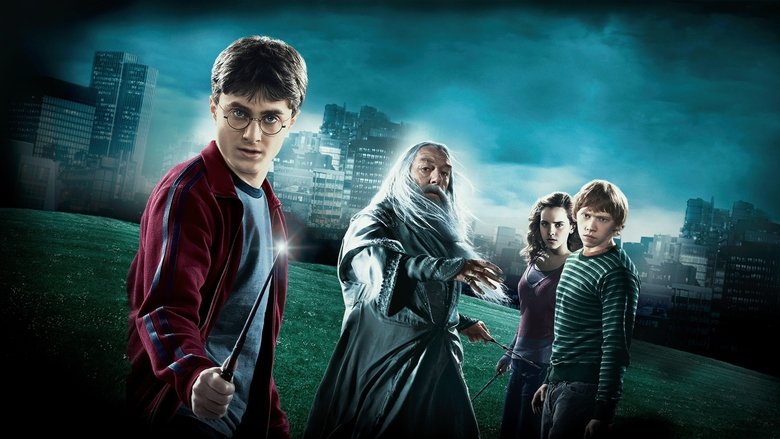
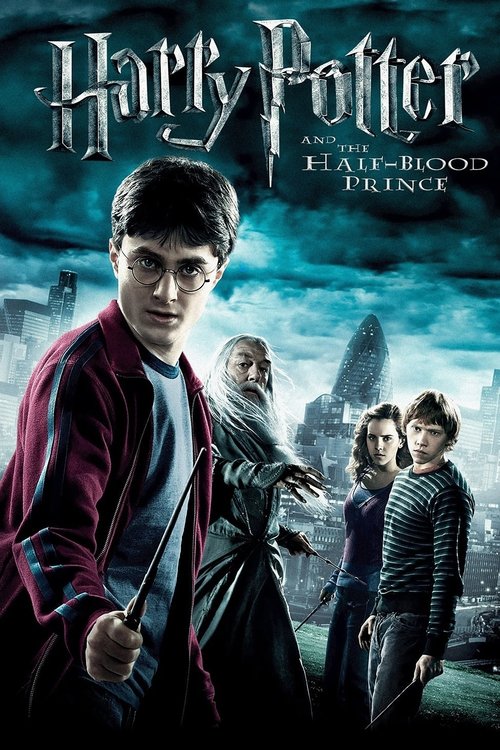
Harry Potter and the Half-Blood Prince
"Dark secrets revealed."
Overview
In his sixth year at Hogwarts, Harry Potter finds the world darker and more dangerous than ever. Lord Voldemort's Death Eaters are wreaking havoc in both the Muggle and Wizarding worlds. Under the guidance of Albus Dumbledore, Harry delves into the past of Tom Riddle, seeking the key to Voldemort's immortality. Meanwhile, a mysterious textbook belonging to the "Half-Blood Prince" aids Harry in his Potions class but leads him down a questionable path.
Draco Malfoy struggles under the weight of a sinister mission entrusted to him by the Dark Lord, isolating him from his peers. As teenage hormones rage and romantic entanglements complicate life at the castle, Harry suspects Draco is a Death Eater. The film culminates in a tragic journey to a remote cave and a devastating confrontation atop the Astronomy Tower that changes Harry's life forever.
Core Meaning
The Loss of Innocence and the Burden of Legacy
Director David Yates portrays the painful transition from adolescence to adulthood. The film suggests that to fight evil, one must understand it—exploring the origins of Voldemort (Tom Riddle) to find his weakness. It deconstructs the infallibility of mentors (Dumbledore) and reveals the human fragility behind villains (Draco), ultimately showing that Harry must face his destiny alone.
Thematic DNA
Loss of Innocence
The visual palette strips away the warm colors of childhood. Characters like Draco and Harry are forced into adult roles—Draco as a reluctant assassin and Harry as the 'Chosen One' burdened with saving the world. The death of the mentor figure signifies the final severance from childhood protection.
Trust and Betrayal
Harry's unwavering trust in Dumbledore is tested, while Dumbledore's trust in Snape becomes the central mystery. The film questions whether trust is a weakness or a strength, especially in the ambiguity of Snape's actions and the perceived betrayal at the climax.
The Complexity of Good and Evil
Unlike previous films, the lines blur. Draco is not just a bully but a terrified victim of circumstance. Slughorn is 'good' but flawed by vanity and cowardice. Snape commits a heinous act that may be mercy in disguise. The film argues that people are not simply 'good' or 'bad' but defined by their choices.
Love in a Time of War
Teenage romances (Harry/Ginny, Ron/Hermione) serve as a stark counterpoint to the encroaching darkness. They represent the life and normalcy that the characters are fighting to preserve, acting as a beacon of hope amidst the gloom.
Character Analysis
Harry Potter
Daniel Radcliffe
Motivation
To destroy Voldemort and protect his friends, driven by the loss of Sirius and the prophecy.
Character Arc
Harry moves from a passive student to an active player in the war. He learns to use manipulation (on Slughorn) and accepts that Dumbledore cannot protect him forever. He transitions from a boy following orders to a hero accepting his burden.
Draco Malfoy
Tom Felton
Motivation
Fear of Voldemort and the desire to save his family (and himself) from death.
Character Arc
Draco's facade of arrogance crumbles to reveal a terrified boy. Charged with killing Dumbledore, he is isolated and physically deteriorating, symbolizing the destructive nature of the Dark Arts on the soul.
Albus Dumbledore
Michael Gambon
Motivation
To prepare Harry for the final battle and to destroy Voldemort's anchors (Horcruxes).
Character Arc
Dumbledore is preparing for his end. He imparts his final lessons to Harry, showing his own fallibility and vulnerability, culminating in his sacrifice to protect Draco's soul and Harry's life.
Severus Snape
Alan Rickman
Motivation
To fulfill his secret pact with Dumbledore and protect Lily's son (ultimately), though this is hidden.
Character Arc
Snape walks a razor's edge, making the Unbreakable Vow to protect Draco while ostensibly serving Dumbledore. His killing of Dumbledore cements his role as the apparent villain, though his motivations remain ambiguous.
Horace Slughorn
Jim Broadbent
Motivation
Comfort, prestige, and the desire to be associated with famous/talented wizards.
Character Arc
Slughorn returns to Hogwarts seeking comfort and influence. He is forced to confront his past shame—giving Tom Riddle information about Horcruxes—and eventually yields the memory to Harry, choosing truth over vanity.
Symbols & Motifs
The Vanishing Cabinet
A bridge between the safety of Hogwarts and the danger of the outside world (Borgin & Burkes). It symbolizes the corruption of the sanctuary and the inevitability of war infiltrating even the safest places.
Draco spends the year repairing the cabinet in the Room of Requirement, using a bird to test it. The bird's death and subsequent life foreshadow the danger Draco is bringing into the school.
Felix Felicis (Liquid Luck)
Symbolizes the power of confidence and the illusion of control. While it grants luck, it also reveals that success often comes from intuition and taking risks rather than rigid planning.
Harry wins the potion and uses it to manipulate Slughorn into revealing his memory. It represents a lighter, more whimsical magic in a dark film.
The Potion in the Cave
The physical manifestation of suffering and the burden of knowledge. Dumbledore must consume his own pain and fear to uncover the truth, symbolizing the self-sacrifice required of a leader.
In the seaside cave, Dumbledore is forced to drink the emerald potion to reach the locket, reducing the most powerful wizard to a sobbing, vulnerable shell.
The Half-Blood Prince's Textbook
Knowledge without context. It offers Harry power and success (Sectumsempra) but carries a dark legacy, teaching him that shortcuts to power often come with dangerous consequences.
Harry becomes obsessed with the book's notes, excelling in class but eventually using a dark spell that nearly kills Draco, paralleling Voldemort's use of dark knowledge.
Memorable Quotes
It is the unknown we fear when we look upon death and darkness, nothing more.
— Albus Dumbledore
Context:
Spoken to Harry in the cave by the seaside as they prepare to find the Horcrux.
Meaning:
Dumbledore explains that fear stems from ignorance. It reinforces the film's theme that understanding the 'monster' (Voldemort) is the key to defeating him.
I am not worried, Harry. I am with you.
— Albus Dumbledore
Context:
Spoken in the cave when Dumbledore is weak and Harry is helping him.
Meaning:
A poignant reversal of roles. Usually, Harry feels safe because he is with Dumbledore. Here, Dumbledore places his faith and safety in Harry, signaling the passing of the torch.
You dare use my own spells against me, Potter? It was I who invented them - I, the Half-Blood Prince!
— Severus Snape
Context:
During the duel at the end of the film when Harry tries to use Sectumsempra on Snape.
Meaning:
The revelation of the film's title character. It strips Harry of his borrowed confidence and reveals his reliance on the very man he hates.
But I am the Chosen One.
— Harry Potter
Context:
In the library/halls when Hermione warns him about Romilda Vane's love potion attempts.
Meaning:
A rare moment of humor where Harry acknowledges his fame, using it to impress Hermione (and justify Romilda Vane's interest), showing his growing maturity and wit.
Philosophical Questions
Does the end justify the means?
The film explores this through Dumbledore and Snape. Dumbledore manipulates Harry and Slughorn for the 'greater good.' Snape kills his only ally to maintain his cover and save Draco. The film asks if these moral compromises are acceptable to defeat a greater evil.
Can a soul be repaired?
Through the concept of Horcruxes, the film posits that murder rips the soul apart. Slughorn's memory and Harry's mission suggest that remorse is the only, albeit painful, way to heal—a path Voldemort rejects but Draco may still be capable of.
Is destiny a choice?
Voldemort sets the prophecy in motion by choosing to attack Harry. Harry chooses to be the 'Chosen One' not because of the prophecy, but because Voldemort killed his parents. The film emphasizes that our choices define us more than our abilities or prophecies.
Alternative Interpretations
Draco's Suit and Isolation
Critics and fans noted that Draco Malfoy wears a black suit throughout the film, unlike other students in robes or casual Muggle clothes. This can be interpreted as his separation from the school environment—he is no longer a student but a 'businessman' for the Death Eaters, or perhaps mourning his own lost childhood.
The Bird in the Cabinet
A popular visual analysis suggests the bird Draco sends into the vanishing cabinet represents Snape. It enters black (ominous) and returns white (alive/pure)? Or simply that life is fragile. Some fans view the bird's survival as a metaphor for Draco's soul—damaged but not lost.
Snape's Mercy
The ending is often read not as a murder, but as an act of mercy. By killing Dumbledore, Snape saves Draco's soul from being fractured by the act of killing, and saves Dumbledore from a painful, slow death by the curse in his hand. This recontextualizes Snape from villain to tragic hero.
Cultural Impact
Harry Potter and the Half-Blood Prince is pivotal for shifting the franchise into a visually distinct 'art house' blockbuster style. Cinematography: Bruno Delbonnel's work (nominated for an Oscar) influenced the 'Dark Academia' aesthetic, proving fantasy films could be visually sophisticated and moody. Teen Drama: The film is often remembered (and sometimes meme-d) for its heavy focus on 'Hogwarts Rom-Com' elements, particularly the awkward 'shoelace scene' between Harry and Ginny, which sparked debate among fans about the adaptation of their romance compared to the books. Legacy: It successfully set the stage for the two-part finale, cementing the transition from a school-adventure series to a war drama.
Audience Reception
Praised: The film was highly acclaimed for its stunning cinematography, acting (particularly Michael Gambon, Alan Rickman, and Tom Felton), and the successful balancing of humor with dark themes. The 'Liquid Luck' scene is a fan favorite for Daniel Radcliffe's comedic performance.
Criticized: Many book fans were disappointed by the exclusion of Voldemort's backstory (the Gaunt family memories) and the climactic battle at Hogwarts. The romantic subplots, especially the chemistry between Harry and Ginny, were criticized as awkward or poorly written compared to the book.
Verdict: Generally considered one of the most visually beautiful and emotionally resonant entries, though some die-hard fans feel it prioritized teen romance over crucial plot exposition.
Interesting Facts
- Bruno Delbonnel, the cinematographer, was nominated for an Academy Award for his work on the film, the only Oscar nomination for Cinematography in the entire series.
- Hero Fiennes-Tiffin, who played the 11-year-old Tom Riddle, is the actual nephew of Ralph Fiennes (who plays Lord Voldemort).
- Maggie Smith (McGonagall) was battling breast cancer during the filming but insisted on completing her role.
- The destruction of the Millennium Bridge in the opening sequence is anachronistic; the bridge opened in 2000, but the film is set in 1996.
- Three new scenes were added for the movie that were not in the book: the collapse of the Millennium Bridge, the attack on The Burrow, and the story of the fish 'Francis' told by Slughorn.
- Tom Felton's pockets were sewn shut by the costume department because he kept sneaking food onto the set.
Easter Eggs
Divine Magic Poster
In the opening cafe scene, a poster behind Dumbledore advertises a perfume called 'Divine Magic,' subtly referencing the wizarding world bleeding into the Muggle one.
7 Rocks on the Window
In the flashback to the orphanage, there are seven small stones lined up on young Tom Riddle's windowsill, foreshadowing the seven Horcruxes he would later create.
Slughorn's Feet
When Slughorn disguises himself as an armchair, his feet are briefly visible before he transforms back, a visual gag hinting at his imperfect concealment.
Opal Necklace
The cursed necklace that hurts Katie Bell is visible in the previous film (Chamber of Secrets) in a deleted scene (or background) at Borgin & Burkes, showing J.K. Rowling's long-term planning.
Draco's Wand Cane
Draco is often seen using his wand as a walking stick or fidgeting with it like a cane, mimicking his father Lucius Malfoy's mannerisms, symbolizing his forced accelerated adulthood.
⚠️ Spoiler Analysis
Click to reveal detailed analysis with spoilers
Frequently Asked Questions
Explore More About This Movie
Dive deeper into specific aspects of the movie with our detailed analysis pages
Comments (0)
No comments yet. Be the first to share your thoughts!