Skip to content
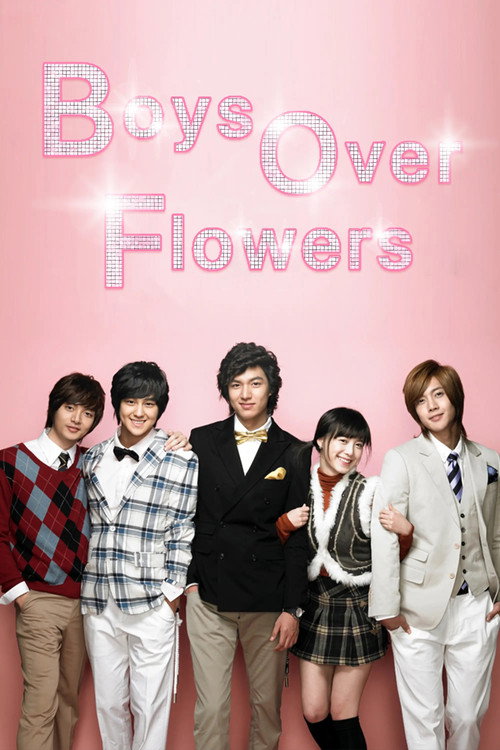
Boys Over Flowers
A tempestuous romantic drama overflowing with fiery passion and aching vulnerability, where an unyielding wild dandelion fights to bloom amidst a golden labyrinth of opulence and high-society storms.
Boys Over Flowers

Boys Over Flowers

꽃보다 남자

05 January 2009 — 31 March 2009 South Korea 1 season 25 episode Ended 8.3 (1,841)

Cast: Koo Hye-sun, Lee Min-ho, Kim Hyun-joong, Kim Bum, Kim Joon

Drama Comedy Socioeconomic Class Stratification and Inequality Transformative Power of Love and Maturity Unyielding Loyalty and Brotherhood Autonomy vs. Filial and Corporate Duty Resilience and Moral Integrity ("The Weed Spirit")

Overview

Boys Over Flowers (2009) follows Geum Jan-di, a headstrong, working-class high school girl whose father runs a modest dry-cleaning business. After courageously rescuing a student from a suicide attempt at the ultra-exclusive Shinhwa High School—an institution catering to the top 1% of South Korea’s elite—Jan-di is granted a competitive swimming scholarship to quiet a public relations scandal. Uninterested in the wealth and snobbery around her, Jan-di quickly clashes with the "F4" (Flower Four), a terrifyingly powerful clique of four unbelievably rich, handsome young men who rule the school with impunity through intimidation and social ostracization.

Led by the arrogant, spoiled heir Gu Jun-pyo, F4 targets anyone who defies their authority by issuing a dreaded "red card," which invites the entire student body to bully the victim. Undeterred by the cruelty, Jan-di becomes the first student to openly fight back against Jun-pyo. Her fierce defiance unintentionally fascinates Jun-pyo, sparking his clumsy, obsessive pursuit of her affection. Meanwhile, Jan-di finds solace in the quiet, contemplative nature of Yoon Ji-hoo, F4's melancholic violinist, creating a complex romantic dynamic that disrupts the longstanding brotherhood of the four heirs.

Across its 25 episodes, the narrative evolves from high school clashes into a high-stakes, young-adult saga spanning international locations, corporate power struggles, forced engagements, and severe familial opposition. As Jan-di and Jun-pyo navigate stark class divides and the relentless interference of Jun-pyo's tyrannical mother, the series charts the emotional maturation of its central characters as they learn the true cost of love, loyalty, and personal freedom.


Core Meaning

The central thesis of Boys Over Flowers is that genuine human warmth, moral integrity, and love are far more powerful than inherited wealth, social status, or institutional power. Through the collision between the impoverished Geum Jan-di and the untouchable Gu Jun-pyo, the creators illustrate that true nobility is defined by emotional courage and empathy rather than lineage or bank accounts.

The show reveals how extreme privilege often breeds emotional isolation and toxicity, whereas love acts as a transformative force capable of breaking down personal egos and entrenched class barriers. Ultimately, the series communicates that choosing authenticity and devotion over societal expectations requires immense sacrifice, but it is the only path to true self-fulfillment and emotional freedom.

Thematic DNA

Socioeconomic Class Stratification and Inequality 30%
Transformative Power of Love and Maturity 25%
Unyielding Loyalty and Brotherhood 20%
Autonomy vs. Filial and Corporate Duty 15%
Resilience and Moral Integrity ("The Weed Spirit") 10%

Socioeconomic Class Stratification and Inequality

The series meticulously examines the immense gulf between South Korea’s hyper-wealthy elite and the struggling working class. Initially framed through high-school bullying and economic elitism, the theme deepens as corporate interests (Shinhwa Group) threaten the basic livelihoods of ordinary citizens. Throughout the show, class disparity moves from being an obstacle of social prejudice to a structural force that actively attempts to tear the lead couple apart through financial sabotage, bribery, and physical displacement.

Transformative Power of Love and Maturity

Love is depicted as a catalyst for profound personal evolution. Gu Jun-pyo begins as a violent, self-centered bully but matures into a selfless, responsible man willing to yield his comfort and status to protect the woman he loves. Similarly, Jan-di learns to open her guarded, fiercely independent heart, discovering that allowing oneself to be vulnerable and loved is a form of strength rather than weakness.

Unyielding Loyalty and Brotherhood

The bond between the four members of F4 serves as an emotional backbone across the narrative. Though tested severely by love triangles, conflicting corporate duties, and violent fallouts, their friendship evolves from a pact of high-society entitlement into an authentic brotherhood rooted in mutual protection, forgiveness, and emotional support.

Autonomy vs. Filial and Corporate Duty

Every member of F4 struggles under the weight of pre-destined family expectations. The show contrasts the cold, business-driven demands of parents—epitomized by Chairwoman Kang—with the young characters' desire to choose their own careers, artistic passions, and romantic partners. By the end of the series, each young heir must actively claim their own identity rather than remaining a puppet of their corporate dynasty.

Resilience and Moral Integrity ("The Weed Spirit")

Embodied by Geum Jan-di (whose name references grass/weed), this theme emphasizes that a person can be stepped on, beaten down, and impoverished, yet still refuse to break. Her unyielding spirit acts as a moral compass that inspires those around her to challenge corrupt social norms.

Character Analysis

Geum Jan-di

Koo Hye-sun

Archetype: The Plucky Everyman / Heroine ("Strong Weed") Key Trait: Unwavering resilience and moral courage

Motivation

To protect her family and friends and maintain her moral integrity; evolves into accepting Jun-pyo’s love while retaining her independence.

Character Arc

Begins as a hot-tempered dry-cleaner's daughter who accidentally enters elite society. After suffering intense bullying, economic hardship, and a career-ending physical injury, she matures from a defensive girl into a compassionate adult who pursues medical studies while maintaining her fierce self-respect.

Gu Jun-pyo

Lee Min-ho

Archetype: The Arrogant Antihero / Tsundere Heir Key Trait: Passionate intensity and fiercely protective loyalty

Motivation

Seeking genuine affection and taking control of his own life; evolves into sacrificing his status to protect Jan-di and becoming a leader worthy of respect.

Character Arc

Starts as a narcissistic, violent high school bully who uses power to mask severe emotional neglect. Through his love for Jan-di, he undergoes a painful emotional awakening, learning selflessness, enduring physical beatings, and stepping up to manage Shinhwa Group responsibly.

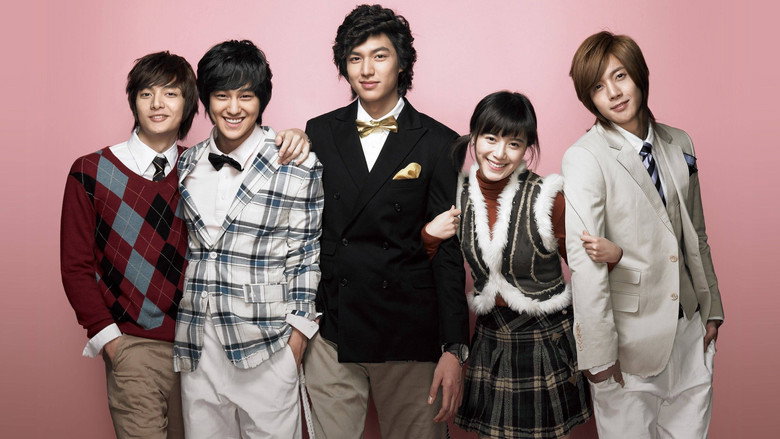
All 5 characters and cast

Symbols & Motifs

The Red Card

Meaning:

Symbolizes absolute totalitarian control, institutional cruelty, and social death within Shinhwa High.

Context:

Placed in the lockers of targeted students; when Jan-di publicly tears hers up, it signifies the breaking of fear and the start of revolution against F4's tyranny.

The Star and Moon Necklace

Meaning:

Symbolizes destiny, eternal protection, and their unbreakable connection even when separated across continents, where the star represents Jun-pyo holding onto the moon (Jan-di).

Context:

Custom-designed by Jun-pyo for Jan-di.

Dandelion / Grass

Meaning:

Reflects Jan-di’s fundamental nature. Unlike delicate hot-house flowers, grass grows anywhere, survives harsh weather, and springs back up when trampled upon, representing working-class endurance.

Context:

Associated with Geum Jan-di, whose name references grass/weed.

The White Sail / Yacht Motif

Meaning:

Symbolizes freedom, tranquility, and his role as a gentle harbor for Jan-di amidst the chaotic storms created by Jun-pyo and his family.

Context:

Associated with Yoon Ji-hoo during boat outings and discussions of sailing.

Pottery and Clay

Meaning:

Clay represents human vulnerability and trauma; the delicate process of shaping and firing ceramics symbolizes his emotional guardedness, his artistic heritage, and his ultimate healing through authentic affection.

Context:

Associated with So Yi-jung's craft and artistic journey.

The Swimming Pool / Water

Meaning:

Water serves as Jan-di’s sanctuary and place of absolute freedom, while paradoxically marking critical turning points in her life.

Context:

Used from saving a student, to losing her competitive swimming career due to injury, to triggering Jun-pyo’s lost memories in the series climax.

Memorable Quotes

미안하다고 하면 법은 왜 있고 경찰은 왜 있어?
— Gu Jun-pyo

Context

Episode 1. Spoken when Jan-di demands an apology after he ruins her clothes.

Meaning

Jun-pyo's arrogant catchphrase perfectly establishes his entitled mindset before his character transformation.

하얀 천과 바람만 있으면 어디든 갈 수 있어.
— Yoon Ji-hoo

Context

Episode 2 / Episode 5. Spoken to Jan-di on a boat regarding his love for sailing.

Meaning

Captures his romantic, melancholic spirit and became one of the most famous and parodied lines in K-drama history.

All 5 quotes

Episode Highlights

Episode 1

S1E1

Jan-di saves a bullied student from jumping off Shinhwa's roof, receives a scholarship, and publicly stands up to Jun-pyo after receiving the red card.

Significance:

Launches the entire series arc and establishes the central conflict.

Episode 5

S1E5

Jan-di suffers severe bullying (water balloons, fire extinguishers), but Jun-pyo rescues her. Later in New Caledonia, Ji-hoo kisses Jan-di, causing a rift within F4.

Significance:

Escalates the love triangle and accelerates Jun-pyo's emotional transformation.

Episode 10

S1E10

Jun-pyo and Jan-di go on a double date; Jun-pyo defends Jan-di’s friend, and the leads share their iconic first genuine kiss.

Significance:

Confirms their mutual feelings and reveals Jun-pyo's underlying nobility.

Episode 13

S1E13

The story shifts to Macau six months later. Jun-pyo has taken over corporate duties following his father's collapse and treats Jan-di coldly under his mother's watch.

Significance:

Begins the angst-ridden Second Act focused on corporate pressure and forced separation.

Episode 18

S1E18

Jun-pyo’s forced fiancée, Ha Jae-kyung, calls off the wedding at the altar after recognizing Jun-pyo and Jan-di’s profound love.

Significance:

Prompts Chairwoman Kang to launch all-out financial warfare against Jan-di’s family.

Episode 25

S1E25

Jun-pyo suffers selective amnesia after saving Ji-hoo from a car accident. Jan-di falls into a swimming pool to jog his memory, successfully restoring his recollection. Three years later, Jun-pyo returns from US business studies and proposes to Jan-di on the beach with F4 reunited.

Significance:

Resolves all narrative arcs and completes the character growth trajectories.

Philosophical Questions

Can love truly overcome deeply entrenched socio-economic inequality, or does romanticizing class divides merely obscure systemic injustice?

Explored through the intense conflicts between Jan-di's working-class reality and the corporate empire of the Shinhwa Group, questioning whether individual romance can genuinely bridge severe economic divides.

What defines human value—inherited wealth and status, or moral resilience and capacity for empathy?

Examined through the contrast between the superficial elitism of Shinhwa High's wealthy elite and Jan-di's unyielding moral courage and integrity.

How much of one's identity and personal happiness should be sacrificed to fulfill familial and corporate obligations?

Explored through the struggles of the F4 heirs, particularly Jun-pyo under Chairwoman Kang, as they balance family obligations against their personal desires and autonomy.

Alternative Interpretations

The series offers multiple interpretive angles:

Full ending explanation

Cultural Impact

Released in early 2009 during the height of the Second Hallyu (Korean Wave), Boys Over Flowers was adapted from Yoko Kamio’s legendary manga Hana Yori Dango. The series established the quintessential K-drama romantic comedy blueprint: the arrogant chaebol heir, the spunky impoverished heroine, the gentle second male lead, the evil matriarch, dynamic amnesia, and dramatic airport proposals.

The drama popularized the "Kkotminam" (flower boy) trend across Asia, transforming male beauty standards to favor groomed hair, stylish tailoring, soft facial features, and expressive emotionality. Achieving domestic ratings over 30–35%, the show launched Lee Min-ho to international stardom and served as a foundational gateway drama for millions of fans worldwide.

Audience Reception

Audiences and critics consistently praise the incredible onscreen chemistry between Lee Min-ho and Koo Hye-sun, the charismatic supporting cast, the iconic OST ("Paradise"), and the addictive, escapist melodrama.

However, viewers criticize the over-the-top campiness, dated sound editing, repetitive breakup/reunion cycles in the second half, toxic behavior from Jun-pyo in early episodes, and exaggerated acting choices by Koo Hye-sun. Overall, while recognized as highly melodramatic and trope-heavy by modern standards, it is universally acknowledged as an iconic, essential landmark in K-drama history.

Interesting Facts

  • Near the end of production in February 2009, lead actress Ku Hye-sun was involved in a serious car crash that resulted in mouth stitches and hospitalization, halting filming and delaying Episode 17 while KBS aired a special F4 talk show.
  • Lee Min-ho specifically got a perm before auditioning for Gu Jun-pyo to match Tsukasa Domyoji's look from the manga, landing him the career-defining role.
  • To accurately reflect the top 1% chaebol lifestyle, Jun-pyo’s wardrobe cost thousands of dollars per episode, with a single coat costing over $6,000.
  • The soundtrack—featuring T-Max’s 'Paradise' and SS501’s 'Because I’m Stupid'—became a massive pop phenomenon and won Best Soundtrack at the 11th Mnet Asian Music Awards (MAMA) in 2009.
  • Production took place in lavish overseas locations such as New Caledonia and Macau (The Venetian Resort), setting a new benchmark for overseas shoot budgets in Korean drama history.
  • Late ASTRO member Moon Bin made his screen debut in the series playing the young version of So Yi-jung.

Easter Eggs

Double-Role Cameo by Jung Eui-chul

Actor Jung Eui-chul played two distinct roles: Lee Min-ha in Episode 1 (the student saved by Jan-di on the roof) and Lee Jae-ha / Model Haje in Episodes 11–12 (Min-ha's vengeful twin brother who orchestrates a plot against Jun-pyo).

High-Profile Guest Stars

Featured notable guest appearances including Han Chae-young as Ji-hoo's high-society first love Min Seo-hyun, Lee Min-jung as Jun-pyo's rebellious fiancée Ha Jae-kyung, and Park Soo-jin as Yi-jung's first love Cha Eun-jae.

Manga Title Wordplay Honor

The original Japanese title Hana Yori Dango is a famous pun meaning 'Dumplings over Flowers' (valuing practical food over visual beauty). The K-drama frequently nods to this by having Jan-di's family obsess over food, porridge, and dry-cleaning practicalities while ignoring the glossy glamour of the 'flower boys'.

Frequently Asked Questions

Explore More About This Movie

Dive deeper into specific aspects of the movie with our detailed analysis pages

Comments (0)

Leave a comment

No comments yet. Be the first to share your thoughts!

Similar Movies